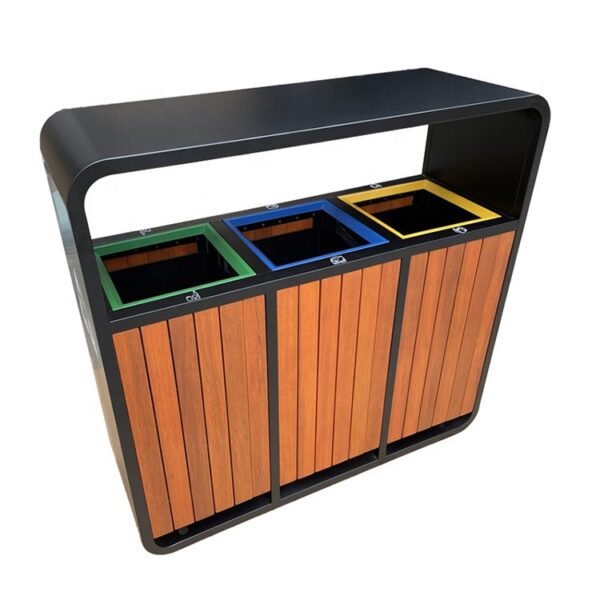
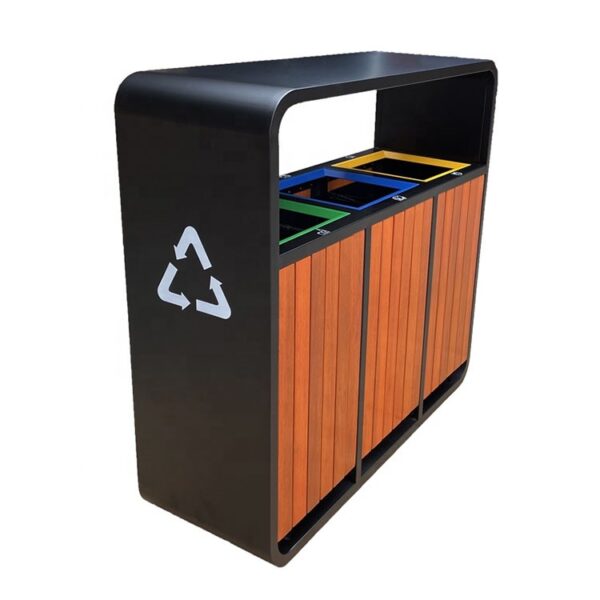
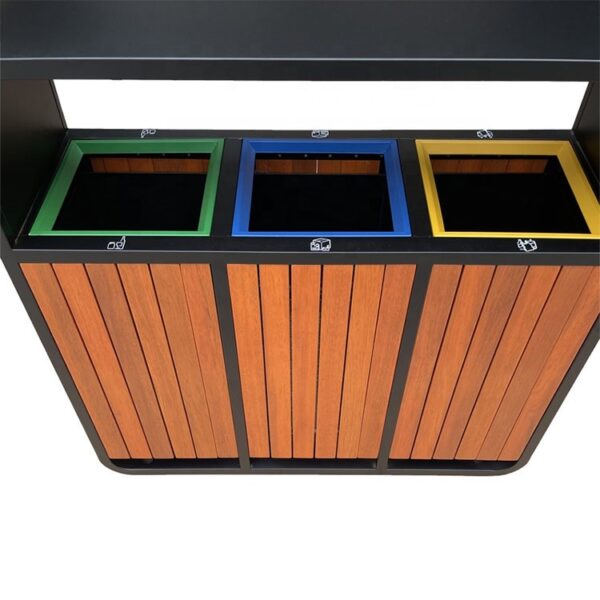
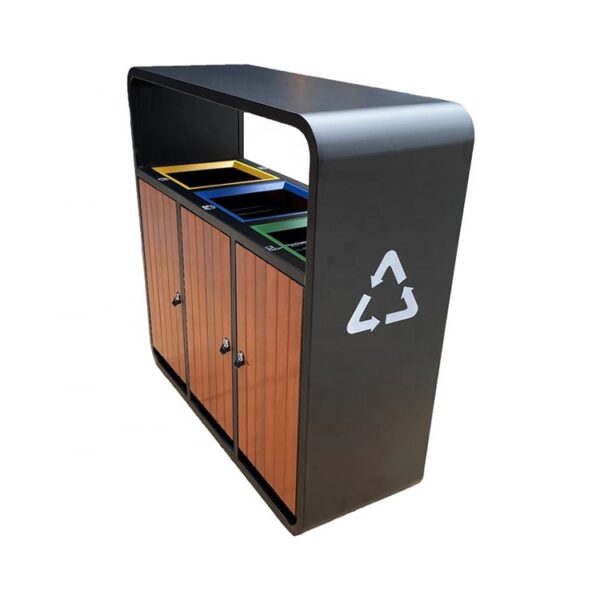
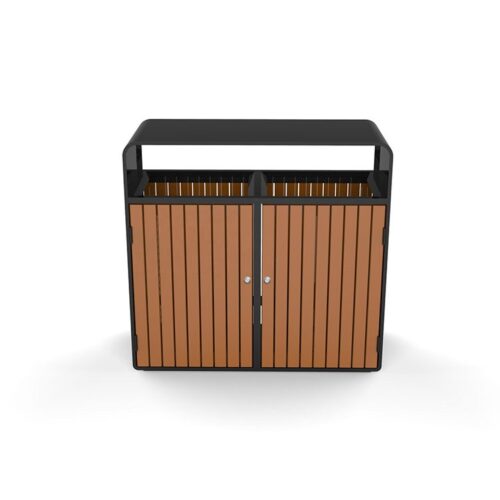
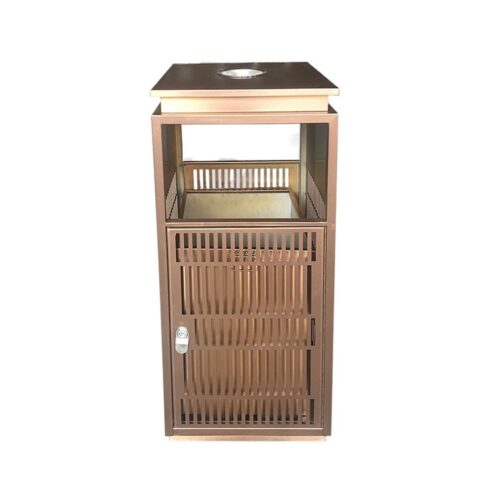
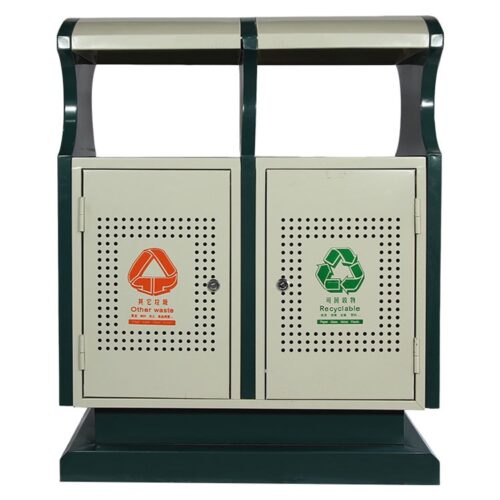
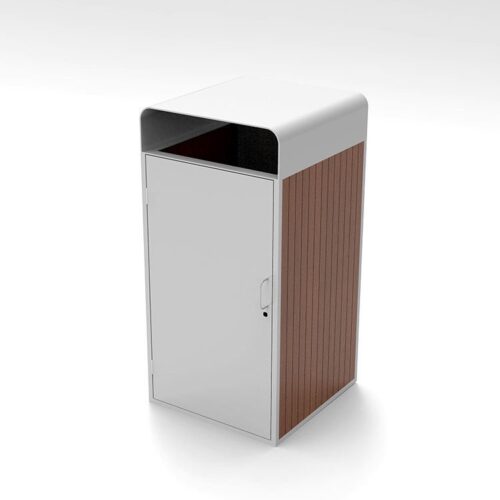
Along campus sidewalks and office-park paths, the outdoor receptacle keeps litter contained so crews spend less time on daily sweep-backs. At street corners and transit stops, a rigid, weather-resistant body helps withstand sun, rain, and bumps so maintenance teams can reduce touch-up and replacement cycles. Near building entrances and gatehouse lanes, a wide, easy-aim opening guides disposables into the bin so staff can cut down on spill cleanups around thresholds. In plazas and pedestrian corridors, the removable inner liner simplifies bag changes so one worker can empty and reset the unit quickly with minimal contact. On municipal routes and campus grounds, smooth internal surfaces rinse clean so wash-downs finish faster and odors are easier to control. In high-traffic sidewalks and mixed-use streets, optional anchoring points can be specified so assets stay in place and site audits take less time. For public-facing locations with vandalism risk, optional anti-tamper fasteners can be added so access is controlled and repair calls are reduced. Across parks, streetscapes, and commercial entrances, the maintenance-friendly layout supports routine inspection so teams can standardize service intervals and keep public areas presentable.