Share your requirements and target market. We’ll suggest the right configuration, sampling path, and production plan.
During business hours, We can usually provide a preliminary quote within two hours.
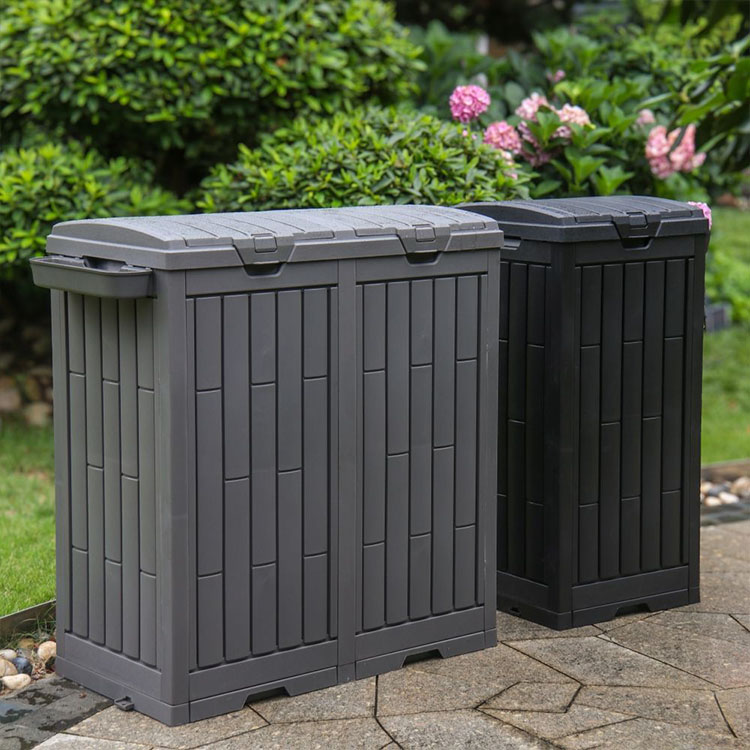
: workflow-based setups to improve efficiency and keep corridors tidy
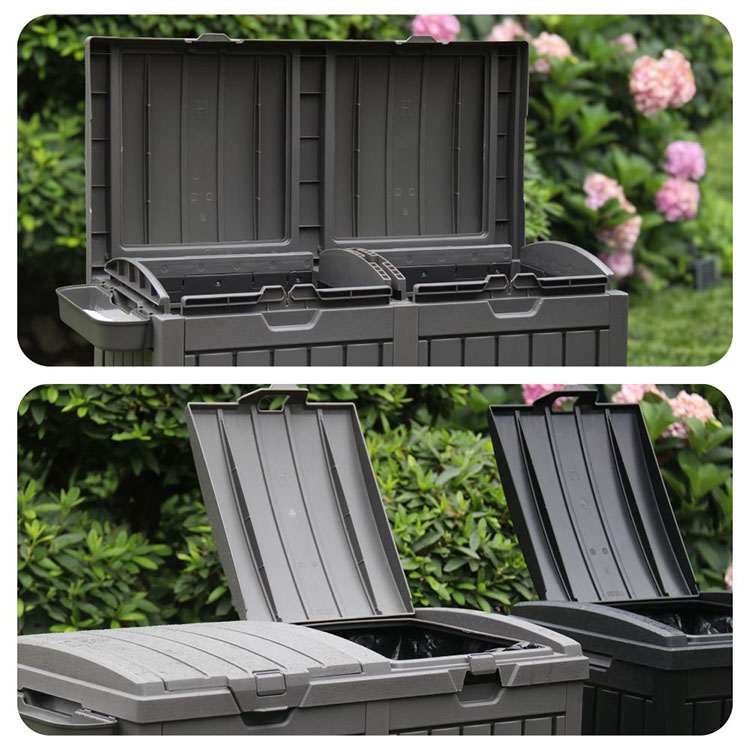
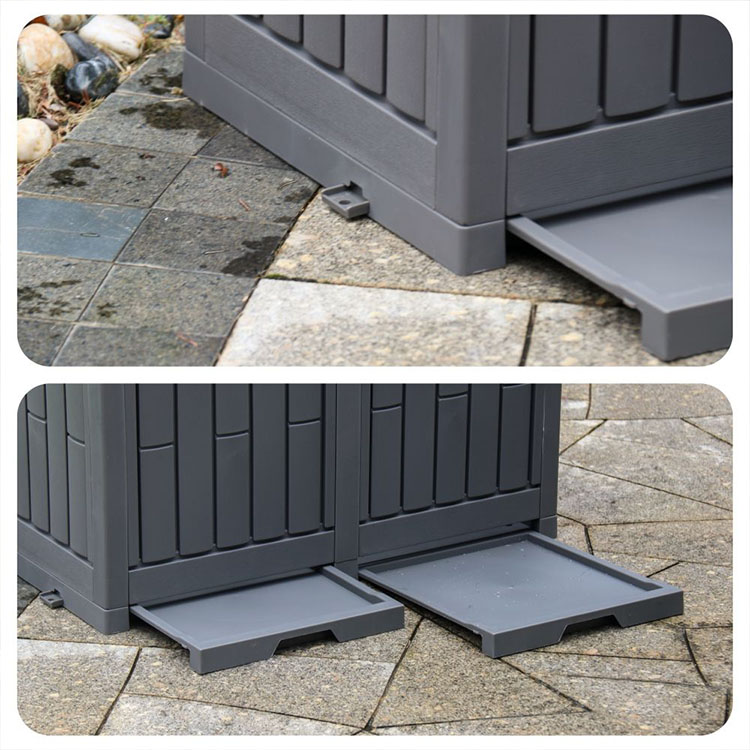
: easier bag changes and maintenance, built for daily facility use
: 1–3 stream options with clear icon/label systems to reduce contamination
: materials, finishes, branding & packaging locked for consistent reorders
Your info is used only for quoting and communication.
How to Reduce Contamination at Multi-Stream Recycling Stations in Commercial Buildings
Most “multi-stream” stations fail because the building designed for looks, not behavior. Here’s how I’d troubleshoot the mess—using real contamination data, not wishful thinking.
Contamination is optional.
If your multi-stream recycling station is “always contaminated,” that’s not a mystery of human nature—it’s the predictable outcome of vague labels, wide-open lids, bad placement, and a back-of-house process that quietly recombines streams when nobody’s watching. So what are we actually fixing here?
Here’s the hard truth I’ve learned the boring way: people don’t read, janitors get blamed for upstream behavior they didn’t cause, and the “recycling program” often collapses at the loading dock because the contract punishes contamination but the building never engineered for it.
Table of Contents
The baseline nobody wants to say out loud
A lot of facilities talk like contamination is a rounding error. It isn’t.
In a June 2024 characterization study, the Washington State Department of Ecology found that “Other Materials that do not belong in the recycling stream” were about 10.3% of inbound recycling statewide—and commercial inbound recycling was estimated at ~170,200 tons, with 12.8% categorized as material that doesn’t belong. That’s not “one bad tenant.” That’s the system.
And yes, plastics make it worse. A July 2023 report notes “just 9% of plastics are recycled,” while also pointing out why the stream gets messy: polymer types, additives, and mixed materials don’t behave like a clean spreadsheet. That’s upstream product design colliding with your downstairs bins.
Troubleshooting mindset: treat contamination like a defect, not a vibe
When I diagnose waste stream contamination in offices, I don’t start with posters. I start with failure modes.
Failure mode 1: “Multi-stream” is real, but the openings are generic
If every opening is a big rectangle, you’re begging for wish-cycling.
Your highest ROI move is physical constraint: match openings to the stream (slot for paper, round for bottles/cans, flap for landfill), then back it up with icon-first labels. The moment you force a user to hesitate for half a second, you cut casual contamination.
Add one “why”: “Food residue turns paper into trash.”
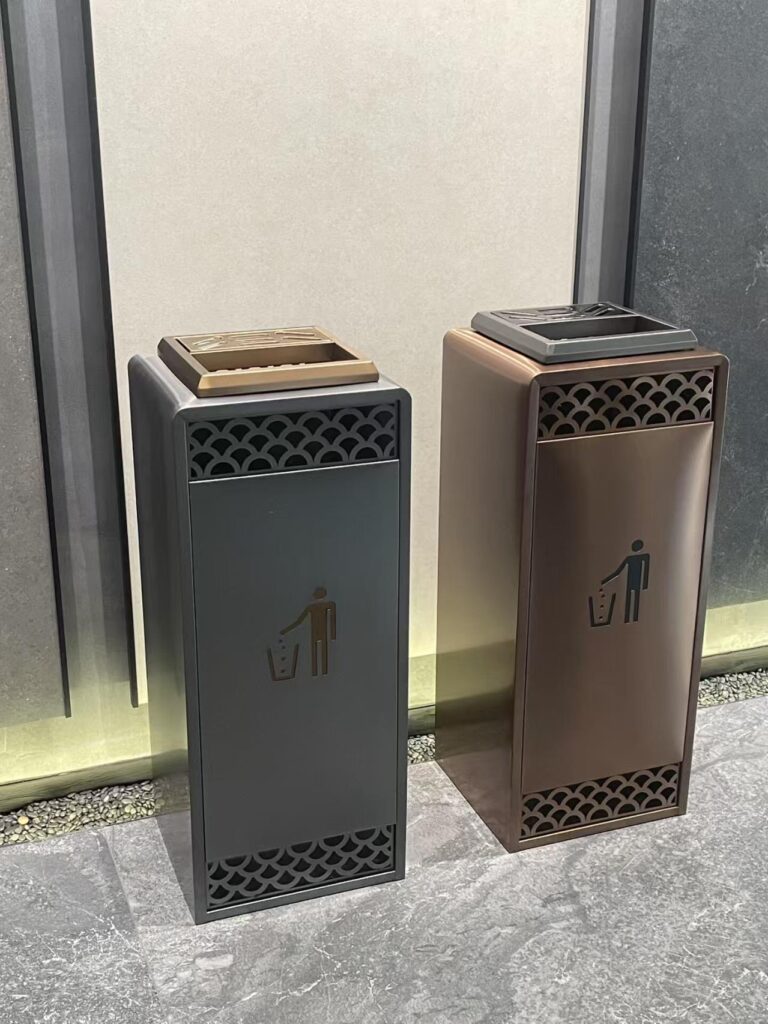
If you’re rolling out upgrades, I’d look at clear icon/label systems and lock the graphic system so it doesn’t drift into chaos six months later. A good starting reference point is a station built around clear labeling panels: commercial sorting station with clear labels.
Failure mode 3: Your station placement is training people to contaminate
Three words: friction beats lectures.
If landfill is closer than recycling, people will contaminate recycling less… by using landfill more. If recycling is closer than landfill, contamination rises. So you engineer the path:
Put the station where waste happens (break rooms, copy rooms, loading docks, conference areas).
Keep streams physically together. Separate bins = contamination magnets.
Remove “random solo bins” that don’t match the standard station.
Failure mode 4: Back-of-house “consolidation” is quietly undoing everything
This is the part people hate to admit.
If custodial routes dump multiple streams into one cart “to save steps,” your program is decorative. Fix it by redesigning the collection workflow:
Color-coded liners per stream.
Dedicated cart per stream (or partitioned cart).
A written rule: never combine streams “temporarily.”
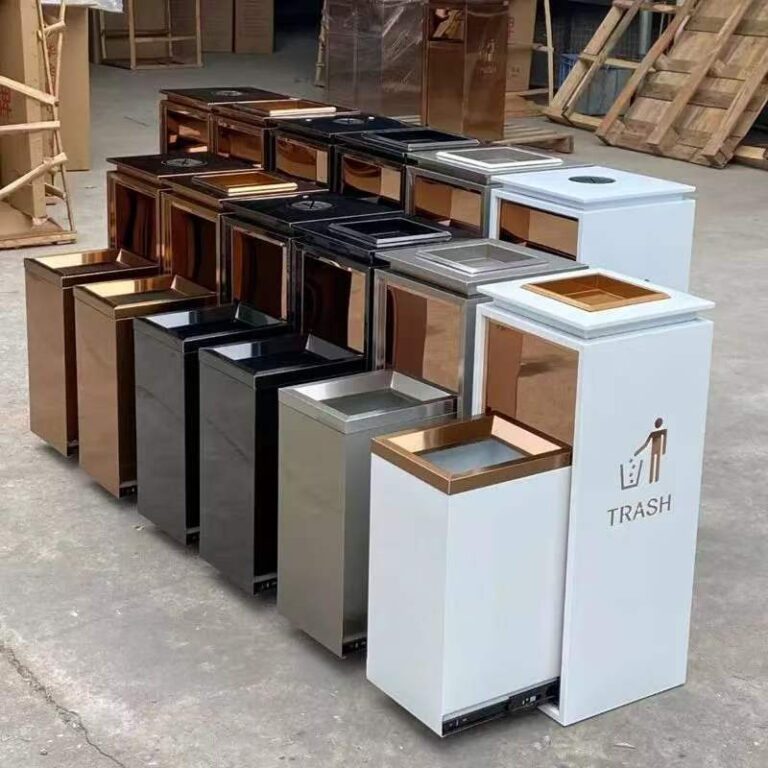
If you need consistent station layouts and servicing logic across multiple properties, this is where you stop buying random bins and start standardizing via classification stations for multi-stream sorting and documented servicing steps.
Failure mode 5: Your hauling agreement has teeth, but your building doesn’t
Some haulers will charge contamination fees or reclassify loads as trash when contamination crosses a threshold (the number varies; read your contract). Your job is to build a station system that can survive that contract.
Two practical moves:
Ask for a monthly contamination note (even if it’s a basic “high / medium / low”).
Do a quarterly mini-waste-audit: pick two floors + one break room + the loading dock.
If you’re ready to redesign the setup (branding, finishes, stream configuration), do it intentionally through custom recycling projects for branded rollouts so you don’t end up with a Franken-station that nobody recognizes.
Failure mode 6: You’re trying to do “three-stream” everywhere
Sometimes two streams wins.
If your market can’t take glass, or your tenants can’t handle organics separation yet, simplify:
Start with landfill + mixed recycling, and get contamination down first.
Add organics later where it’s operationally controlled (cafeterias, managed kitchens).
A “clean two-stream” often beats a “dirty three-stream.” That’s why I like the idea of deploying two-stream stations in public-facing areas and reserving higher-complexity setups for staff-controlled spaces. Example: 2-stream sorting station for lobbies and offices.
Failure mode 7: You’re guessing instead of measuring
If you can’t answer “what contaminant is #1,” you’re not troubleshooting—you’re hoping.
Common top offenders in commercial buildings:
Food/liquids (especially coffee + sauces)
Plastic film (“tanglers” in MRFs)
Unlabeled compostables
Batteries (serious safety risk)
PPE and “mystery plastic”
Now measure it. Ten minutes per station, once a week, for one month. You’ll know exactly where to intervene.
What to change first (and what to ignore for now)
If you want the fastest path to reduce recycling contamination, here’s my priority order:
Openings (physical constraint)
Icon-first labels (yes/no lists)
Station placement (remove “solo bins”)
Custodial workflow (stop recombining streams)
Hauler feedback loop (get contamination notes)
Only then: broader “education”
Quick comparison table: interventions that actually move the needle
Intervention
Best for
Typical failure it fixes
Effort level
Expected impact on contamination
Restricted, purpose-shaped openings
High-traffic public areas
“Anything fits anywhere” dumping
Medium
High
Standardized station layout across floors
Multi-tenant offices
“New puzzle every floor” confusion
Medium
Medium–High
High-contrast, icon-first bin labels
Mixed audiences
“I didn’t read that paragraph”
Low
Medium
Remove/replace solo bins + co-locate streams
Break rooms, copy rooms
“Landfill here, recycling over there”
Medium
Medium–High
Custodial collection redesign (no stream mixing)
Back-of-house
“Sorted upstairs, mixed downstairs”
High
High
Smart sorting / guided stations
Problem hotspots
Repeat contaminators
High
Medium–High
If you’re speccing hardware, I’d look at modular station families first, then decide whether you need “smart” features. That’s the logic behind browsing smart sorting systems only after you’ve fixed the basics.
FAQs
What is recycling contamination in commercial buildings?
Recycling contamination in commercial buildings is the presence of non-accepted materials—like food-soiled paper, plastic film, liquids, batteries, or trash—inside recycling streams, which reduces commodity value, increases residue, and can cause entire loads to be rejected or treated as disposal rather than recycling.
After that definition, here’s the operational reality: contamination is usually created at the bin opening (bad design) and cemented at the loading dock (bad workflow). Fix both or you’re just rearranging blame.
How do you prevent recycling contamination at multi-stream recycling stations?
Preventing recycling contamination at multi-stream recycling stations means designing the station so the “wrong” action is physically harder than the “right” action, using restricted openings, stream-specific labels, co-located bins, and a back-of-house process that keeps streams separate from floor to dock.
If you want a shortcut: lids + labels + placement. Training helps, but training without constraints fades fast.
What contamination rate is “normal” for commercial recycling?
A “normal” contamination rate for commercial recycling varies by region and what’s accepted locally, but real characterization work often finds a meaningful slice of inbound recycling as material that does not belong, with commercial streams frequently showing double-digit percentages depending on the program and collection conditions.
If you need a reality check, the June 2024 Washington study quantified “Other Materials that do not belong” at 12.8% for commercial inbound recycling in its analysis.
What should recycling station signage and bin labels include in offices?
Office recycling station signage should include fast, scannable “YES/NO” examples for each stream, icons larger than text, and one short contamination warning tied to the local program—because staff and visitors make decisions in seconds and often default to guessing when labels are vague or inconsistent.
Also: match the label to the lid opening. If the opening is generic, the label becomes an argument instead of a guide.
Why do businesses stop recycling when contamination happens?
Businesses stop recycling when contamination happens because the program turns into a cost center—extra pickups, rejected loads, staff frustration, and reputational risk—so recycling gets deprioritized unless the building makes correct sorting easy and repeatable.
That shows up in real survey work too: in the Pinellas County 2023 commercial survey, “contamination issues” appeared as a stated reason some respondents don’t recycle.
Conclusion
If you’re tired of playing whack-a-mole with waste stream contamination, standardize the station design and the servicing workflow at the same time. That’s the only combo I’ve seen hold up once the novelty wears off.
If you want help speccing multi-stream stations (openings, labels, modules, and rollout consistency), start with Facility Project Solutions and request pricing and samples.