Share your requirements and target market. We’ll suggest the right configuration, sampling path, and production plan.
During business hours, We can usually provide a preliminary quote within two hours.
: workflow-based setups to improve efficiency and keep corridors tidy
: easier bag changes and maintenance, built for daily facility use
: 1–3 stream options with clear icon/label systems to reduce contamination
: materials, finishes, branding & packaging locked for consistent reorders
Your info is used only for quoting and communication.
Campus & University Recycling Bin Placement: A Capacity and Convenience Framework
Campus recycling fails less from “bad students” and more from bad placement, bad pairing, and lazy capacity assumptions. This framework ties bin locations to real waste generation, service frequency, and compliance constraints.
Bins drive behavior. I keep seeing the same failure pattern in campus recycling bins: a facilities team buys a “nice” station, drops it where a lobby designer wants it, and then acts shocked when overflow spikes, contamination climbs, and custodial routes quietly double because the station is nowhere near the actual discard points. So why are we still pretending placement is “aesthetic”?
Here’s the hard truth I’m willing to say out loud: most university recycling bin placement plans are built backwards. They start with containers and end with behavior. The order should be reversed: start with behavior (where hands let go of stuff), then route logic (who services what, when), then capacity (how fast volume builds), then container selection.
I’m going to frame this as a troubleshooting lens, because that’s what campuses actually need.
Table of Contents
The capacity–convenience axis (what everyone forgets)
Convenience is not “near-ish.” It’s near enough that the user doesn’t take the lazy option. The North Carolina Department of Environmental Quality basically says the quiet part: people recycle more when bins are nearby, and twinning (pairing) trash and recycling reduces contamination because lone recycling bins get treated like trash.
Capacity is the math your team avoids because it forces uncomfortable conversations: “We don’t have staffing for that pickup frequency,” or “We’re running 10-gallon bins in a 300-seat lecture hall and calling it ‘engagement’.”
So the framework is two questions, repeated building-by-building:
Can a person dispose of items correctly with minimal friction?
Can operations service the system without overflow, pile-ons, or route chaos?
If you answer “no” to either one, your recycling station placement is cosmetic.
Evidence: campuses are already telling you what works (and what breaks)
Let’s get out of vibes and into numbers.
In FY 2023–24, North Carolina public colleges and universities reported 23,646 total tons generated, with 42% diverted through recycling or recovery. More relevant for placement: over 80% of reporting schools used paired (“twinned”) waste and recycling bins in some capacity, and over 90% had recycling bins in academic and office buildings. That’s not a trend. That’s institutional admission: pairing and coverage density are baseline, not “nice-to-have.”
At the University of Illinois Urbana-Champaign, a campus waste characterization update called out the thing procurement decks love to hide: 18% of recyclables were contaminated and unsalvageable, with liquids contributing contamination to 5% of items sorted. That’s a placement-and-system-design problem as much as it’s an education problem: liquid + open-top recycling next to beverage traffic = predictable failure.
And the University at Buffalo did a waste audit and published the operational mess in plain language: about 1.2 tons of garbage daily, and in the audit stream 24% of “recycling” should’ve been trash while 18% of trash should’ve been recycled. When streams are that crossed, your “recycling education” posters are basically confession notes.
One more that cuts through the politeness: a Xavier University report flat-out says separated containers push people to use the nearest bin “regardless of labeling,” driving contamination, while successful programs show equal numbers of recycling and trash containers paired side-by-side.
The framework, in practice: how I’d rebuild your placement plan
1) Map discard points like a skeptic, not like a brochure writer
I don’t start with floorplans. I start with hands.
Track where items leave hands in each building type:
Lecture halls: beverage and snack packaging spikes at entry/exit waves
Libraries: coffee cups, paper towels near restrooms, printer paper near labs/printers
Dining: organics + mixed packaging, heavy peak loads, high contamination risk
Residence halls: weekend surges, party waste, packaging mountains during move-in/out
Athletics/events: “burst waste” that overwhelms small bins in minutes
The NC report explicitly notes bins frequently placed in dining, athletic venues, pedestrian walkways, and events—because that’s where discard happens.
2) Twin by default (paired trash and recycling bins), and stop negotiating it
If your campus has standalone recycling bins, you’re basically paying for contamination.
Pairing is not a theory. It’s reported practice at scale (80%+ in the NC dataset) (北卡罗来纳州环境质量部) and it’s a repeated best-practice conclusion in campus audits.
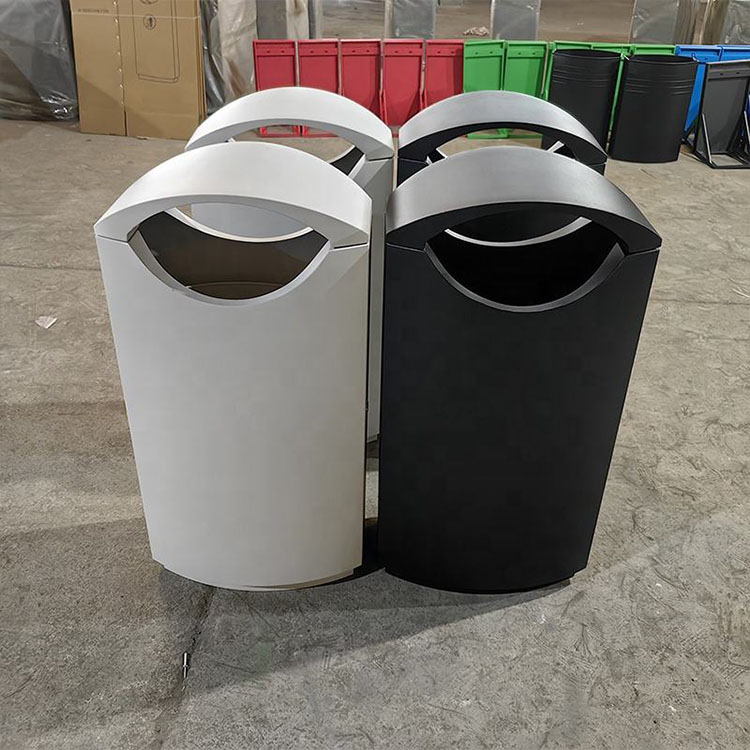
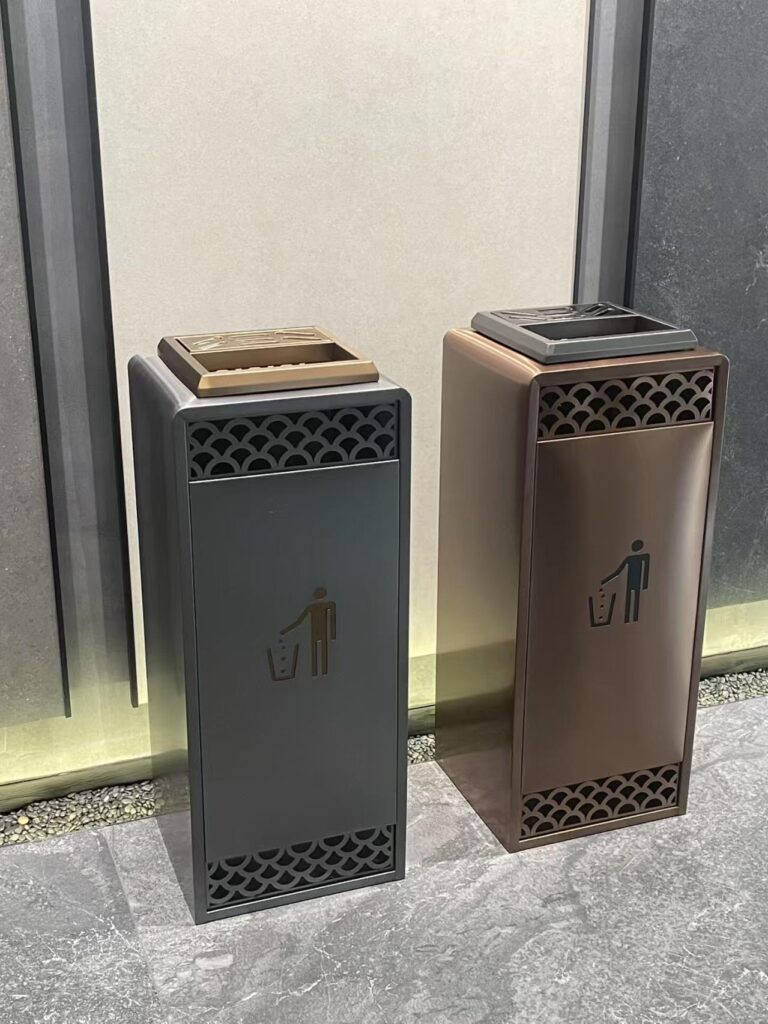
Operationally, pairing also simplifies training: one “decision moment,” two apertures, one sign frame. If you want to go further, move from ad-hoc bins to standardized recycling & sorting stations that lock icon language and stream configuration (1–3 stream). The Facility Project Solutions positions its recycling & sorting systems around exactly that standardization (icons, color bands, protected sign frames). (Facility Project Solutions)
3) Build capacity like an operator: volume × time × service reality
You don’t need perfect data. You need defensible assumptions.
A practical method:
Start with a building’s daily waste tonnage (even a rough proxy from custodial pickup logs)
Estimate stream split (trash / recycling / compost) from audits or spot checks
Decide service frequency (daily, 3×/week, event-only)
Convert weight to volume using a conservative bulk density assumption
Add a fill factor (bins don’t fill to 100% before people start pile-driving cups on top)
Use UIUC’s published baseline as the “wake-up number”: 5,000+ tons landfilled annually and 13% recyclable in the reviewed stream. If 13% of your stream is recyclable material and you under-size or under-place recycling, you’re manufacturing landfill tonnage.
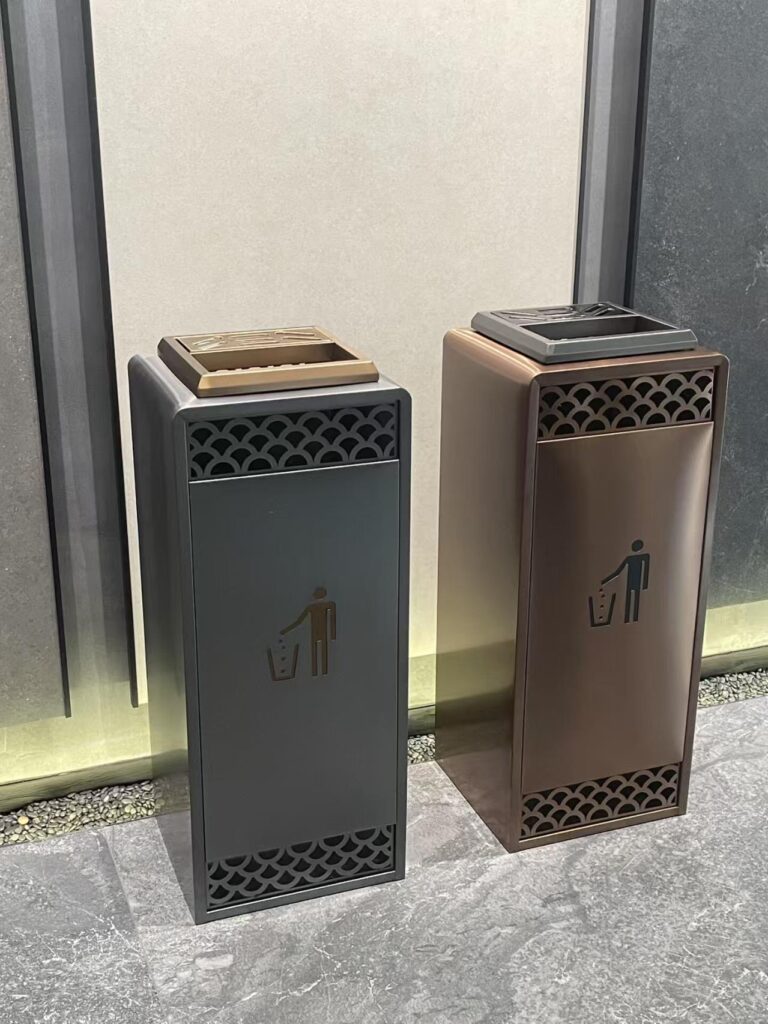
If you’re updating your station fleet, you’ll likely live in 1–3 stream units. For spec options and formats, classification stations for public areas are the category where aperture choice and signage consistency usually matter more than “premium finish.” (Facility Project Solutions)
4) Centralize where it reduces labor without killing convenience
Centralized stations can lower custodial touches. But they can also trigger “nearest bin syndrome” if you push them too far from real discard points.
I’m not anti-centralization. I’m anti-fantasy.
The Buffalo audit notes their consultant walk-through explicitly looked at bin locations, whether trash and recycling were paired, and signage. That’s the right posture: centralize, then validate with field observation.
A good compromise model:
Keep high-convenience micro-pairs at choke points (entries, elevator lobbies, vending, printer banks)
Use larger centralized stations in predictable congregation zones (main corridors, student centers)
Remove redundant bins that create route sprawl, but only after you confirm there’s no “dead zone” where trash wins by proximity
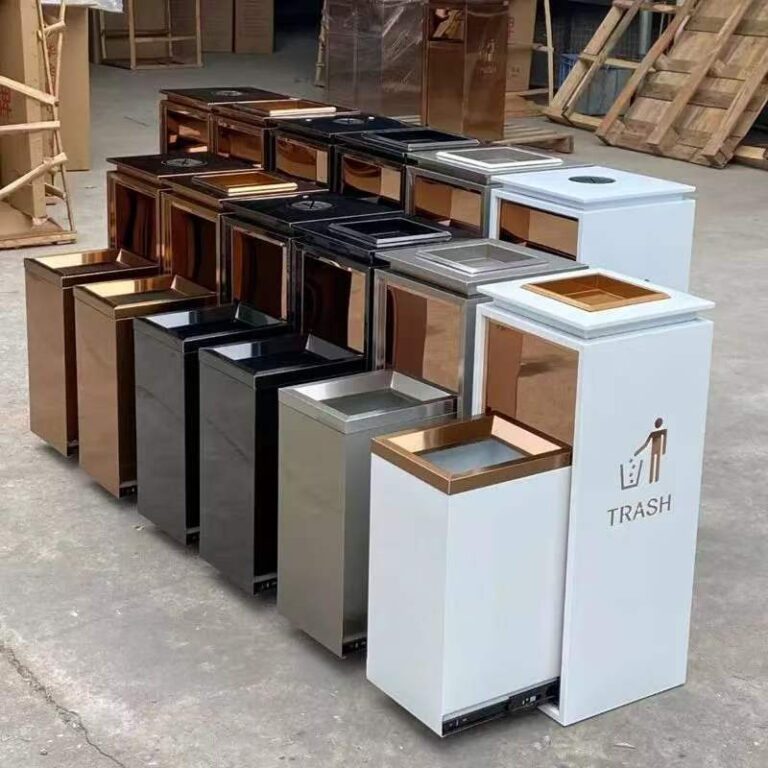
If you need custom stream configurations (say: landfill + bottles/cans + paper, or landfill + compost + recycling), that’s when a custom recycling project spec pays off—because the wrong aperture mix is how you end up with coffee cups in paper slots all semester. (Facility Project Solutions)
5) Treat signage and apertures as contamination controls, not decoration
People don’t read paragraphs. They read shapes.
If you have beverage traffic, your bin should make the correct action physically obvious: round holes for bottles/cans, slot for paper, restricted openings for landfill when possible. This is also why “open-top everything” is a campus contamination machine—UIUC literally flags liquids as a contamination driver.
6) Compliance isn’t optional: ADA and organics enforcement change placement
Here’s the part campuses mess up during “retrofits”: you can’t just park a station wherever you have a blank wall.
The U.S. Access Board summarizes accessible route rules clearly: 36 inches minimum continuous clear width (with limited reductions), and protruding object limits exist because hazards along circulation paths matter. Translation: your shiny station can become a lawsuit-shaped obstacle if it pinches a corridor.
Then there’s organics compliance pressure. CalRecycle says that for violations occurring after Jan 1, 2024, jurisdictions issue a Notice of Violation requiring compliance within 60 days, and penalties can follow if noncompliance continues. Even outside California, that enforcement posture is contagious: if dining has organics requirements, placement must support separation or you’ll fail inspections and your diversion claims.
And the macro picture is ugly: Reuters reported United Nations Environment Programme projections that global waste costs could hit $640 billion annually by mid-century, with waste generation surging absent action. Campuses don’t get to pretend they’re outside that math.
What “good” looks like: a placement comparison table
Placement model
What it optimizes
Where it breaks
Contamination risk
Operational note
Desk-side bins everywhere
User convenience (max)
Custodial labor explodes; users treat bins as “magic away”
Medium–High
Good for offices only if paired public stations exist nearby
Corridor micro-pairs (paired trash + recycling)
Correct choice at decision points
Under-sized bins overflow during peaks
Low–Medium
Best baseline for academic/office buildings; aligns with “twinning” best practice
Centralized multi-stream stations
Route efficiency + signage standardization
Users choose nearest trash if station is too far
Medium
Works when placed at real discard choke points and sized for surge loads
Pair with “what goes where” coaching early semester; organics enforcement pressure is rising
Event pop-up stations
Peak control
Volunteers absent → chaos
High (unless staffed)
Use restrictive apertures; service frequency must be aggressive
FAQs
What does “paired trash and recycling bins” mean in a campus setting?
Paired trash and recycling bins means placing landfill and recycling receptacles directly side-by-side at the same decision point, using consistent labeling and (ideally) matched form factors so users see disposal as a single choice moment, not a scavenger hunt, which reduces mis-sorting and cuts “nearest-bin” contamination. In practice, I treat pairing as the default condition for any public-facing bin on campus.
How do I calculate recycling bin capacity planning for academic buildings?
Recycling bin capacity planning is the process of matching container volume and pickup frequency to the building’s real generation rate (by stream), accounting for peak periods and the fact that bins “fail” before they’re full when openings clog, liquids leak, or overflow becomes visible, which drives people to dump trash into recycling. If you don’t have weights, start with custodial bag counts and adjust after a two-week audit.
Where is the best location for recycling containers in lecture halls and corridors?
The best location for recycling containers is at the highest-traffic discard points—entries, exits, elevator lobbies, vending zones, and corridor choke points—so correct disposal happens at the moment people are already stopping or changing direction, rather than forcing extra steps that push users toward the nearest trash can. If you’re guessing, run a two-day “follow the cups” walk and you’ll stop guessing fast.
How do I place recycling bins on a university campus without violating accessibility rules?
Placing recycling bins without violating accessibility rules means positioning receptacles so they do not reduce required accessible route clear widths, do not create protruding-object hazards, and do not block door swings or turning spaces, because circulation paths must maintain minimum clearances and safe edges for mobility and cane users. I’ve seen “green upgrades” quietly create corridor pinch points—don’t be that campus.
Why do campuses still see high contamination even with lots of recycling bins?
High contamination with lots of bins usually means the system is asking people to make hard choices under time pressure: unclear signage, wrong openings, unpaired placement, liquid-heavy traffic next to open recycling, and inconsistent station types across buildings, all of which causes cross-stream dumping and makes recyclables unsalvageable. More bins can actually increase contamination if they’re placed and spec’d badly.
Conclusion
If your university recycling bin placement plan is stuck in “we bought bins, now please behave,” flip it: pair by default, map discard points, and let capacity math tell the truth about service frequency.