Ne partez pas tout de suite - Obtenez votre recommandation de projet
Faites-nous part de vos exigences et de votre marché cible. Nous vous proposerons la bonne configuration, le bon chemin d'échantillonnage et le bon plan de production.
Pendant les heures de bureau, nous pouvons généralement fournir un devis préliminaire dans les deux heures.
les installations basées sur le flux de travail pour améliorer l'efficacité et garder les couloirs bien rangés
Le sac à dos est plus facile à changer et à entretenir, il est conçu pour une utilisation quotidienne dans l'établissement.
: 1-3 options de flux avec des systèmes d'icônes/étiquettes clairs pour réduire la contamination
: des matériaux, des finitions, une image de marque et un emballage verrouillés pour des commandes cohérentes
Vos informations ne sont utilisées qu'à des fins de devis et de communication.
Liste de contrôle standard pour la préparation d'un chariot d'entretien ménager : du linge aux produits d'entretien
Un chariot d'entretien est un poste de travail mobile, et non un placard de rangement sur roulettes. Cette liste de contrôle indique ce qu'il faut y charger, où le placer et ce que les responsables doivent vérifier avant chaque prise de service.
À 8 h 07, la première réclamation semble rarement grave. Une femme de ménage a besoin de plus de taies d’oreiller. Puis quelqu’un ne trouve pas les sacs poubelle adaptés. Vingt minutes plus tard, un responsable court après des recharges de shampoing tandis que trois chambres nettoyées attendent d’être validées dans le PMS.
C'est d'abord le chariot qui est tombé en panne.
Et bien que le problème immédiat semble être un mauvais approvisionnement, ce qui a en réalité échoué, c'est toute une chaîne de décisions concernant les niveaux de stock minimum, l'affectation des chambres, le contrôle des produits chimiques, la prévision des besoins en linge, l'ergonomie des chariots et la responsabilité du réapprovisionnement dans le local de rangement de l'étage.
À qui appartient cette chaîne ?
Je pense sincèrement que les hôtels donnent l'impression que la préparation des chariots d'entretien est bien plus simple qu'elle ne l'est en réalité. Ils appellent cela “ remplir le chariot ”, remettent à quelqu'un une liste de contrôle standard pour les chariots d'entretien et considèrent que le travail est terminé dès que les étagères semblent pleines.
« Plein » n'a aucun sens.
Un chariot d'entretien est un poste de travail mobile. Il transporte du linge propre, des produits chimiques, des produits d'accueil, des déchets, des outils et parfois plusieurs centaines de dollars de consommables dans les couloirs réservés aux clients pendant toute une prise de service. Si le chargement n'est pas adapté, le personnel en fait les frais : pas supplémentaires, mouvements inconfortables, efforts pour pousser le chariot et allers-retours incessants vers le local d'entretien.
Voici la triste vérité : un chariot de ménage surchargé ne prouve pas que l'équipe d'entretien soit bien préparée. En général, cela prouve simplement que personne n'a calculé la charge.
Ce que doit contenir un chariot d'entretien standard
Que faut-il mettre dans le chariot ? Suffisamment de matériel pour réaliser la composition prévue pour la pièce, plus une petite réserve prévue à cet effet — pas tout ce que le garde-manger de l'étage peut fournir.
Un chariot d'entretien standard doit contenir :
Linge de lit propre
Linge de salle de bains
Produits d'accueil
Produits en papier
Produits chimiques de nettoyage homologués
Outils à main
Chiffons en microfibre
Équipement de protection individuelle
Sacs poubelle
Sacs pour linge sale et déchets
Informations sur l'attribution des salles
Un panneau d'avertissement « Sol glissant »
Toute fiche d'inspection ou d'entretien spécifique à un bien immobilier
Voilà le principe. Les quantités varient.
Le nombre de serviettes peut varier. La logique de contrôle, elle, ne doit pas changer.
Commencez par attribuer les chambres, pas par ranger le linge de maison
Certains chariots sont chargés par habitude : dix draps par-ci, une pile de serviettes par-là, peut-être quelques taies d’oreiller supplémentaires fourrées dans le dernier recoin. Cette méthode semble rapide… jusqu’à ce que le circuit comprenne six chambres avec deux lits queen size et que le chariot ait été chargé pour des lits king size.
Utilisez la fiche de devoirs.
En ce qui concerne le linge de lit, la liste des fournitures d'entretien de l'hôtel peut comprendre :
Draps-housses ou draps de lit
Draps plats
Housses de couette
Taies d'oreiller
Protège-matelas
Housses de protection pour oreillers
Couvertures
Linge de lit pour lit d'appoint
Linge de lit pour canapé-lit
La formule de calcul est la suivante :
Supposons qu'un préposé dispose de 14 chambres « king ». Chaque chambre avec service complet nécessite un drap-housse et un drap plat. Le besoin de base est donc de 14 de chaque ; en prévoyant une marge de 10% pour le linge endommagé, les changements de lit imprévus ou les erreurs de statut des chambres, la quantité nécessaire s'élève à environ 16.
Pas 25.
Les stocks excédentaires semblent inoffensifs, car le linge en surplus est doux. Mais les quantités s'accumulent rapidement, les étagères sont encombrées, on ne voit plus rien, et le magasinier commence à retirer un paquet pour pouvoir en attraper un autre. Ce sont là des mouvements inutiles — du “ muda ”, si vous préférez employer le terme issu de la gestion allégée —, et cela se répète tout au long du service.
Le linge propre doit également rester propre. Rangez-le derrière une housse ou la porte d’un chariot, à l’écart des vaporisateurs, des chiffons humides, des produits d’entretien pour la salle de bains et des déchets des clients. Il n’est pas acceptable qu’une taie d’oreiller frotte contre le gâchette d’un produit d’entretien pour salle de bains qui fuit sous prétexte que “ le flacon était presque fermé ”.”
Presque tout est fermé. Super.
Le linge de salle de bains prend vite de la place dans le caddie
Les serviettes de bain prennent beaucoup de place. Les peignoirs, c'est encore pire.
Un chargement standard peut comprendre :
Serviettes de bain
Serviettes de main
Gants de toilette
Tapis de bain
Serviettes pour le visage
Peignoirs
Des serviettes de piscine ou de spa là où le parcours le nécessite
Plutôt que de créer un seul mur de linge de maison compressé, regroupez le linge de salle de bains en ensembles répétables par pièce ou en zones de rayonnages fixes. Si la norme de la marque prévoit deux serviettes de bain, deux essuie-mains, deux gants de toilette et un tapis de bain, tout le monde doit savoir à quoi ressemble un ensemble complet pour la salle de bains.
C'est une méthode de gestion visuelle très simple, mais elle est efficace. Les articles manquants sautent aux yeux avant même que le chariot ne quitte le cellier.
Et ne vous contentez pas de glisser discrètement des serviettes de spa dans le chariot d'une chambre d'hôtel “ au cas où ”. Il s'agit d'un flux opérationnel différent. La demande est différente.
Les espaces communs ont besoin de poubelles, pas d'un tas de déchets en vrac
Les petits articles entraînent des pertes étonnamment importantes, car ils sont difficiles à compter et s'abîment facilement. Un plateau rempli de pains de savon, de sachets de café, de bonnets de douche et de flacons d'après-shampoing peut sembler bien garni, mais personne ne peut dire s'il contient suffisamment d'ensembles complets pour les chambres.
Utilisez des bacs à compartiments pour :
Papier toilette
Mouchoirs en papier
Shampoing
Après-shampoing
Gel douche
Savon
Lotion pour le corps
Bonnet de douche
Sacs hygiéniques
Café et thé
Sucre et crème
Gobelets et couvercles
Sacs à linge
Blocs-notes et stylos
Sacs poubelle pour chambres d'hôtel
Définissez une quantité minimale et maximale pour chaque bac. Une carte kanban, une ligne de remplissage colorée ou un système à deux bacs s’avèrent plus utiles qu’un énième rappel plastifié demandant au personnel de “ veiller à ce que le chariot soit toujours bien approvisionné ”.”
Les hôtels qui utilisent des distributeurs de produits d'accueil en vrac ont une liste d'articles différente. Ils peuvent avoir besoin de cartouches de recharge, de scellés de sécurité, de clés pour les distributeurs, de numéros de lot, ainsi que d'un entonnoir propre ou d'un système de distribution fermé. Ils n'ont pas nécessairement besoin de 40 mini-flacons qui traînent par terre.
Un système différent. La même discipline.
| Étagère du milieu | Serviettes, tapis de bain, taies d’oreiller | Le linge le plus utilisé reste à portée de main | Entasser le linge | | Étagère du bas | Draps, housses de couette, fournitures emballées plus lourdes | Un centre de gravité bas améliore la stabilité | Placer de petits produits chimiques là où ils risquent de couler sur le linge | | Support latéral | Balai à franges, balai, plumeau, panneau d’avertissement, accessoire d’aspirateur | Maintient les outils longs en place pendant les déplacements | Outils dépassant dans les embrasures de porte | | Sac à linge | Linge utilisé uniquement | Sépare les textiles contaminés du linge propre | Remplir le sac à linge de déchets | | Sac poubelle | Déchets des chambres uniquement, sous réserve de la politique de l’hôtel | Permet de garder les déchets hors du compartiment de rangement propre | Laisser les sacs traîner ou déborder |
Mais il y a une mise en garde. Les flacons de produits chimiques lourds ne doivent pas être simplement enterrés à côté de draps propres sous prétexte qu’ils se trouvent tous les deux dans la partie basse du chariot. Les produits chimiques doivent être placés dans un compartiment vertical et étanche, avec les pulvérisateurs bien fermés et les étiquettes tournées vers l’extérieur.
Un centre de gravité bas, c'est important. Mais la ségrégation chimique l'est encore plus.
Produits chimiques de nettoyage : le chariot n'est pas une paillasse de laboratoire
Que contient cette bouteille bleue sans étiquette ?
Si la réponse est “ du nettoyant pour vitres, sans doute ”, le chariot doit s'arrêter immédiatement. Retirez le flacon, identifiez le produit, étiquetez-le correctement ou éliminez-le conformément à la procédure en vigueur dans l'établissement concernant les produits chimiques.
Pas de devinettes.
Un chariot d'entretien classique peut contenir :
Nettoyant multi-usages au pH neutre
Nettoyant pour vitres
Nettoyant pour salle de bains
Nettoyant pour cuvette de WC
Désinfectant homologué par l'EPA lorsque cela est requis
Détartrant pour surfaces homologuées
Traitement des taches sur la moquette
Nettoyant pour acier inoxydable
Produit anti-odeurs
C'est là que le jargon du métier peut s'avérer dangereux. Des expressions telles que “ jus rouge ”, “ spray bleu ” ou “ le truc fort ” peuvent avoir du sens pour une équipe expérimentée travaillant à un étage donné, mais ces surnoms ne veulent rien dire pour un nouvel employé, un intérimaire, un chef d'équipe de remplacement ou un inspecteur de sécurité.
Utilisez le nom du produit.
Hypochlorite de sodium —NaOCl, le principe actif présent dans de nombreux produits à base d'eau de Javel, peut dégager du chlore gazeux lorsqu'il est mélangé à des acides. Le mélange d'eau de Javel avec un produit contenant de l'ammoniac peut entraîner la formation de chloramines irritantes. Les désinfectants à base d'ammonium quaternaire, généralement appelés “ quats ”, doivent également être utilisés selon les concentrations et les temps de contact sur la surface humide spécifiés.
Un simple coup de chiffon ne signifie pas forcément que l'on a désinfecté. Parfois, cela ne fait que rendre la surface humide et donner un faux sentiment de sécurité.
Chaque flacon pulvérisateur secondaire doit comporter les indications suivantes :
Nom du produit
Dilution d'utilisation correcte
Informations obligatoires sur les dangers
Date de préparation ou de recharge, le cas échéant
Date d'expiration, le cas échéant
Identification du fournisseur ou du système de distribution
Une étiquette claire et compréhensible pour les employés
Et oui, les étiquettes finissent par se mouiller. Remplacez-les.
Outils, chiffons et EPI : de petits objets, un flux de travail important
Pourquoi les agents choisissent-ils le mauvais chiffon ? Parfois, la formation laisse à désirer. Mais le plus souvent, le chiffon adéquat ne se trouve pas là où la main s'attend à le trouver.
Cette distinction est importante.
Une liste de contrôle pratique pour les chariots d'entretien devrait inclure les éléments suivants :
Chiffons en microfibre à code couleur
Éponges anti-rayures
Brosse de toilettes dans un support fermé
Brosse pour les détails ou pour les joints
Raclette à vitre
Plumeau télescopique
Pelle à poussière et balayette
Système de nettoyage à serpillière
Aspirateur et accessoires homologués
Panneau « Sol glissant »
Gants jetables
Gants résistants aux produits chimiques lorsque la fiche de données de sécurité (FDS) l'exige
Protection oculaire contre les risques d'éclaboussures
Produit désinfectant pour les mains
Le code couleur est utile, mais seulement si l'ensemble du logement suit le même système. Sinon, le rouge désignera les serviettes de toilettes à un étage et les serviettes de salle de bains en général à un autre, ce qui est pire que de ne pas avoir de système du tout.
Couleur
Zone recommandée
Règle de contrôle
Rouge
Toilettes et surfaces très exposées à la contamination dans la salle de bains
Ne jamais utiliser en dehors de la zone des toilettes
Jaune
Autres surfaces de la salle de bains
À ne pas mélanger avec le linge de chambre
Bleu
Verre, miroirs et surfaces de chambre à coucher présentant peu de risques
Remplacer lorsqu'il est visiblement sale
Vert
Zones de contact avec les aliments ou d'accueil
Respecter la politique d'hygiène de l'établissement
Ce ne sont pas les couleurs en elles-mêmes qui sont sacrées, mais la cohérence.
C’est pourquoi cela m’agace quand quelqu’un considère les roulettes d’un chariot comme un simple détail d’entretien. Une roulette encrassée de cheveux, un roulement grippé ou une roue usée augmente la force de poussée à chaque trajet dans les couloirs. Ajoutez à cela une moquette épaisse, des interstices au niveau des ascenseurs, une étagère à linge surchargée et une poignée placée trop haut : ce “ petit problème de chariot ” devient alors un véritable fardeau ergonomique pendant toute la durée du service.
Les employés le ressentent. La direction, souvent, non.
Gestion des déchets sans polluer la zone propre
Les sacs poubelle doivent être choisis en fonction de la taille de la poubelle installée, et non achetés en tant que sacs « universels » qu'il faudrait ensuite étirer — ou plier — pour les adapter tant bien que mal.
Le chariot peut nécessiter des sacs de protection pour :
Poubelles de salle de bains
Corbeilles de chambre ou de bureau
Conteneurs de recyclage
Unités de traitement des déchets sanitaires
Poubelles dans les lieux publics
Points de collecte en coulisses
Ces cas d'utilisation ne sont pas interchangeables.
Dans les chambres d'hôtel ou les bureaux équipés de poubelles sans contact, le personnel doit vérifier l'état des piles, la réactivité du capteur, le positionnement du sac poubelle et le jeu du couvercle avant de déclarer qu'une poubelle à capteur intelligent pour les bureaux est défectueux. Une doublure qui recouvre le boîtier du capteur peut perturber son fonctionnement. Il en va de même pour les piles déchargées. Évident ? Oui. Et pourtant, cela a échappé à l'attention.
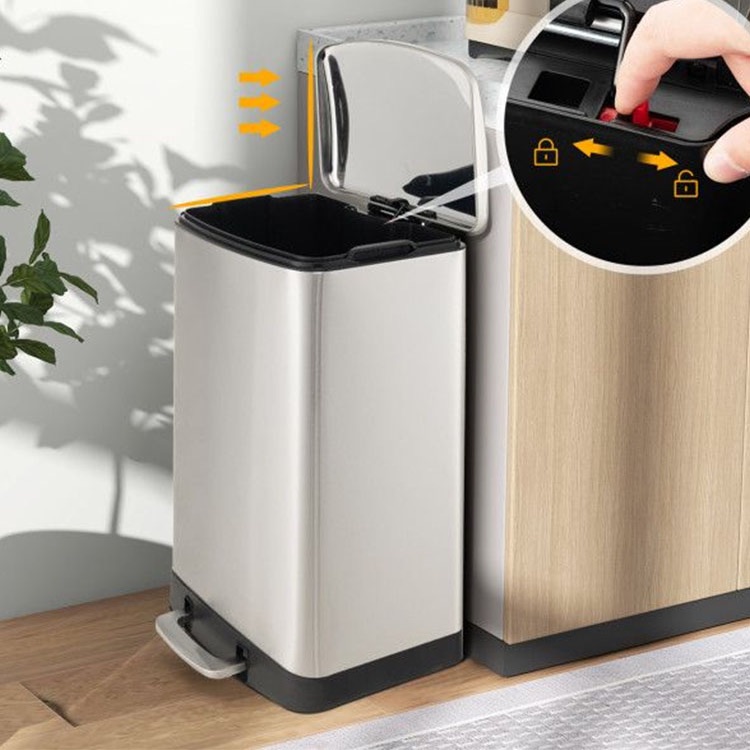
Lorsqu'un appareil nécessite une mise en marche sans intervention manuelle et ne comporte aucun composant électronique, un poubelle de bureau à pédale en acier inoxydable offre une alternative mécanique. Mais la course de la pédale, le retour du couvercle, la tension des charnières et le débordement du sac doivent figurer sur la liste de contrôle. Une poubelle à pédale dont le couvercle reste à demi-ouvert n’est pas synonyme d’hygiène « mains libres » ; c’est une poubelle défectueuse habillée d’acier inoxydable.
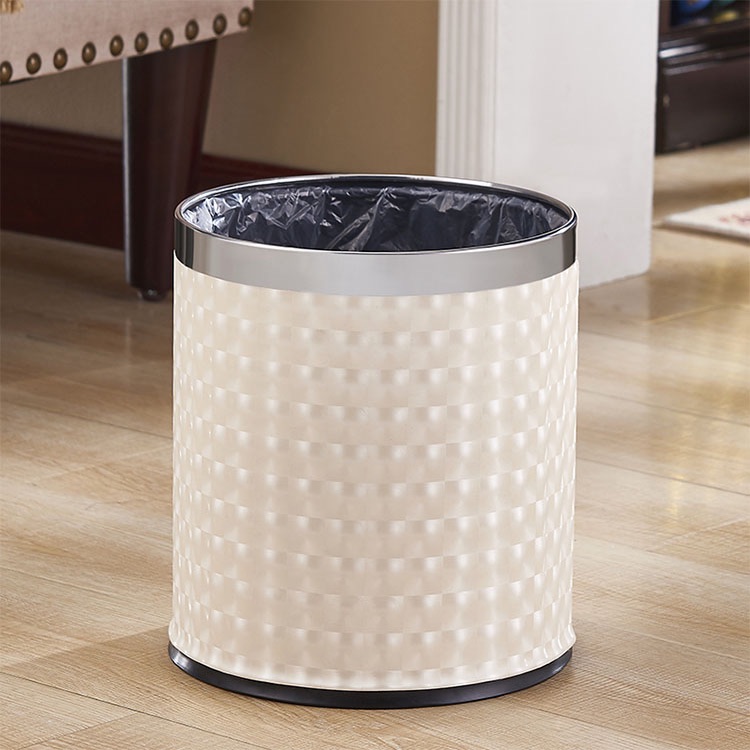
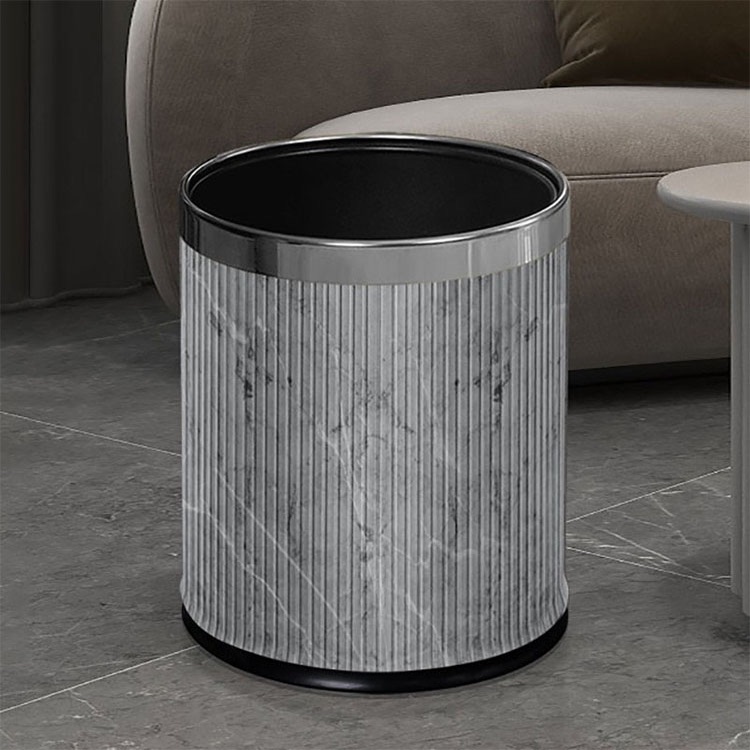
Et les déchets des espaces communs doivent suivre un parcours spécifique. Les femmes de ménage ne doivent pas entasser les déchets du hall d'entrée dans un chariot de chambre déjà plein sous prétexte que cela leur évite un aller-retour. A poubelle d'intérieur résistante au feu pour hall d'entrée peut s'inscrire dans le cadre du plan global de sécurité incendie et de gestion des déchets de l'immeuble ; il convient donc de définir séparément la fréquence des collectes et le transfert des déchets.
Ne déposez pas de déchets dans le compartiment propre.
Il n'y a aucune exception à cette règle.
Liste de contrôle du chariot d'entretien avant la prise de service
Une case à cocher ne suffit pas à valider une inspection. J’ai vu suffisamment de listes de contrôle opérationnelles — dans tous les secteurs — pour me montrer sceptique face à un document papier qui atteste de la conformité sans exiger de personne de toucher, de tester ou de compter quoi que ce soit.
Veillez donc à ce que les chèques soient émis sur papier.
État du panier
Les roues tournent librement, sans fil, cheveu ni débris
Les freins s'enclenchent correctement
Les poignées sont bien fixées
Les étagères et les plateaux sont propres et secs
Les portes, les couvercles et les serrures fonctionnent
Les pare-chocs sont intacts
Il n'y a ni arêtes vives ni fixations apparentes
Les sacs à linge et les sacs poubelles sont vides et correctement fixés
Poussez le chariot chargé sur plusieurs mètres. Faites-le tourner. Arrêtez-le. Testez le frein.
Une roue peut tourner parfaitement lorsqu'elle n'est pas chargée, mais se bloquer dès que plusieurs étagères de linge sont posées dessus.
Gestion des stocks
Le linge de maison correspond aux types de chambres attribués
Les serviettes sont conformes aux normes de service
Les équipements correspondent à la quantité prévue pour la journée
Les produits en papier sont secs et en bon état
Les sacs poubelle sont adaptés aux dimensions des poubelles installées
Aucun produit chimique périmé, présentant une fuite ou non étiqueté n'est chargé
Les chiffons sont propres et triés par couleur
Les EPI sont disponibles dans les tailles adaptées
L'aspirateur, la serpillière et le panneau d'avertissement sont en état de marche
Ne vous contentez pas de compter les pièces. Vérifiez leur état.
Une boîte de mouchoirs écrasée, une taie d’oreiller tachée, un vaporisateur fêlé ou un gant de deux tailles trop grand peuvent techniquement se trouver sur le chariot, mais ils ne constituent pas un stock utilisable. C’est là toute la différence entre le stock théorique et le stock prêt à l’emploi.
Vérification finale de sécurité
Les matériaux propres et ceux qui ont déjà été utilisés sont séparés dans des zones distinctes
Les articles volumineux sont rangés en bas sans gêner le passage
Les gâchettes des pulvérisateurs sont orientées vers l'intérieur
Les bouchons des flacons et les témoins de dilution sont fermés
Les outils longs sont maintenus en place
Aucun élément ne dépasse du châssis de la remorque
Le préposé a une bonne visibilité tout autour du chariot
La charge totale se déplace sans qu'il soit nécessaire d'exercer une force de poussée excessive
Cependant, aucune organisation des chariots ne peut compenser un quota de chambres irréalisable. En septembre 2024, PBS a rapporté que certains agents d'entretien d'hôtels nettoyaient jusqu'à 17 chambres par service lors de conflits liés aux salaires et aux conditions de travail. Le rapport mentionnait également des prévisions de chiffre d'affaires par chambre disponible aux États-Unis qui devraient atteindre un niveau record de $101.84. Ce contraste dérangeant apparaît dans le Reportage de PBS sur les conditions de travail du personnel d'entretien dans les hôtels.
Un chariot correctement chargé permet de réduire les allers-retours au garde-manger et les mouvements inutiles. Il ne peut toutefois pas transformer un manque chronique de personnel en un modèle de fonctionnement sûr.
Soyons honnêtes.
Comment vérifier la configuration après le service
Les produits qui n'ont pas été touchés en disent long. Tout comme les rayons vides.
Pendant 14 jours, suivez :
Articles retournés non utilisés
Courses d'urgence au supermarché
Recharges de produits chimiques
Pénurie de linge de maison
Chambres nettoyées par chargement de chariot
Rapports d'entretien relatifs aux chariots
Incidents liés à des doublures de taille inadaptée
Demandes de « Reclean »
Nombre de minutes consacrées au réapprovisionnement
Signalements de situations de malaise par les salariés
Imaginons que huit serviettes de bain propres soient rapportées chaque après-midi. Cela ne signifie pas pour autant que le personnel ait commis une erreur ; cela indique probablement que le niveau de stock de référence est trop élevé. Si le nettoyant pour vitres vient à manquer avant le déjeuner, vérifiez le poste de dilution, la capacité des flacons, la méthode d'application, le dosage dans les chambres et la présence éventuelle de fuites.
Ne concluez pas tout de suite que “ le personnel en utilise trop ”.”
Et demandez aux employés où le chariot leur pose des problèmes. Ils savent quelle roue grince, quel bac se coince, quelle étagère nécessite les deux mains et quel accessoire latéral accroche dans les encadrements de porte. Un tableur ne vous révélera pas tout cela.
L'audit de fin de service doit répondre à trois questions :
Qu'est-ce qui est à court ?
Quels ont été les résultats ?
Qu'est-ce qui a provoqué ce mouvement supplémentaire ?
C'est suffisant pour commencer. Les tableaux de bord sophistiqués peuvent attendre.
FAQ
En quoi consiste la configuration standard d'un chariot d'entretien ménager ?
Un chariot d'entretien standard constitue un stock mobile et bien organisé de linge propre, de serviettes, de produits d'accueil, de produits en papier, de produits chimiques de nettoyage, d'outils, d'équipements de protection et de matériel de collecte des déchets, classés en fonction de leur poids, de leur fréquence d'utilisation, des mesures de contrôle de la contamination, ainsi que du nombre et du type de chambres attribuées à l'agent d'entretien.
Il ne s'agit pas d'un décompte universel des articles. Chaque établissement doit calculer les quantités en fonction du type de chambre, du taux d'occupation, du niveau de service, des normes en matière de linge et de la taille des services.
Comment bien remplir un chariot d'entretien ?
Pour charger correctement un chariot d'entretien, il faut calculer les quantités de fournitures nécessaires en fonction des chambres attribuées, placer les objets lourds en bas du chariot, garder les produits fréquemment utilisés à portée de main, maintenir les produits chimiques en position verticale, séparer le linge propre des déchets et des textiles usagés, attacher les outils longs et effectuer une inspection de sécurité consignée par écrit avant que le chariot n'emprunte les couloirs réservés aux clients.
Ensuite, faites le point sur le stock à la fin du service. Si personne ne note les manquants et les retours, le chariot de demain sera préparé en se basant, comme d'habitude, sur des estimations approximatives.
Quels produits d'entretien doit-on trouver dans un chariot d'entretien d'hôtel ?
Les produits d'entretien destinés au chariot de ménage d'un hôtel sont les produits chimiques et les outils approuvés par l'établissement et correctement étiquetés, nécessaires au nettoyage des surfaces attribuées. Ils comprennent généralement un nettoyant neutre, un nettoyant pour vitres, un nettoyant pour salle de bains, un nettoyant pour cuvette de WC, un désinfectant, des chiffons en microfibre, des brosses, des éponges, des gants, une serpillière, un aspirateur et un panneau d'avertissement « sol mouillé ».
La composition exacte des produits chimiques utilisés dépend des surfaces de la pièce, du système fourni par le fournisseur, de la politique de prévention des infections et des consignes figurant sur l'étiquette. Utiliser davantage de produits chimiques ne garantit pas automatiquement une pièce plus propre.
Quelle est la meilleure façon d'organiser un chariot d'entretien d'hôtel ?
La meilleure façon d'organiser un chariot d'entretien d'hôtel consiste à placer les articles les plus fréquemment utilisés entre la hauteur de la taille et celle des épaules, les produits lourds et scellés sur les étagères inférieures, les produits d'accueil dans les plateaux supérieurs compartimentés, les outils dans des rangements extérieurs et le linge propre dans des compartiments protégés, tout en prévoyant des sacs séparés pour le linge usagé et les déchets.
Mais testez la configuration avec un chariot chargé, et non avec un modèle d'exposition vide. La résistance de la moquette, les seuils d'ascenseur, le rayon de braquage et l'état des roues peuvent modifier ce qui semble faisable.
À quelle fréquence faut-il remplir la liste de contrôle du chariot d'entretien ?
Une liste de contrôle pour les chariots d'entretien consiste en une inspection documentée effectuée avant chaque service, suivie d'un bref bilan de l'état et de l'inventaire à la fin du service ; les contrôles hebdomadaires doivent porter sur les roues, les freins, les pare-chocs, les fixations, les sacs, les poignées, les étiquettes et les besoins en nettoyage en profondeur, tandis que tout défaut affectant la sécurité de déplacement ou la maîtrise des produits chimiques nécessite le retrait immédiat du chariot du service.
Et le responsable devrait assister de temps en temps à l'inspection. Sinon, la liste de contrôle risque de devenir une simple série de cases à cocher, remplie à 16 h 55.
Transformez le chariot en poste de travail contrôlé
Commencez par un étage.
Remplissez un chariot d'entretien en fonction d'une affectation réelle de chambres, pesez ou répertoriez le stock, parcourez l'itinéraire réel dans les couloirs, comptez chaque article rapporté au local d'entretien et notez ceux qui reviennent intacts. Demandez ensuite à la personne qui l'a utilisé à quel moment la procédure l'a ralentie.
Écoute bien.
L'objectif n'est pas d'avoir un chariot plus esthétique. Il s'agit plutôt de réduire les ruptures de stock, les mouvements maladroits, la contamination croisée, l'effort nécessaire pour pousser le chariot, et de permettre à l'agent d'entretien de ne pas avoir à improviser en cours de service.
C'est ça, le contrôle opérationnel. Enfin.
Si vous envisagez de mettre en place un programme de ménage ou de gestion des déchets à l'échelle de l'établissement, contactez Facility Project Solutions afin d'examiner les flux de circulation des chariots, les poubelles des chambres, les poubelles des espaces communs et les exigences opérationnelles avant de choisir votre équipement.