Share your requirements and target market. We’ll suggest the right configuration, sampling path, and production plan.
During business hours, we can usually send an initial quote within .
: workflow-based setups to improve efficiency and keep corridors tidy
: easier bag changes and maintenance, built for daily facility use
: 1–3 stream options with clear icon/label systems to reduce contamination
: materials, finishes, branding & packaging locked for consistent reorders
Your info is used only for quoting and communication.
Recycling Stations That Look Multi-Stream but Aren’t: How to Audit Bins, Inserts, and Signage
Multi-stream-looking bins can still feed one trash bag behind the door. Here’s how I audit stations fast—hardware, inserts, labels, signage, and the back-of-house chain that usually exposes the lie.
I’ve walked into “multi-stream recycling stations” that were basically theater: three openings up top, one cavern underneath, one black bag, one outcome—and a laminated sign screaming “SUSTAINABILITY” like that fixes physics, contracts, and custodial reality in the same breath.
So what are we actually measuring: diversion, optics, or legal exposure?
Here’s my hard truth: most “compliance” failures aren’t malicious. They’re procurement-driven. Somebody bought the cabinet, somebody else ordered the liners, a third person printed the recycling stream labels, and the hauler’s contract quietly decides the ending.
Table of Contents
The fastest way to spot a fake multi-stream station (no tools, 90 seconds)
Three words: Open. Look. Count.
Now the longer, uncomfortable version—because this is where professionals stop playing nice: if a station claims 2–3 streams but you see a single bag spanning the entire footprint, you don’t have a “guest education problem,” you have a system integrity problem, and every KPI you report upstream is contaminated from the moment it leaves the chute.
Rhetorical question time: if the backend is single-stream trash, why is the front-end wearing a multi-stream costume?
The audit sequence I use on-site (bins → inserts → signage → chain of custody)
I do it in four passes, because skipping steps is how you end up “fixing signage” while the station remains functionally single-stream.
Pass 1: Bin body + door reality (the part nobody photographs)
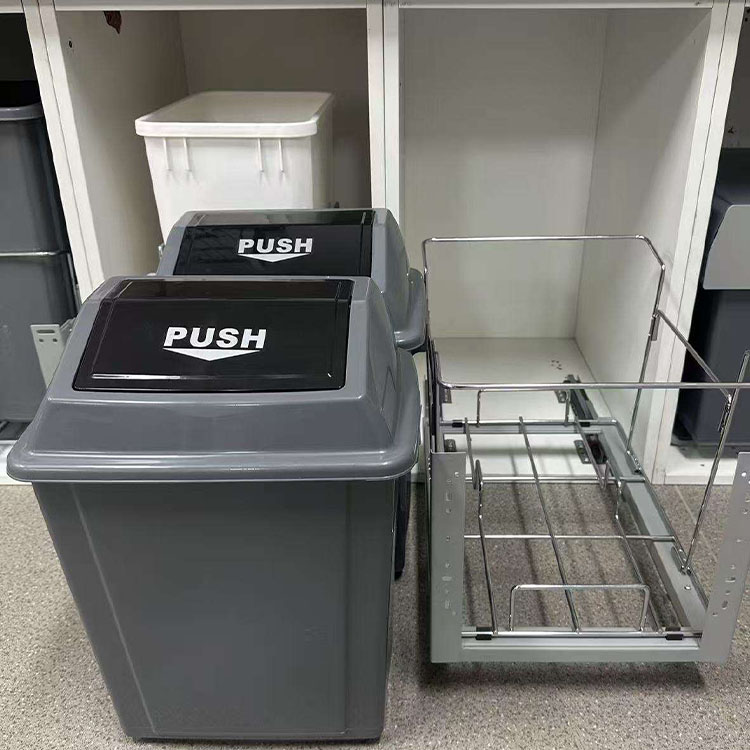
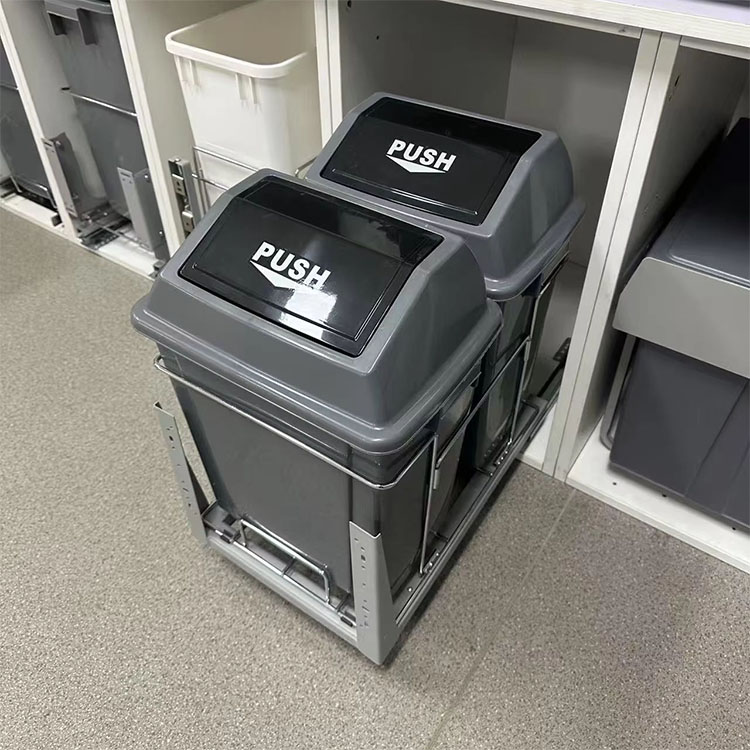
Door access & interior geometry: Does the cabinet physically support two separate liners/bins, or is it a single cavity with dividers that don’t reach the floor?
Bag clamp points: Real separation usually has distinct retention points per stream; fake separation often has one ring or one clamp rail.
Leak paths: If you have a “bottles/cans” stream next to “paper,” a single drip turns fiber into landfill. Liquids are a known contamination driver; one campus audit called out liquids as the biggest contamination category by weight in their sorted material.
If you want a reference point for what “designed for compliance” looks like, compare typical layouts in recycling & sorting systems with purpose-built classification station designs—the engineering is basically screaming: serviceability and separation matter.
Pass 2: Inserts + apertures (where behavior is engineered, not requested)
You can’t “train” people out of bad geometry. You can only reduce error rates.
Restrictive openings: Slots for paper, round holes for bottles, flaps for landfill—these are not aesthetic choices; they’re behavioral controls.
Insert fit & drift: If inserts float, rotate, or get swapped during servicing, your multi-stream vs single-stream recycling logic collapses.
Material callouts: PET (#1, polyethylene terephthalate, C10H8O4) and HDPE (#2) don’t belong in the same opening if your downstream system can’t handle mixed rigid plastics without heavy residue. The bin doesn’t have to teach polymer chemistry, but it must not lie about what’s actually accepted.
Product teams sometimes describe this bluntly: “restrictive openings guide correct disposal.” That’s the entire point of stations like a clear-label commercial sorting station—you’re shaping decisions at the moment of discard, not pleading afterward.
Pass 3: Recycling bin labels + waste station signage (the compliance minefield)
This is where I get opinionated, fast: signage is cheap; reputational cleanup is not.
From a Reuters analysis of recycling-label confusion, 42% of people who were unsure about recyclability said they “take a guess,” which is basically a contamination generator disguised as optimism. (Reuters)
Your signage must do three jobs simultaneously:
State the stream (Trash / Recycle / Compost) in plain language.
State top offenders (“NO liquids,” “NO food,” “NO plastic film”) using icons, not paragraphs.
Match your actual collection + processing reality (what your vendor takes, not what the internet says is “recyclable”).
And yes, laws are moving toward “stop implying recyclability when it’s not real.” California’s SB 343 is about product/packaging claims, but the direction is obvious: regulators are tired of performative recyclability signals.
If you’re running multi-site programs, I’d align your station language to one internal standard and then localize the “accepted items” panel by property. That’s how you stay sane.
Pass 4: Chain-of-custody check (where the bin either becomes real—or gets exposed)
This is the part most audits conveniently “forget” because it ruins the story.
Ask custodial: “When you pull this station, how many bags do you tie off?”
Ask your hauler/processor: “Are these streams collected separately? Where do they go? MRF? Compost facility? Landfill transfer?”
Spot-check staging: If both “streams” get dumped into the same rolling cart backstage, your station is a liar with better typography.
A solid example of what real measurement looks like is the University of Illinois Urbana-Champaign building waste characterization work: they put numbers on it—12.9% recyclables in the waste stream (224.76 lbs), and of 1,065.7 lbs sorted from recycling streams, 81.4% was correctly recycled while 18.6% was contamination.
The dirty secret: “multi-stream” often fails at the liner level
Short sentence.
Bin-liner color standards are ignored more often than people admit—even by staff—because supply chains break, substitutes get ordered, and the “temporary fix” becomes the permanent practice. That same Illinois assessment flags confusion and inconsistent compliance around liner color-coding, including among building service workers.
So if you want the audit to survive contact with operations, you need:
a liner spec (thickness, size, color),
a reorder rule,
and a supervisory check that isn’t optional.
The table I wish every facilities director had on day one
What it looks like
What it actually is
Compliance risk
Quick audit test
Fix that works
3 labeled openings on top
1 internal bag/cavity
“False diversion” reporting; stakeholder blowback
Open door: one bag = fail
Add true internal separation (bins/liners) or relabel as single-stream
“Recycle” icon + vague text
Users guess (and contaminate)
Higher contamination, rejected loads
Watch 10 disposals: count “hesitations”
Replace with icon-first labels + top 5 “NO” items
Paper slot + bottle hole
Inserts rotate/swapped
Streams cross-contaminate
Push/pull insert; does it lock?
Use keyed inserts + service SOP
Compost stream label
No organics service contract
Greenwash risk; odor/pests
Ask: “Where does compost go?”
Don’t label organics without pickup + processing
Beautiful station in lobby
Back-of-house consolidation
Program collapse
Follow the bag to the dock
Train + stage separate carts; audit weekly for 30 days
Two case-study signals I trust more than “best practices”
I’ll take a field memo over a glossy brochure any day.
Western Washington University produced a practical universal waste signage project document that points directly at the real enemy: inconsistent signage and unclear ownership. They even price the boring parts—printing costs around $2,300, with additional student wage ranges called out for the 2024–25 academic year.
That Illinois audit didn’t just “recommend education.” It tied outcomes to consistency in bin style and signage—and quantified contamination and correct sorting rates.
That’s the pattern: consistency beats inspiration.
FAQs
What is a “fake” multi-stream recycling station?
A fake multi-stream recycling station is a waste receptacle that presents multiple labeled openings (trash/recycle/compost) but lacks true internal separation, separate liners, or separate collection downstream, causing all materials to be combined into one bag or cart despite multi-stream recycling bin labels and signage. If the backend collapses, the front-end is marketing.
How do I audit recycling bins for compliance without a full waste study?
A fast compliance audit is a structured spot-check that verifies physical separation, insert/aperture controls, recycling stream labels, and downstream collection practices by opening stations, counting distinct bags per stream, observing disposal behavior, and confirming hauling/processing paths against your documented rules and local acceptance lists. Do it in 90 seconds per station, then pick 10% for deeper review weekly.
What should recycling bin inserts actually do?
Recycling bin inserts are physical aperture components that restrict and guide what users can place into each stream (e.g., paper slot vs bottle round), reducing contamination by making the “wrong” item harder to insert and by stabilizing stream separation when paired with dedicated internal liners and service procedures. If inserts are loose, swappable, or generic, they’re decorative.
What waste station signage reduces contamination the most?
Effective waste station signage is high-contrast, icon-first labeling placed at the point of disposal that lists the stream name and the top local “YES/NO” items, so users don’t guess; this matters because confusion drives mis-sorting, and reporting shows many people will guess when unsure. Photographs of “accepted items” work better than clip-art. Fight me.
How often should we run a waste audit checklist for multi-stream stations?
A practical waste audit checklist cadence is weekly for the first 4–6 weeks after rollout or signage changes, then monthly once contamination stabilizes, with extra audits after vendor changes, liner supply substitutions, renovations, or seasonal staffing shifts that typically degrade compliance and station servicing discipline. The first month is where most programs either become real or quietly die.
What’s the clearest sign that a station is single-stream recycling pretending to be multi-stream?
The clearest sign is operational consolidation: when the “separate” openings feed one internal bag, one custodial cart, or one dock container, the station is functionally single-stream regardless of labels, and any reported diversion by stream becomes an assumption rather than verified data. Open the door. Then follow the bag.
Conclusion
If you want this to stop being a PR risk and start being a controllable system, standardize the hardware and the service playbook.