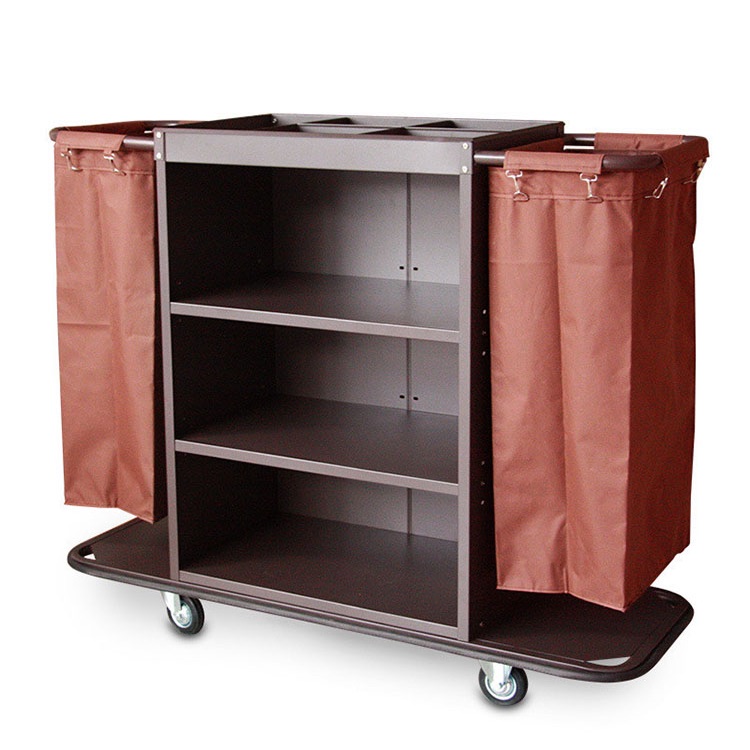
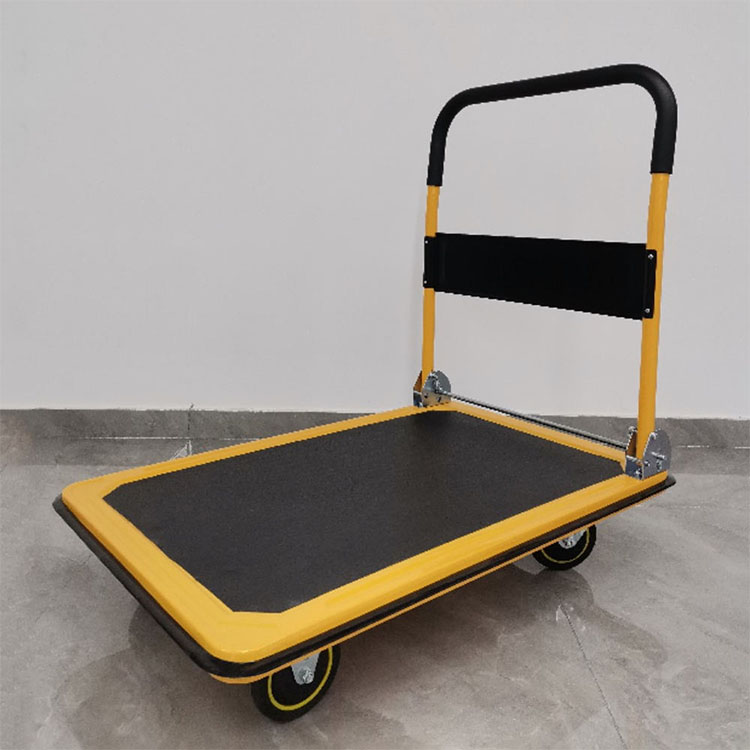
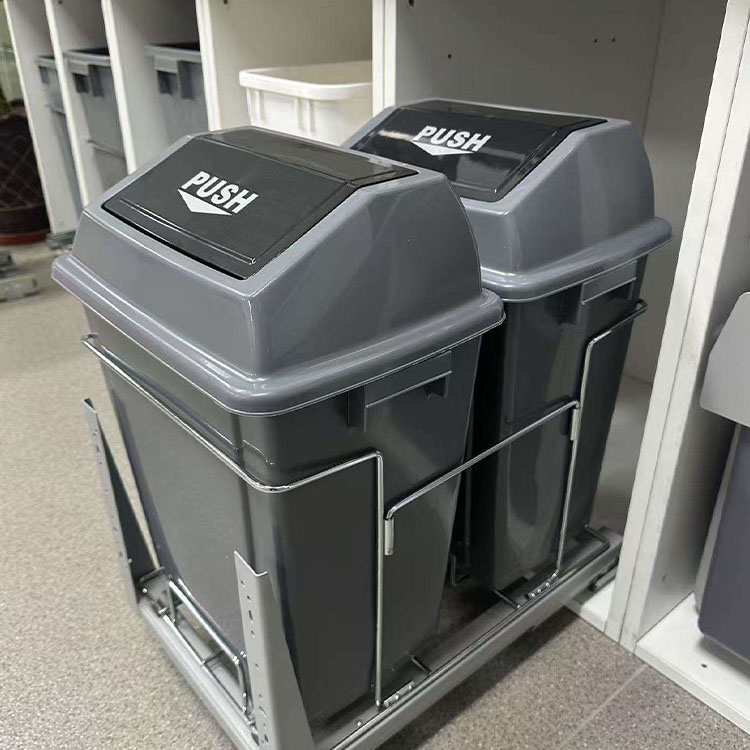
Share your requirements and target market. We’ll suggest the right configuration, sampling path, and production plan.
During business hours, We can usually provide a preliminary quote within two hours.
: workflow-based setups to improve efficiency and keep corridors tidy
: easier bag changes and maintenance, built for daily facility use
: 1–3 stream options with clear icon/label systems to reduce contamination
: materials, finishes, branding & packaging locked for consistent reorders
Your info is used only for quoting and communication.
How to Design Tray Storage on Room Service Trolleys
Most room service trolleys are designed backward. This piece breaks down how to design tray storage on room service trolleys using real 2023-2024 data, internal product logic from Facility Project Solutions, and the ugly operational truths most suppliers never mention.
Most room service trolleys are designed backward
Most carts fail.
I say that because too many hotel buyers still spec room service trolleys by catalog silhouette, shelf count, or finish sample, when the real fight happens in elevator thresholds, carpet transitions, blind corridor turns, and the 90 seconds between kitchen pass and guest door, where a badly staged tray becomes a spill, a delay, or another pointless trip. Why do we keep pretending tray capacity is the same thing as service capacity?
If I were building the internal-link structure for this topic on Facility Project Solutions, I would lean into the site’s existing taxonomy: room service trolley range, hotel service cart category, and OEM/ODM hotel cart engineering should anchor the commercial-intent layer, while deeper links should point readers toward the exact operating problem they are trying to solve. That hierarchy is already visible on the site, and it is the right one because buyers think in this order: category, operating route, then configuration.
Tray storage on room service trolleys should be designed around push force, route length, and floor friction before anyone argues about how many trays the cart “can” hold, because overload on a bad route punishes staff twice: once in the shoulders and wrists, and again in lost time. What good is a six-tray claim if the cart becomes a wall-hugging brick on carpet?
The 2023 U.S. Bureau of Labor Statistics industry table shows hotels except casino hotels and motels at 4.1 total recordable cases and 2.4 DART cases per 100 full-time workers. Then the 2024 University of Iowa banquet-cart study gets more concrete: in a 171-room hotel, 90th-percentile push force rose from 68.9 N with loads under 5 lb to 112.9 N when loads exceeded 25 lb, and carpet pushed force higher than other surfaces, at 98.2 N versus 73.4 N for full interactions. That is why I cap active tray count by route condition, not by sales brochure optimism.
And labor pressure is not abstract either. The June 2024 AHLA staffing survey said 76% of surveyed hotels were understaffed, 13% were severely understaffed, and housekeeping was the top hiring need for 50% of respondents. Reuters then reported on September 2, 2024 that more than 10,000 hotel workers struck across 25 hotels in nine U.S. cities, openly framing the fight around pay, fair workloads, and the reversal of pandemic-era service cuts. Smart room service trolley tray rack design is not just an equipment issue. It is a workload-control issue wearing casters.
The tray storage logic that actually works
I’m blunt here.
The best tray storage design for room service carts is not “more shelves.” It is fewer, better-zoned positions that let staff load in sequence, separate hot from cold, keep the heaviest trays at mid-body height, and avoid digging through backup stock during a live run. Why turn a service trolley tray holder system into a rolling storeroom?
I prefer a three-zone logic:
Zone 1: active delivery trays
This is the money zone. Put the next 2-4 guest drops where the operator can see them instantly. No stacking. No searching. No loose cutlery sliding under domes.
Zone 2: support items
Coffee service, condiments, folded napkins, guest extras, and replacement flatware live here. Not mixed with plated meals. Not shoved behind them.
Zone 3: reserve or return
Used items, backup china, or banquet overflow belong in a separate zone, ideally low or enclosed, so clean and dirty paths do not collapse into each other.
Here is the comparison I would actually hand to procurement:
Layout Type
Best Use Case
What It Gets Right
What Usually Goes Wrong
My Verdict
Open tray rack
Fast breakfast and high-visibility service
Instant access, fast loading, easy counting
Exposes items, looks messy when operators improvise
Open racks, sliding doors, and the small decisions that decide service speed
Sliding doors matter.
I have watched too many teams obsess over color chips while ignoring door swing, and I will say it plainly: hinged doors are often a bad answer for guest corridors, because the cart does not exist in a showroom; it exists in a hallway where another staffer, a vacuum, or a guest luggage trolley is already stealing your clearance. Isn’t that obvious once you picture the route?
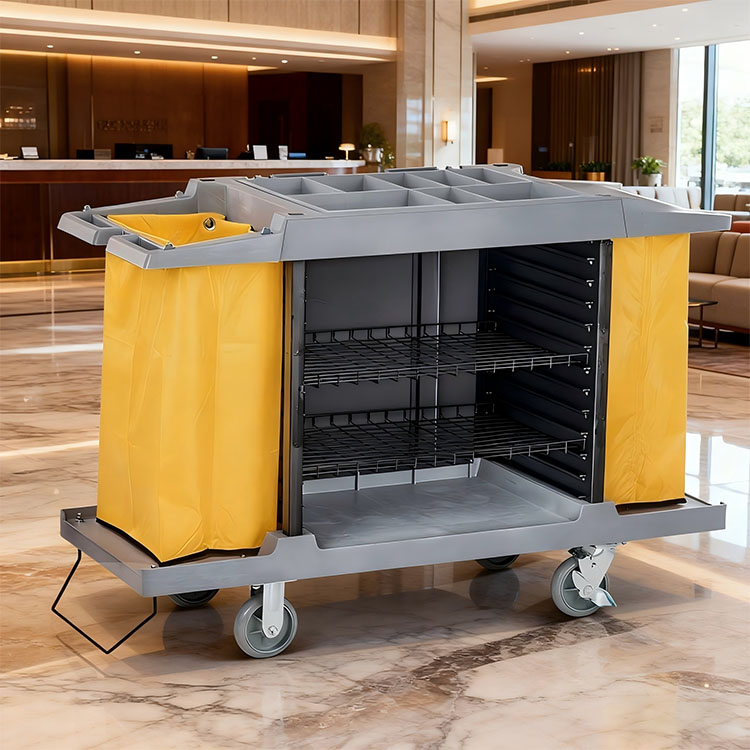
Facility Project Solutions makes this point, quietly but correctly. Its covered model says the doors slide rather than swing, which lets staff access the cabinet in tight hallways and elevators without needing extra clearance at the threshold. Its corridor cart emphasizes divided storage and adjustable shelving. Its tray-rack model emphasizes multi-level staging, non-marking casters, and protective bumpers. That trio alone tells you the design sequence I would follow: route first, access second, storage format third.
My own bias? I favor hybrid room service trolley design for most full-service hotels. Open active-tray positions on top or mid-level. Enclosed reserve storage below. Sliding access if the property runs narrow corridors. Stainless or sealed wipe-clean contact surfaces where staff actually touch and reload. Not sexy. Very effective.
Sanitation is not a finish choice
Cleanability wins.
The FDA’s Food Code 2022 is explicit about food-service systems being built around safe food and cleanable equipment, and that matters here because tray storage is not just about where plates sit; it is about whether the trolley can be reset between runs without grime hiding in joints, soft edges, or absorbent panels. Why spec a beautiful cart that becomes a contamination trap by month three? (U.S. Food and Drug Administration)
The 2024 PubMed-indexed systematic review on hotel housekeepers and cleaners found the most affected body regions were the low back at 53.9%, shoulders at 41.4%, and wrists/hands at 40.1%. That is not a room-service-only study, but the lesson carries over cleanly: repetitive bad reaches, awkward pushes, and ugly reload positions compound fast in hospitality. So I design tray storage to keep the heaviest active loads between knee and elbow height, with no repeated stooping to the floor shelf and no top-heavy “premium” tower nonsense.
If I were approving a spec sheet today, I would want these details settled before sampling:
active tray count per run
typical load weight by meal period
corridor width and elevator door width
carpet versus hard-floor ratio
open, enclosed, or hybrid access
caster diameter and wheel material
bumper coverage
wipe-down time target between runs
That last one gets ignored constantly. It should not.
The room service trolley design spec I would actually sign off on
This is my filter.
Not because it sounds tidy, but because it survives contact with real operations, real staff shortages, and real guest floors. Ready?
For a standard upscale hotel guest-floor trolley, I would usually approve a hybrid tray storage layout with 4-6 active delivery positions, a lower enclosed reserve zone, non-marking swivel casters, wraparound bumper protection, and shelf geometry that keeps the heaviest active trays in the operator’s natural handling zone. For carpet-heavy routes, I would step up wheel size rather than keep pretending staff can brute-force physics.
I would also reject three common mistakes:
Overheight carts that look impressive and handle terribly.
Deep cabinets that hide everything and slow reloads.
Unzoned storage that mixes plated meals, extras, and returns into one messy cavity.
How should trays be stored on a room service trolley?
Trays should be stored in a room service trolley by delivery sequence, weight class, and temperature sensitivity, with the heaviest hot plates centered between knee and elbow height, cold items isolated from heat, and each tray either racked vertically or assigned to a clearly separated horizontal level to prevent searching, shifting, and spills. After that, everything becomes simpler: faster unloads, fewer repeat motions, less rattling, and fewer collisions with backup stock or dirty returns.
What is the best tray storage design for room service carts?
The best tray storage design for room service carts is usually a hybrid layout that combines 4-6 dedicated tray positions, one enclosed zone for backup items and guest extras, non-marking 125-150 mm casters, and clear separation between active-delivery trays and reserve stock so staff do not turn the cart into a rolling junk drawer. In plain English, you want speed where the operator touches the cart most and containment where clutter usually accumulates.
Are open racks or covered cabinets better for hotel room service trolley storage?
Open racks are better for speed and visibility, while covered cabinets are better for discreet presentation and containment; the right choice depends on route geometry, menu mix, and service style, but in most full-service hotels a hybrid layout wins because it preserves access without exposing everything to corridor traffic. I would use open racks for breakfast-heavy, short-route operations and covered sections for premium floors or properties that care deeply about hallway appearance.
What materials work best for tray storage on room service trolleys?
The best materials for tray storage on room service trolleys are wipe-clean, non-porous, serviceable surfaces such as stainless shelving or sealed panels paired with a rigid frame, rounded impact edges, and non-marking wheels, because the design has to survive daily sanitation, mixed flooring, and repeated collisions without looking battered after three months. Fancy finishes are fine, but I do not trust any material that cannot be cleaned quickly and repeatedly without swelling, chipping, or trapping grime.
Your next move
Do this next.
If you are specifying a new room service trolley design, send your supplier these five numbers before you ask for a quote: corridor width, elevator door width, average active tray count, typical loaded cart weight, and floor-surface mix. Then ask for a layout drawing that shows active tray positions, reserve storage, caster spec, and bumper coverage.
That one step weeds out weak suppliers fast. And if you are building the content and conversion path on Facility Project Solutions, route readers from the broad hotel service cart category into the exact configuration pages that solve their problem, because the buyer searching “how to design tray storage for service carts” is not looking for inspiration. They are looking for a trolley that works.