Share your requirements and target market. We’ll suggest the right configuration, sampling path, and production plan.
During business hours, We can usually provide a preliminary quote within two hours.
: workflow-based setups to improve efficiency and keep corridors tidy
: easier bag changes and maintenance, built for daily facility use
: 1–3 stream options with clear icon/label systems to reduce contamination
: materials, finishes, branding & packaging locked for consistent reorders
Your info is used only for quoting and communication.
Standard Housekeeping Cart Setup Checklist: From Linen to Cleaning Supplies
A housekeeping cart is a mobile workstation, not a rolling storage closet. This checklist shows what to load, where to place it, and what supervisors should inspect before every shift.
At 8:07 a.m., the first complaint rarely sounds serious. A housekeeper needs more pillowcases. Then someone can’t find the correct trash liners. Twenty minutes later, a supervisor is chasing shampoo refills while three cleaned rooms sit unreleased in the PMS.
The cart failed first.
And although the immediate problem looks like poor stocking, what actually broke was a whole chain of decisions involving par levels, room assignments, chemical control, linen forecasting, cart ergonomics, and replenishment responsibility across the floor pantry.
Who owns that chain?
I frankly believe hotels make housekeeping cart setup look far simpler than it is. They call it “stocking the trolley,” hand someone a generic housekeeping cart checklist, and assume the job is finished once the shelves look full.
Full is meaningless.
A housekeeping cart is a rolling workstation. It carries clean textiles, chemicals, guest amenities, waste, tools, and sometimes several hundred dollars of consumable stock through guest corridors for an entire shift. If the load is wrong, staff pay for it in extra steps, awkward reaches, hard pushing, and repeat trips to the pantry.
Here’s the ugly truth: an overloaded maid cart doesn’t prove that housekeeping is prepared. Usually, it proves nobody calculated the load.
What a Standard Housekeeping Cart Should Contain
What belongs on the cart? Enough material to complete the assigned room mix, plus a small and deliberate contingency—not every item the floor pantry can surrender.
A standard housekeeping cart should carry:
Clean bed linen
Bathroom linen
Guest amenities
Paper products
Approved cleaning chemicals
Hand tools
Microfiber cloths
Personal protective equipment
Waste liners
Used-linen and waste bags
Room-assignment information
A wet-floor warning sign
Any property-specific inspection or maintenance cards
That’s the framework. Quantities move.
The number of towels can change. The control logic shouldn’t.
Start With the Room Assignment, Not the Linen Shelf
Some carts are packed by habit: ten sheets here, a stack of towels there, maybe extra pillowcases squeezed into the last gap. That approach feels fast—until the route contains six double-queen rooms and the cart was loaded for kings.
Use the assignment sheet.
For bed linen, the hotel housekeeping supplies list may include:
Fitted sheets or bottom sheets
Flat sheets
Duvet covers
Pillowcases
Mattress protectors
Pillow protectors
Blankets
Rollaway-bed linen
Sofa-bed linen
The simple working formula is:
Suppose an attendant has 14 king rooms. Each full-service room needs one fitted sheet and one flat sheet. Fourteen of each is the base requirement; with a 10% allowance for damaged linen, unexpected bed changes, or room-status errors, the working quantity becomes roughly 16.
Not 25.
Overstock looks harmless because the extra linen is soft. But mass accumulates quickly, shelves become compressed, visibility disappears, and the attendant starts pulling one bundle out just to reach another. That’s wasted motion—“muda,” if you prefer the lean-operations term—and it repeats all shift.
Clean linen should also remain clean. Store it behind a cover or cart door, away from spray bottles, damp cloths, toilet tools, and guest waste. A pillowcase rubbing against a leaking bathroom-cleaner trigger isn’t acceptable because “the bottle was mostly closed.”
Mostly closed. Great.
Bathroom Linen Eats Cart Space Fast
Bath towels are bulky. Robes are worse.
A standard load might include:
Bath towels
Hand towels
Washcloths
Bathmats
Face towels
Bathrobes
Pool or spa towels where the route requires them
Rather than building one compressed textile wall, group bathroom linen into repeatable room sets or fixed shelf zones. If the brand standard calls for two bath towels, two hand towels, two washcloths, and one bathmat, everyone should know what one complete bathroom set looks like.
This is basic visual management, but it works. Missing pieces stand out before the cart leaves the pantry.
And don’t quietly stuff spa towels onto a guestroom cart “just in case.” Different operational stream. Different demand.
Amenities Need Bins, Not a Loose Pile
Tiny items create surprisingly big losses because they’re hard to count and easy to damage. A top tray full of rolling soap bars, coffee sachets, shower caps, and conditioner bottles may look abundant, but nobody can tell whether it contains enough complete room sets.
Use divided bins for:
Toilet paper
Facial tissues
Shampoo
Conditioner
Body wash
Soap
Body lotion
Shower caps
Sanitary bags
Coffee and tea
Sugar and creamer
Cups and lids
Laundry bags
Notepads and pens
Guestroom waste liners
Set a minimum and maximum quantity for each bin. A kanban card, colored fill line, or two-bin system is more useful than another laminated reminder telling staff to “keep cart fully stocked.”
Hotels using bulk amenity dispensers have a different pick list. They may need refill cartridges, tamper seals, dispenser keys, batch numbers, and a clean funnel or closed dispensing system. They don’t necessarily need 40 miniature bottles riding around the floor.
Different system. Same discipline.
| Middle shelf | Towels, bathmats, pillowcases | High-use linen stays within a comfortable reach zone | Packing linen too tightly | | Lower shelf | Sheets, duvet covers, heavier sealed supplies | Low center of gravity improves stability | Placing small chemicals where they leak onto linen | | Side holder | Mop, broom, duster, warning sign, vacuum attachment | Secures long tools during movement | Tools projecting into doorways | | Linen bag | Used linen only | Separates contaminated textiles from clean stock | Stuffing trash into the linen bag | | Waste bag | Guest-room waste only, subject to hotel policy | Keeps refuse outside the clean-storage compartment | Letting bags drag or overflow |
But there’s a caveat. Heavy chemical bottles shouldn’t simply be buried beside clean sheets because both happen to belong low on the cart. Chemicals need an upright, leak-resistant compartment with trigger heads secured and labels facing outward.
A low center of gravity matters. Chemical segregation matters more.
Cleaning Chemicals: The Cart Isn’t a Chemistry Bench
What’s in the unmarked blue bottle?
If the answer is “glass cleaner, probably,” the cart should stop right there. Remove the bottle, identify the product, label it correctly, or dispose of it under the property’s chemical procedure.
No guessing allowed.
A typical housekeeping trolley setup may carry:
Neutral-pH multipurpose cleaner
Glass cleaner
Bathroom cleaner
Toilet-bowl cleaner
EPA-registered disinfectant where required
Descaler for approved surfaces
Carpet spot treatment
Stainless-steel cleaner
Odor-control product
Here’s where industry shorthand can become dangerous. “Red juice,” “blue spray,” or “the strong stuff” might make sense to a veteran team on one floor, but those nicknames mean nothing to a new hire, agency worker, relief supervisor, or safety inspector.
Use the product name.
Sodium hypochlorite—NaOCl, the active ingredient in many bleach products—can release chlorine gas when mixed with acids. Combine bleach with an ammonia-containing product and irritating chloramines may form. Quaternary ammonium disinfectants, usually called “quats,” need their specified dilution and wet-contact time as well.
A quick wipe isn’t necessarily disinfection. Sometimes it’s just a wet surface and misplaced confidence.
Every secondary spray bottle should show:
Product name
Correct working dilution
Required hazard information
Preparation or refill date where applicable
Expiration date where applicable
Supplier or dispensing-system identification
A legible label employees can understand
And yes, labels get wet. Replace them.
Tools, Cloths, and PPE: Small Items, Big Workflow
Why do attendants reach for the wrong cloth? Sometimes training is weak. More often, the correct cloth isn’t where the hand expects it to be.
That distinction matters.
A practical housekeeping cart checklist should cover:
Color-coded microfiber cloths
Non-scratch sponges
Toilet brush in a closed holder
Detail or grout brush
Glass squeegee
Extendable duster
Dustpan and brush
Mop system
Vacuum and approved attachments
Wet-floor sign
Disposable gloves
Chemical-resistant gloves where the SDS requires them
Eye protection for splash hazards
Hand-sanitizing product
Color coding is helpful—but only if the entire property follows the same scheme. Otherwise red means toilet cloth on one floor and general bathroom cloth on another, which is worse than having no system at all.
Color
Suggested zone
Control rule
Red
Toilet and high-contamination bathroom surfaces
Never use outside the toilet zone
Yellow
Other bathroom surfaces
Keep separate from bedroom cloths
Blue
Glass, mirrors, and low-risk bedroom surfaces
Replace when visibly soiled
Green
Food-contact or refreshment areas
Follow property sanitation policy
The colors themselves aren’t sacred. Consistency is.
This is why I get irritated when someone dismisses cart wheels as a maintenance detail. A caster wrapped with hair, a sticky bearing, or a flat-spotted wheel increases push force on every corridor run. Add thick carpet, elevator gaps, an overloaded linen shelf, and a handle positioned too high—now the “little trolley problem” is a full-shift ergonomic tax.
Staff feel it. Management often doesn’t.
Waste Handling Without Polluting the Clean Zone
Waste liners should be selected by installed bin size, not purchased as one universal bag and stretched—or folded—until they roughly fit.
The cart may need liners for:
Bathroom bins
Bedroom or desk-side bins
Recycling containers
Sanitary-waste units
Public-area receptacles
Back-of-house collection points
Those aren’t interchangeable use cases.
For guestrooms or offices with touch-free receptacles, staff should check battery condition, sensor response, liner positioning, and lid clearance before declaring that a smart sensor trash can for offices is defective. A liner pulled across the sensor housing can interfere with operation. So can depleted batteries. Obvious? Yes. Still missed.
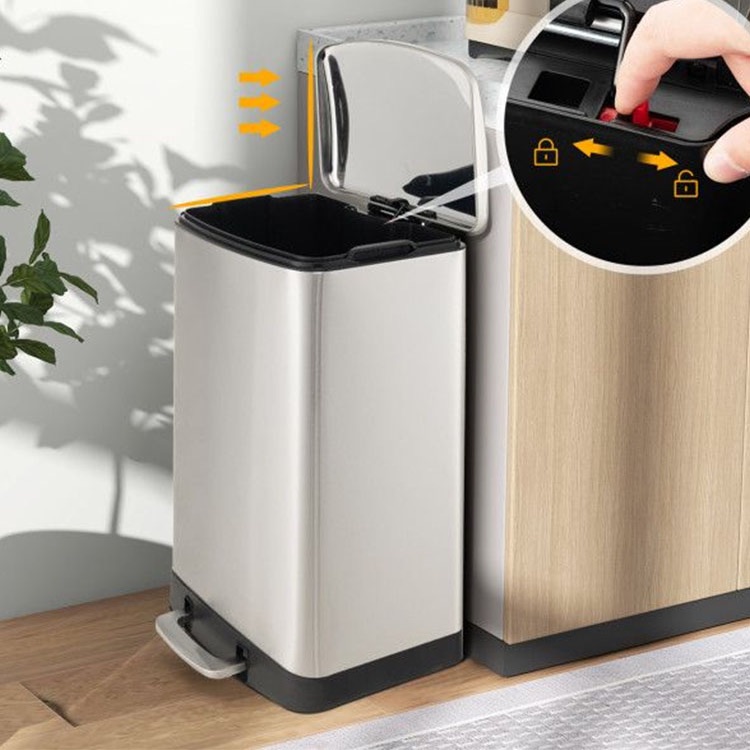
Where a property wants hands-free disposal without electronic components, a stainless-steel pedal office trash bin offers a mechanical alternative. But pedal travel, lid return, hinge tension, and liner overhang belong on the inspection list. A pedal bin with a lid that stays half-open isn’t hands-free hygiene; it’s a broken bin wearing stainless steel.
And public-area waste needs its own route. Housekeepers shouldn’t cram lobby rubbish into an already loaded room cart because it saves one trip. A fire-resistant indoor lobby trash bin may sit within the property’s broader fire-safety and waste-control plan, so servicing frequency and waste transfer should be defined separately.
Keep waste outside the clean compartment.
No exceptions there.
The Pre-Shift Housekeeping Cart Checklist
A signature box doesn’t make an inspection real. I’ve seen enough operational checklists—in every industry—to be skeptical of paper that records compliance without requiring anyone to touch, test, or count anything.
So make the checks physical.
Cart Condition
Wheels rotate freely without thread, hair, or debris
Brakes engage correctly
Handles are secure
Shelves and trays are clean and dry
Doors, covers, and locks operate
Bumpers are intact
No sharp edges or exposed fasteners are present
Linen and waste bags are empty and correctly attached
Push the loaded cart several meters. Turn it. Stop it. Try the brake.
A wheel can spin perfectly when unloaded and bind once several shelves of linen are sitting above it.
Stock Control
Linen matches assigned room types
Towels match the service standard
Amenities meet the day’s calculated quantity
Paper products are dry and undamaged
Waste liners match installed bin sizes
No expired, leaking, or unlabelled chemical is loaded
Cloths are clean and separated by color
PPE is available in correct sizes
Vacuum, mop, and warning sign are serviceable
Don’t count only pieces. Check condition.
A crushed tissue box, stained pillowcase, cracked spray trigger, or glove two sizes too large may technically exist on the cart, but it isn’t usable stock. This is the difference between book inventory and field-ready inventory.
Final Safety Check
Clean and used materials have separate zones
Heavy stock sits low without blocking access
Spray triggers face inward
Bottle caps and dilution controls are closed
Long tools are restrained
Nothing projects beyond the cart body
The attendant can see around the cart
Total load moves without excessive push force
However, no cart arrangement can compensate for an impossible room quota. In September 2024, PBS reported that some hotel housekeepers were cleaning up to 17 rooms per shift during disputes over pay and working conditions. The report also cited projected record U.S. revenue per available room of $101.84. That uncomfortable contrast appears in the PBS report on hotel housekeeping working conditions.
A properly loaded cart can cut pantry runs and wasted motion. It can’t turn chronic understaffing into a safe operating model.
Let’s be honest.
How to Audit the Setup After the Shift
The untouched stock tells a story. So does the empty shelf.
For 14 days, track:
Items returned unused
Emergency pantry trips
Chemical refills
Linen shortages
Rooms cleaned per cart load
Cart-related maintenance reports
Wrong-size liner incidents
Reclean requests
Minutes spent restocking
Employee discomfort reports
Suppose eight clean bath towels come back every afternoon. That doesn’t mean the attendant did anything wrong; it probably means the par level is bloated. If glass cleaner runs out before lunch, investigate the dilution station, bottle capacity, application method, room mix, and possible leakage.
Don’t jump straight to “staff are using too much.”
And ask attendants where the cart fights them. They know which wheel chatters, which bin jams, which shelf needs two hands, and which side tool catches door frames. A spreadsheet won’t reveal all of that.
The post-shift audit should answer three questions:
What ran out?
What came back?
What caused extra movement?
That’s enough to start. Fancy dashboards can wait.
FAQs
What is a standard housekeeping cart setup?
A standard housekeeping cart setup is an organized mobile inventory of clean linens, towels, guest amenities, paper products, cleaning chemicals, tools, protective equipment, and waste supplies, arranged according to weight, frequency of use, contamination control, and the number and type of rooms assigned to the attendant.
It’s not a universal item count. Each property should calculate quantities from room type, occupancy, service level, linen standard, and assignment size.
How do you stock a housekeeping cart correctly?
Stocking a housekeeping cart correctly means calculating supplies from assigned rooms, loading heavy items low, keeping frequently used products within easy reach, securing chemicals upright, separating clean linen from waste and used textiles, restraining long tools, and completing a documented safety inspection before the cart enters guest corridors.
Then reconcile the load after the shift. If nobody records shortages and returns, tomorrow’s cart will be packed using the same old guesswork.
What cleaning supplies belong on a hotel housekeeping cart?
Cleaning supplies for a hotel housekeeping cart are the property-approved, properly labelled chemicals and tools needed for assigned surfaces, commonly including neutral cleaner, glass cleaner, bathroom cleaner, toilet-bowl cleaner, disinfectant, microfiber cloths, brushes, sponges, gloves, a mop, a vacuum, and a wet-floor warning sign.
The exact chemical set depends on the room surfaces, supplier system, infection-control policy, and label directions. More chemicals don’t automatically produce a cleaner room.
What is the best way to organize a hotel housekeeping cart?
The best way to organize a hotel housekeeping cart is to place high-frequency items between waist and shoulder height, heavy sealed stock on lower shelves, amenities in divided top trays, tools in external restraints, and clean linen inside protected compartments while maintaining separate bags for used textiles and waste.
But test the layout with a loaded cart, not an empty display model. Carpet resistance, elevator thresholds, turn radius, and wheel condition can change what feels workable.
How often should a housekeeping cart checklist be completed?
A housekeeping cart checklist is a documented inspection completed before every shift, with a shorter condition and inventory review after the shift; weekly checks should examine wheels, brakes, bumpers, fasteners, bags, handles, labels, and deep-cleaning needs, while defects affecting safe movement or chemical control require immediate removal from service.
And the supervisor should occasionally watch the inspection happen. Otherwise the checklist risks becoming another row of ticks filled in at 4:55 p.m.
Turn the Cart Into a Controlled Workstation
Start with one floor.
Load one housekeeping cart against a real room assignment, weigh or document the stock, push it through the actual corridor route, count every pantry return, and note what comes back untouched. Then ask the person who used it where the setup slowed them down.
Listen carefully.
The goal isn’t a prettier cart. It’s fewer shortages, fewer awkward reaches, less cross-contamination, lower push effort, and a room attendant who doesn’t have to improvise halfway through the shift.
That’s operational control. Finally.
If you’re planning a property-wide housekeeping or waste-handling program, contact Facility Project Solutions to review cart workflows, guestroom bins, public-area receptacles, and operational requirements before selecting equipment.