Share your requirements and target market. We’ll suggest the right configuration, sampling path, and production plan.
During business hours, We can usually provide a preliminary quote within two hours.
: workflow-based setups to improve efficiency and keep corridors tidy
: easier bag changes and maintenance, built for daily facility use
: 1–3 stream options with clear icon/label systems to reduce contamination
: materials, finishes, branding & packaging locked for consistent reorders
Your info is used only for quoting and communication.
When to Use Lockable Indoor Trash Bins in Commercial Buildings
Lockable indoor trash bins are not for every hallway. They make sense where waste creates security, sanitation, compliance, or service-control risk—and they fail when buyers use them as decoration instead of operational equipment.
Table of Contents
The Real Reason Buildings Need Lockable Indoor Trash Bins
Trash gets political.
I have watched procurement teams argue for three weeks over the finish on a lobby receptacle, then ignore the bigger problem sitting ten feet away: who can open it, who can contaminate it, who can dump the wrong material into it, and who gets blamed when the janitorial vendor finds a swollen bag of food waste, batteries, badges, broken glass, or confidential paperwork inside a “normal” bin. Why pretend a trash can is only a trash can?
Lockable Indoor Trash Bins are not luxury accessories. They are control points. The lock is not there to impress visitors; it is there to reduce tampering, protect liners, slow down casual misuse, limit access to sensitive waste, and force waste handling into a documented service routine. That matters in office towers, hospitals, schools, airports, hotels, labs, mixed-use lobbies, and any commercial building where one bad disposal habit can become a pest issue, a privacy issue, a fire issue, or a labor issue.
The hard truth: most buildings do not need every bin to lock. That is lazy specification. What they need is selective locking in the places where exposure is higher than convenience cost.
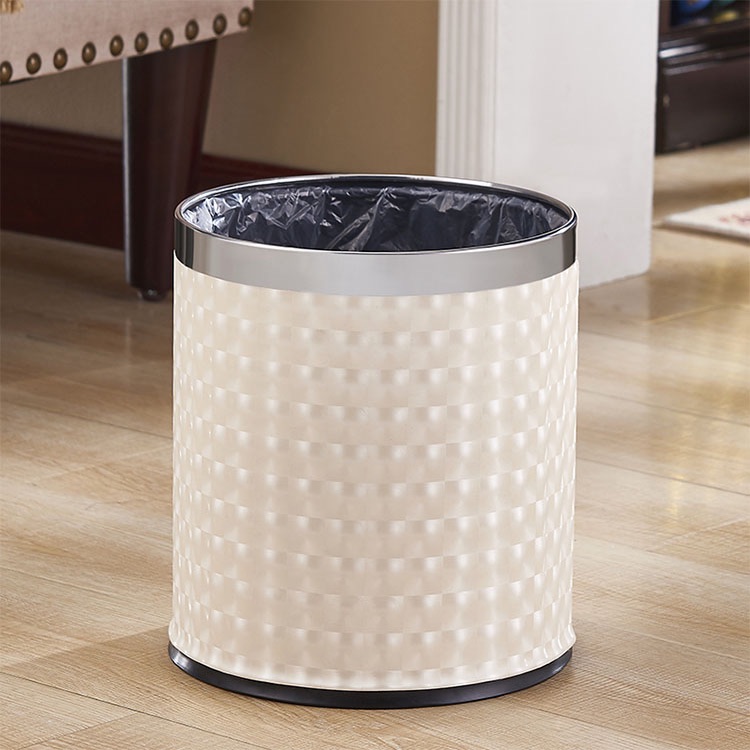
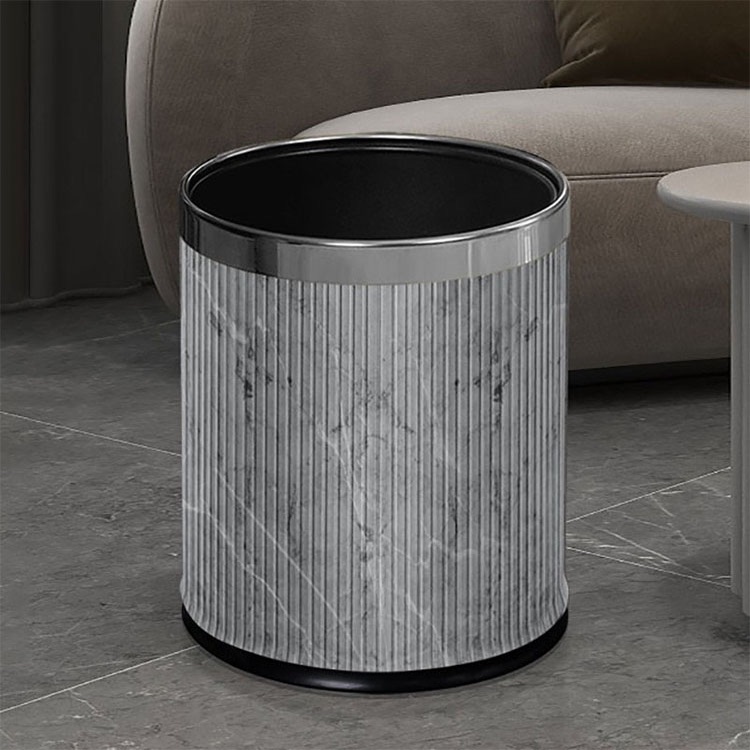
Start with the waste stream, not the catalog. If the area mostly receives dry paper, wrappers, and coffee cups, a standard covered or swing-lid unit may be enough; the site’s own office waste bin with swing lid is a good example of a lower-friction indoor waste container for everyday common areas. But if the same zone receives food waste after hours, visitor dumping, sensitive documents, batteries, electronic accessories, sharps-adjacent material, or staff-only waste, a lockable waste receptacle starts earning its footprint.
New York City made the larger public-health argument visible in 2024: its Department of Sanitation said all businesses setting out curbside trash must use bins with secure lids as of March 1, 2024, and that all trash, food, and food-soiled paper must be in a secure-lid bin for collection. That rule is curbside, not indoor, but the lesson carries inside: loose access creates loose behavior. NYC’s DSNY commercial containerization rule says businesses also need enough bins for waste generated over a 72-hour period.
Where Lockable Waste Receptacles Actually Make Sense
1. Public lobbies with after-hours access
Use lockable indoor trash bins in commercial lobbies when the building stays open after front-desk staffing drops. Hotels, medical office buildings, coworking spaces, apartment-retail hybrids, and transportation-adjacent offices all have the same ugly pattern: public access continues, but supervision thins out.
That is when people dump things.
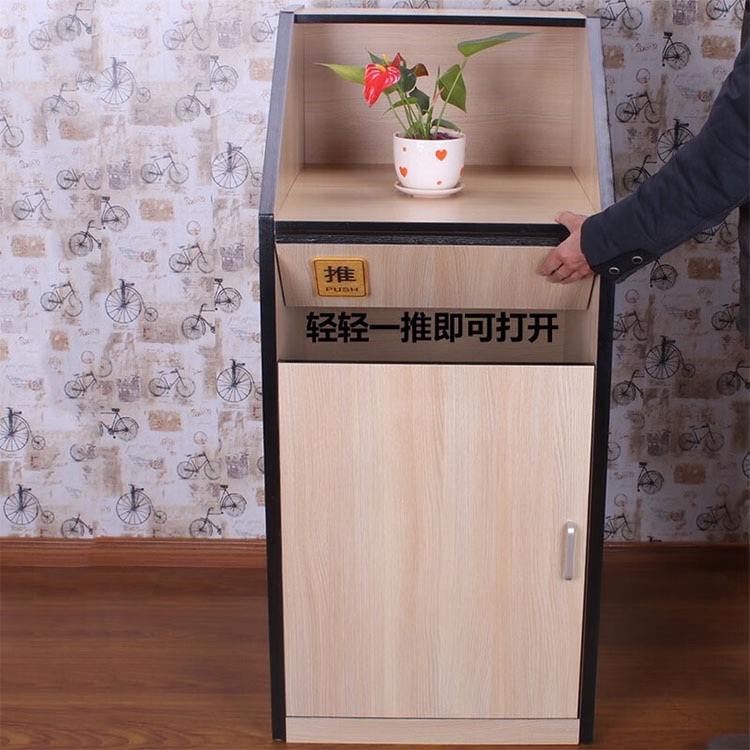
Not always maliciously. Sometimes it is a rideshare coffee tray, a takeout bag, a cracked phone charger, an event badge, or a bag of food because someone does not want to carry it upstairs. But the result is the same: odor, liner failure, contamination, and extra labor. A locked service door with a controlled drop opening can keep the user experience simple while preventing people from pulling liners, hiding objects, or using the bin as a free disposal point.
For lobby programs, I would start with the broader Indoor Trash Bins category, then narrow by opening geometry, finish, liner access, and lock placement. Do not start with color. Color does not stop misuse.
2. Offices handling confidential paper or customer records
This is where I get opinionated: if a bin sits near HR, finance, leasing, legal, medical intake, insurance processing, or tenant management, an open office trash can is a weak control. It may be convenient, yes. It may also be the easiest place for sensitive paper to disappear into the wrong waste stream.
The FTC’s Disposal Rule requires businesses and individuals that maintain consumer reports or records for a business purpose to take appropriate measures when disposing of sensitive information derived from those records. That does not mean every trash can needs to become a shred console. It does mean that uncontrolled disposal is not a serious policy. The FTC Disposal Rule is blunt about the duty to dispose of sensitive information properly.
So here is the practical call: use lockable indoor trash bins or secure paper consoles in zones where documents can contain names, addresses, Social Security numbers, medical account numbers, rent applications, credit reports, employee records, bank details, or signatures. Put standard rectangular office waste bins with liners under desks only when the waste stream is genuinely low-risk.
3. Food-adjacent interiors that attract pests
Break rooms are not harmless. Neither are cafés, pantry corridors, conference floors, vending zones, or hotel pre-function areas after events. A commercial building does not need a pest problem to justify better bin control; it only needs warm food residue, weak lids, and inconsistent servicing.
OSHA’s sanitation standard for workplaces says waste-food receptacles must be smooth, corrosion-resistant, easily cleanable or disposable, sized and located to prevent overfilling, emptied at least once each workday unless unused, and kept clean and sanitary; it also says receptacles need a solid tight-fitting cover unless sanitary conditions can be maintained without one. That is a boring sentence with expensive consequences. OSHA 1910.141 is not marketing copy; it is the baseline.
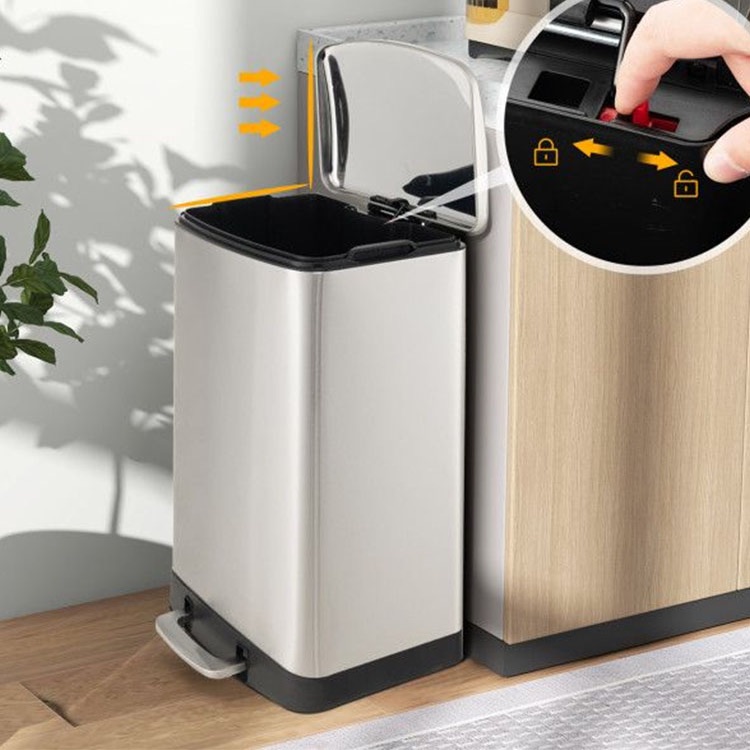
Lockable indoor trash bins make sense here when staff must control liner changes, reduce scavenging, prevent users from lifting lids, or protect an organics stream from random contamination. In some buildings, a lockable service door matters more than a locked top. Why? Because users still need easy disposal, but cleaning staff need protected access to the liner.
4. Healthcare, lab, and diagnostic-adjacent buildings
This one should not be controversial, but somehow it still is: if a building handles medical samples, testing materials, cleaning chemicals, batteries, reagents, or protected patient information, the waste system needs access control and training, not a nicer-looking bin.
In February 2024, the Sacramento County District Attorney announced a nearly $5 million Quest Diagnostics settlement tied to allegations involving improper disposal of hazardous waste, medical waste, and protected patient information. Prosecutors said inspections reviewed compactors and dumpsters and found chemicals, bleach, reagents, batteries, electronic waste, unredacted medical information, specimen containers, solvents, and flammable liquids. The Sacramento DA’s Quest Diagnostics settlement announcement is a useful warning for any facility team that thinks “trash is handled by housekeeping.”
No, a lockable indoor trash bin alone does not solve hazardous waste compliance. But it can stop the first failure: unauthorized access, casual dumping, and mixed disposal before trained staff ever see the problem.
5. High-traffic corridors where liners get abused
Some bins fail because users throw away the wrong thing. Others fail because the public can touch the wrong part.
I have seen liners pulled out, pushed down, ripped, overfilled, and used as hiding spots. In schools, malls, stadium back-of-house corridors, office towers, and public agencies, a lockable service panel can protect the liner while still leaving the aperture open for normal use. That small design change protects labor time. And labor time is where the real cost sits.
The National Safety Council’s 2023–2024 injury data shows falls, slips, and trips accounted for 479,480 days-away-from-work cases, while contact incidents and overexertion were also heavy injury categories. Waste handling is not the only driver, obviously, but overflowing bags, liquid leakage, awkward lifting, and blocked corridors are exactly the small operational defects that turn into claims. NSC’s work-related injury cause data gives the larger safety context.
The Lockable Bin Decision Matrix
Use the table below before you buy. I would rather lose a sale than watch a property manager lock every bin and create a servicing nightmare.
Building Zone
Waste Risk
Should the Indoor Bin Lock?
Better Specification
Main office desks
Dry paper, wrappers, low sensitivity
Usually no
Open or swing-lid office bin with removable liner
HR / finance / leasing / legal areas
Confidential records, identity data, signatures
Yes
Lockable secure trash can or dedicated document console
Break rooms and staff pantries
Food waste, odors, pests, liquids
Often yes
Lockable service door, tight lid, easy-clean liner
Public lobby after hours
Visitor dumping, tampering, concealed waste
Yes
Controlled aperture, lockable liner access, weighted or fixed base
A locking lid can make disposal annoying. A lockable service door can make servicing controlled. Those are different problems.
If users must touch, lift, guess, or wait, they will put waste beside the bin. Then the facility manager will blame “behavior” instead of the specification. I have seen this movie too many times. The bin was not secure; it was hostile.
For most secure trash cans for offices, the sweet spot is an open or shaped aperture for users, with locked liner access for staff. In food zones, add a tight-fitting lid or flap. In confidential zones, use a narrower slot. In public areas, consider anchoring, weighted bases, and concealed bags.
They ignore e-waste and batteries
Here is another quiet failure: electronic waste. People throw away vapes, cables, lithium-ion accessories, calculators, badges, small sensors, and batteries because the building gives them no better option.
Reuters reported in March 2024 that a UN report found 62 million metric tons of e-waste were generated in 2022, with annual output expected to increase by a third by 2030; the article also notes that e-waste can contain hazardous substances such as mercury. Reuters’ e-waste report coverage should make facility teams uncomfortable.
Lockable indoor trash bins are not e-waste stations. But in buildings where small electronics keep appearing in general waste, a locked access point plus a clearly labeled e-waste drop box can reduce the “I didn’t know where else to put it” excuse.
They treat recycling as a morality project
Recycling fails when it is harder than trash. Full stop.
If you install lockable waste receptacles but leave recycling open, distant, or visually confusing, users will choose convenience. Pair secure trash with clear sorting. Use consistent color bands, icon-first labels, and removable liners. Facility Project Solutions’ commercial sorting station with clear labels fits this logic better than a one-off bin dropped into a corner.
How I Would Specify Lockable Indoor Trash Bins
Step 1: Map the waste stream by hour, not by room name
Walk the building at 9 a.m., noon, 3 p.m., 7 p.m., and after closing. Count food waste, paper, bottles, cups, packaging, confidential paper, e-waste, and odd objects. One walkthrough is theater. Five walkthroughs are evidence.
Step 2: Decide whether the lock protects the user side, the service side, or both
Most commercial building trash bins should protect the service side. Fewer should lock the user side. Only sensitive, hazardous, or restricted areas need both.
Step 3: Match materials to cleaning chemistry
For indoor waste containers, look for powder-coated steel, stainless steel, or durable resin depending on finish expectations and cleaning routine. Ask what disinfectants will be used. Ask whether sodium hypochlorite, quaternary ammonium compounds, alcohol-based cleaners, or peroxide products touch the surface. Pretty finishes that cannot survive real cleaning are liabilities.
Step 4: Protect the liner
A lockable bin with a visible, sagging liner still looks cheap. Use liner rings, removable inner buckets, or concealed bag retention. The site’s rectangular office waste bin with liner is the kind of format I would review when liner presentation matters in offices and corridors.
Step 5: Standardize the family
Do not buy one bin per department like a flea-market procurement operation. Standardize by zone: lobby, corridor, office, pantry, secure records, recycling, fire-safe. Then use finishes and signage to adapt. If you manage multiple properties, roll the whole specification into an OEM/ODM commercial trash bin program so locks, keys, apertures, liners, finishes, and replacement parts do not become a mess six months later.
FAQs
What are lockable indoor trash bins?
Lockable indoor trash bins are commercial waste containers with controlled access features, such as keyed service doors, locking lids, restricted apertures, or secured liner compartments, used inside buildings to reduce tampering, protect sensitive waste, control odors, prevent misuse, and make janitorial servicing more predictable in offices, hotels, healthcare facilities, schools, and public interiors.
They are not automatically “better” than standard indoor trash cans. They are better when the waste stream carries a real risk: confidential documents, food residue, after-hours visitor access, regulated materials, high contamination, or repeated liner abuse.
When should commercial buildings use lockable indoor trash bins?
Commercial buildings should use lockable indoor trash bins when waste access creates a measurable risk, including privacy exposure, pest attraction, odor complaints, public tampering, hazardous material mixing, e-waste dumping, or recurring overfilled liners that slow down janitorial work and raise safety concerns for staff and occupants.
I would prioritize lobbies, break rooms, HR areas, clinics, shared conference floors, tenant service areas, schools, and any corridor where public access continues after staffing drops.
Are lockable waste receptacles required by law?
Lockable waste receptacles are not universally required by law, but certain regulations and local rules may require secure lids, controlled disposal, sanitary containers, or reasonable protection of sensitive information, especially for food waste, consumer records, medical information, hazardous waste, and business trash set out for municipal or private collection.
That distinction matters. A law may not say “buy a lockable bin,” but it may require an outcome—sanitary storage, secure disposal, protected records, proper separation—that a lockable indoor trash bin helps achieve.
What is the best lockable trash bin for businesses?
The best lockable trash bin for businesses is the model that matches the specific waste risk, user behavior, cleaning schedule, service access, and building design, rather than the most expensive or most secure-looking unit; in practice, the right choice balances controlled liner access, easy disposal, durable materials, cleanable surfaces, and clear labeling.
For offices, I like lockable service access more than user-side friction. For clinics and labs, I want stronger access control and stream separation. For lobbies, I want a controlled opening that still looks intentional.
Do lockable indoor trash bins reduce contamination?
Lockable indoor trash bins can reduce contamination when they are paired with restricted openings, clear labels, staff-controlled liner changes, and nearby recycling or organics options, because users are less able to dump random materials into the wrong stream and janitorial teams can service containers without exposing or disturbing adjacent waste.
But locks alone do not teach anyone anything. If signage is vague, recycling is far away, or the opening shape does not match the waste stream, contamination will continue—just inside a more expensive container.
Are lockable indoor trash bins good for offices?
Lockable indoor trash bins are good for offices when they are used in areas handling sensitive documents, shared food waste, visitor traffic, tenant records, or repeated misuse, but they are usually unnecessary under ordinary desks or in low-risk workstations where simple indoor waste containers are faster, cheaper, and easier to service.
Use secure trash cans for offices selectively. Over-locking the entire workplace creates friction, and friction creates side-piles, complaints, and staff workarounds.
Final Thoughts: Audit Before You Buy
Do not start with the bin.
Start with the incident history: odor complaints, pest sightings, confidential paper mistakes, liner tears, after-hours dumping, food waste leakage, recycling contamination, e-waste appearances, and staff injury risks. Then decide where lockable indoor trash bins actually reduce exposure.
If your building has one risky zone, specify one secure solution. If your portfolio has repeated problems across offices, hotels, clinics, schools, or mixed-use properties, build a standardized bin family with matching apertures, liners, locks, keys, finishes, and labels.
Ready to stop guessing? Send your floor type, waste stream, traffic level, finish requirements, and site count through the Facility Project Solutions contact page and request a lockable indoor trash bin specification built around real building behavior—not catalog fantasy.