Share your requirements and target market. We’ll suggest the right configuration, sampling path, and production plan.
During business hours, We can usually provide a preliminary quote within two hours.
: workflow-based setups to improve efficiency and keep corridors tidy
: easier bag changes and maintenance, built for daily facility use
: 1–3 stream options with clear icon/label systems to reduce contamination
: materials, finishes, branding & packaging locked for consistent reorders
Your info is used only for quoting and communication.
Why High-Traffic Lobbies Need Service-Friendly Waste Bins
Most lobby waste bins fail quietly before they fail visibly. The problem is rarely “capacity” alone. It is servicing access, liner retention, signage, placement, security, and the minute-by-minute behavior of people moving through a front-of-house space.
Table of Contents
The Lobby Bin Is Not Décor. It Is Infrastructure.
Bins decide everything.
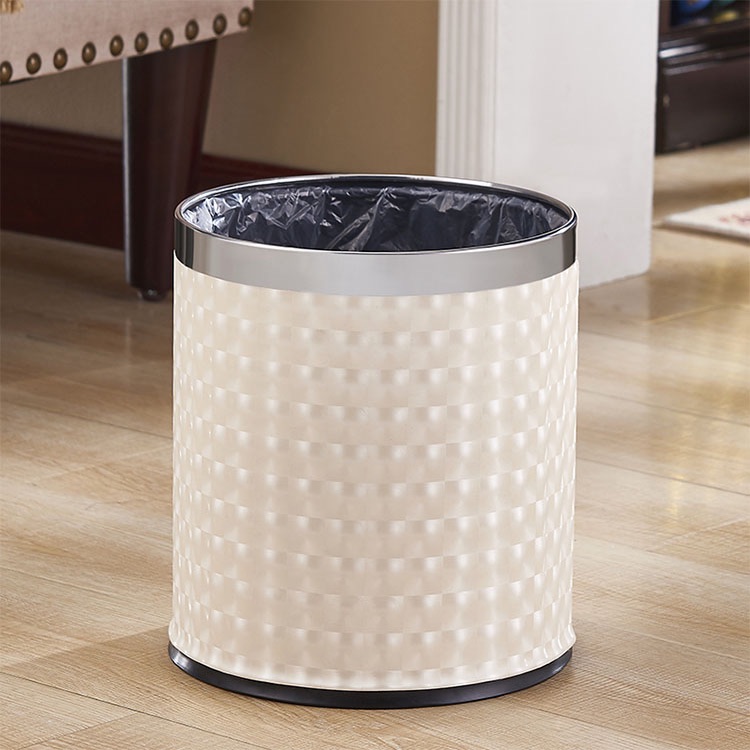
I have watched polished hotel lobbies, corporate atriums, airport-adjacent reception areas, and medical buildings spend serious money on stone floors, scent systems, brass signage, and imported lounge furniture, then sabotage the whole front-of-house experience with a commercial waste bin that takes two hands, one hip, and a muttered curse to empty.
Why does that happen?
Because procurement often buys the object, not the service cycle.
A lobby trash can is not just a container. It is a daily collision point between guests, cleaners, building engineers, sustainability managers, brand standards, ADA circulation rules, fire-risk thinking, and the not-so-glamorous physics of wet coffee cups, PET bottles, food wrappers, paper towels, and overfilled liners. The best commercial waste bins are not the prettiest ones in the catalog. They are the bins that stay clean-looking after 700 people touch the room before lunch.
Hard truth: high-traffic waste bins fail in public.
A bad office bin can hide under a desk. A bad lobby bin sits under the logo wall, next to the security desk, by the elevator bank, beside the café queue, or outside the conference center where every visitor makes a snap judgment. If it smells, overflows, blocks a path, stains a floor, or confuses users into contaminating recycling, the facility team owns the mess.
That is why service-friendly trash cans matter. Not as a design preference. As operational insurance.
For teams standardizing across properties, the better move is to specify lobby trash cans built for indoor traffic and lock the service details before rollout: removable liners, liner retention, door access, clear openings, finish durability, signage, and replacement-part logic. The building will tell you quickly whether you got it right.
The Data Is Blunt: Waste Handling Is a Risk Business
The glamorous version of facility management talks about guest experience. The real version talks about injuries, blocked walkways, contamination, labor minutes, and repeatable procedures.
OSHA’s 2024 injury and illness data release pulled from more than 370,000 Form 300A summaries and more than 732,000 partial Form 300/301 records, which is a reminder that workplace risk is not theoretical paperwork; it is recorded, reportable, and often tied to routine tasks people stop noticing. See OSHA’s own release on 2024 injury and illness data.
Now narrow the lens. The BLS 2024 industry table reports solid waste collection at 5.0 total recordable cases per 100 full-time workers, higher than the all-private-industry rate of 2.3 shown in the same table. A lobby attendant is not a municipal hauler, obviously, but the pattern is useful: waste work punishes bad handling design. The BLS table on nonfatal occupational injury and illness rates by industry is not subtle about that.
And recycling? Also messy. The EPA’s U.S. recycling infrastructure assessment, tied to August 2024 reports to Congress, estimates $36.5 billion to $43.4 billion in investment is needed to modernize curbside collection, drop-off, processing, MRFs, composting, anaerobic digestion, and related infrastructure by 2030. That does not mean your lobby bin alone fixes recycling. It means the system is fragile, expensive, and brutally dependent on correct sorting at the first touchpoint. Read the EPA’s page on the U.S. recycling infrastructure assessment.
So yes, the bin matters.
Not because it is noble. Because it is where behavior becomes material.
“Service-Friendly” Means the Cleaner Wins in Under 20 Seconds
Most commercial trash receptacles are marketed to the buyer. Good ones are designed for the person who empties them.
That distinction is everything.
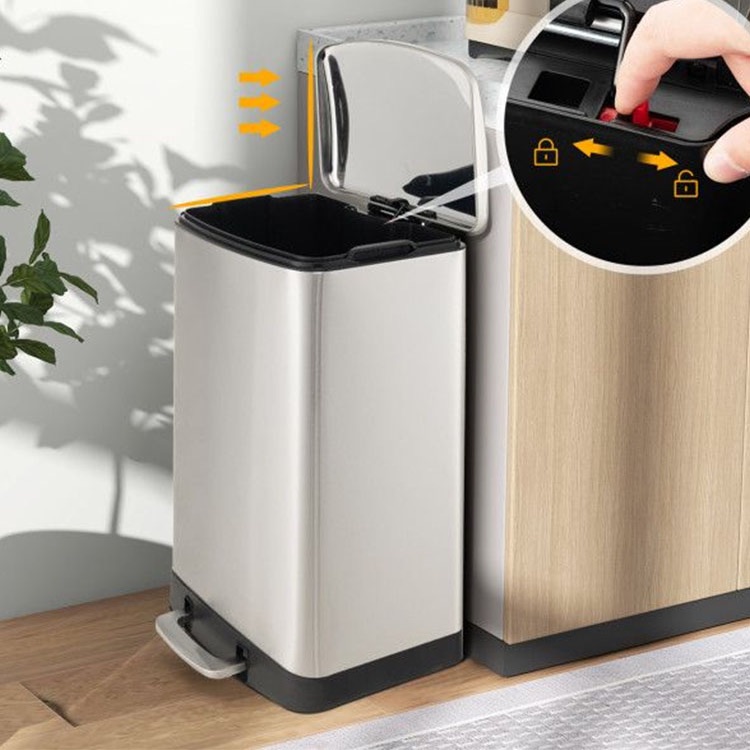
A service-friendly waste bin should reduce the number of motions required to inspect, open, remove, replace, wipe, close, and reset the unit. I do not care how elegant the powder-coated steel looks if the liner collapses into the can after 40 minutes, if suction locks the bag against the wall, or if the door hinge forces staff to drag the bin into the traffic lane.
The quiet killers are small.
Bag drag. Rim grime. Splash zones. Missing liner rings. Doors that swing into pedestrian flow. Openings that accept everything, including pizza boxes and half-full drinks. Labels printed too small. “Recycling” streams that look decorative rather than functional. Stainless finishes that show every fingerprint under 4000K lobby lighting.
A lobby is theatre, but the service corridor is math.
If one waste point takes 45 extra seconds to service, and staff touch it 12 times per day, across 40 locations, that is 6 labor hours per week burned on friction nobody budgeted for. And that number is conservative. Add spills, complaint response, liner failures, and weekend event traffic, and the “cheap” bin starts billing you after purchase.
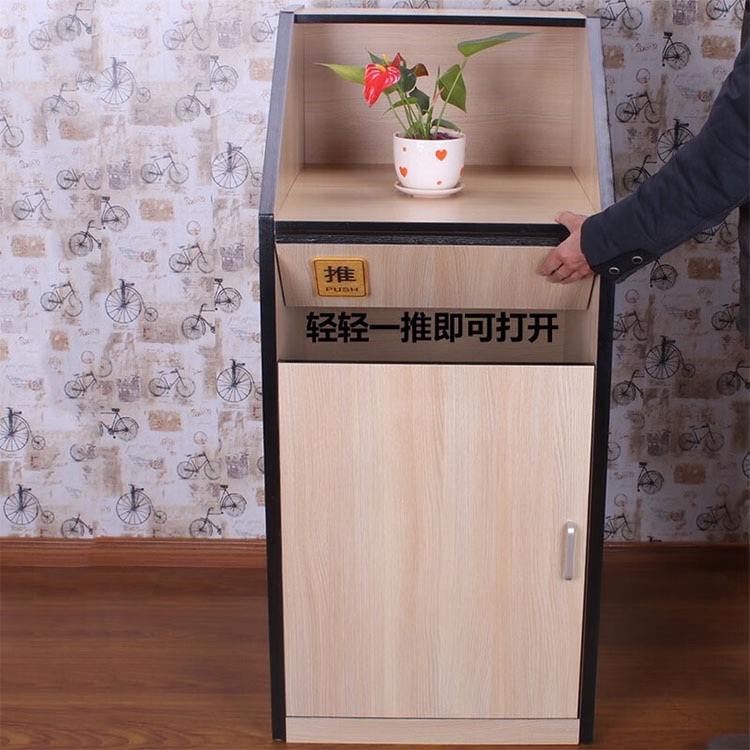
For higher-volume public interiors, the better spec is usually a commercial recycling bin with removable liners or a locked, front-access receptacle that lets staff change bags without lifting a heavy, wet liner vertically through a narrow top opening.
What I Look for Before I Trust a Lobby Waste Bin
Failure Point in High-Traffic Lobbies
Cheap Bin Behavior
Service-Friendly Waste Bin Behavior
Operational Payoff
Liner change
Bag snags, tears, or suctions to the wall
Removable liner, vented body, rim grip, or door access
Faster changeouts, fewer spills
User sorting
One vague opening for everything
Shape-coded openings for landfill, bottles/cans, paper, or organics
Lockable access, controlled openings, weighted base
Less disruption in public areas
High-Traffic Lobbies Create Four Waste Streams, Not One
Here is where many facility teams lie to themselves.
They call it “trash.”
It is not trash. It is mixed behavior.
In a high-traffic lobby, you are likely handling at least four streams: landfill waste, recyclable containers, paper/cardboard, and “problem waste” like liquids, food residue, batteries, masks, sharps-adjacent medical debris in healthcare contexts, or event-generated contamination. The bin has to communicate faster than a distracted person can make a bad decision.
That is why clear-label commercial recycling and trash bins outperform vague “eco” setups.
A person walking through a lobby will not read a paragraph. They will read color, shape, aperture, icon, and proximity. A round hole says bottle. A slot says paper. A black opening says landfill if the rest of the system is consistent. A green leaf graphic says almost nothing if the user is holding a coffee cup with a plastic lid and a half-inch of liquid left inside.
I have a strong opinion here: most recycling signage is designed by people who already know the answer.
That is a failure. Signage should be designed for the confused user, the visitor, the conference attendee, the hotel guest who is late for checkout, and the delivery driver who has never seen your property standards. A commercial sorting station with clear labels does not just “look organized.” It narrows the decision.
The best waste bins for high-traffic areas are not passive containers. They are behavioral prompts.
Placement Is a Liability Decision Disguised as Interior Design
Put the bin in the wrong place and you create three problems at once: people miss it, staff hate it, and accessibility gets messy.
The ADA Standards say protruding objects must not reduce the required clear width of accessible routes, and the U.S. Access Board explains that objects can be recessed in alcoves so they project no more than 4 inches into circulation paths in certain conditions. That is not “design trivia.” It is what separates a clean lobby plan from an avoidable complaint. See the ADA.gov section on required clear width and the Access Board guide to protruding objects.
OSHA’s walking-working surfaces rule also expects workplaces to be kept clean, orderly, sanitary, and free of hazards such as sharp or protruding objects, leaks, spills, snow, and ice. A bin that encourages overflow beside an entrance mat is not just ugly. It is a housekeeping defect waiting to become an incident report. Read OSHA’s rule at 29 CFR 1910.22.
So where should lobby waste bins go?
Not where the rendering looks nice. Where disposal actually happens.
Near elevator banks. Near exits. Beside café seating, but not inside the queue turn. At conference-room thresholds after events. At security screening exits where visitors shed badges, wrappers, and bottles. Near restrooms, but outside door maneuvering clearances. At reception-adjacent zones only if staff can service the unit without bending into a guest’s knees.
And never, never as a lone decorative object in the middle of a circulation path.
The Dirty Secret: Capacity Is Overrated
Everyone asks, “How many gallons?”
Fine. Capacity matters.
But high capacity with poor access is just a larger problem. A 30-gallon lobby trash can with a bad liner fit can take longer to service than a 15-gallon unit with a proper removable insert. A multi-stream station with huge openings can collect more contamination than material. A heavy metal unit can feel premium while quietly damaging floors, door frames, and cleaner morale.
The better question is: how fast can the bin return to guest-ready condition?
That is the service metric.
Commercial waste bins in lobbies should be specified around peak-use intervals: morning entry, lunch traffic, event breaks, checkout windows, shift changes, school dismissal, visiting hours, and transit surges. A hotel lobby at 7:30 a.m. behaves differently from the same lobby at 2:00 p.m. A medical office lobby after flu-season appointments behaves differently from a corporate tower on a Friday.
This is why I like modular systems. Not because modular sounds advanced. Because behavior changes.
A custom 3-stream recycling bin project lets a facility team adjust openings, labels, inserts, and stream logic as waste audits expose what people actually throw away. That is the grown-up version of sustainability: not a poster, but a system that can be corrected.
Spec the Bin Like You Spec Flooring, Lighting, or Security Hardware
Nobody serious buys lobby flooring without thinking about traffic, cleaning chemistry, slip resistance, lifecycle cost, and replacement matching. Yet waste bins often get treated like loose accessories.
That is backward.
A lobby bin spec should include material, finish, dimensions, capacity, stream count, liner access, door swing, aperture type, lock requirements, signage method, cleaning compatibility, replacement parts, carton marking, and reorder control. If the project spans multiple sites, it should also include finish standards, private-label requirements, packaging marks, and installation notes.
For hotel groups, public facilities, and FM providers, that is where an OEM/ODM waste-bin program earns its keep. The point is not customization for vanity. The point is repeatability.
Same liner size. Same label language. Same door access. Same service motion. Same finish tolerance. Same receiving documentation. Same replacement pathway.
I know this sounds unromantic.
Good. Facilities work is full of unromantic things that save money.
Lobby Waste Bin Specification Checklist
Specification Area
Minimum Acceptable Standard
Better Standard for High-Traffic Lobbies
Material
Resin, powder-coated steel, or stainless steel
Finish matched to cleaning chemicals and fingerprint tolerance
Access
Top lift or open top
Front door, removable liner, or easy-pull insert
Sorting
Single landfill stream
2-stream or 3-stream with clear openings
Signage
Text label only
Icon, color band, opening shape, multilingual option
Placement
Freestanding
Wall-adjacent, alcove-aware, stable, route-safe
Security
Open access
Lockable door or controlled access where needed
Maintenance
Generic bag fit
Defined liner size, retention ring, spare part pathway
Rollout
One-off purchase
Spec library, batch QC, carton labels, reorder control
Sustainability Dies at the Opening
I am going to say the quiet part out loud: a lot of commercial recycling programs are theater.
Not all. But many.
They put out a blue bin, add a leaf icon, and assume diversion improves. Then the janitorial contractor finds liquid coffee in the paper stream, food in the bottle stream, and compostable-looking packaging that is not accepted by the local processor. The report still says “recycling station.” The material says otherwise.
Service-friendly design changes that.
A good recycling and trash setup makes the wrong action slightly harder and the right action obvious. Restrictive openings help. Protected labels help. Consistent stream order helps. Removable liners help because staff can inspect contamination quickly instead of wrestling with opaque bags in a back room. Door access helps because nobody wants to lift a leaking bag chest-high through a polished lobby unit.
If sustainability matters, connect the lobby bin to the operational plan. The site’s sustainable hotel supplies and recycling station standards should not live in a PDF nobody reads. They should show up in the object itself: aperture, icon, color, liner, service access, and placement.
That is where commercial recycling and trash bins stop being décor and start behaving like infrastructure.
How to Choose Waste Bins for Commercial Lobbies Without Getting Fooled
Start with observation, not the catalog.
Watch the lobby for one week if possible. Count the traffic peaks. Photograph overflow points. Ask cleaning staff which bins they hate. Check what lands in the wrong stream. Measure clear routes. Look at where people naturally pause: elevator waiting areas, reception handoffs, café pickup zones, badge return points, restroom exits, and event doors.
Then write the spec.
Not “black stainless lobby bin.”
Write this instead: “Powder-coated steel 2-stream lobby trash/recycling station, front-service door, removable rigid liners, landfill + bottles/cans openings, protected icon labels, low-fingerprint finish, stable base, no projection into accessible route, compatible with standard liner size, lockable access.”
That is a procurement sentence with teeth.
And when you request pricing, ask suppliers for the uncomfortable details: liner dimensions, cleaning method, MOQ, spare parts, hinge type, labeling method, packaging marks, finish variance, lead time, sample timing, and whether the same configuration can be reordered across 10, 50, or 200 sites.
For B2B programs, the winner is rarely the lowest unit price. It is the system that keeps the lobby clean at 11:47 a.m. when the first wave of coffee cups hits and the housekeeping team is already short one person.
FAQs
What are service-friendly waste bins?
Service-friendly waste bins are commercial trash receptacles designed so staff can empty, clean, reposition, inspect, and reset them quickly without wrestling with stuck liners, awkward doors, sharp edges, blocked routes, unclear sorting labels, or hard-to-wipe interiors during peak visitor traffic. They reduce labor drag because the service motion is built into the product design, not improvised later by cleaning teams.
In practice, that means removable liners, vented bodies, liner rings, front-access doors, protected signage, smooth interior surfaces, stable bases, and openings matched to real waste streams. The easier a bin is to service, the less likely it is to overflow, smell, leak, or turn into a public complaint.
Why do high-traffic lobbies need different waste bins than offices?
High-traffic lobbies need different waste bins because they face faster fill rates, more visitor confusion, more liquid waste, tighter appearance standards, stricter circulation concerns, and more public visibility than private office areas or back-of-house zones. A lobby bin must manage behavior, brand perception, safety, and service speed all at once.
An office bin can be modest and still work. A lobby bin has to survive coffee cups, conference traffic, delivery waste, guests, tenants, patients, students, and staff without looking neglected. That usually means stronger materials, better openings, faster liner changeouts, and clearer signage.
How often should lobby trash cans be emptied?
Lobby trash cans should be emptied according to observed fill rate and peak traffic windows, not only a fixed schedule, because overflow, liner suction, leaks, odor, and recycling contamination often appear before a routine service checkpoint in hotels, hospitals, schools, offices, and public buildings. The right interval comes from a waste audit.
For many busy properties, that means checking bins before and after predictable surges: morning arrivals, lunch, event breaks, checkout periods, visiting hours, or evening departures. If staff constantly top off bags before they are full because removal is difficult, the issue may be bin design rather than frequency.
What features should I look for in commercial recycling and trash bins?
Commercial recycling and trash bins should have clear stream labels, durable finishes, restricted openings, removable liners, stable bases, easy-clean surfaces, accessible placement dimensions, and service doors or liner systems that reduce awkward lifting. The best units make the correct disposal choice obvious while making staff servicing faster and cleaner.
For a lobby, I would prioritize liner access over decorative styling. Then I would check signage visibility, opening shape, bag retention, security needs, replacement-part availability, and whether the supplier can repeat the same configuration across future projects without changing dimensions or finishes.
Are multi-stream lobby bins worth it?
Multi-stream lobby bins are worth it when the facility has enough recycling volume, clear local hauling rules, consistent labels, and staff procedures for checking contamination before collection. Without those conditions, a multi-stream station can look sustainable while quietly producing dirty material that is hard to recover.
The best use case is a lobby with predictable bottles, cans, paper, and landfill waste: hotels, offices, universities, transport hubs, conference centers, and mixed-use properties. Start with two streams if user confusion is high, then expand after a waste audit proves the need.
Your Next Steps: Stop Buying Bins Like Accessories
Treat the lobby bin as a front-of-house operating system.
Before the next purchase order, walk the lobby with the cleaning lead, security lead, sustainability owner, and procurement manager. Identify where waste is created, where people pause, where bags fail, where recycling gets contaminated, and where a bin could block movement. Then specify the unit around service: liner access, stream logic, labels, materials, cleaning, placement, and reorder control.
For multi-site programs, do not gamble on one-off sourcing. Build a controlled spec with the right commercial waste bins, lobby waste bins, and recycling stations from the start.
Ready to standardize a cleaner, faster, more service-friendly lobby waste system? Request a B2B quote from Facility Project Solutions and send your site count, traffic profile, preferred streams, dimensions, finish requirements, and rollout timeline.