Share your requirements and target market. We’ll suggest the right configuration, sampling path, and production plan.
During business hours, We can usually provide a preliminary quote within two hours.
: workflow-based setups to improve efficiency and keep corridors tidy
: easier bag changes and maintenance, built for daily facility use
: 1–3 stream options with clear icon/label systems to reduce contamination
: materials, finishes, branding & packaging locked for consistent reorders
Your info is used only for quoting and communication.
Should Hotels Use Different Trash Bins for Bedrooms and Bathrooms?
Bedroom and bathroom waste are not the same operational problem. This investigative guide breaks down why hotels should separate bin types by room zone, what specs matter, and how smarter hotel waste bins reduce housekeeping friction, guest complaints, and contamination.
Table of Contents
The Hard Truth: One Guest Room, Two Waste Behaviors
Two bins win.
When I look at room turnover from the housekeeper’s side, not from the interior designer’s side, bedroom waste and bathroom waste behave like two different material streams: one is dry, visible, snack-heavy, receipt-heavy, and presentation-sensitive; the other is wet, tissue-heavy, liner-dependent, and much more likely to create odor, splash, or guest disgust if the bin is wrong. Why would we spec them as if they were identical?
My answer is blunt: hotels should use different trash bins for bedrooms and bathrooms. Not always different in style. Different in function.
The bedroom bin is a guest-facing object. It sits near desks, minibars, sofas, luggage benches, or beds. It has to disappear visually while still being easy to find. The bathroom bin is a hygiene tool. It has to handle moisture, sanitary waste, used tissues, cosmetic pads, razors, hair, cotton swabs, and the occasional disaster that no procurement spreadsheet wants to name.
That distinction matters because waste is no longer just “trash.” The 2023 Annals of Tourism Research Empirical Insights study on hotel and restaurant waste notes that tourism produces more than 35 million tons of solid waste annually, and that waste patterns in hotels and restaurants differ significantly from other industries and even within the sector itself. In plain English: generic bins create generic failure.
And the hotel sector already knows waste systems are under scrutiny. The 2024 U.S. Green Lodging Trends Report found that 83.5% of U.S. hotels have implemented a waste reduction plan, while 75.8% operate recycling programs in guestrooms and front-of-house areas. That is not niche sustainability talk anymore. That is mainstream hotel operations.
So yes, the bin split matters. Bedroom versus bathroom is not a decorating question. It is a labor, hygiene, contamination, and guest-experience question.
Bedroom Trash Bins Are About Presentation, Sorting, and Quiet Compliance
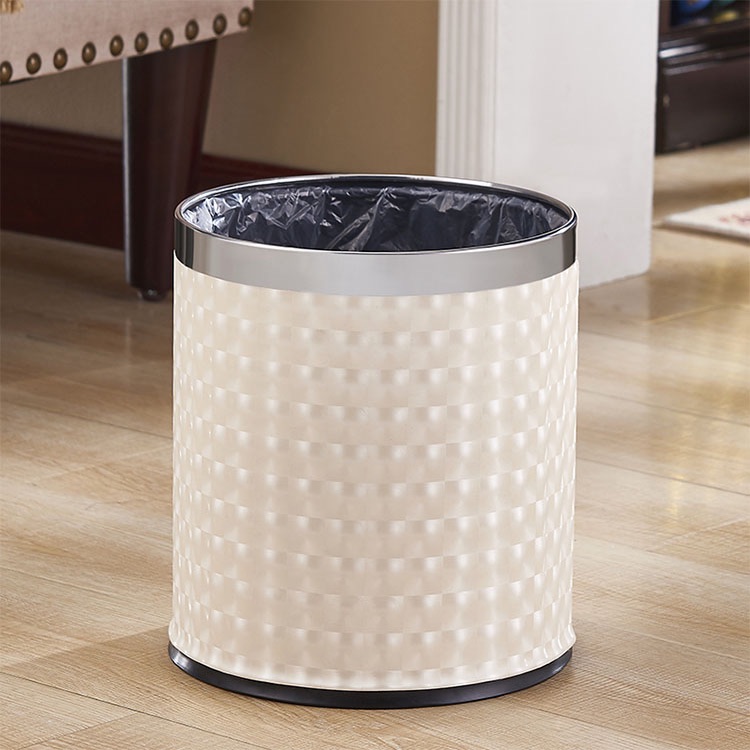
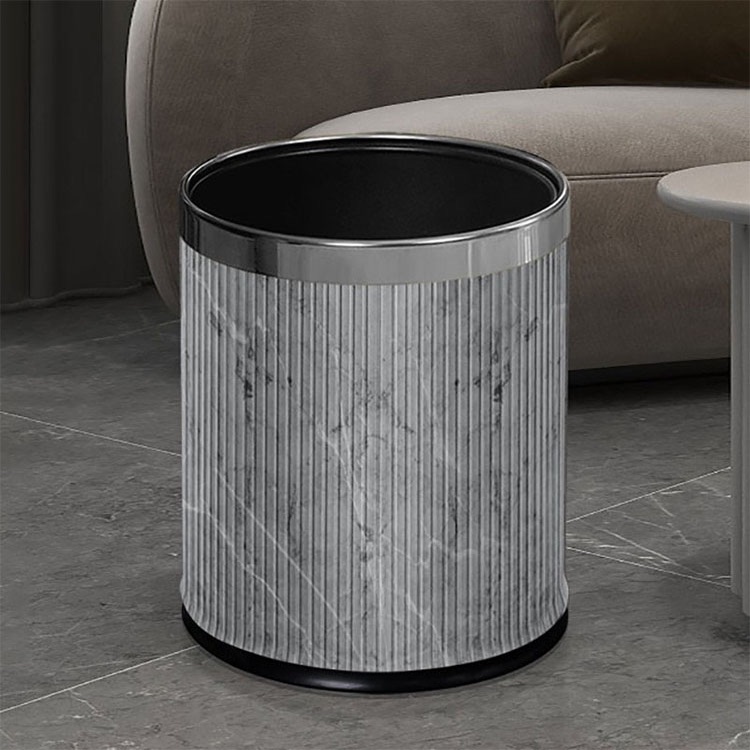
Hotel bedroom trash cans should be open-top, compact, easy to empty, and visually aligned with the room package. I like 10–15 L for most standard rooms, 15–20 L for extended-stay layouts, and a clean liner-ring design if the brand wants the bag hidden.
This is where hotel room trash bins earn their keep. The best guest room wastebaskets do not need a pedal, lid, or complicated mechanism. In fact, I think lids in bedrooms are often over-specified. Guests toss receipts, snack wrappers, coffee sleeves, tissues, paper bags, amenity packaging, and water-bottle labels. Make the opening obvious. Make the liner change fast. Make the finish consistent.
But here is where hotels get cute and lose money: they buy a beautiful guest room wastebasket that is too narrow for housekeeping hands, too light to stay upright, or too textured to wipe down quickly. I have seen properties obsess over leatherette grain and forget that a room attendant has maybe 20–30 minutes to reset the entire room, not perform bin archaeology.
If the property is pushing sustainability, the bedroom is also the logical place to introduce dual-stream behavior: landfill plus recycling. Not the bathroom. CalRecycle’s SB 1383 business guidance is instructive here because it requires businesses to place organic waste and recycling containers wherever customer disposal containers are provided, except restrooms. That “except restrooms” detail is not random; bathrooms are contamination zones.
A smart hotel room setup often looks like this:
Room Zone
Best Bin Type
Practical Capacity
Main Waste Profile
Design Priority
Mistake I See Too Often
Bedroom / Desk
Open-top guest room wastebasket
10–15 L
Paper, packaging, cups, snacks, receipts
Quiet visual integration
Too small, too decorative, hard liner removal
Bedroom / Extended Stay
Larger open-top or dual-bin unit
15–20 L
Food packaging, bottles, delivery waste
Sorting clarity
No recycling option despite heavy packaging
Bathroom
Pedal bin with liner
5–8 L
Tissues, sanitary waste, cotton pads, wet wipes
Hygiene and odor control
Open bin beside toilet
Suite Bathroom
Soft-close pedal bin
8–12 L
Higher-volume personal-care waste
Touchless or low-touch use
Polished finish that fingerprints badly
Public Lobby
Larger open-top or sorting station
40–80 L+
Cups, wrappers, bottles, event waste
Fast service and traffic flow
Pretty bin with slow servicing
The bedroom is where 2-stream waste sorting bins for hotels can make sense, especially in long-stay, conference, resort, and serviced-apartment formats. But do not drop a three-stream recycling puzzle into a 24 m² room and expect exhausted guests to study icons at midnight. The label has to do the work.
Bathroom Trash Bins Are Hygiene Equipment, Not Decor Accessories
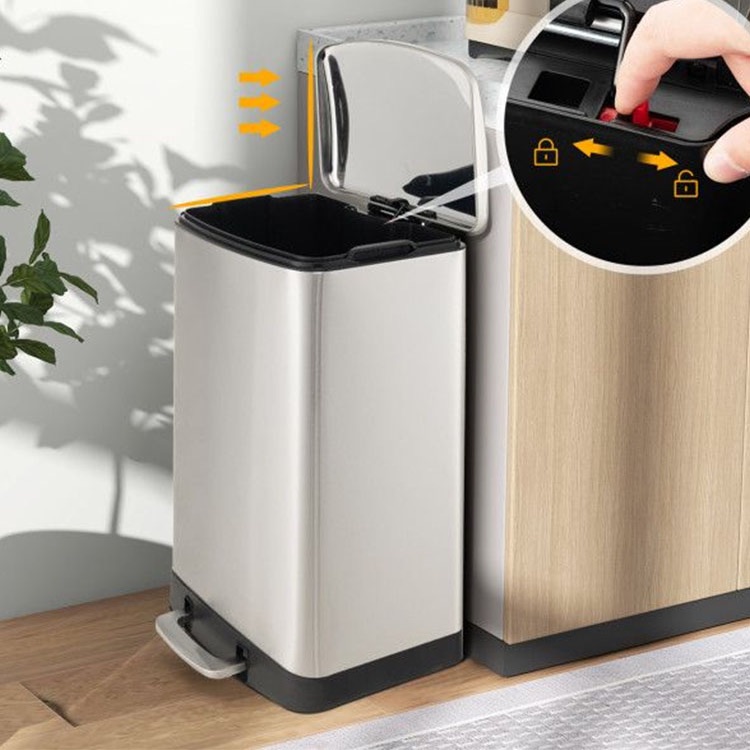
Bathroom bins should be smaller, lined, preferably pedal-operated, corrosion-resistant, and easy to disinfect. I would rather see a basic 5–8 L stainless steel pedal bin that housekeeping can wipe in six seconds than a sculptural open-top bin that turns every tissue into a visual crime scene.
This is where hotel bathroom trash bins separate serious operators from brochure operators.
Bathrooms generate wet waste. Bathrooms generate private waste. Bathrooms generate odors faster because humidity accelerates the problem. A bedroom bin can often be open. A bathroom bin should usually be lidded, pedal-operated, and fitted with a liner that does not collapse into the container when a guest drops something damp.
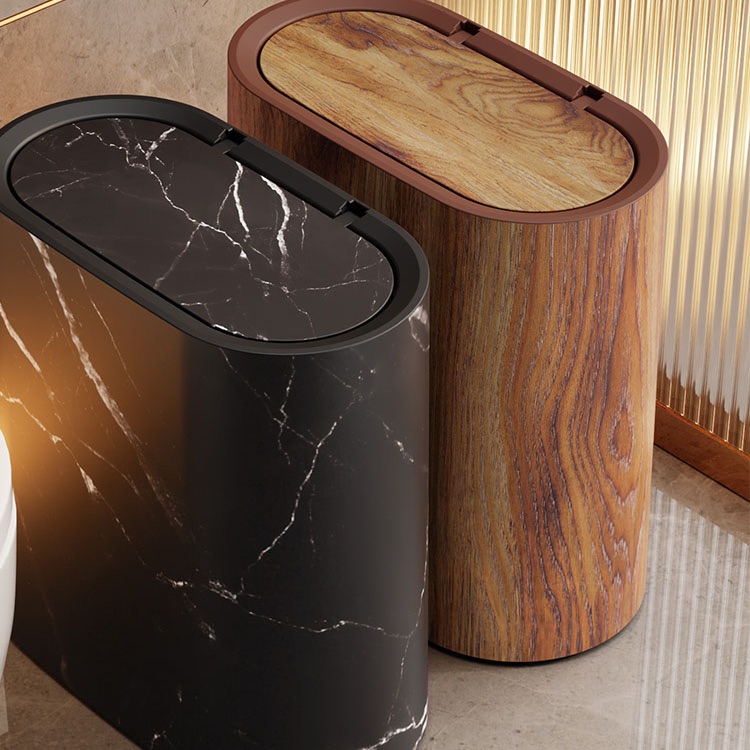
Material matters. Powder-coated steel can work. 304 stainless steel works better in humid, coastal, spa, or high-turnover bathrooms. ABS or PP plastic can work in economy properties if the finish does not stain and the lid mechanism is replaceable. Wood-look bins in bathrooms? I would avoid them unless the engineering is strong and the property accepts higher cleaning risk.
There is also a legal-policy signal here. California SB 1383 rules make restrooms an exception for customer-facing organics and recycling container placement, while still requiring businesses to manage organic waste and recyclables elsewhere with correct labels and education. Again, bathrooms are not ideal sorting environments. They are disposal environments.
And for larger California hotels with food operations, SB 1383 is not abstract. CalRecycle lists hotels with on-site food facilities and 200+ rooms among mandated food donors, with contracts, recordkeeping, and food recovery obligations entering the operational picture. That is back-of-house food waste, not bathroom waste, but it proves the broader point: waste handling is now compliance infrastructure, not housekeeping trivia.
So I would spec bathroom bins like this:
Bathroom Bin Specification I Trust
Use a 5–8 L pedal bin for standard rooms, 8–12 L for suites, and a soft-close lid if the brand category justifies it. Choose 304 stainless steel, powder-coated steel, or high-grade PP/ABS. Add a removable inner bucket. Use a liner system that hides bag overhang. Keep the geometry simple enough for a gloved hand and disinfectant wipe.
No drama. No gimmicks.
The Contamination Problem Nobody Wants to Own
The dirty secret in hospitality trash cans is not that guests refuse to recycle. It is that hotels often ask guests to recycle inside a badly designed system.
The EPA’s 2024 recycling infrastructure assessment identifies contamination of recyclables, low collection rates, weak markets, low commercial profitability, and limited decision data as major recycling challenges. It also estimates that total recycling investment needs fall around $36 billion to $43 billion.
That macro problem shows up in a hotel room as one simple question: where does the guest put the half-full coffee cup?
If the only visible container is a bedroom wastebasket, everything goes there. If a recycling bin exists but sits across the room with unclear icons, guests guess. If the bathroom has a recycling symbol, guests contaminate the stream with tissue, cotton, plastic film, and wet items. Then the “green program” becomes a housekeeping sorting burden. Staff hate it. Haulers reject it. Management blames guests.
The 2024 Green Seal hotel guidebook frames waste minimization, reuse, recycling, tracking, chemical management, purchasing, and continual improvement as part of lodging-property environmental requirements. That should push procurement teams toward systems, not one-off bin purchases.
This is why I like a three-zone logic:
Zone 1: Bathroom
One small lidded liner bin. No recycling message unless local regulation or property policy demands it. The job is clean containment.
Zone 2: Bedroom
One clean open-top bin, or one paired landfill/recycling setup for brands with active diversion programs. The job is guest clarity.
Zone 3: Corridor, Lobby, Breakfast Area, Meeting Space
Use larger service-friendly waste bins or multi-stream stations with consistent color, icons, and apertures. The job is volume control and cleaner sorting.
This is also where eco-friendly commercial trash bins for guest areas and back-of-house belong in the conversation. A property does not become “sustainable” because it bought bamboo-look guest room wastebaskets. It becomes better when the bin family, liner sizes, labels, collection route, and staff reset process work together.
What the Data Says About Better Hotel Waste Bins
The hotel industry is moving, but unevenly. The 2024 U.S. Green Lodging Trends Report found that 80.6% of hotels have recycling programs in back-of-house areas, while only about 30.2% have conducted a solid waste assessment within the past three years. That gap is the story. Hotels have programs. Many still lack measurement.
The same report highlights Hilton Orlando Lake Buena Vista as a waste-management example, citing about 1,400 lb of cooking oil recycled biweekly, 50% reused, and 10,000–15,000 lb of food scraps composted monthly at Walt Disney World Park. That is not bedroom-bin waste, obviously. But it shows what real waste infrastructure looks like: measured streams, known volumes, operational partners, and repeatable collection.
Now shrink that logic down to the guest room.
If your hotel waste bins are not mapped to the waste stream, you are not managing waste. You are just decorating disposal points.
Procurement Question
Weak Answer
Better Answer
Should bedroom and bathroom bins match?
“Yes, same style everywhere.”
They can share a finish, but they need different functions.
Should bathroom bins be open-top?
“It saves money.”
Usually no; use lidded pedal bins for privacy and moisture control.
Should guestrooms have recycling?
“Only if guests ask.”
Use bedroom or room-entry zones, not bathrooms, and keep labels simple.
Should liners be visible?
“Guests do not care.”
Luxury and upscale rooms should hide liner edges where possible.
Should hotels use one supplier family?
“Any bin is fine.”
A coordinated bin family reduces mismatch, spare-part chaos, and rollout drift.
Should public-area bins match guest-room bins?
“Yes, for branding.”
Public-area bins need higher capacity, service doors, restricted openings, and traffic-flow logic.
For properties sourcing across multiple sites, this is where commercial trash bins configured for brand standards become useful. Multi-site hotel groups should not let every GM or local purchasing manager freestyle the bin program. That is how you end up with five liner sizes, three finishes, two broken pedal mechanisms, and one angry housekeeping supervisor.
My Practical Rule: Same Design Language, Different Bin Mechanics
Should hotels use separate trash bins for bedrooms and bathrooms? Yes. But the smartest properties do it subtly.
Use one visual language: matte black, brushed stainless, warm neutral, leatherette, or powder-coated finish. Then change the mechanics by room zone. Bedroom: open, dry, easy to empty. Bathroom: lidded, lined, moisture-resistant. Public area: high-capacity, service-friendly, sorting-capable.
That is the procurement sweet spot.
If you are choosing the best trash bins for hotel rooms, do not start with the catalog photo. Start with the waste profile:
Is the room standard, suite, long-stay, resort, or conference-heavy?
Does the property have real recycling pickup, or just a sustainability page?
Are guests eating delivery meals in-room?
Are bathroom floors humid, coastal, or spa-adjacent?
Can housekeeping remove and replace liners without fighting the bin?
Does the finish survive peroxide cleaner, quats, fingerprints, and daily abuse?
I would rather buy a slightly plainer hospitality trash can that survives 36 months of hard service than a “luxury” bin that photographs well and fails in month six. That is not cynicism. That is asset management.
For front-of-house continuity, the same logic extends to lobbies and corridors. A luxury lobby trash can with an open top can work beautifully in reception areas because the waste is high-frequency and low-privacy. Put that same open-top logic beside a hotel toilet and you have made the guest experience worse.
FAQs
Should hotels use separate trash bins for bedrooms and bathrooms?
Yes, hotels should use separate trash bins for bedrooms and bathrooms because each zone receives different waste, faces different hygiene risks, and requires different servicing mechanics during housekeeping. Bedroom bins handle dry guest waste and visual presentation, while bathroom bins need liners, lids, moisture resistance, and more private disposal behavior.
Bedroom bins can be open-top and design-led. Bathroom bins should usually be pedal-operated and lined. The best setup keeps the same design language across the room while changing the functional spec.
What size trash bin is best for a hotel bedroom?
A hotel bedroom trash bin is usually best at 10–15 L for standard guestrooms because that size handles paper, packaging, snack waste, receipts, and small disposable items without taking up too much visible floor space. Extended-stay rooms or suites may need 15–20 L, especially where guests eat delivery meals.
The real test is not capacity alone. The bin must be easy for staff to empty, stable on carpet or hard flooring, and compatible with standard liner sizes.
What size trash bin is best for a hotel bathroom?
A hotel bathroom trash bin is usually best at 5–8 L for standard rooms because bathroom waste is smaller in volume but higher in hygiene sensitivity, moisture exposure, and guest privacy expectations. Suites, spa bathrooms, and family rooms may justify 8–12 L pedal bins with removable inner buckets.
I prefer pedal lids in bathrooms because guests do not want to touch a bin after washing hands, applying cosmetics, shaving, or handling tissues. Soft-close lids are worth considering in upscale rooms.
Should hotel bathrooms have recycling bins?
Hotel bathrooms generally should not be the primary location for recycling bins because bathroom waste is often wet, tissue-heavy, and contamination-prone, making it a poor fit for clean recyclable streams. Recycling belongs in the bedroom, entry zone, corridor, lobby, meeting area, or breakfast space where guests discard cleaner packaging and bottles.
There are exceptions, but they need strong signage and local hauling support. A recycling symbol on the wrong bathroom bin can create more contamination than diversion.
What materials are best for hotel bathroom trash bins?
The best materials for hotel bathroom trash bins are 304 stainless steel, powder-coated steel, or high-grade PP/ABS plastic because they resist moisture, wipe down quickly, and tolerate frequent liner changes. The material should handle humidity, cleaning chemicals, fingerprints, and repeated foot-pedal use without rusting or deforming.
I would be careful with absorbent finishes, rough textures, and decorative wraps in bathrooms. They may look premium on day one and tired after a quarter of real occupancy.
How many trash bins should a hotel room have?
A standard hotel room should usually have two trash bins: one bedroom wastebasket for dry guest waste and one smaller bathroom bin for private or wet waste. Rooms with kitchenettes, long-stay formats, or strong sustainability programs may need a third container or a paired recycling setup in the bedroom area.
Do not add bins just to look green. Add them when the waste stream, signage, collection route, and staff process support the extra container.
Your Next Steps: Audit the Room Before Buying the Bin
Before ordering new hotel trash bins, walk five occupied-room turnovers with housekeeping and write down what actually lands in the bedroom bin, the bathroom bin, and the corridor cart. Then standardize the spec: bedroom wastebasket, bathroom pedal bin, optional recycling station, liner sizes, finish, cleaning method, and replacement parts.