Share your requirements and target market. We’ll suggest the right configuration, sampling path, and production plan.
During business hours, We can usually provide a preliminary quote within two hours.
: workflow-based setups to improve efficiency and keep corridors tidy
: easier bag changes and maintenance, built for daily facility use
: 1–3 stream options with clear icon/label systems to reduce contamination
: materials, finishes, branding & packaging locked for consistent reorders
Your info is used only for quoting and communication.
From Single-Use Reduction to Multi-Stream Sorting: A Green Hotel Equipment Checklist
Hotels don’t become greener because they buy prettier bins or swap plastic bottles for “eco” versions. They get greener when equipment, housekeeping, purchasing, and guest behavior stop fighting each other.
I’ve walked through hotel back corridors that told the whole story before anyone opened a spreadsheet.
Clean lobby. Polished brass. A tasteful “we care about the planet” sign near reception. Then, behind the swing door, one swollen black bag full of half-used amenity bottles, wet towels, breakfast wrappers, plastic cups, banana peels, broken hangers, and God knows what else.
That’s the program.
A mess.
And here’s the bit people in hospitality procurement don’t like hearing: most hotel sustainability work collapses because the equipment plan is built for the guest-facing photo, not the dirty 6:40 a.m. housekeeping route when room attendants are under time pressure, banquet staff are clearing plates fast, and nobody has the patience to read a cute recycling poster.
So yes, green hotel equipment matters. But not in the soft brochure way. It matters because equipment is where the promise either turns into a working system — or quietly dies beside the service elevator.
The legal pressure isn’t imaginary either. New York’s small plastic hospitality bottle rules kicked in on January 1, 2025 for hotels with 50 or more rooms, blocking small personal-care bottles under 12 ounces; smaller lodging properties follow on January 1, 2026, according to the New York State Department of Environmental Conservation. California moved earlier with AB 1162, setting compliance dates of January 1, 2023 for larger lodging properties and January 1, 2024 for smaller ones, with penalties attached for repeat violations under the state law text published by LegiScan.
So this isn’t just brand fluff. It’s regulation, waste hauling, labor minutes, guest trust, SKU discipline, and housekeeping sanity all smashed into one operational problem.
Fun, right?
Table of Contents
Start With Single-Use Plastic Reduction, Not Recycling
Recycling is what you do after you’ve already failed to avoid the waste.
I know that sounds harsh. I mean it. A hotel that removes 30,000 tiny shampoo bottles a year isn’t just “saving plastic” for a LinkedIn post. It’s cutting receiving volume, stockroom clutter, bathroom waste, leakage complaints, housekeeping replenishment time, and all the little amenity-counting nonsense that nobody writes into the ROI model but every room attendant feels in their wrists.
This is why any sustainable hotel equipment checklist should start with removal. Not substitution. Removal.
Bulk dispensers. Refillable amenity systems. Reusable serviceware. Water refill stations. Smarter housekeeping carts. Better back-of-house sortation. Less loose stuff rolling around on carts like a bad warehouse pick face.
The EU is already leaning in the same direction. In 2024, Reuters reported that the European Parliament backed rules targeting single-use packaging, including mini shampoo bottles in hotels, while wider packaging waste reduction goals pointed toward 2030; the same report noted EU packaging waste had reached 84 million tonnes by 2021 in Reuters’ coverage of the EU packaging vote.
But watch what many hotels do. They replace one disposable with a greener-looking disposable, pat themselves on the back, and keep the same broken workflow.
I frankly believe that’s lazy procurement.
If the item doesn’t need to exist, don’t buy an “eco” version of it. Kill the item. Then redesign the process around that decision.
Hotel Area
Old Habit
Better Equipment Choice
Why It Matters
Guest bathroom
Mini shampoo, conditioner, lotion bottles
Wall-mounted bulk dispensers, tamper-resistant refill systems
Cuts single-use plastic and restocking frequency
Housekeeping
Loose amenity bottles on open carts
Compartmentalized amenity and linen carts
Reduces overstocking, pilferage, and product damage
Lobby
One generic trash bin
Multi-stream hotel recycling station
Makes sorting visible and easier
Corridors
Mixed waste bins
Paired landfill/recycling receptacles
Reduces guest confusion
Banquet areas
Disposable cups, stirrers, sachets
Reusable serviceware, refill stations, bulk condiment systems
High-volume waste reduction
Back of house
Open mixed-waste containers
Color-coded rolling bins with labels
Staff sort faster under time pressure
The housekeeping cart is weirdly important here.
Not glamorous. Absolutely central.
If room attendants are carrying loose amenities, used linen, replacement towels, cleaning chemicals, paper products, refill bottles, and random guest leftovers on a chaotic cart, the waste program is already bleeding out in the corridor. A properly designed custom linen and amenity cart for hotels gives staff actual zones: clean linen here, used linen there, amenities controlled, refills protected, trash separated before it becomes one ugly mixed bag.
That’s not a cute detail. That’s the workflow.
Multi-Stream Sorting Is Where Green Claims Get Tested
A hotel recycling station is not a sustainability program.
It’s a sorting prompt.
And most sorting prompts are terrible.
Guests are not standing in the lobby doing a waste audit. They’re holding a latte cup, a receipt, a water bottle, a snack wrapper, maybe a kid’s half-eaten muffin, and they’re looking for the fastest way to get rid of it without feeling guilty. Staff are moving faster than that. If your station makes them decode “dry,” “wet,” “mixed,” “recoverable,” or some other consultant vocabulary, they’ll dump it wherever the opening looks biggest.
I would too.
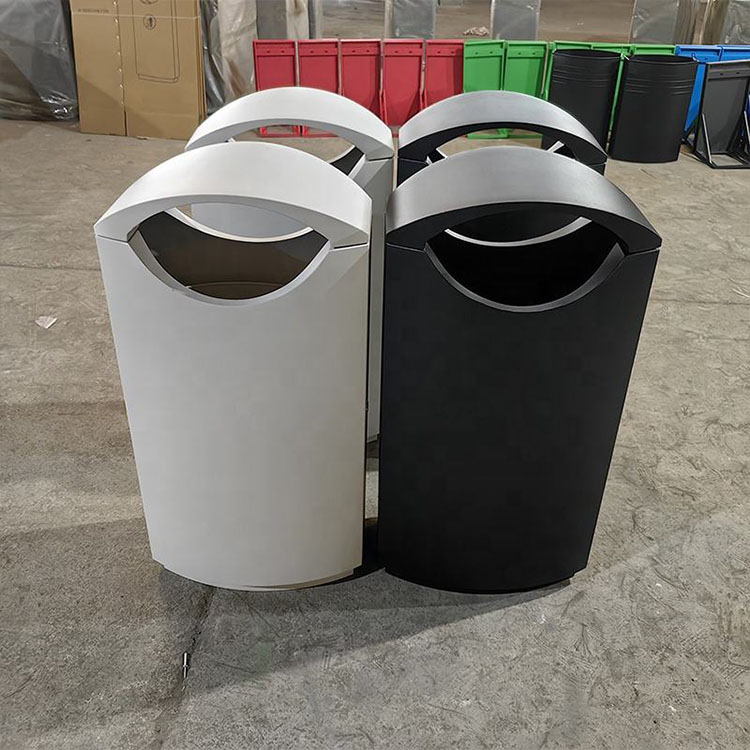
Use language people understand: landfill, bottles and cans, paper, food scraps. Match the opening shape to the waste stream. Put landfill next to recycling so contamination doesn’t spike. And for the love of common sense, don’t install five streams if your hauler collects two.
I’ve seen it happen. Beautiful multi-stream cabinets. Nice icons. Custom colors. Expensive finish. Then the night crew empties everything into the same dumpster because the waste contractor never agreed to separate pickup.
That’s not green. That’s prop work.
The food-waste side is even uglier. The U.S. EPA says food waste makes up about 24% of municipal solid waste disposed of in U.S. landfills, and landfills are the third-largest source of methane emissions from human activity in the country, according to the U.S. Environmental Protection Agency. Reuters also reported in May 2024 that landfills accounted for more than 14% of U.S. methane emissions in 2022, while EPA data linked food waste to roughly 58% of fugitive methane emissions from landfills in Reuters’ landfill methane report.
That puts hotel breakfast buffets, banquet scrape-down, staff cafeterias, prep waste, and room-service leftovers right in the middle of the methane conversation.
Not sexy. Expensive if ignored.
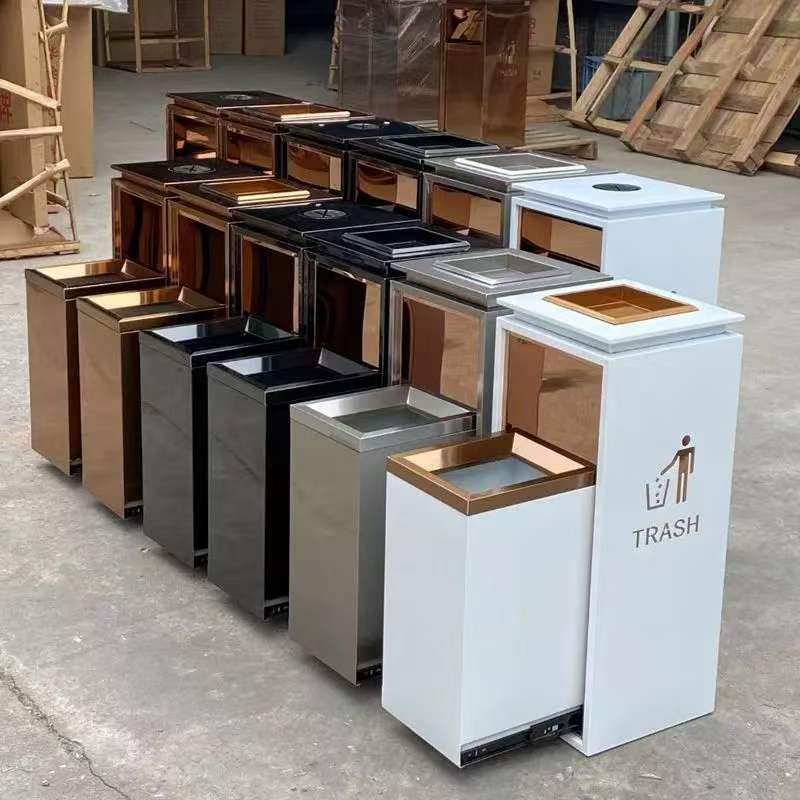
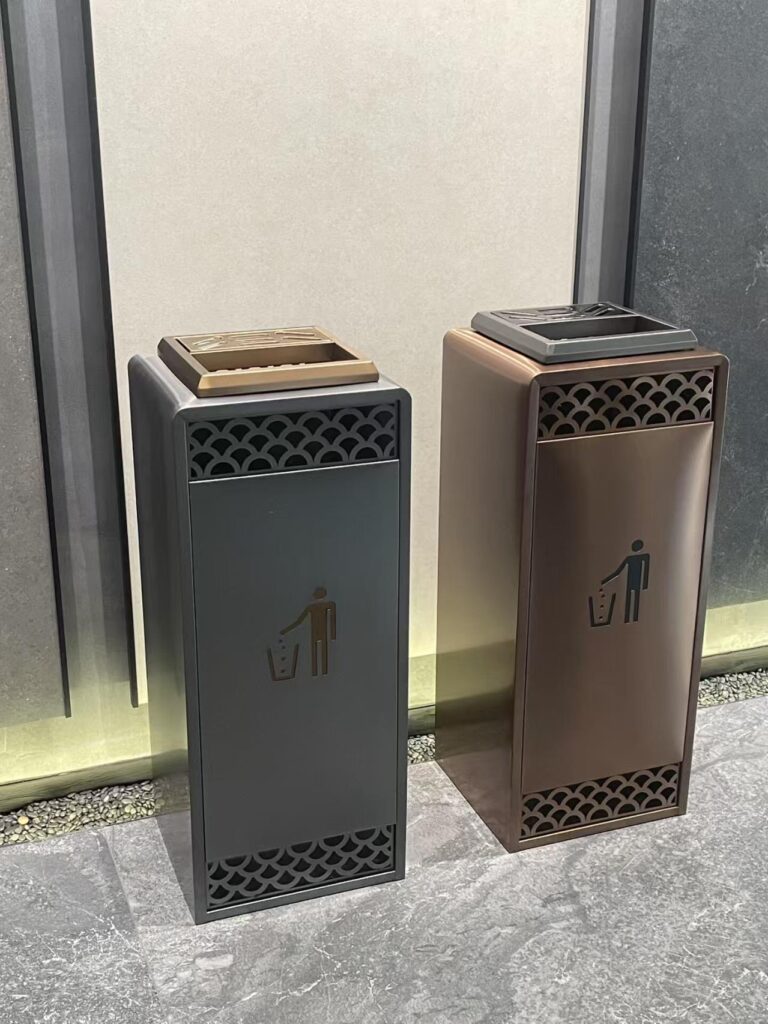
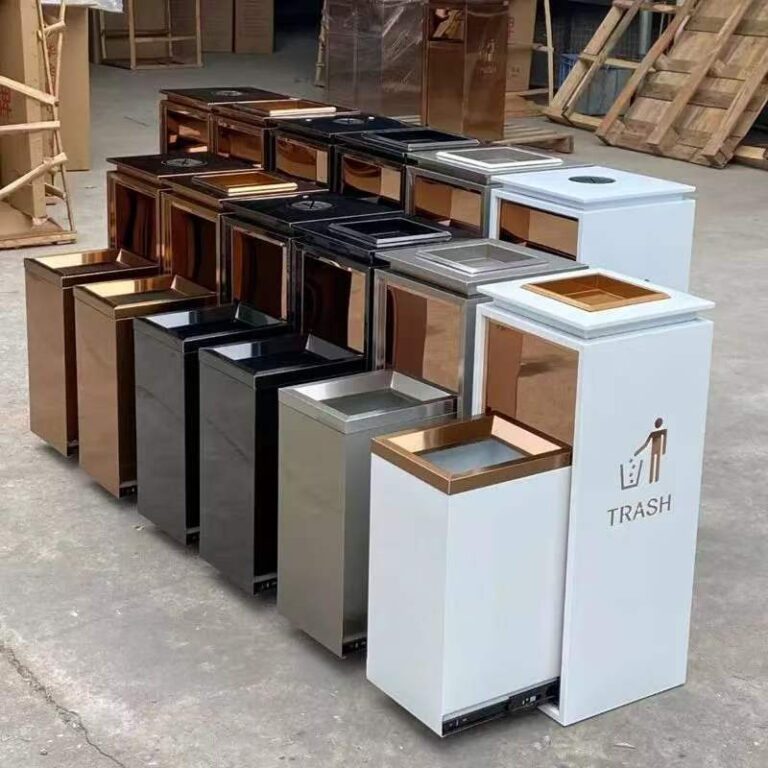
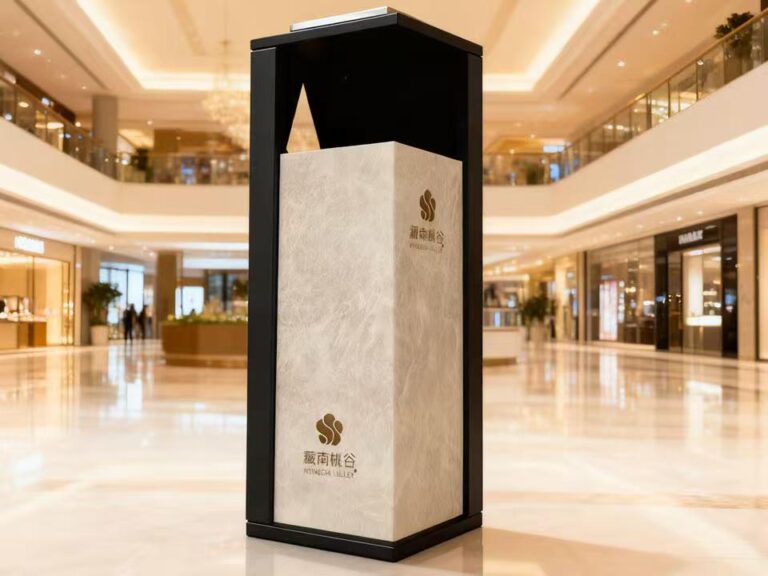
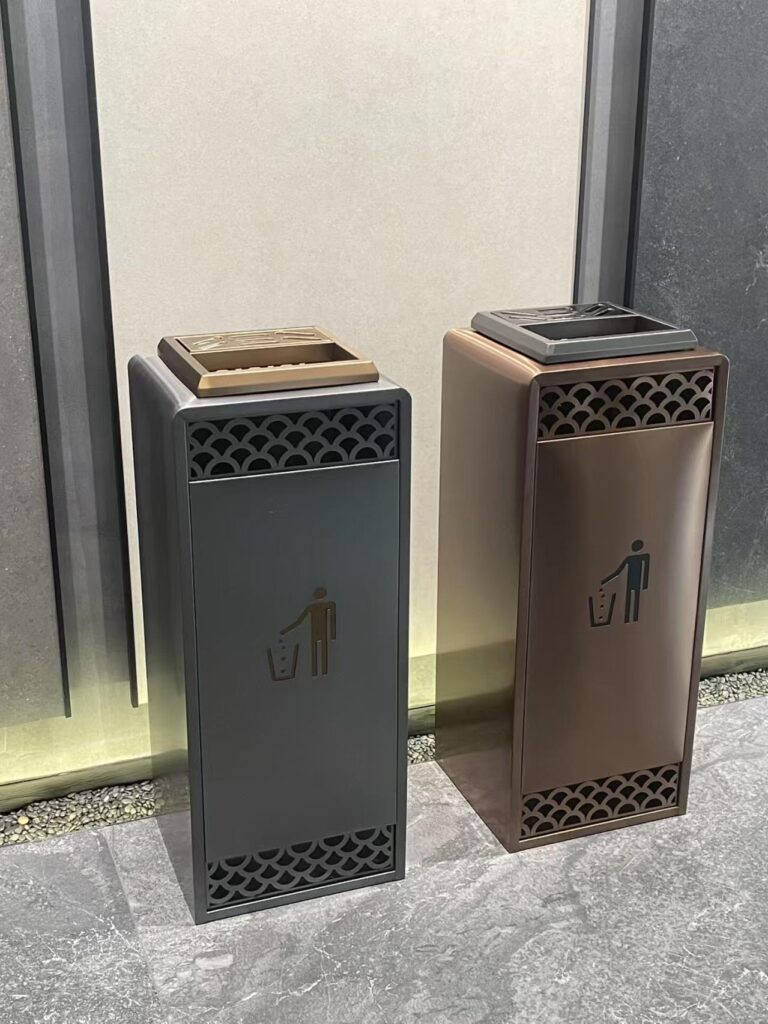
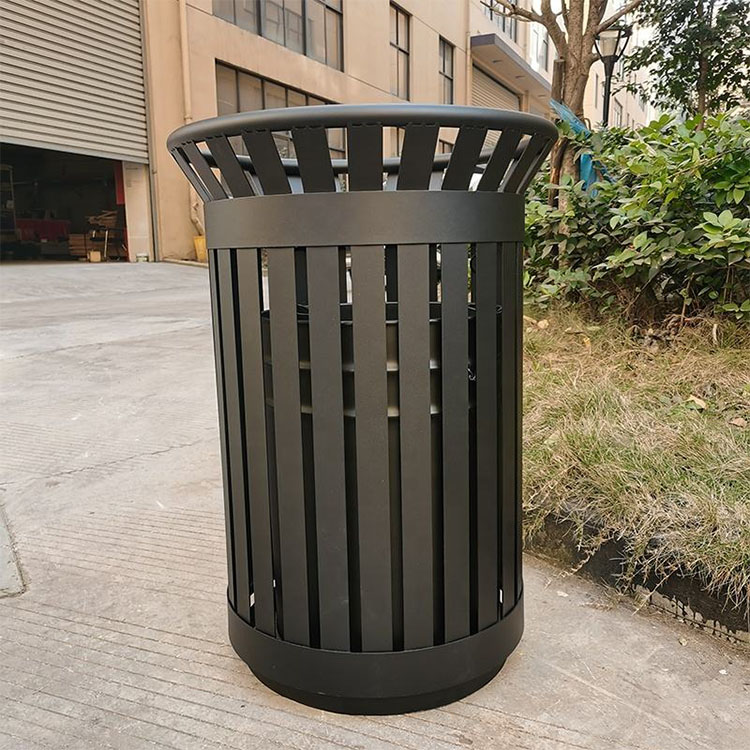
Front-of-house equipment has another problem: it has to look like it belongs. A cheap plastic bin in a marble lobby screams “afterthought.” That’s why a marble-pattern lobby trash receptacle can make sense for properties that need waste control without visual downgrading the lobby, while a stainless steel lobby litter bin fits hotels that want something durable, wipeable, and less precious.
But don’t buy by finish alone.
Ask about liner access. Ask about fingerprints. Ask about fire-safe materials. Ask whether two units can sit together as a paired landfill and recycling point. Ask whether the label plate can be replaced when the city changes recycling rules — because yes, that happens, and it’s annoying.
The Green Hotel Equipment Checklist That Actually Works
Here’s the checklist I’d hand to an owner, not the one I’d put in a glossy ESG deck.
Use item-based labels: “bottles/cans,” “food scraps,” “landfill”
Abstract labels like “dry waste”
Maintenance
Washable liners, spare lids, replacement labels
Make cleaning easy or staff will bypass it
Bins become dirty and guests avoid them
High-traffic areas are where cheap waste planning gets exposed fast.
Checkout rush. Breakfast rush. Conference break. Wedding reception. Bus group arrival. One undersized bin, and suddenly the top is stacked with cups, napkins, wrappers, and half-full bottles like a little monument to bad planning.
Touchless equipment isn’t magic. But in the right zone, a motion sensor trash can for high-traffic areas reduces lid contact, keeps the guest flow moving, and helps stop the “overflow pile” that makes even a good lobby look badly managed.
And no, this doesn’t mean every bin needs a sensor. Please don’t over-spec. That’s another disease in this industry.
Use sensors where hands are full, traffic is heavy, or hygiene expectations are high. Use simpler durable units where the volume is predictable. Match the tool to the mess.
Don’t Buy “Eco-Friendly” Equipment Without Checking the Waste Contract
This is where green hotel equipment gets real boring.
Good.
Boring is where money hides.
Before buying multi-stream waste sorting bins, get the accepted materials list from the hauler in writing. Not verbally. Not “usually.” In writing. PET bottles? HDPE containers? Aluminum cans? Mixed paper? Glass? Soiled cardboard? Compostable PLA? Coffee cups? Napkins? Food scraps? Liquids?
If procurement can’t answer those questions, the hotel is guessing.
And guessing gets expensive.
Compostable packaging is the classic trap. A hotel swaps plastic cutlery for compostable cutlery. Everyone feels good for about five minutes. Then the local composter refuses it, the recycler rejects it, and the landfill takes it anyway. Now the property has paid more for the same disposal outcome, plus extra contamination risk.
Green-looking waste is still waste.
From my experience, the better sequence is painfully simple:
Remove the unnecessary single-use item.
Replace only what guests or operations genuinely need.
Use refillable, reusable, or bulk systems before disposables.
Match every sorting stream to the actual hauler rules.
Put bins where the waste is created, not where the floor plan had dead space.
Train housekeeping, stewarding, banquet, front desk, and night crew differently.
Audit contamination weekly for the first 60 days.
That last one is where the fantasy ends.
Open the bags. Look inside. Count the errors. Coffee cups in recycling. Banana peels in landfill. Plastic wrap in organics. Amenity bottles in guest-room trash. Wet waste leaking through liners. Staff using the nearest bin because the proper one is 40 steps away.
Messy data beats pretty claims.
Where Hotels Should Place Recycling Stations
The correct placement rule is almost embarrassingly simple: put the bin where the waste happens.
Not where it photographs well. Not where the designer left an empty corner. Not where management thinks guests “should” walk.
Where the waste happens.
Elevator banks. Lobby seating clusters. Breakfast exits. Vending zones. Ice machines. Pool decks. Meeting-room pre-function areas. Banquet back corridors. Staff cafeterias. Housekeeping closets. Loading docks. Stewarding zones. Anywhere a guest or employee naturally gets rid of something.
Pair the streams too. A recycling bin without landfill beside it becomes contaminated. A food-waste bin without a liquids plan becomes disgusting by lunch. A bottle/can opening without clear labeling turns into a general trash hole.
And please — don’t use vague sustainability poetry on the labels.
Use item names. “Bottles and cans.” “Food scraps.” “Landfill.” “Paper.” “Glass only.” Add icons. Add color. Add bilingual or multilingual labels if the staff mix requires it. This is not the moment for brand voice gymnastics.
For luxury hotels, the front-of-house receptacle is basically FF&E. Treat it that way. Finish, proportions, lid design, cleanability, and visual weight all matter. Back of house is different. There, I care about wheels, lids, washable surfaces, color-coded containers, and whether the thing survives abuse from a rushed banquet team.
Pretty in front. Tough in back.
That’s the rule.
How to Reduce Single-Use Waste in Hotels Without Annoying Guests
Guests don’t usually hate sustainability.
They hate friction.
They hate dispensers that look cheap. They hate water stations hidden behind a column. They hate being told to reuse towels while the lobby hands them disposable cups. They hate sustainability that feels like the hotel removed service and kept the savings.
So don’t do that.
If you remove small shampoo bottles, install dispensers that look clean, tamper-resistant, and brand-appropriate. If you add refill stations, make them visible. If you reduce disposable breakfast items, keep the service line moving. If you use refillable amenities, make housekeeping inspection part of the room-ready routine, not some vague “green initiative” memo nobody reads after week one.
A serious hotel waste management equipment plan has to work for two audiences at once: guests who want convenience and staff who need speed.
When those two conflict, speed wins.
Every time.
That’s why equipment selection should be brutally practical. Can one person empty it fast? Does the liner fit properly? Does the lid jam? Does the label peel when cleaned? Does the cart layout prevent cross-contamination? Does the lobby bin still look decent at 80% full? Does the banquet team have enough organics capacity for a plated dinner service?
This is the stuff that decides whether the program lives.