Share your requirements and target market. We’ll suggest the right configuration, sampling path, and production plan.
During business hours, We can usually provide a preliminary quote within two hours.
: workflow-based setups to improve efficiency and keep corridors tidy
: easier bag changes and maintenance, built for daily facility use
: 1–3 stream options with clear icon/label systems to reduce contamination
: materials, finishes, branding & packaging locked for consistent reorders
Your info is used only for quoting and communication.
How to Choose Lobby Trash Cans Without Hurting Interior Design
Most lobby trash cans fail for a simple reason: buyers treat them like janitorial accessories when they are really front-of-house furniture with an operations job. Here’s how I’d spec them so they look expensive, work fast, and don’t become the ugliest object in the room.
Most buyers don’t.
They buy a bin the way they buy mop buckets—by capacity, price, and whatever finish looks vaguely “premium” in a PDF—then act surprised when the thing sits in a marble lobby like a plastic apology, forcing housekeeping to wrestle with ugly liner overhang, awkward bag changes, and visible trash exactly where guests form their first opinion.
And then they call that design?
I don’t. I call it lazy procurement.
I’ve seen this mistake too many times: a gorgeous reception desk, clean millwork, tuned lighting, stone or LVT underfoot, and then—right by the elevator bank—a bulky trash can with the posture of back-of-house equipment. The hard truth is this: lobby trash cans are not accessories. They are furniture with a sanitation job.
Table of Contents
The ugly truth: lobby trash cans live in the photo
The lobby is visual theater.
That is why I don’t start with gallons or even price; I start with what the receptacle is doing to the room’s silhouette, sightlines, and material story, because in a guest-facing environment the bin is always in-frame, always near a decision point, and almost always standing next to finishes that cost more per square foot than the bin itself. Facility Project Solutions already hints at the right logic on its own site: the brand frames its commercial trash bins around clean appearance, fast servicing, and consistent signage, then extends that into indoor bins, sustainability content, and recycling systems rather than treating waste equipment as an isolated SKU dump.
So here’s my position. If your lobby trash can calls attention to itself before your desk, art wall, planter, or seating group does, you picked the wrong one.
What I check before I approve any lobby bin
1) The silhouette has to belong in the room
Shape matters first.
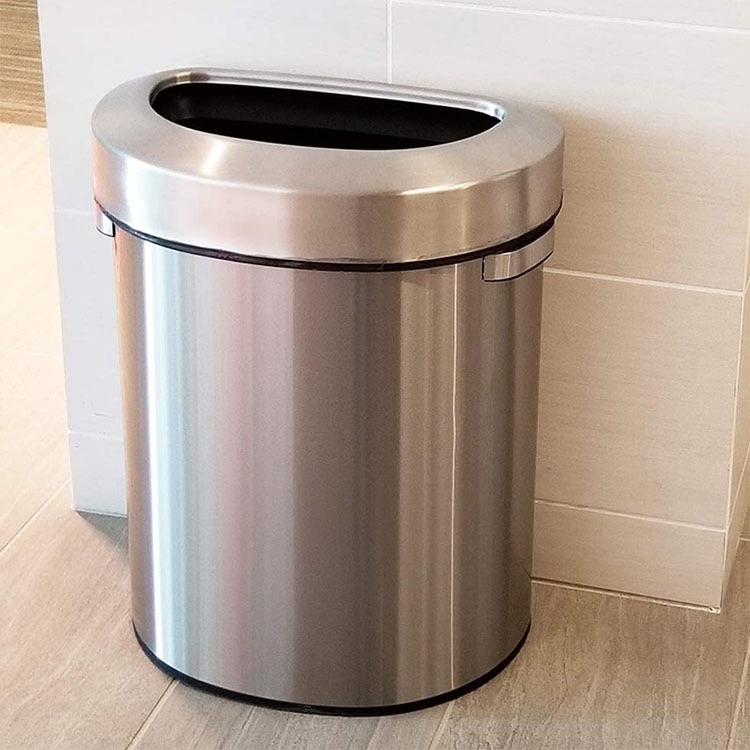
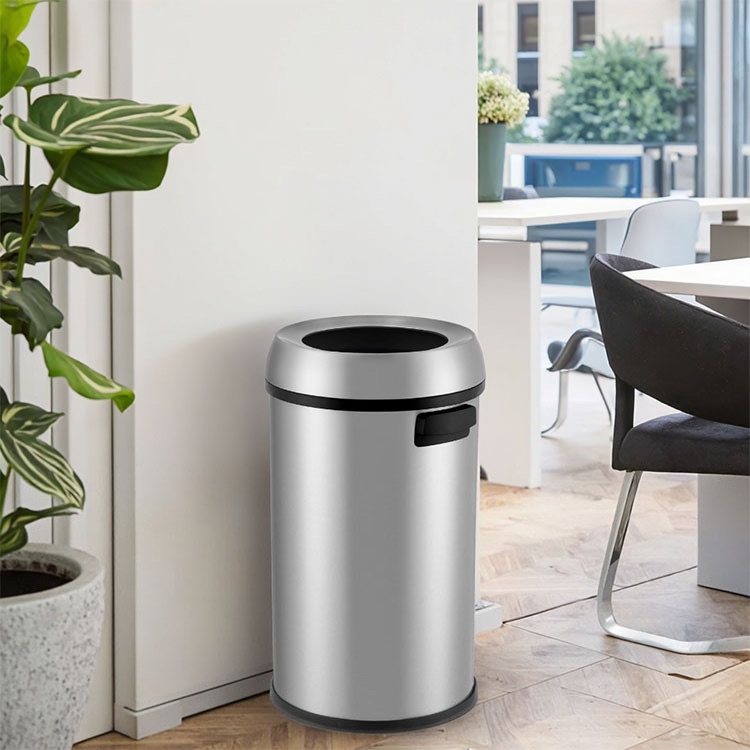
A boxy, blunt commercial lobby trash can can work in a corporate office with rectilinear millwork, but in a hospitality setting I usually want either a restrained cylinder or a softened rectangular form with architectural lines, concealed liner handling, and a finish that echoes nearby metal, stone, wood grain, or laminate instead of fighting it. On Facility Project Solutions, a luxury open-top lobby trash can, a marble-pattern lobby trash receptacle, and a decorative hotel lobby waste bin all point in that direction: refined profile, easy-clean exterior, and a deliberate attempt to keep the can visually quiet.
Why does this matter so much?
Because the wrong silhouette makes even “decorative waste receptacles” look like afterthoughts, and afterthoughts are exactly what guests notice when they cannot name why a lobby feels cheap.
2) The opening should match real waste, not fantasy waste
Openings tell the truth.
Designers love tiny apertures because they photograph clean, but real lobby waste is not imaginary confetti; it is coffee cups, receipts, takeaway lids, water bottles, snack packaging, and occasional overflow from people who refuse to walk twenty more feet. I like openings that are generous enough to avoid misses, but controlled enough that the interior stays discreet. Facility Project Solutions’ Luxury Lobby Trash Can with Open Top explicitly sells the open-top format on easier drop-in disposal and faster service, while its lobby and sorting products repeatedly lean on restricted openings and clear labels where contamination control matters. That is the right split: single-stream bins should reduce misses; multi-stream stations should guide behavior.
And yes, I’ll say it bluntly: a beautiful lid that makes people miss the opening is not premium. It is bad industrial design wearing nice clothes.
3) Concealed liner management is non-negotiable
Bag edges kill luxury.
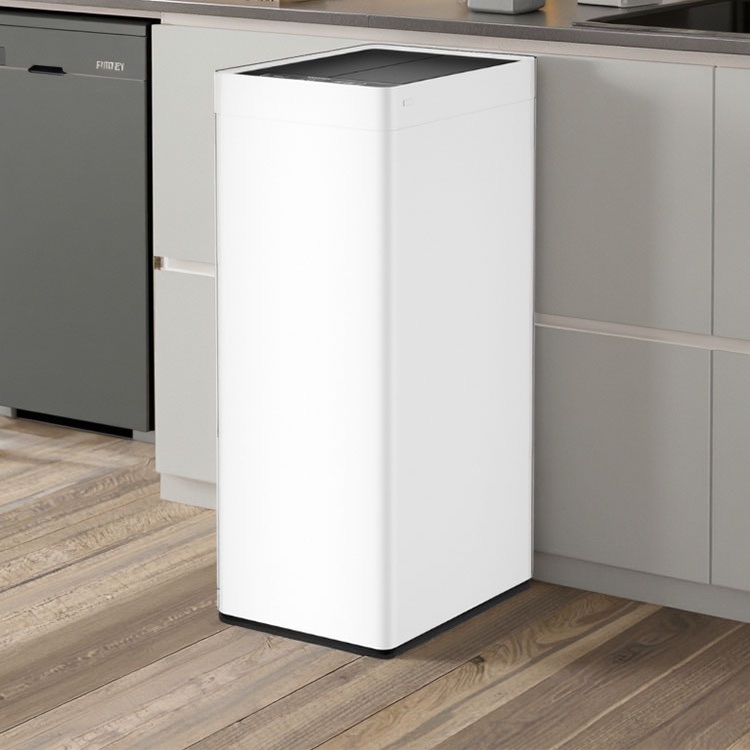
If I see exposed black liner folds peeking over a so-called high-end hotel lobby trash can, I stop caring what veneer, powder coat, or stainless finish you paid for, because the illusion is broken. This is why I keep pushing clients toward indoor waste receptacles for lobbies that use lift-off tops, liner-retaining rims, inner buckets, or bag-retention rings. The decorative and marble-pattern lobby pages on Facility Project Solutions both emphasize discreet liner handling and lift-out or concealed service formats, which is exactly where the front-of-house spec should live.
A bin can be cheap and neat. It cannot be sloppy and upscale.
4) Servicing time is a design variable, not just an ops variable
Housekeeping sees the lie first.
According to the U.S. Bureau of Labor Statistics 2023 injury and illness table, traveler accommodation posted a total recordable case rate of 3.9 per 100 full-time workers, while hotels except casino hotels hit 4.1. I don’t pretend a lobby trash can changes that number by itself, but I do take the message seriously: in hospitality, repeated physical tasks matter, and any spec that slows liner changeouts, increases awkward reach, or forces extra floor cleanup is a design failure hiding inside an operations problem.
So I ask a rude question in every review: how many seconds does a clean bag change take, and how humiliating is that motion when it happens 12 feet from the front desk?
5) Safety and code pressure do not disappear because the finish looks good
Pretty does not mean harmless.
The 2024 IFC significant changes report published by Washington State tightened language for certain higher-risk occupancies around waste and linen containers, including noncombustible or low-heat-release materials, UL 1315 listing for metal containers at 20 gallons or more, noncombustible lids, and separate waste-collection-room treatment once portable containers exceed 32 gallons. That is not a hotel-lobby rulebook by itself, and I’m not pretending it is. I am saying the direction of travel is obvious: bigger interior waste containers attract more scrutiny, not less. That is why a fire-safe public-area trash can belongs in the conversation long before a project team starts improvising with oversized decorative bins.
This is where a lot of expensive projects get embarrassingly amateur. They design for Pinterest, then retrofit for reality.
My quick filter for style, service, and sanity
I use this table before I approve any lobby waste receptacle.
Bin type
Best use case
Interior-design upside
Real operational risk
My verdict
Open-top decorative bin
Main guest circulation, elevator lobby, reception adjacency
Clean lines, fast visual read, easy to match finishes
Can invite oversized waste and visible trash if opening is too exposed
Best when traffic is steady and service is frequent
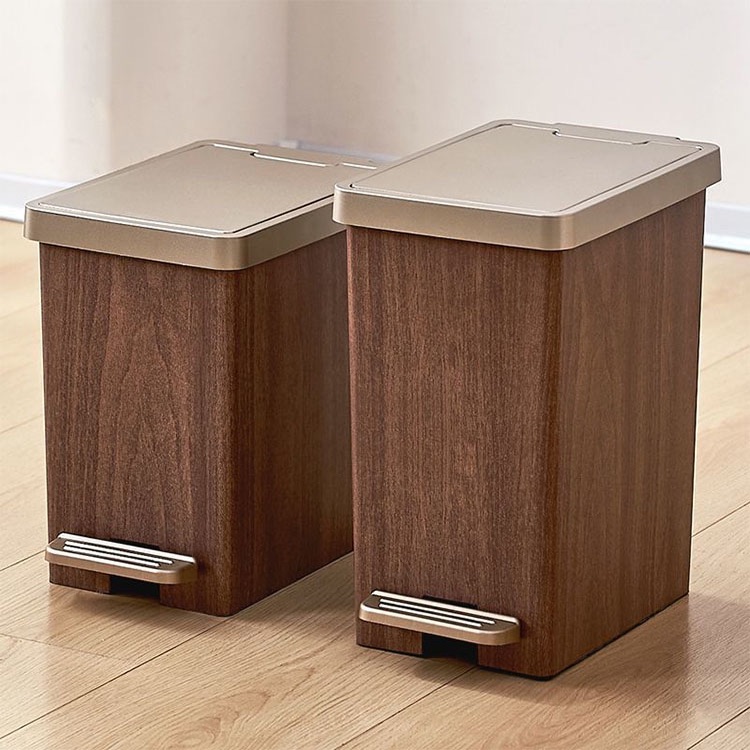
Concealed-liner marble or wood-look bin
Premium hotel lobby, lounge edge, executive office reception
Blends with stone, veneer, and soft-luxury palettes
Surface wear looks cheap fast if finish quality is poor
Strong choice when material match is the top priority
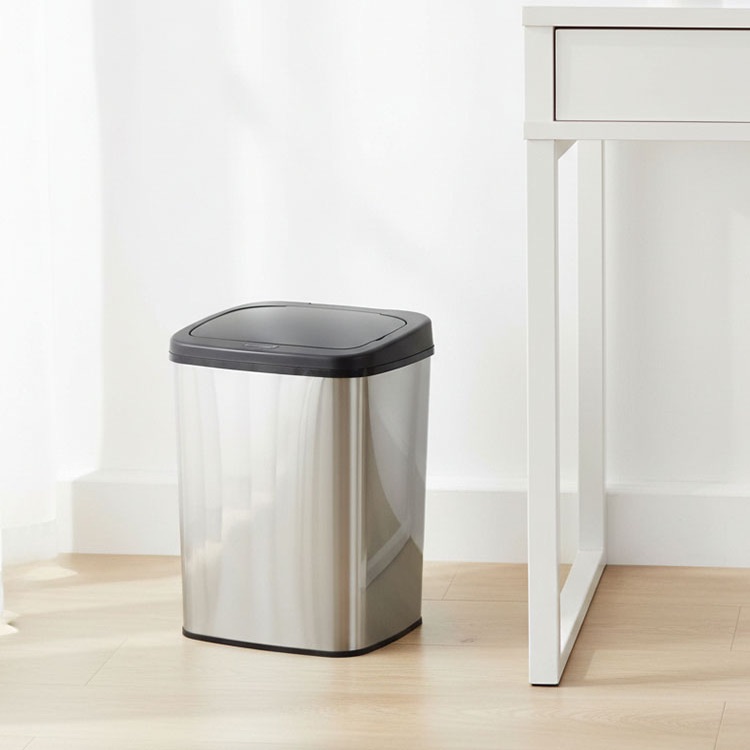
Stainless steel pedal bin
Touch-sensitive zones, medical-adjacent public areas, back-of-house crossover zones
Reads cleaner and more technical than decorative
Foot-pedal hardware can feel too utilitarian in luxury settings
Good for hybrid spaces, less ideal at the visual center of a grand lobby
Fire-safe metal can
Corridors, meeting zones, high-risk public interiors
Neutral profile, risk-conscious spec
Can look institutional if proportions are clumsy
Buy for risk profile first, style second
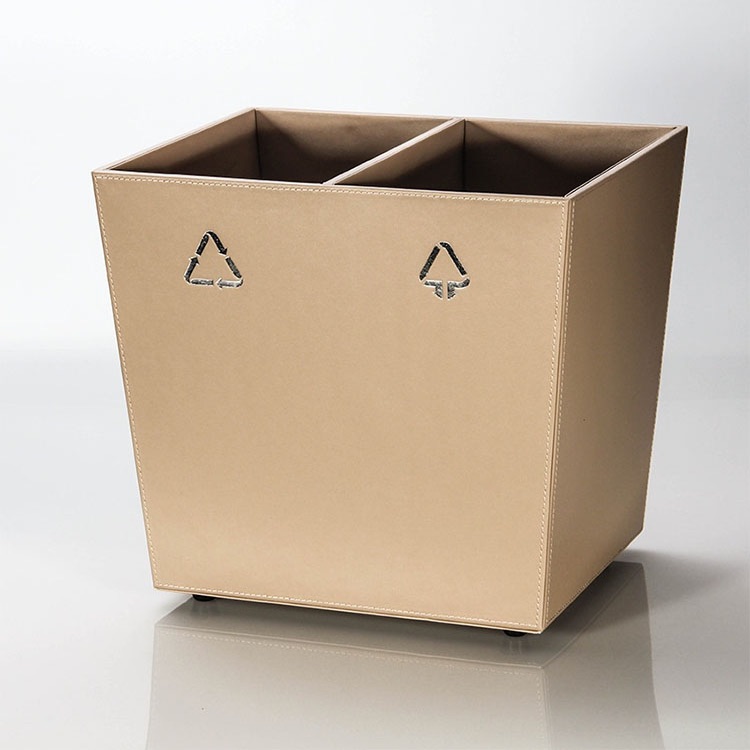
2-stream or 3-stream sorting station
Large lobbies, cafés, conference floors, mixed disposal streams
Signals sustainability and order when graphics are disciplined
Turns ugly fast when labels, openings, and servicing are inconsistent
Only works if you commit to signage and maintenance discipline
That table is not theory. It is scar tissue.
The evidence says the same thing I do
Standardize or suffer.
In the University of Illinois 2024 waste assessment executive summary, Facilities & Services reported that as of March 2024 it had deployed 245 standardized bins across 70 campus buildings, yet walkthroughs still found signage and bin types varying widely. Translation: standard hardware helps, but inconsistency at the last ten feet still wrecks the user experience. That is not just a campus lesson. It applies directly to hotel lobby trash cans, office reception bins, and any indoor waste receptacles for lobbies that are supposed to look intentional across multiple properties.
Boston University says the quiet part out loud.
Its Internal Waste Bin & Signage Standardization project calls centralized, standardized bin setups one of the most basic and well-researched ways to improve proper sorting behavior. I agree, and I’d push it further: in front-of-house design, standardization is not just about diversion. It is about visual calm. When every property improvises a different liner reveal, opening type, label family, and finish, the brand stops looking like a brand and starts looking like procurement drift.
That is why I don’t separate design from behavior.
A beautiful lobby waste station that users contaminate, ignore, or overflow is not a design success. It is a rendering success.
The smarter internal-link strategy for Facility Project Solutions
This site wants a hub-and-spoke model.
After reviewing Facility Project Solutions, I would not stuff this article with repetitive exact-match anchors to “lobby trash cans” and call it strategy. The site already has three strong clusters: front-of-house bin aesthetics, safety/serviceability, and recycling/sorting. The homepage frames the brand around commercial trash bins with easy servicing and clean appearance, while the sustainability section pushes standardized labels, right-sized indoor/outdoor families, and predictable servicing routes. That gives this article a natural job: act as the hub that introduces the buying framework, then send readers into the right spoke based on problem type.
Here’s how I’d do it in the body, naturally, not mechanically.
One more thing. I would use one exact-match anchor, maybe two if the page is long. After that, I’d rotate partial-match and intent-based anchors. Repetition is not optimization. It’s a footprint.
If you want the short version, use this buying sequence
Start with the room, not the receptacle
Measure finish language, sightlines, and traffic first. Then choose the bin family.
Then stress-test the service motion
If the liner change is awkward, visible, or slow, reject it.
Then check contamination risk
Single-stream for convenience. Multi-stream only when signage, openings, and service discipline are real.
Then check the risk profile
If public-area fire concern, compliance pressure, or oversized capacity enters the picture, move safety up the stack fast.
Then buy in families
The best lobby trash cans for interior design are rarely one-off trophies. They are repeatable families that keep your property looking coherent across reception, corridors, meeting floors, and lounges.
FAQs
How do you choose lobby trash cans without hurting interior design?
Choosing lobby trash cans without hurting interior design means selecting receptacles whose finish, silhouette, opening style, liner concealment, and service method match the room’s materials, traffic, and safety demands, so the bin reads like integrated furniture rather than visible janitorial equipment. I tell clients to reject any can that looks acceptable only when empty, because real lobbies are judged during peak use, not in product photography.
What size should hotel lobby trash cans be?
The right size for hotel lobby trash cans is the smallest capacity that handles peak waste volume without visible overflow, frequent misses, or emergency bag changes, while still keeping the unit proportionate to the furniture scale, circulation width, and code expectations of the public space. In plain English: oversize bins often solve one ops problem by creating three design problems.
Are open-top or lidded lobby waste receptacles better?
Open-top lobby waste receptacles are better for fast, intuitive disposal in high-traffic guest areas, while lidded or more controlled formats work better where odor, touch concerns, stream separation, or safety expectations carry more weight than pure disposal speed and visual simplicity. I prefer open-top for single-stream guest convenience and more controlled openings for sorting stations or sensitive zones.
Do decorative lobby trash cans actually improve cleanliness?
Decorative lobby trash cans improve cleanliness when their appearance increases acceptance, their opening reduces near-bin misses, and their liner system makes quick resets easy enough that staff can keep them immaculate during heavy traffic without treating the unit like a maintenance burden. A decorative bin that slows service is not helping cleanliness; it is borrowing against it.
When should you use a multi-stream station instead of a single bin?
A multi-stream station should replace a single lobby bin only when the property has real diversion goals, clear labeling, stream-specific openings, regular servicing, and enough user volume to justify visible sorting behavior without turning the lobby into a signage project. Otherwise, a bad recycling station creates contamination, clutter, and brand damage in one move.
Your Next Step
Do this tomorrow.
Walk the lobby with three photos, one stopwatch, and zero sentimentality. Photograph the current bin from guest eye level. Time one liner change. Then ask whether the can belongs to the room, hides the bag, handles actual waste, and respects the risk profile of the space. If the answer is no, stop treating the issue like a commodity purchase and start building a proper front-of-house spec. For product-level examples, start with the luxury open-top lobby trash can, compare it against the marble-pattern lobby trash receptacle, pressure-test safety with the fire-safe public-area trash can, and map future diversion needs through the 2-stream hotel sorting bin and the site’s sustainability page. If you’re rolling out across multiple properties, that is when I’d move straight to a quote and specification review instead of pretending another generic bin catalog will save you.