Share your requirements and target market. We’ll suggest the right configuration, sampling path, and production plan.
During business hours, We can usually provide a preliminary quote within two hours.
: workflow-based setups to improve efficiency and keep corridors tidy
: easier bag changes and maintenance, built for daily facility use
: 1–3 stream options with clear icon/label systems to reduce contamination
: materials, finishes, branding & packaging locked for consistent reorders
Your info is used only for quoting and communication.
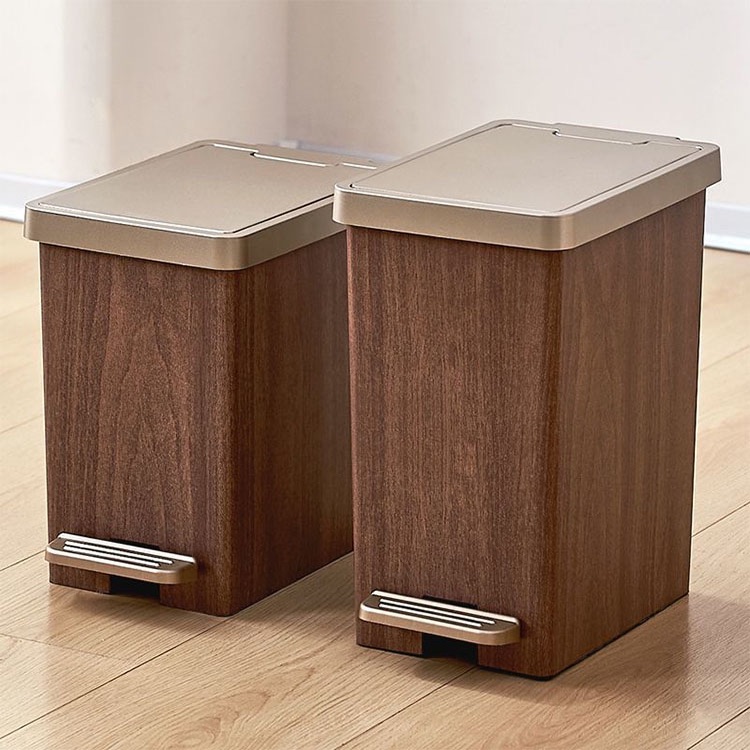
Wood-grain lobby trash cans are not just decorative lobby trash cans. Used well, they hide the sanitation function, protect the design scheme, and cut visual clutter in guest-facing interiors. Used badly, they become overpriced props that overflow, confuse recycling, or create safety headaches.
Table of Contents
The Bin Nobody Budgeted for Becomes the Thing Everyone Notices
Looks still matter.
In a hotel, office tower, clinic, or mixed-use property, the lobby trash can sits in that awkward category of object people pretend not to see until it looks cheap, blocks circulation, shows a sagging liner, or overflows next to a $40,000 stone desk and instantly wrecks the illusion that the place is under control. Want the hard truth?
I’ve seen operators spend aggressively on millwork, stone, scenting, and lighting, then drop in a generic black plastic can like the janitorial closet won the last argument. That is backwards. A wood-grain lobby waste bin earns its keep when you need the receptacle to disappear into the interior palette while still being fast to service, easy to use, and hard to make ugly.
That matters more now, not less. According to J.D. Power’s 2024 North America Hotel Guest Satisfaction Index, U.S. hotel ADR hit $158.45 in May 2024, and perceived value increasingly rides on details tied to cleanliness, staff service, and facilities upkeep. Their separate 2024 third-party hotel management benchmark said year-over-year satisfaction gains were driven by cleanliness, maintenance and upkeep, and staff responsiveness. In plain English: guests paying more notice more.
So no, the best use for wood-grain lobby waste bins is not “any upscale lobby.” I’m more opinionated than that. The best use is any high-visibility, indoor, moderate-waste zone where aesthetics matter, litter is mostly dry, and staff need discreet liner handling. That is where a warm-finish premium lobby waste bin with wood-grain panel or a more formal luxury lobby trash can with open top starts making operational sense, not just visual sense.
Where Wood-Grain Lobby Waste Bins Actually Work
Three words first: front-of-house.
That is the sweet spot, because wood-grain lobby trash cans soften the institutional feel of waste handling, and they do it without forcing the operator into precious, high-maintenance materials that look good in a render and bad after six weeks of rolling luggage, coffee drips, and belt-buckle collisions. Why buy a decorative surface if it cannot survive contact with real people?
Reception and concierge zones
This is the obvious one, but most teams still misplace the bin. The right location is not dead center. It is slightly off the visual axis, near the natural pause point where guests finish a coffee, receipt, brochure, or water bottle sleeve. A wood grain waste receptacle works here because it reads more like furniture than equipment, especially when the liner is concealed and the opening is intuitive.
This is where I think wood-grain lobby waste bins outperform flashier materials. Why? Because elevator banks generate constant low-volume litter: receipts, tissues, snack wrappers, bottle caps, event handouts. The waste is real, but the user interaction is brief. You want fast drop-in use, minimal misses, and zero visual drama.
Put differently, this is not a hero object. It is a friction-reduction device. And when it looks like part of the finish package, people use it without mentally clocking “trash can.”
Meeting floors and pre-function spaces
This use case is underrated.
Conference traffic produces cyclical bursts: coffee cups at 8:55, badge sleeves at 10:30, pastry napkins at noon, note paper and sample packaging by 4:15. Here, hotel lobby waste bins need to look polished during quiet periods and survive spikes without staff babying them.
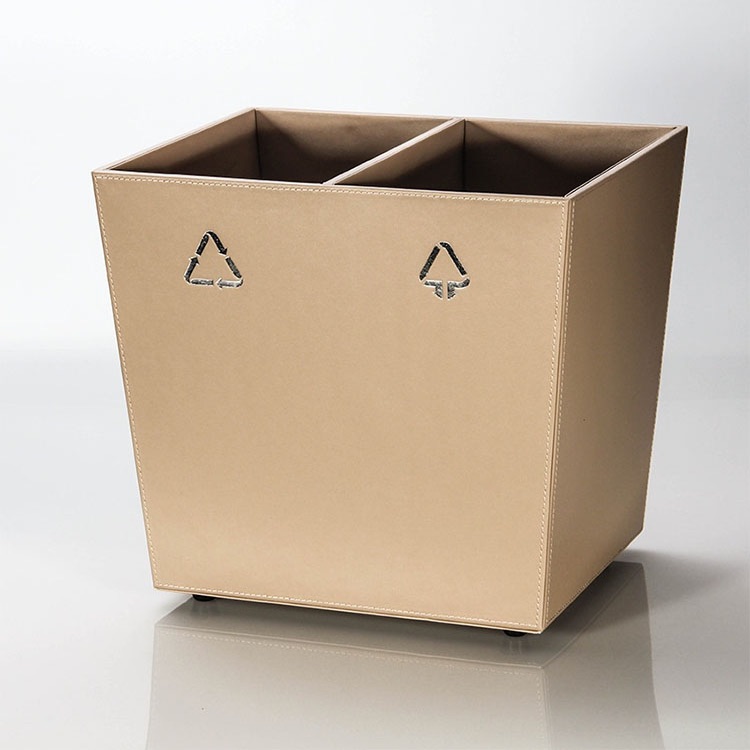
But I would not run a standalone wood-grain bin here unless the waste stream is mostly dry. The second you have beverage containers, catering debris, or printed collateral in any volume, pair the lobby unit with a 2-stream waste sorting bin for hotel public spaces or a commercial recycling bin with removable liners. That is where the pretty bin stops being décor and starts behaving like infrastructure.
Executive office lobbies and client waiting areas
Office lobby trash cans live under a different microscope. Less foot traffic. More scrutiny. A partner in a law firm, a private-equity office manager, or a medical-administration director does not want a receptacle that screams “janitorial supply.” They want something quiet, controlled, and brand-compatible.
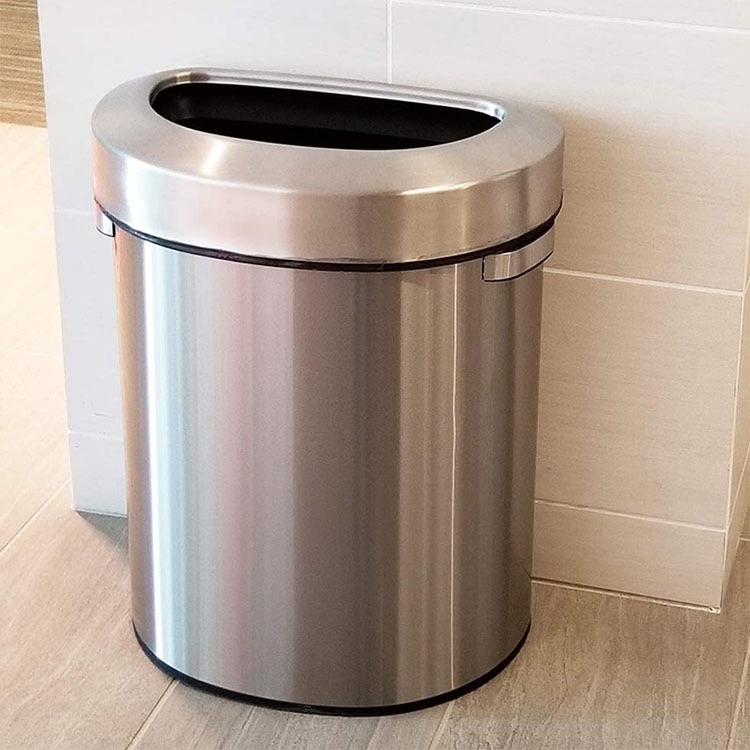
That is exactly why wood-grain commercial lobby waste receptacles work in executive receptions, tenant lounges, and private waiting zones. They soften the room. They signal intent. And they avoid the cold, cafeteria-grade feel that stainless can create when the rest of the interior is walnut veneer, bronze, and fabric wall panels.
The quick filter
Zone
Best fit for wood-grain lobby waste bins?
Typical waste mix
What wins here
What to add
Hotel reception
Yes
Receipts, tissues, coffee lids, wrappers
Warm finish, concealed liner, discreet presence
A second unit near lounge seating if traffic stacks
Elevator lobby
Yes
Small dry litter
Fast drop use without visual clutter
Floor protection, careful placement off travel line
A lobby trash can is good only when the user experience and the service experience are both idiot-proof, because guests will not study signage and housekeepers will not forgive a bin that turns a 25-second bag change into a 90-second wrestling match during peak turnover. Who pays for that friction? You do.
The academic evidence is blunt. In a 2024 paper published through ScienceDirect, researchers ran three pre-registered experiments with N=811 and found that people were most likely to recycle when the recycling option was as convenient as trash, not harder and not theatrically easier. Convenience relative to the trash bin was the deciding factor. That aligns with a 2023 Xavier University recycling report, which found that when containers were separated, users often chose the nearest one regardless of label, driving contamination; staff also flagged inconsistent labeling as a major problem. Translation: if you place a decorative lobby bin by itself and shove recycling twenty feet away, you are engineering contamination. Promoting recycling behaviours through convenience and Xavier’s Recycling Report and Recommendations both point in the same direction.
That is why I do not treat wood grain lobby waste bins as standalone objects. I treat them as one node inside a disposal system. If the area has recyclable bottles, cans, or conference paper, the wood-grain trash can should sit within a larger recycling and sorting system or a broader sustainable commercial trash bin program. Anything else is design cosplay.
And yes, maintenance matters. Poorly serviced bins poison the whole investment because guests read grime as indifference. The site’s own category build already leans in the right direction, emphasizing concealed liners, removable inserts, and faster service across its lobby and sorting products, which is exactly the right operational frame for hotels and public facilities.
Where Wood-Grain Lobby Waste Bins Fail
Not every lobby deserves one.
I would avoid wood-grain lobby waste bins in food-heavy, spill-prone edges of the property unless the operator is honest about service frequency. One coffee station can turn a good-looking receptacle into a sticky liability by 10:15 a.m. The cleaner the finish looks on day one, the dirtier it looks on day ten if wipe-down discipline slips.
I would also avoid using them as a lazy catch-all for batteries, e-cigarette waste, or electronics. That is not theoretical. In January 2024, Seattle Public Utilities banned batteries from the garbage after the Seattle Fire Department responded to 79 lithium-ion battery fires in two years. If a property sees any meaningful battery waste, you need a separate collection workflow or, at minimum, a fire-safety-aware alternative such as a stainless steel fire-safety litter bin with lid in the right controlled zone. A decorative wood-grain bin is not the place to test your luck with lithium-ion chemistry.
And I would not put them at the indoor-outdoor handoff where rain, wind, and tracked grit do their worst. That is where outdoor hardware belongs. A vestibule is not a lobby, and operators who confuse the two end up replacing attractive bins that never had a fair chance. Use an all-weather metal trash can for public spaces outside, then transition to the decorative family once the weather fight is over.
What I Would Specify Before I Signed Off
Small details decide this.
I would specify the opening first, not the finish, because drop behavior drives everything that happens after. Open-top for quick dry litter. Restricted or paired-stream openings where recycling sits beside trash. Lidded fire-safety options only where the waste profile supports them.
Then I would check the liner system. If the bag edge shows, the bin will look cheap no matter how expensive the panel finish is. If the liner is hard to remove, staff will hate it no matter how pretty the mockup looked. The best wood grain trash can hides the ugly part without making service slower.
Then footprint. Then base protection. Then placement. Then adjacency to recycling. In that order. I know that sounds harsh, but I’ve watched too many teams reverse the sequence and buy for finish before they buy for use.
FAQs
What are the best uses for wood-grain lobby waste bins?
Wood-grain lobby waste bins are best used in high-visibility indoor areas with mostly dry, low-to-moderate waste volume, where the operator wants the receptacle to blend into the interior rather than read as janitorial equipment, while still allowing fast bag changes, simple wipe-downs, and intuitive guest use. In practice, that means reception zones, elevator banks, executive waiting areas, and meeting-floor corridors more than café edges or exterior thresholds.
Are wood-grain lobby trash cans good for hotels?
Wood-grain lobby trash cans are a strong hotel fit when the brand aesthetic leans warm, residential, boutique, or upscale and the property needs front-of-house waste control that does not visually undercut the design investment already made in millwork, stone, fabric, and lighting. They work especially well in lobbies, concierge areas, and pre-function spaces where visual softness matters and litter is frequent but not messy.
Should a wood grain waste receptacle be paired with recycling?
A wood grain waste receptacle should be paired with recycling whenever the surrounding traffic generates bottles, cans, printed handouts, or takeaway packaging, because users sort better when recycling is as convenient as trash and contamination rises when bins are separated or labeled inconsistently. I would treat the pairing as non-negotiable in meeting spaces, mixed-use lobbies, and office commons.
Are decorative lobby trash cans harder to maintain?
Decorative lobby trash cans are not harder to maintain when they are built with concealed but removable liner systems, smooth wipe-clean surfaces, and a finish that tolerates scuffs, fingerprints, and daily sanitizing without broadcasting wear after every contact. The problem is not decoration. The problem is decorative bins with bad service design, bad placement, or unrealistic cleaning frequency.
Can wood-grain lobby waste bins handle high traffic?
Wood-grain lobby waste bins can handle high traffic if the waste profile is mostly dry, the opening is easy to use, the liner change is fast, and the unit sits where people naturally pause rather than where they are rushing through a doorway or dragging luggage across it. High traffic alone is not the issue. Bad waste mix is.
Your Next Move
Start small.
Audit the lobby in fifteen-minute intervals, count what people actually throw away, and stop pretending all “lobby trash cans” do the same job. If the waste is mostly receipts, tissues, wrappers, and light beverage packaging, a premium wood-grain lobby waste bin is a smart front-of-house play. If the zone also generates recyclables, pair it immediately with a 2-stream sorting bin or a commercial recycling station with removable liners. And if your property is trying to standardize across sites, roll the decision into a wider sustainability and bin-family plan so the lobby stops operating like a one-off styling exercise and starts behaving like part of a real facility system.