Share your requirements and target market. We’ll suggest the right configuration, sampling path, and production plan.
During business hours, We can usually provide a preliminary quote within two hours.
: workflow-based setups to improve efficiency and keep corridors tidy
: easier bag changes and maintenance, built for daily facility use
: 1–3 stream options with clear icon/label systems to reduce contamination
: materials, finishes, branding & packaging locked for consistent reorders
Your info is used only for quoting and communication.
Most hotels do not need fireproof waste bins everywhere. They need them in the few zones where ignition risk, guest behavior, and slow staff visibility overlap: smoking transition points, select guestrooms, elevator lobbies, meeting floors, and a handful of back-of-house trouble spots.
Not everywhere.
I’ll say the impolite part first, because too many hospitality vendors dance around it: most hotels do not need fire resistant wastebaskets in every room, on every floor, in every corner, and the moment a spec sheet starts selling that fantasy, I assume the seller is padding margin rather than solving risk. Why spend money where behavior, ignition source, and exposure do not intersect?
Table of Contents
The industry keeps using the wrong word
“Fireproof” is marketing shorthand. Real buyers should think in narrower terms: fire-resistant construction, oxygen-limiting tops, self-extinguishing designs, metal bodies, controlled openings, and placement discipline. I’ve seen owners obsess over the phrase UL-rated wastebaskets while ignoring the bigger truth: if guests are still flicking cigarette ends near the porte-cochère or tossing swollen lithium-ion vapes into a generic liner, the label alone will not save them.
And that matters now. According to the Seattle Fire Department’s January 2024 notice, the city moved to ban batteries from garbage after firefighters responded to 79 lithium-ion battery fires in two years, often involving e-bikes, e-scooters, and portable electronics. That is not a niche municipal anecdote. That is a warning shot for hotels, because guests carry exactly those items into rooms, lobbies, meeting spaces, and smoking areas every day.
The hard truth? A hotel room fire resistant trash can makes sense only when the bin sits near a believable ignition pathway. No ignition pathway, no business case.
Where fire resistant hotel wastebaskets actually earn their keep
Start outside first.
If your hotel still has a smoking-adjacent entrance, staff smoking zone, garage exit, or side-door break area, that is usually my first move. Not the suite. Not the executive floor. The doorway where cigarettes, ash, wind, and guest impatience collide. The 2023 Royal Albion Hotel fire in Brighton was likely started by a discarded cigarette, according to reporting on the fire service finding, which is exactly why uncontrolled smoking disposal remains a live operational risk rather than a nostalgic one. The Independent’s coverage of the fire-service conclusion is the sort of story facilities teams should read before they overspend indoors and underspec outdoors.
I would spec a self-extinguishing or metal fire retardant waste basket in guestrooms only when one or more of these conditions exist: smoking-history complaints despite non-smoking policy, extended-stay inventory, rooms with balconies or terrace spillover, high paper waste from comp sets or meeting delegates, or properties that see heavy portable-device charging and disposal misuse. Everybody else can stop pretending every room is a mini hazmat site.
Elevator lobbies, meeting floors, and business centers
This is the zone buyers routinely miss.
A guestroom is private chaos. A lobby is supervised theater. But elevator banks, conference pre-function space, meeting-level corridors, and business centers sit in the ugly middle: traffic is high, oversight is intermittent, paper waste accumulates, and guests dump items fast because they are moving. That is where a metal fire-safe trash can for public areas makes far more sense than a decorative open-top bin chosen by an interior designer who never has to answer the fire marshal’s email.
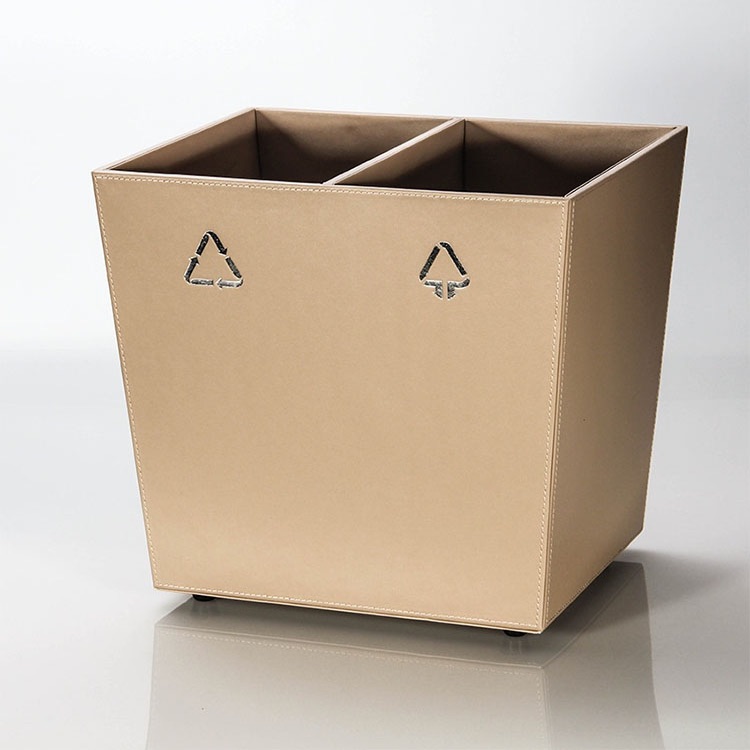
And if the real problem is mixed disposal rather than open flame, do not force one bin to do three jobs. Use a 2-stream waste sorting bin for hotel public spaces or the broader eco-friendly facility solutions for hotels hub to separate bottles, paper, and general waste, because contamination control often reduces the “mystery load” that turns hospitality waste bins into risk buckets.
Back-of-house trouble spots
Quiet risk. Expensive consequences.
I’m talking about staff entrances, housekeeping closets near smoking drift, admin print/copy zones, security desks, and maintenance counters where oily wipes, cartons, paper, batteries, and packaging get dumped together because nobody “owns” the bin. That is where best fire resistant wastebaskets for hotels are not a design accessory; they are a control measure.
The U.S. Fire Administration’s extinguisher guidance says an extinguisher is for a fire that is small and contained in a single object or surface, “like a pan or a wastebasket.” That phrasing matters. It tells you exactly what a controlled receptacle is supposed to do: keep a small problem from becoming a floor evacuation. USFA’s guidance makes that plain.
Big fires begin small, and hotels forget that until the headline lands
This is the part owners hate.
They want fire safety to be a building-system conversation only: sprinklers, alarms, corridor doors, smoke control. Those systems matter more than any bin ever will. In fact, the NFPA’s 2024 U.S. Experience with Sprinklers found the civilian death rate per 1,000 reported fires was 90% lower in properties with sprinklers than in properties with no automatic extinguishing system. So no, I am not claiming a fire resistant hotel wastebasket outranks sprinkler protection. It doesn’t. Not remotely.
But. Small ignition points still decide whether that bigger system ever gets tested.
In August 2024, Reuters reported that a fire at a nine-story hotel in Bucheon, South Korea, killed 7 people and injured 12, beginning on the eighth floor around 7:40 p.m. In December 2024, AP reported that the Ember Hotel fire in Bangkok killed 3 foreigners and occurred while 75 people were staying at the property. Different countries. Different causes under investigation. Same lesson: hotels are dense sleeping occupancies, and when a fire grows, the cost curve turns vicious almost immediately.
So where should hotels use fire resistant waste bins? In the places where a tiny ignition source can sit unnoticed long enough to grow, and where guest behavior is messy, fast, and unsupervised.
A placement matrix that facilities teams can actually use
Hotel zone
Real ignition trigger
Recommended bin approach
Why it makes sense
When it is overkill
Main entrance smoking apron
Cigarettes, ash, wind
Self-extinguishing cigarette bin or sand-fill smoking station
Stops ember transfer before it reaches landscaping, façade edges, or general waste
If the site is truly smoke-free and enforced
Guest rooms with repeated smoking violations
Cigarettes, incense, overloaded charging behavior
Small hotel room fire resistant trash can with oxygen-limiting top
Contains a minor ignition source and reduces visible waste exposure
In low-risk transient rooms with no behavior history
Elevator lobbies and meeting floors
Paper cups, flyers, portable electronics, rushed disposal
Metal fire-safe public-area bin
Higher traffic, lower supervision, more mixed waste
In tiny limited-service properties with constant staff sightlines
Business center / admin print zone
Paper loads, batteries, overheated adapters
Fire-resistant bin plus separate battery disposal point
Paper-heavy trash plus device waste is a bad mix
If the area is rarely used and tightly supervised
Staff entrance / break area
Cigarettes, vapes, coffee cups, cardboard
Outdoor smoking station and controlled indoor metal bin
Staff behavior is predictable, which means it is designable
If smoking is prohibited and there is no loitering zone
Standard lobby centerpiece
Mostly light litter under staff view
Decorative hospitality waste bins
Aesthetics and service speed may matter more than fire control here
When the lobby also doubles as an unsupervised waiting zone late at night
My bias is simple. Buy the tougher bin for the zones with messy human behavior. Buy the prettier bin for the zones with supervision.
The mistakes I see over and over
First mistake: hotels spec a fire resistant wastebasket in every guest room, then leave the exterior smoking point unmanaged. That is backwards.
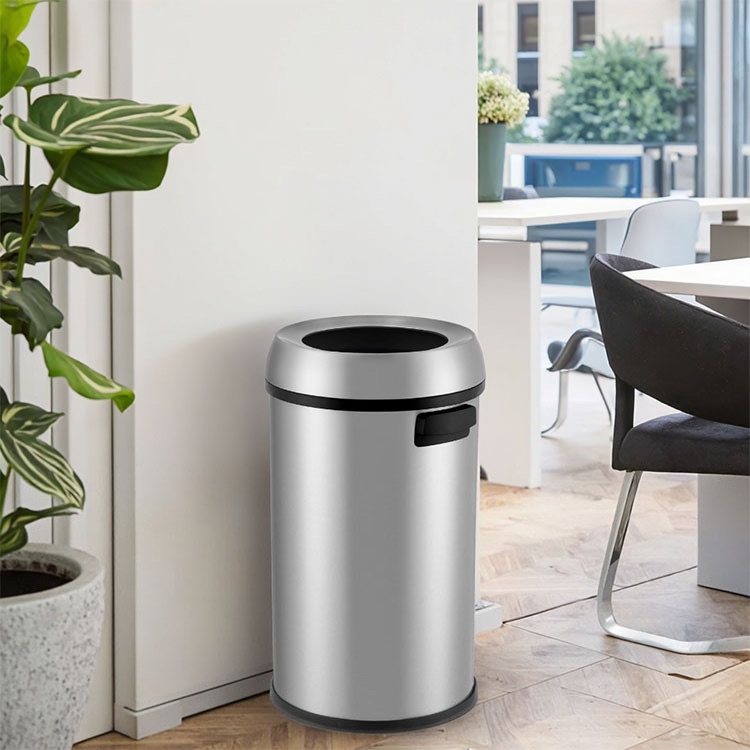
Second mistake: buyers confuse “metal” with “safe.” Metal helps. Shape, opening size, oxygen control, liner exposure, and placement matter too. A wide-open polished cylinder full of paper is not magically wise because it is stainless.
Third mistake: operators use fire resistant hotel wastebaskets to compensate for weak policy. If you have no battery disposal guidance, no smoking enforcement, no housekeeping escalation path for scorched liners, and no staff training on when a wastebasket fire is still extinguishable, the hardware is doing a management job it cannot finish.
Do hotels need fireproof waste bins in every guest room?
Fireproof waste bins are not necessary in every hotel guest room; they make the most sense in rooms where smoking violations, balcony use, extended-stay occupancy, heavy paper disposal, or unsafe battery and vape disposal create a realistic chance that a small ignition source could sit unnoticed long enough to grow.
That is the adult answer, not the catalog answer. If your incident history is clean and housekeeping visibility is high, standard hotel guest room wastebaskets may be enough. If a property keeps seeing scorched liners, cigarette debris, or discarded devices, a self-extinguishing model becomes easier to defend operationally.
Where should hotels use fire resistant waste bins first?
Hotels should use fire resistant waste bins first at smoking transition points, selected high-risk guestrooms, elevator lobbies, meeting-floor corridors, business centers, and back-of-house zones where paper, batteries, vapes, or smoking materials are most likely to be discarded without immediate staff oversight.
I would start at the entrance smoking area before I touched the presidential suite. Why? Because that is where ember behavior is visible, repeated, and cheap to correct with the right receptacle. Then I would move indoors to floors and rooms with actual incident history.
Are fire resistant hotel wastebaskets a substitute for sprinklers and alarms?
Fire resistant hotel wastebaskets are not a substitute for sprinklers, smoke detection, compartmentation, or staff response; they are a local containment tool designed to reduce the chance that a small ignition source in a receptacle becomes a room, corridor, or life-safety event.
That distinction matters. NFPA’s 2024 sprinkler data is blunt: life-safety performance changes dramatically when sprinklers exist and operate. The bin is the first inch of control. The building system is the real safety net. Treat them as partners, not substitutes.
What should buyers look for instead of just asking for “UL-rated wastebaskets”?
Buyers should look for controlled openings, oxygen-limiting or self-extinguishing top design, liner concealment, durable metal or fire-resistant construction, easy cleaning, stable placement, and a use case tied to smoking, battery disposal, or mixed public-area waste, instead of assuming one certification phrase answers the entire risk question.
I’d add one more filter: does the bin match the behavior of the zone? A beautiful open-top vessel in a smoking-prone corner is a lazy buy. A plain metal receptacle with the right top geometry in the same spot is a smarter one.
Your Next Move
Do this next.
Walk the property with engineering, housekeeping, and security for 30 minutes and mark every spot where cigarettes, vapes, batteries, paper loads, and unsupervised disposal overlap. Then spec only those points for upgraded fire resistant wastebaskets. Leave the rest alone. That is how you avoid the two classic hotel procurement sins at once: underspending on the real risk and overspending everywhere else.