Share your requirements and target market. We’ll suggest the right configuration, sampling path, and production plan.
During business hours, We can usually provide a preliminary quote within two hours.
: workflow-based setups to improve efficiency and keep corridors tidy
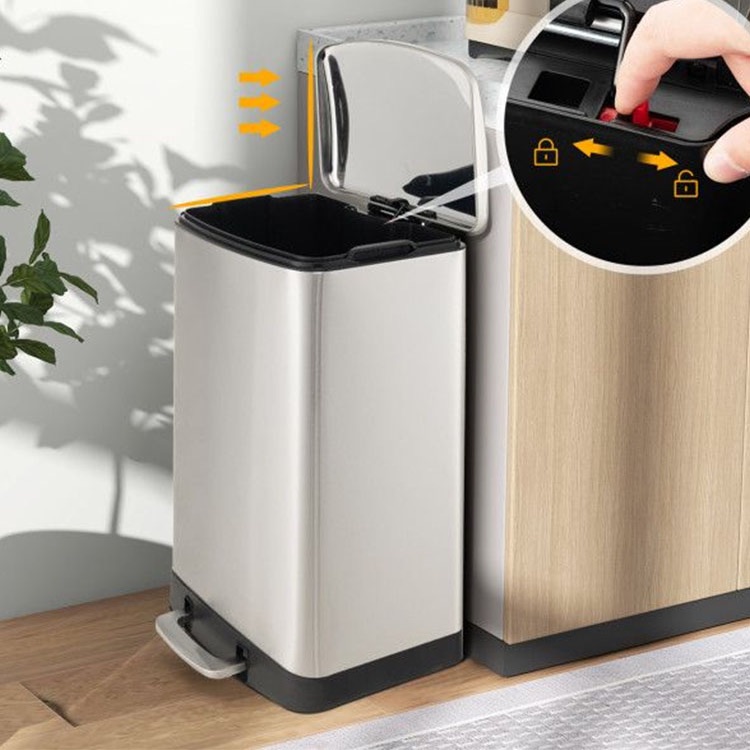
: easier bag changes and maintenance, built for daily facility use
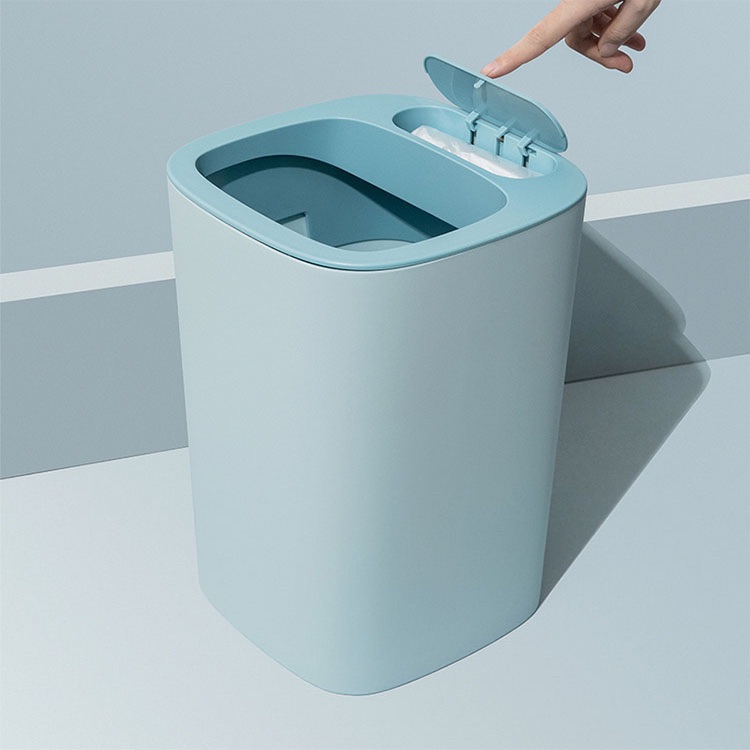
: 1–3 stream options with clear icon/label systems to reduce contamination
: materials, finishes, branding & packaging locked for consistent reorders
Your info is used only for quoting and communication.
How to Choose Hotel Trash Bins That Hide Liner Edges
Most hotel trash cans fail in the details: exposed liner ears, suction-heavy bag removal, cheap rims, noisy lids, and ugly public-area placement. Here’s how I would specify hotel room trash cans, lobby waste bins, and commercial trash cans for hotels without letting a five-cent liner ruin a $300 room impression.
Table of Contents
The Plastic Edge Problem Nobody Wants to Admit
Ugly bags matter.
I’ve watched hotel operators spend real money on stone vanities, soft-close casegoods, Flos-style lighting, wallcovering with a 30,000 double-rub rating, and then let a white liner flap over the rim of a bargain bin like a surrender flag in the corner of the guestroom. Why does that happen?
Because trash bins are usually bought too late.
And because procurement teams often treat Hotel Trash Bins as commodity accessories instead of small operational machines. A guest does not analyze liner retention. They notice “messy” or “clean.” Housekeeping does not care about your rendering. They care whether the liner seats fast, pulls out without suction, and does not collapse during a 17-minute room turn.
Here is the hard truth: if liner edges are visible, the bin is not “finished.” It is merely holding waste.
The 2024 U.S. Green Lodging Trends Report found that 32.1% of hotels had eliminated garbage bags for in-room bins, while 83.5% had a waste reduction plan and less than 1% tracked the amount of waste they discard. That tells me two things: hotels are rethinking liners, but most still lack the measurement discipline to know whether their bin choices are saving labor or just looking virtuous.
If you are sourcing hotel room trash cans, start with the visible rim. Then work backward into housekeeping speed, liner size, fire risk, odor control, guestroom style, and replacement cost.
What Actually Hides a Liner Edge?
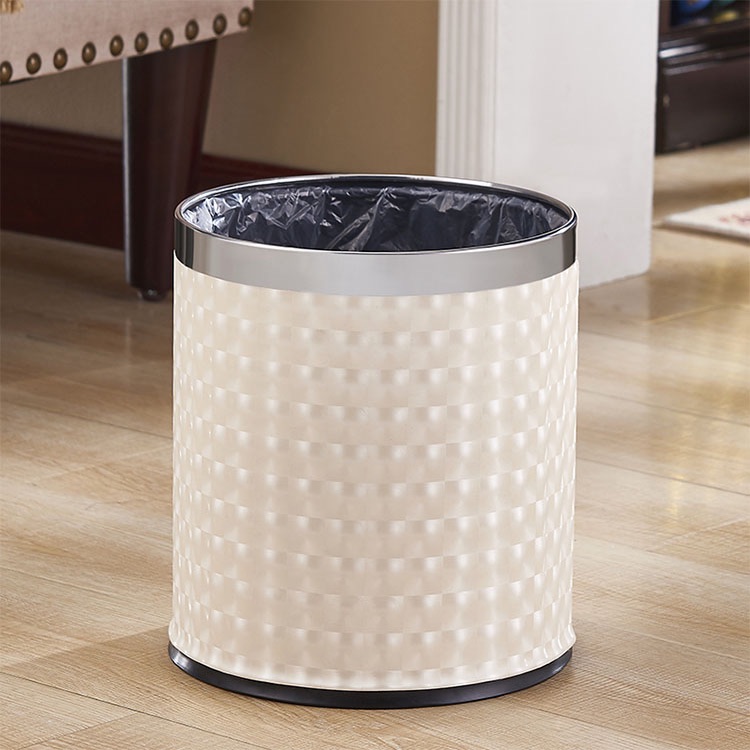
A bin hides a liner edge when it uses a second component to trap excess bag material below the sightline. That component might be a removable liner ring, an inner bucket, a recessed top rim, a sleeve-style body, or a lift-off cap.
My bias is simple: for guestrooms, I like a removable liner ring. For lobbies, I prefer inner buckets or concealed service doors. For bathrooms, I want an inner pail or ring that survives wet wipes, cotton pads, and guest abuse. And for outdoor or smoking-adjacent areas, I stop talking about elegance and start asking about fire, anchoring, and wash-down.
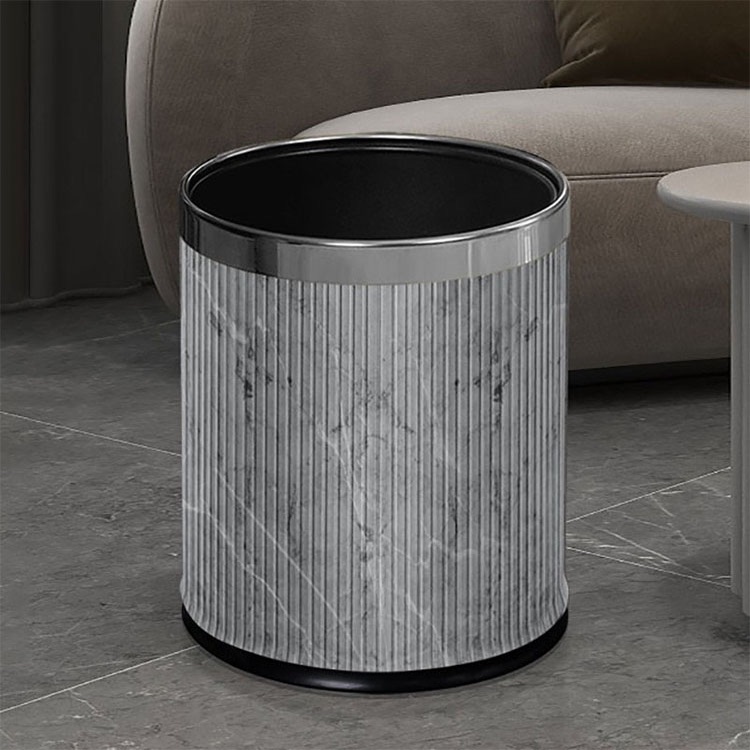
A good example of the right design logic is a compact guestroom wastebasket with liner ring, because the point is not decoration alone; the ring holds the bag in place and tucks away the plastic “ears” that make a room look unfinished. Facility Project Solutions also groups these under Indoor Trash Bins, which is the right internal path for buyers comparing hotel room bins, lobby trash cans, office bins, and sensor formats.
The Four Real Concealment Mechanisms
Hidden Liner Method
Best Use Case
What It Solves
What Can Go Wrong
My Verdict
Removable liner ring
Guestrooms, bathrooms, suites
Hides bag edge, fast relining, clean sightline
Ring gets lost if not tethered or standardized
Best all-around for hotel room trash cans
Removable inner bucket
Bathrooms, offices, public areas
Cleaner emptying, better liquid control
Adds weight and one more part to clean
Best for wet or mixed waste
Recessed rim / shadow gap
Luxury rooms, low-waste areas
Minimalist look, no visible liner
Poor fit if liner gauge or size changes
Good only with tight spec control
Lift-off top / sleeve cover
Lobbies, corridors, meeting spaces
Conceals liner completely, premium look
Slower servicing if heavy or awkward
Best for decorative hotel waste receptacles
The hidden liner rim is not a gimmick. It is the difference between a hotel trash can that photographs well on opening day and one that still looks controlled after 9,000 room turns.
The Procurement Test: Don’t Buy the Bin Until You Test the Bag
Most bad bin choices come from showroom logic. The buyer sees the body. The operator lives with the liner.
So here is my field test. Put the actual liner inside the actual sample. Not a “similar” bag. Not whatever the factory had nearby. Use the liner your housekeeping team buys by the case: 6 micron, 8 micron, 10 micron, clear HDPE, black LDPE, compostable PBAT blend, whatever your program requires. Then run 20 relining cycles.
You will learn more in seven minutes than from any brochure.
The 2024 report’s finding that only less than 1% of hotels track waste volumes or recyclables is embarrassing, but it also explains why bad bins survive. Nobody assigns cost to the extra 15–25 seconds per room caused by liner slippage, suction, double-bagging, and staff rework. In a 220-room hotel, even 20 wasted seconds per occupied room can become a real labor leak during peak turnover.
For multi-site procurement, I would point the buyer toward a spec-driven path like Product Selection and Cost-Effective Solutions, because the winning move is not “find the cheapest bin.” It is locking the rim geometry, liner compatibility, carton labeling, finish, and reorder spec before the first container ships.
My Minimum Specification for Hotel Trash Bins
I would not approve a hotel trash bin unless the sample passes these checks:
Liner edge visibility: no exposed plastic from standing eye level at 1.5 meters.
Relining time: under 12 seconds for a trained room attendant.
Bag retention: no liner collapse when loaded to 60–70% capacity.
Surface cleaning: wipe-clean body with no dirt-catching grooves near the rim.
Noise control: no loud metal-on-metal ring slap in guestrooms.
Material match: PP, ABS, powder-coated steel, leatherette wrap, or 304 stainless steel depending on placement.
Replacement logic: identical rings and buckets across a room family, not six near-match parts.
Waste policy fit: compatible with bagless, bagged, recycling, or compostable-liner programs.
The tiny part matters. A $0.40 liner ring failure can make a $40 bin feel cheap.
Guestroom, Bathroom, Lobby: Stop Using One Bin Everywhere
A hotel is not one waste environment. It is at least five.
Guestrooms receive tissues, receipts, snack wrappers, amenity packaging, bottles, and the occasional unpleasant surprise. Bathrooms receive wet waste. Lobbies receive coffee cups, food wrappers, event trash, and public contamination. Meeting areas spike during breaks. Back-of-house waste streams behave like a small logistics operation.
So why do so many properties buy one bin family and hope?
For rooms, choose compact waste bins that hide trash bags with a liner ring or recessed rim. For bathrooms, specify inner buckets. For lobbies, use decorative hotel waste receptacles with top openings, side doors, or removable liners. The Stainless Steel Office Trash Can is relevant for hotel lobbies, corridors, meeting rooms, and business centers because stainless steel bodies, top openings, removable inner buckets, and liner-retention rims solve different public-area problems than a guestroom wastebasket.
If the property has a waste diversion program, the trash bin cannot be chosen separately from recycling. That is where a commercial recycling bin with removable liners becomes part of the same conversation. A lonely trash can in a lobby often becomes the “everything” bin. Pair it with labeled recycling and restricted openings, or do not pretend guests will sort correctly.
Sustainability Is Not a Press Release; It Is a Bin Standard
I get suspicious when hotels talk about sustainability only through guest-facing slogans. Real sustainability shows up in boring specs: liner count, waste audits, refill systems, sorting accuracy, service routes, and whether housekeeping has to throw away half-used plastic every day.
New York’s Department of Environmental Conservation says hotels with 50 or more rooms cannot provide small plastic bottles under 12 ounces for hospitality personal care products starting January 1, 2025, with smaller properties following January 1, 2026. The agency explicitly recommends refillable dispensers and visible staff/guest education.
Washington’s RCW 70A.245.140 goes further into future compliance: lodging establishments with 50 or more units face restrictions beginning January 1, 2027, and penalties can reach $500 per day, capped at $2,000 annually, for certain violations.
What does shampoo law have to do with hotel trash bins? More than buyers admit. As guestroom packaging changes, trash composition changes. If refillables reduce mini-bottle waste, the room bin may no longer need the same liner practice. If a property eliminates in-room garbage bags, the bin surface and cleaning SOP become more important. If compostable bags enter the spec, rim fit and tear resistance become non-negotiable.
This is why I would connect bin procurement with a broader sustainable hotel supplies program, not treat hotel trash cans as isolated SKUs.
The Housekeeping Safety Angle Buyers Ignore
Here is the uncomfortable part: trash is not always “trash.” It can be broken glass, sharps, blood-contaminated tissue, vomit cleanup material, chemical residue, cannabis packaging, food waste, or needles left by guests who assume housekeeping is magic.
OSHA’s bloodborne pathogens guidance states that occupational exposure to blood or other potentially infectious materials puts workers at infection risk, and OSHA specifically references janitorial and hotel/motel industry exposure materials in its hazard-recognition resources.
No, a liner ring does not make a bin “safe” by itself. But poor liner control increases hand contact, liner collapse, digging, re-bagging, and bin interior contamination. Good commercial trash cans for hotels reduce handling friction. That matters.
For bathrooms and public spaces, I prefer bins that prevent direct reach-in during servicing. For guestrooms, I want ring-lift relining that does not force staff to press the liner down with bare fingers. For lobbies, I want removable liners and service doors. For smoking zones or entryways, I want fire-aware, anchored equipment, not a pretty basket near a cigarette stream.
Materials: The Honest Take
Material choice is not aesthetic first. It is abuse prediction.
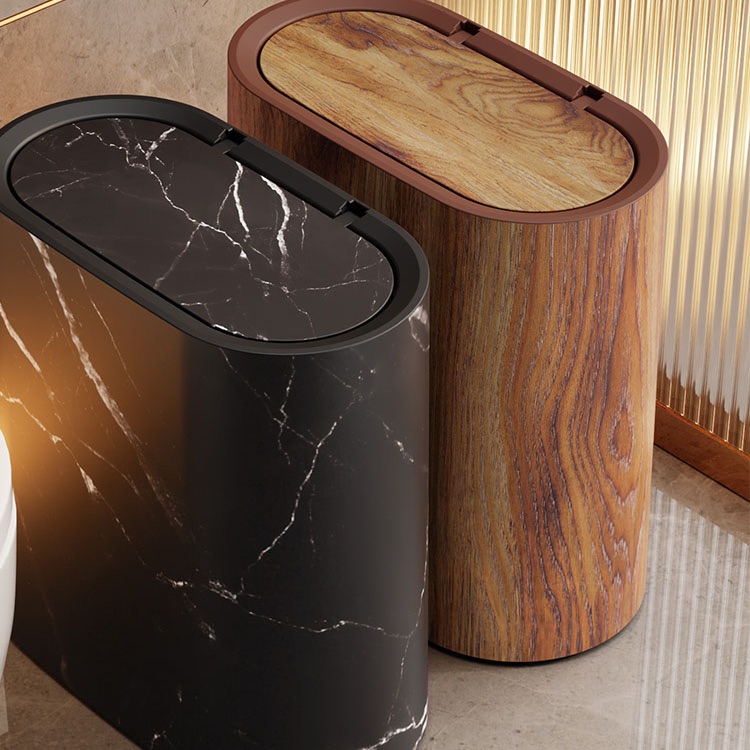
PP and ABS are fine for budget-to-midscale rooms if the rim is well designed. Powder-coated steel is better for corridors, staff areas, and public zones, but paint chips become ugly fast if carts hit the base. 304 stainless steel, with roughly 18% chromium and 8% nickel, earns its place in lobbies and bathrooms because it wipes clean and resists corrosion, but it fingerprints unless brushed or treated. Leatherette and wood-grain panels look warm in suites, but housekeeping chemicals can punish cheap wraps.
For best trash cans for hotels, I would rather buy a slightly plain bin with a perfect hidden liner rim than a gorgeous bin with sloppy bag control.
That opinion annoys designers. I’m fine with that.
FAQs
What is a hotel trash bin that hides liner edges?
A hotel trash bin that hides liner edges is a guest-facing waste container designed with a liner ring, removable inner bucket, recessed rim, or lift-off cover that secures the bag while concealing loose plastic from normal guest view in rooms, bathrooms, lobbies, and public areas. This design keeps the bin visually clean while helping housekeeping replace liners faster and more consistently.
Why do visible liner edges look bad in hotel rooms?
Visible liner edges look bad in hotel rooms because they interrupt the finished interior design, signal rushed housekeeping, and make even a clean guestroom feel less controlled, especially near vanities, desks, minibars, and bedside furniture where guests inspect small details closely. The problem is not only cosmetic; exposed liners also slip, bunch, and invite inconsistent staff handling.
Are liner-ring hotel room trash cans better than inner-bucket bins?
Liner-ring hotel room trash cans are usually better for dry guestroom waste because they hide excess bag material with fewer parts, while inner-bucket bins are better for bathrooms, wet waste, and public areas where liquid control and easier emptying matter more. I use liner rings for speed and appearance, then inner buckets where contamination risk is higher.
Can hotels eliminate garbage bags from in-room bins?
Hotels can eliminate garbage bags from in-room bins only when the bin material, cleaning procedure, waste mix, labor model, and guest expectations support bagless operation without creating odor, staining, or housekeeping safety problems. The 2024 Green Lodging data shows this is already happening, but it remains an operational decision rather than a simple sustainability slogan.
What size trash bin is best for hotel guestrooms?
The best trash bin size for most hotel guestrooms is usually 6–12 liters, large enough for tissues, wrappers, receipts, and light amenity waste but small enough to fit beside a desk, minibar, vanity, or nightstand without drawing attention. Suites, extended-stay rooms, and family rooms may need 12–18 liters or paired waste and recycling bins.
How should hotels choose decorative waste receptacles for lobbies?
Hotels should choose decorative waste receptacles for lobbies by prioritizing concealed liners, stable placement, service-door access, fingerprint-resistant finishes, aperture size, and visual compatibility with the lobby’s traffic pattern, not just the exterior style. A lobby bin must handle coffee cups, food wrappers, event waste, and guest misuse while still looking intentional at 7 p.m.
Your Next Steps
Do not ask a supplier for “hotel trash bins” as a generic RFQ. Ask for three samples: one guestroom bin with a hidden liner ring, one bathroom bin with an inner bucket, and one public-area decorative receptacle with concealed liner access. Then test each with your real liner, your actual housekeeping SOP, and your brand finish standard.
If you are buying across multiple rooms or properties, start with Facility Project Solutions’ indoor trash bin category and request a controlled spec set: dimensions, material, rim mechanism, liner compatibility, finish, carton labeling, and replacement-part logic. The winning bin is not the one that looks best empty. It is the one that still looks clean after the 10,000th liner change.