Share your requirements and target market. We’ll suggest the right configuration, sampling path, and production plan.
During business hours, We can usually provide a preliminary quote within two hours.
: workflow-based setups to improve efficiency and keep corridors tidy
: easier bag changes and maintenance, built for daily facility use
: 1–3 stream options with clear icon/label systems to reduce contamination
: materials, finishes, branding & packaging locked for consistent reorders
Your info is used only for quoting and communication.
How Hotel Chains Can Spec Different Cart Programs by Brand Tier
A hard-nosed guide to hotel housekeeping carts, hotel cart programs, and hotel procurement specifications for luxury, upscale, select-service, and extended-stay brands.
Most chains cheat.
They write hotel brand standards as if bronze trim, matte-black powder coat, or a logo plate were the real decision, when the real decision is labor behavior: push force, turning radius, bag separation, wipe-down speed, sightline control, spare-part discipline, and whether a cart jams the service elevator at 6:40 a.m. Why are so many teams still buying by beauty shot?
I have sat through enough hotel procurement specifications reviews to know the routine. Corporate wants “consistency.” Operations wants “property flexibility.” Ownership wants the cheapest thing that looks approved in a PDF. All three are understandable. But only one approach survives contact with reality: one controlled cart family, split by brand tier, with shared DNA and limited variance.
Table of Contents
Brand Tier Changes the Work Before It Changes the Look
Tier matters.
If a chain tries to force one housekeeping cart logic across a luxury tower, a 140-room select-service box, and an extended-stay property with long linen cycles, it is not standardizing operations; it is mass-producing friction. Why pretend otherwise?
The pressure is getting worse, not better. In March 2024, Reuters reported that hotel conversions and franchise agreements were rising, with global conversions moving closer to 40% of rooms entering brand systems, which means more mixed building types are being asked to behave like one brand promise. Then AHLA’s February 2024 survey said 67% of hotels still faced staffing shortages, 72% still could not fill open positions, and housekeeping was the top hiring need for 48% of respondents. That is the backdrop for hotel cart programs now: mixed assets, thinner staffing, and less patience for dumb equipment variance.
And the labor signal got louder. In September 2024, Reuters reported more than 10,000 U.S. hotel workers struck across 25 hotels in nine cities, and the public rationale was not vague morale language; it was higher pay, fairer workloads, and the reversal of pandemic-era staffing cuts. That is not a labor story sitting off to the side. It is the spec brief.
Laws are getting blunt.
Seattle’s Protecting Hotel Employees from Injury Ordinance limits how much guest-room floor area covered employees can clean in a day, and the city’s 2024 notice says covered workers in large hotels can clean a maximum of 4,500 square feet in an 8-hour day, with 3x pay when they go past the limit under qualifying conditions. Once cities start pricing workload, any cart spec that adds walking, re-sorting, or awkward pushing is no longer “value engineering.” It is expensive denial.
The injury math is ugly too. BLS data for 2024 put the total recordable case rate for hotels except casino hotels and motels at 3.9, versus 2.4 for restaurants and other eating places; separately, BLS’s May 2024 occupational wage release put maids and housekeeping cleaners at $36,180 mean annual pay. Thin labor pool. Physical work. Higher injury incidence than much of food service. Why would any serious chain spec carts like a decorative afterthought?
The Cart Matrix I Would Put in Front of a Brand VP
One family. Not one SKU.
That distinction is where grown-up hotel brand standards begin, because luxury, upscale, select-service, and extended-stay properties do not share the same service theater, but they should share the same engineering logic. Here is the matrix I would start with.
Enclosed or semi-enclosed cart, lockable doors, hidden bag frame, 100–125 mm non-marking TPE casters, full bumper wrap, premium powder coat or 304 stainless touchpoints
Dual-stream linen separation, quiet caster package, easy-clean bag change
Branded waste and recycling stations with restrained graphics and premium finishes
Same wheel vendor or approved equivalent, same bumper profile, same finish codes, same spare-parts kit
Higher-capacity linen collection and sorting carts
Durable public-area bins, less ornament, higher abuse tolerance
Same approved parts logic, same maintenance triggers, same replacement thresholds
Luxury tiers are not buying capacity first
Silence first.
A luxury flag does not need the most storage; it needs the cleanest corridor behavior, because the guest sees the equipment, hears the equipment, and judges the brand through the equipment before anyone says hello. Why do so many luxury teams still approve carts that rattle like airport janitorial gear?
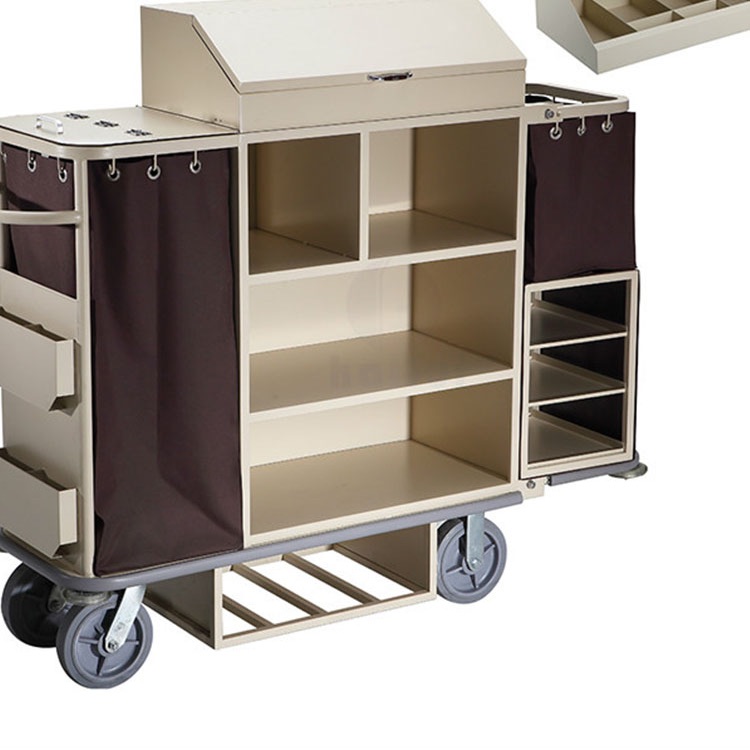
That is why I would steer premium-floor readers toward a page like Branded Housekeeping Trolley with Storage Compartments: it points in the right direction on presentation, zoned storage, and corridor manners. But I would still tighten the spec beyond aesthetics. I would lock wheel diameter, tread material, bumper hardness, hinge quality, lock type, and approved cleaning chemistry. Luxury failures are rarely dramatic. They are repetitive. Squeak, scuff, rattle, sag, repeat.
And there is a safety angle that too many luxury operators treat as somebody else’s memo. HTNG’s October 2024 buyer’s guide says that in a typical 300-bedroom hotel, a housekeeper enters a room alone more than 80,000 times a year. Premium tiers that still separate visual control, route efficiency, and staff safety into different conversations are kidding themselves.
Select-service should be built for tolerance, not theater
Speed wins.
A lean select-service hotel does not need a cart that looks expensive in a board deck; it needs a cart that survives tight elevators, fast room turns, fewer staff, and rougher handling without turning maintenance into a second job. Why buy ornament when what you really need is recovery speed?
This is where I would connect the reader to How to Size Laundry and Linen Carts by Room Count, because room count is not a boring ops variable. It is the budget truth. A 90-room hotel that buys a convention-hotel cart body wastes aisle space, aggravates turn-time, and then blames labor. I see it constantly.
My rule is simple: select-service specs should be lighter, narrower, cheaper to repair, and harder to misuse. That usually means fewer decorative panels, cleaner shelf zoning, a bag solution that does not balloon the live profile, and a caster package that can take elevator seams and hard turns without drifting.
Extended-stay properties should treat linen flow like a production line
Volume changes everything.
When guests stay longer, cook more, generate different waste mixes, and pull housekeeping into a different cadence, the cart program cannot merely be “the same cart, but more of it.” Why do brands keep making that mistake?
This is exactly why a route-specific page like Double-Bag Laundry Cart for Housekeeping Teams matters. Dirty and clean logic, or at least separated streams, should not be left to staff improvisation late in a shift. I would rather spend slightly more on bag separation and route discipline than pay later in re-handling, closet returns, and hallway clutter.
Where Hotel Procurement Specifications Usually Collapse
Specs fail softly.
They do not usually fail because the metal snaps in half. They fail because the approved document sounds polished while ignoring the boring variables that decide daily pain: wheel resistance, brake behavior, shelf pitch, bag access, handle height, disinfectant tolerance, and spare-part codes. What is a “brand standard” worth if nobody can reorder the same caster six months later?
OSHA is not subtle here. Its ergonomics guidance tells employers to use rolling carts with large, low-resistance wheels, keep them maintained, and push rather than pull whenever possible. I agree, but I will go one step further: housekeeping cart standards for hotels should be written like engineering, not marketing. If the spec does not name wheel diameter, wheel material, bumper type, allowable width band, load zone, hardware finish, and replacement trigger, it is not a spec. It is mood-board prose.
This site already hints at the right buying structure. Facility Project Solutions separates commercial intent into the homepage’s core categories, an OEM/ODM hotel cart program, a sustainable hotel supplies rollout page, operational blog posts, and route-specific product pages. That is the correct spine for this topic, because a reader searching how to choose housekeeping carts by hotel brand tier is not ready for a dead-end SKU page first; they need to move from strategy, to route logic, to product family, to quote request.
The Internal Link Spine This Page Should Own
Internal links matter.
But most people still do them like they are sprinkling parsley on a steak. Why waste the traffic?
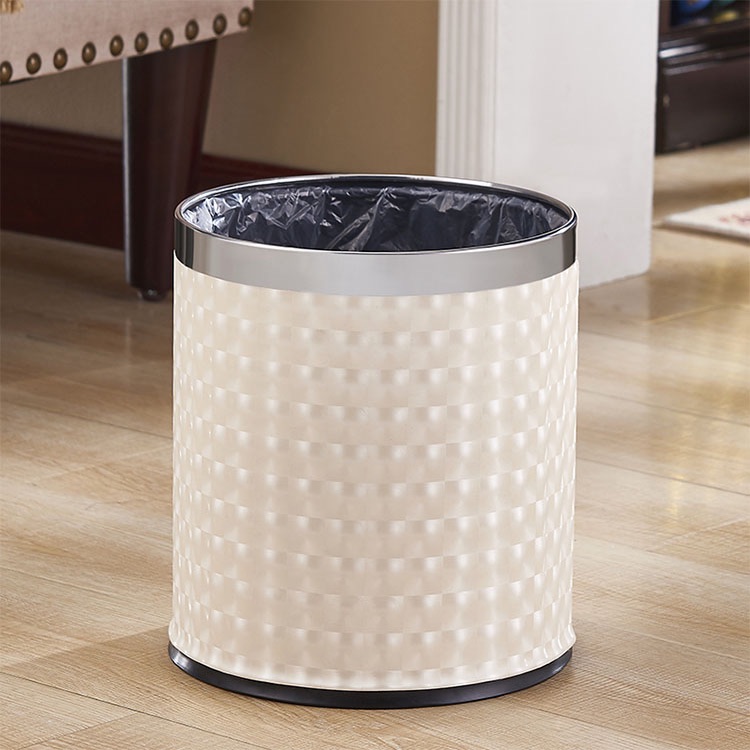
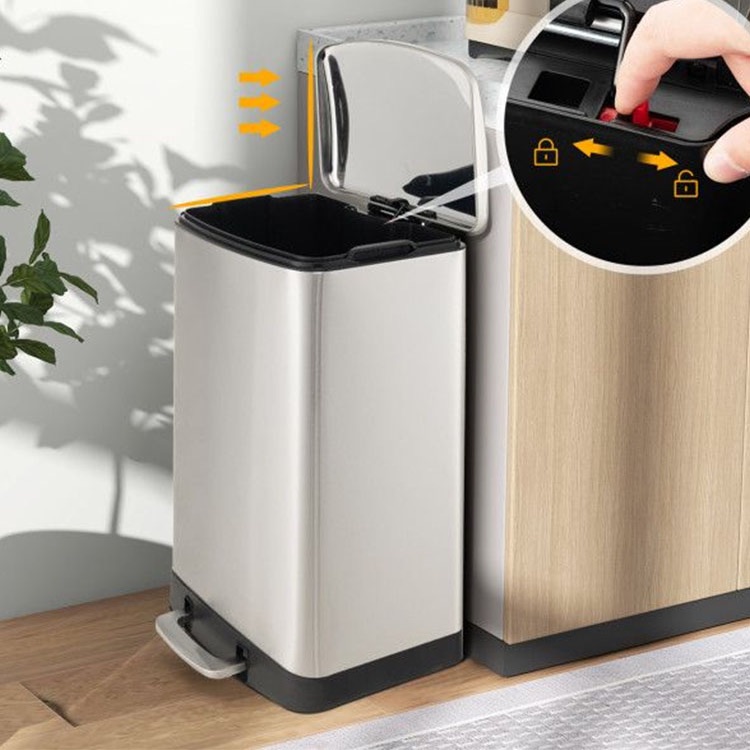
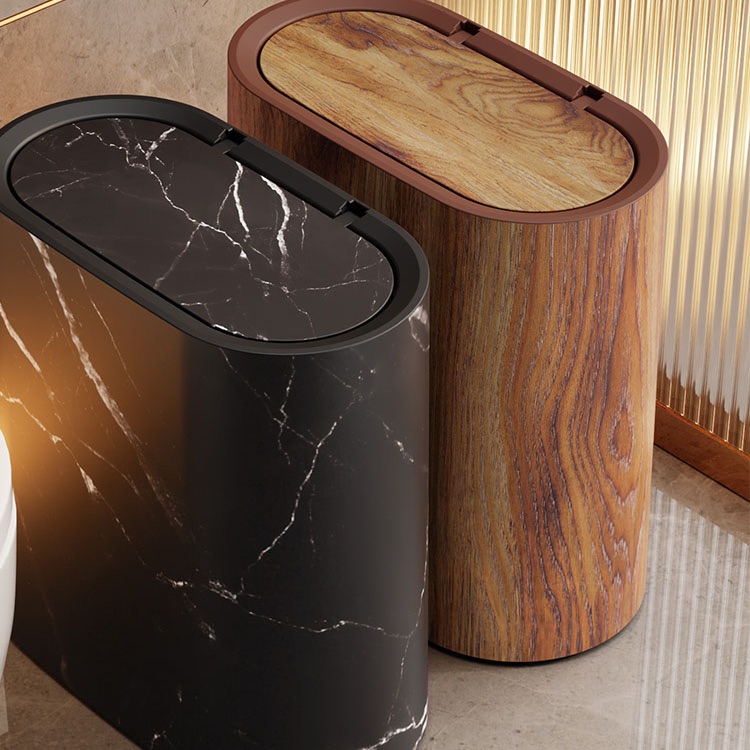
I would also keep one supporting public-area branch alive inside this article, because brand tiers do not stop at housekeeping. Premium and upper-upscale brands often need tighter visual control in guest-facing waste and diversion points, which makes a page like 2-Stream Waste Sorting Bin for Hotels a relevant adjacent link rather than a random upsell. Luxury guests notice clutter. Select-service operators notice service time. Good internal architecture respects both.
FAQs
What does it mean to spec different cart programs by brand tier?
Specifying different cart programs by brand tier means creating a controlled family of carts, linen movers, and support stations whose dimensions, storage logic, wheel package, finish, and visibility are tuned to each tier’s service promise, labor model, and building geometry while still sharing one chain-wide parts and compliance logic.
In plain English, I would keep the engineering language stable and vary only the pieces that truly change by tier: concealment level, noise control, route width, bag separation, shelf zoning, and front-of-house appearance. That is how you preserve brand discipline without forcing nonsense uniformity.
What is the difference between luxury hotel brand standards and select-service hotel cart specs?
Luxury hotel brand standards put the cart under guest scrutiny, so noise, concealment, finish protection, lockable storage, and visual discipline rise to the top, while select-service hotel cart specs favor faster access, tighter footprints, fewer decorative parts, and lower replacement cost because the labor model is leaner and the service ritual is shorter.
I would never spec those two tiers the same way. The luxury cart lives in the guest’s peripheral vision. The select-service cart lives in a race against time. That is not a small difference. That is the difference.
How should hotel chains choose housekeeping carts by brand tier?
Hotel chains should choose housekeeping carts by brand tier only after mapping corridor width, elevator depth, room mix, linen par, amenity load, visibility to guests, and cleaning chemistry, because the right cart is not the one with the nicest brochure photo; it is the one that removes friction from the exact route staff run every day.
My advice is blunt: measure first, argue later. If a brand team cannot show live route data from one luxury, one select-service, and one extended-stay pilot, it is not ready to freeze a cart standard.
Should a chain standardize one cart across every brand?
A chain should not standardize one cart across every brand, but it should standardize one design language, one wheel-and-bumper logic, one parts catalog, and one exception policy, so luxury, upscale, select-service, and extended-stay flags behave like relatives instead of strangers assembled by different local buyers.
This is the hard truth I keep coming back to: one SKU across every flag is lazy. One governed family across every flag is smart. That is the difference between control and chaos with a prettier template.
Your Next Step
Stop guessing.
Audit one property in each tier for 90 minutes: corridor pinch points, elevator depth, linen volume, dirty/clean separation, cart park zones, bag-change time, wall strikes, caster noise, and push complaints from staff. Then freeze one approved cart family per tier, one spare-parts kit per family, and one exception rule for owners who want off-spec substitutions.
And if this page is being published on Facility Project Solutions, do not leave it floating as a thought piece. Send readers from here into the OEM/ODM hotel cart program or a B2B quote request only after they have seen the operational path through sizing, standardization, and route-specific products. That is how hotel procurement specifications stop being theater and start becoming a system.