Share your requirements and target market. We’ll suggest the right configuration, sampling path, and production plan.
During business hours, We can usually provide a preliminary quote within two hours.
: workflow-based setups to improve efficiency and keep corridors tidy
: easier bag changes and maintenance, built for daily facility use
: 1–3 stream options with clear icon/label systems to reduce contamination
: materials, finishes, branding & packaging locked for consistent reorders
Your info is used only for quoting and communication.
Are Soft-Close Trash Cans Worth It for Premium Hotel Rooms?
Premium hotels do not win on mattresses alone. They win on tiny signals—noise, liner visibility, maintenance discipline, and whether a guest bathroom feels intentional or cheap at 2:14 a.m.
Usually, yes.
I’ve watched premium hotels spend aggressively on stone tops, brushed brass, scent marketing, and oversized mirrors, then ruin the effect with a flimsy bin that clacks shut, shows the liner, and screams “value-engineered at the last minute,” which is ridiculous because guests notice those cheap signals faster than most procurement teams ever admit.
Why do that?
Table of Contents
The cheap bin problem no one in hospitality likes to admit
A premium room is not judged rationally. It is judged instantly. The guest walks in, scans the vanity, opens the curtain, checks the bed, tests the shower pressure, and then—without meaning to—builds a silent scorecard from dozens of micro-signals, including whether the bathroom waste bin feels solid, quiet, and clean or flimsy, loud, and vaguely tacky.
That sounds minor. It isn’t.
The 2024 North America Hotel Guest Satisfaction Index said the quiet part out loud: with U.S. hotel ADR at $158.45 in May 2024, guest value perception is leaning harder on room cleanliness, facilities maintenance, and the overall guest-room experience. And McKinsey’s 2024 hotel customer-experience analysis notes that luxury is the fastest-growing chain-scale segment, projected to grow 6% annually through 2025. When rates rise, tolerance drops. That is the real backdrop for this question.
My blunt view: in a premium hotel bathroom, an open-top bin often looks under-specified. Not always. But often enough that I would treat it as a design risk, not a harmless accessory decision.
Quiet is a feature, not a gimmick
The sleep argument is more practical than romantic
Guests do not write reviews saying, “The damping hinge on the waste bin improved my circadian health.” They write, “The room felt calm,” or they write nothing at all and quietly book again. That is how this works.
The CDC’s sleep guidance updated on May 15, 2024 recommends keeping a bedroom quiet, relaxing, and cool, and that matters more in hospitality than some buyers admit because premium rooms are built around controlled ambience: softer close on drawers, heavier doors, insulated glazing, quieter HVAC, better blackout. A trash can lid that slams against stainless steel breaks that whole story for almost no savings.
And here is the part operators know but rarely say on the record: premium rooms are judged at odd hours. Late-night tissue drop. Post-shower cotton pad. Early-morning coffee capsule. A noisy lid at 6:10 a.m. is not “small.” It is the sound of cheapness.
One bin is usually the wrong answer
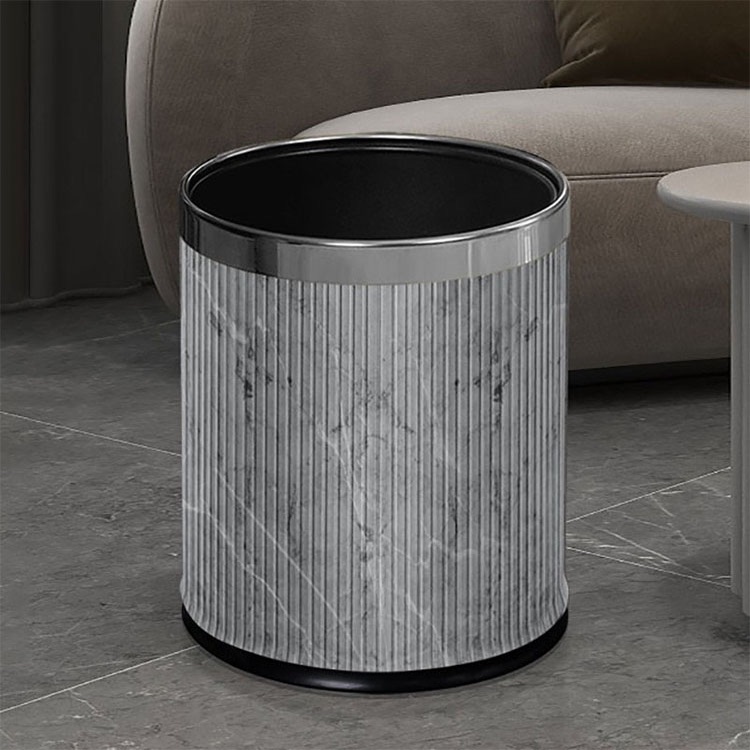
I would not spec the same bin for the bedroom and the bathroom unless the room is compact and the brand standard is aggressively minimalist. A better pattern is a quiet, polished bathroom pedal bin plus a simpler bedroom wastebasket.
It is about labor, consistency, and fewer ugly details
Here is the hard truth. Hotels almost never lose money because a trash can lacks damping. They lose money because bad bin specs create friction: exposed liners, slower relining, more visible grime, dented bodies, and more guest-facing evidence that housekeeping is working uphill.
When Reuters reported on September 2, 2024 that more than 10,000 U.S. hotel workers struck across 25 hotels in nine cities, the key complaint was not décor. It was pay, staffing, and fair workloads, with some hotel services, including housekeeping, already disrupted. In a labor-tight environment, operators should stop buying bathroom hardware that adds even tiny amounts of repeat friction across 200, 400, or 800 rooms.
That is why I care less about the phrase “soft-close” in isolation and more about the whole spec stack: pedal reliability, removable inner bucket, liner-retaining rim, easy wipe-down geometry, finish consistency, and restock speed. The bin matters most when it works with the room-turn system, which is where a linked page like compact maid cart with linen storage becomes contextually smart instead of forced. The site’s housekeeping-cart page talks explicitly about zoned compartments, adjustable shelves, non-marking casters, and faster room turns; that operational framing supports this article naturally.
My unpopular opinion on sensor cans
Most sensor cans in guestrooms are a mistake.
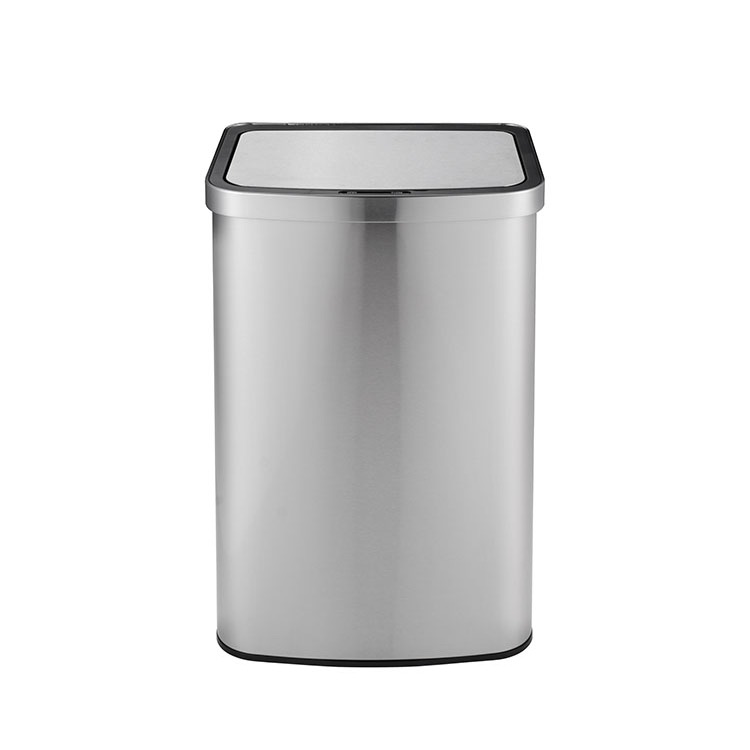
They look modern for about six minutes. Then the batteries die, the lids hesitate, the motion sensor misfires, or engineering gets another low-grade service nuisance that no one remembers approving. In premium hotel rooms, a soft-close step can usually beats a sensor can on reliability, housekeeping sanity, and total annoyance.
What the spec decision actually looks like
Decision Factor
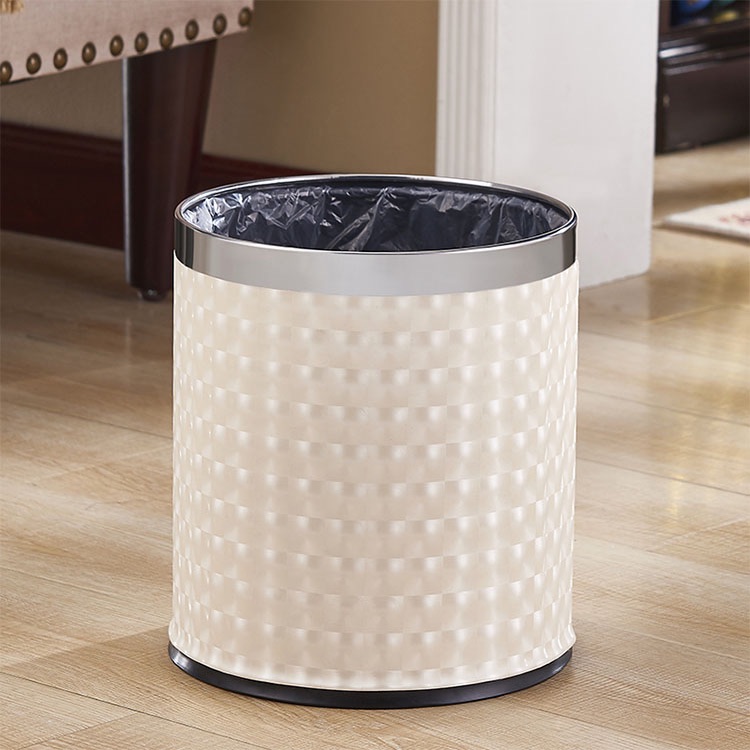
Open-Top Guestroom Bin
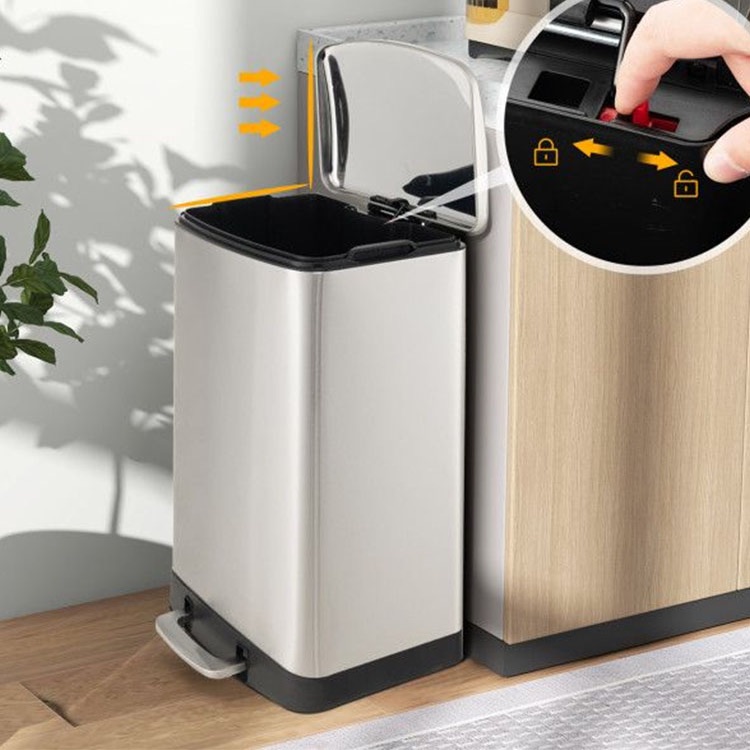
Soft-Close Step Bin
Sensor Bin
Noise control
Low to medium; no lid, but more liner and contents visibility
High; damped closure cuts metallic slam
Medium to high when new, but tech failure risk exists
Guest perception in premium bathroom
Often looks budget unless beautifully integrated
Strongest balance of hygiene, quiet, and finish
Mixed; can feel either upscale or gimmicky
Housekeeping speed
Fast if liner ring is good
Fast if inner bucket and liner lock are well designed
Slower when batteries, sensors, or lid resets enter the equation
Failure points
Minimal
Pedal and damper wear over time
Sensor, battery, motor, lid calibration
Best placement
Bedroom, minibar, vanity niche
Bathroom, WC zone, spa-style vanity area
Public restrooms or selected common areas, not most guestrooms
My verdict
Fine in standard rooms
Best fit for premium hotel bathrooms
Overused, oversold
The smarter play, in my view, is not “soft-close everywhere.” It is “soft-close where the guest perceives calm, cleanliness, and refinement most directly.”
When soft-close trash cans are worth it—and when they are not
Worth it in premium rooms with visible bathrooms
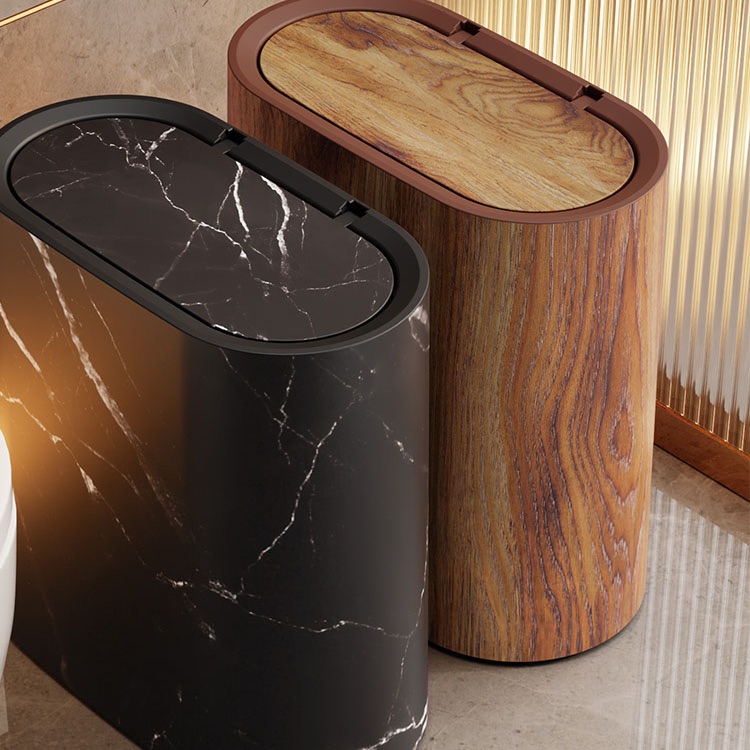
If the vanity zone is open, semi-open, or visually prominent, I would almost always spec a soft-close can. The bin becomes part of the room composition. Once it is visible from the bed, the standard changes.
Worth it when the hotel is selling calm
Spa hotels. Luxury resorts. Upper-upscale urban brands. Extended-stay premium concepts. Any property leaning on “quiet luxury,” wellness, or longer average stays should not sabotage that story with a clangy bin.
The JD Power 2024 study found guests are taking fewer trips but staying longer—3.43 days on average in 2024 versus 3.36 in 2023—which means room details get more exposure, not less. Longer stays magnify weak specs.
Not worth it in every room category
But let’s not get theatrical. In older limited-service properties, in hidden bathroom layouts, or in rooms where the bin sits inside a vanity cabinet, soft-close may not return enough value to justify universal deployment. There are cases where a durable open-top bedroom bin with a concealed liner ring is the better buy.
That is also why I would support this article internally with a link to the site’s hotel recycling and sorting systems only when the brand wants to broaden the conversation from “one premium bathroom bin” to “property-wide waste presentation, sorting, and consistency.” Otherwise, that link becomes noise.
Worth it when sustainability is part of the rate story
If a hotel is selling eco-cred, it needs more than towel cards and green copy. It needs visible, coherent waste behavior.
Booking.com’s 2024 Sustainable Travel research found 83% of travelers say sustainable travel is important to them and 75% want to travel more sustainably in the next 12 months. Guests may not book a room because the bathroom bin has damping, but they absolutely notice whether the property’s waste setup feels thoughtful, consistent, and real rather than cosmetic.
The spec I would actually approve
I would keep it simple.
For the bedroom: one clean-lined wastebasket with a concealed liner solution. For the bathroom: one 5L to 8L soft-close pedal bin, preferably with a removable inner bucket, stable base, fingerprint-resistant finish, and no fussy electronics. If the property is design-forward, pick a finish that matches the faucet family or hardware language. If the property is hard-use urban business travel, prioritize wipe-down speed and dent resistance over showroom drama.
And yes, I would standardize it.
A premium hotel does not need a “designer bin moment.” It needs the same silent, clean, durable behavior in room 1208, 1816, and 2403. That is where operators make money: not in object beauty alone, but in repeatable, low-friction standards.
FAQs
Are soft-close trash cans worth it for premium hotel rooms?
Yes, a soft-close trash can is usually worth it in a premium hotel room because it reduces lid slam noise, hides waste more elegantly, supports a cleaner bathroom presentation, and signals that the operator has paid attention to tactile details that guests notice during longer, higher-priced stays.
I would not call it mandatory in every room type, but in upper-upscale and luxury bathrooms it is one of those small specs that protects the room’s overall finish level.
What size soft-close trash can is best for a premium hotel bathroom?
The best size for a premium hotel bathroom bin is usually 5 to 8 liters, because that capacity handles tissues, amenity packaging, and light personal waste without looking oversized beside a vanity or toilet, while still allowing housekeeping to reline it quickly during standard room-turn windows.
Anything much smaller starts to feel decorative. Anything much bigger can crowd circulation and look utilitarian.
Are soft-close step trash cans better than sensor trash cans for hotels?
Soft-close step trash cans are usually better than sensor trash cans in guestrooms because they deliver quiet closure and hands-free use without batteries, sensor lag, or lid failures, which means lower maintenance risk, better consistency across hundreds of rooms, and fewer service calls for engineering.
Sensor bins can make sense in selected public restroom settings. In guestrooms, I think they are overspecified more often than not.
Do soft-close trash cans improve guest satisfaction?
Soft-close trash cans do not transform guest satisfaction by themselves, but they improve the cluster of signals guests use to judge room quality—noise control, cleanliness, finish level, and maintenance discipline—which matters more in premium segments where every small flaw feels bigger because the rate is higher.
Think of the bin as a supporting actor. Not the lead. But bad supporting actors still ruin scenes.
Your Next Move
Run a one-floor audit this week. Check three things: exposed liners, lid noise, and how long a room attendant needs to reline and wipe the bin during a live turn. Then compare your current setup against a paired approach—a discreet bedroom wastebasket plus a soft-close bathroom step bin—and decide whether your current spec matches the rate you are charging.