Share your requirements and target market. We’ll suggest the right configuration, sampling path, and production plan.
During business hours, We can usually provide a preliminary quote within two hours.
: workflow-based setups to improve efficiency and keep corridors tidy
: easier bag changes and maintenance, built for daily facility use
: 1–3 stream options with clear icon/label systems to reduce contamination
: materials, finishes, branding & packaging locked for consistent reorders
Your info is used only for quoting and communication.
Should Hotels Place Trash Bins in Guest Corridors?
Corridor bins look efficient on paper, but they often create the wrong kind of visibility: odor, clutter, spills, and egress headaches. I argue for a tighter system—guestroom bins, public-area stations, and back-of-house sorting—backed by current hotel waste data and real code signals.
Mostly, no.
I have sat through enough hotel ops conversations to know why hotel corridor trash bins keep coming back: they sound efficient, they seem to reduce guest calls, and they give housekeeping a visible release valve for overflow, yet the minute you move from whiteboard logic to an actual guest floor, the trade-offs start stacking—odor drift, liner exposure, spill risk, visual clutter, and the small but nasty issue that corridors are not neutral space; they are part of the product the guest already paid for.
Why would we place visible waste in the one circulation zone guests read as a proxy for cleanliness, safety, and control?
My view is blunt: permanent hotel hallway trash cans are usually an operational shortcut masquerading as a system. The better answer is boring, disciplined, and far more effective—put the right bin in the room, place larger hotel recycling bins and waste stations at intentional public nodes, and make housekeeping waste disposal flow through service points instead of through the guest experience.
Table of Contents
The corridor-bin idea collapses when codes and guests enter the room
Codes do not reward improvisation
Here is the hard edge. OSHA’s exit-route requirements state that exit routes must be free and unobstructed and that no materials or equipment may be placed, either permanently or temporarily, within the exit route. Seattle’s 2024 Administrative Rule 3.01.24, written for valet trash or recycling containers outside dwelling or sleeping units, is even more revealing: containers cannot obstruct minimum egress width, filled containers are time-limited to 6 hours in a 24-hour period, and empty approved containers cannot remain in a corridor for more than 12 continuous hours. That is not permission. That is a regulator telling you corridor waste is tolerated only under narrow control.
And yes, Seattle’s rule is not a universal hotel statute. But the enforcement logic matters because it shows how officials think about shared corridors: width first, duration second, materials third, management rules always. If your bin strategy depends on “nobody will mind,” you do not have a strategy.
Guests notice faster than inspectors
I do not care how elegant the spec sheet looks. A freestanding guest corridor waste bin outside room doors reads like back-of-house drift. Luxury guests read it as neglect; midscale guests read it as clutter; staff read it as one more stop that can overflow on a bad shift. None of those readings help RevPAR.
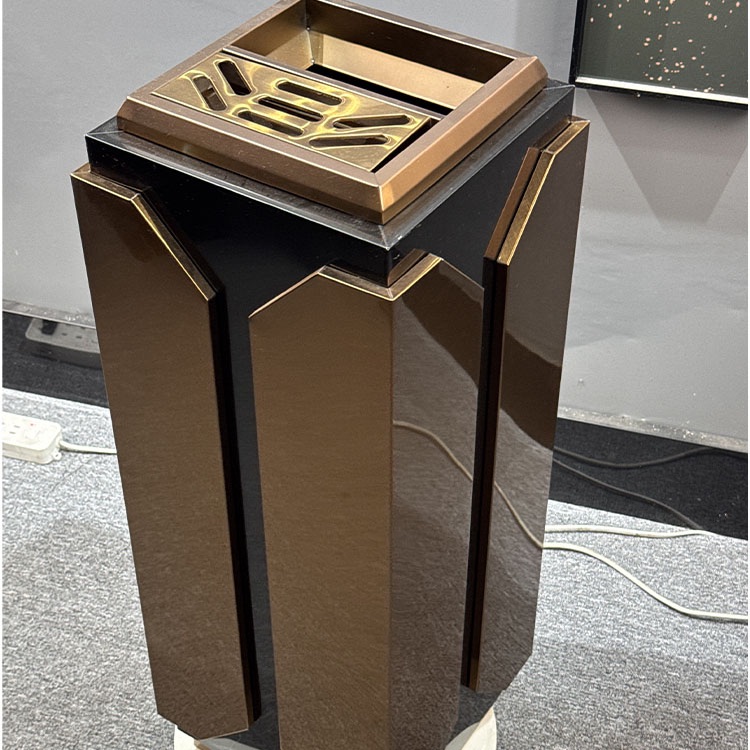
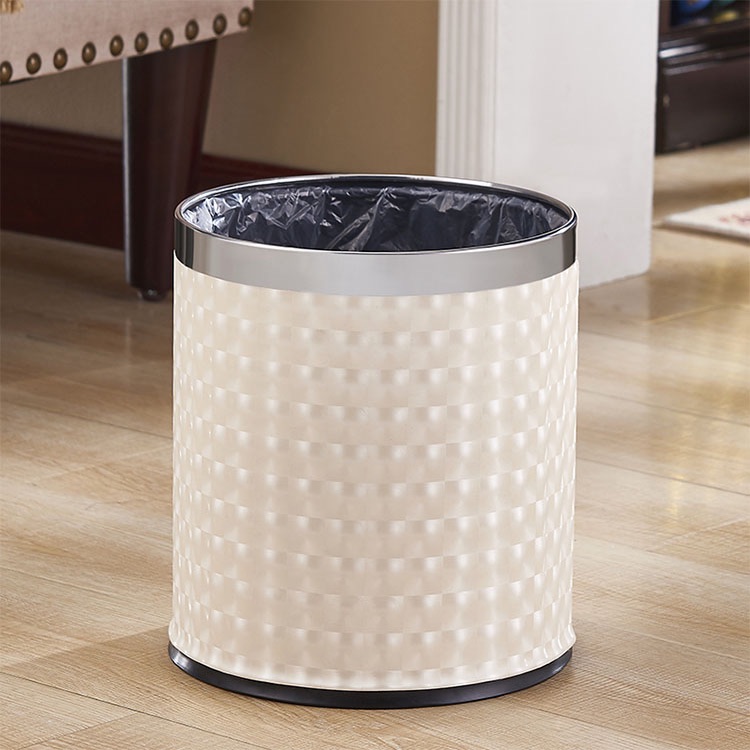
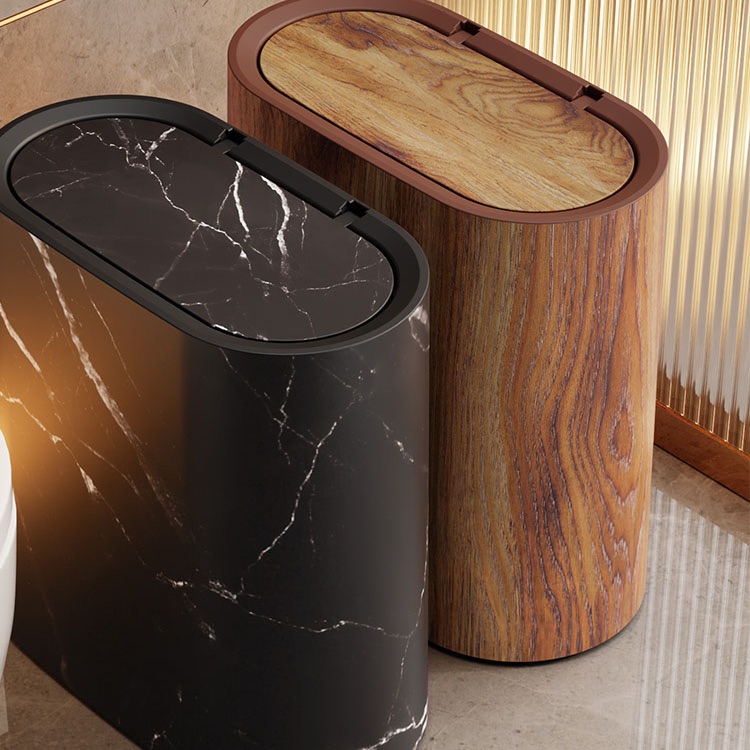
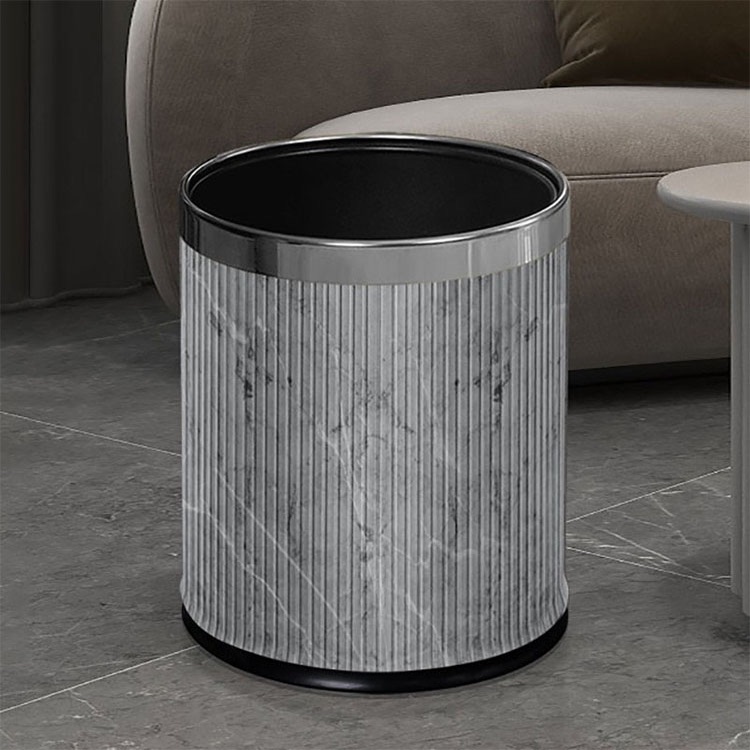
If a property genuinely needs easier disposal, I would rather see a strong chain of placement: guestroom wastebaskets, a discreet decorative hotel lobby waste bin, and a clearly labeled custom recycling bin design for hotels near elevators, meeting floors, or breakfast areas. That is still visible waste management. It is just managed like hospitality instead of like a service alley.
What 2024 hotel waste management data actually says
The industry is already moving toward guestrooms and front-of-house programs
According to the 2024 U.S. Green Lodging Trends Report, 75.8% of hotels already have a recycling program for guestrooms and front-of-house areas, while 80.6% have a recycling program in back-of-house areas. The more revealing number is uglier: less than 1% of hotels report tracking the amount of waste they discard or the recyclables they collect in any serious, recurring way. I have seen this movie before—operators blame placement when the real failure is measurement.
That gap changes the conversation. Many hotels do not need more bins. They need better placement logic, clearer openings, tighter liner service, and a basic waste map by floor, outlet, and shift.
The real waste fight is bigger than room trash
The UNEP Food Waste Index Report 2024 says the world generated 1.05 billion tonnes of food waste in 2022, with food services responsible for 28% of that total. In hotel terms, that means the biggest waste pain usually sits in breakfast buffets, banquet prep, outlet packaging, and back-of-house organics—not in whether a guest had to walk ten extra steps to find a can. Methane, or CH4, does not care about hallway aesthetics; it cares about volume and disposal.
And the practical evidence is not subtle. Hilton’s official Green Breakfast case study reported a 62% reduction in combined pre- and post-consumer breakfast food waste across 13 UAE hotels in 2023, including more than 76% reduction in pre-consumer waste and 55% in post-consumer waste. In 2024, Hilton’s Green Ramadan initiative scaled to 32 hotels in seven countries and reported a further 21% reduction in post-consumer food waste. That is what a real hotel waste management win looks like: data, menu design, signage, training, and service control. Not a hallway bin.
The same 2024 lodging report also highlights the WWF/AHLA Hotel Kitchen work, where participating hotels cut waste by 10% to 38% in just 12 weeks. Read that again. Double-digit waste reduction in three months, and nobody had to turn guest corridors into mini collection zones to get there.
The placement model that beats hotel hallway trash cans
Use fewer bins. Use smarter locations.
When I map hotel trash bins, I start where waste is generated, then where guests naturally pause, then where staff can service without performance theater. That means rooms first, elevator-lobby or breakfast-area stations second, and back-of-house sorting third. The site you gave me already has the bones for that architecture: hotel room bins, commercial recycling bins with removable liners, 2-stream waste sorting bins for hotel public spaces, and a sustainability page that leans into standardization and monitoring-ready options.
Here is the comparison I would use with any GM, brand director, or procurement lead:
Moderate to low if placed outside clear egress paths
Acceptable when designed well
Best front-of-house compromise
Back-of-house sorting point
Housekeeping consolidation, recycling separation, organics control
Low
Guest never sees it
Non-negotiable
Breakfast / meeting-area recycling station
High-volume packaging and food-service-adjacent waste
Moderate but manageable with signage and servicing
Positive when well branded
Strong second priority
What the best trash bins for hotels actually do
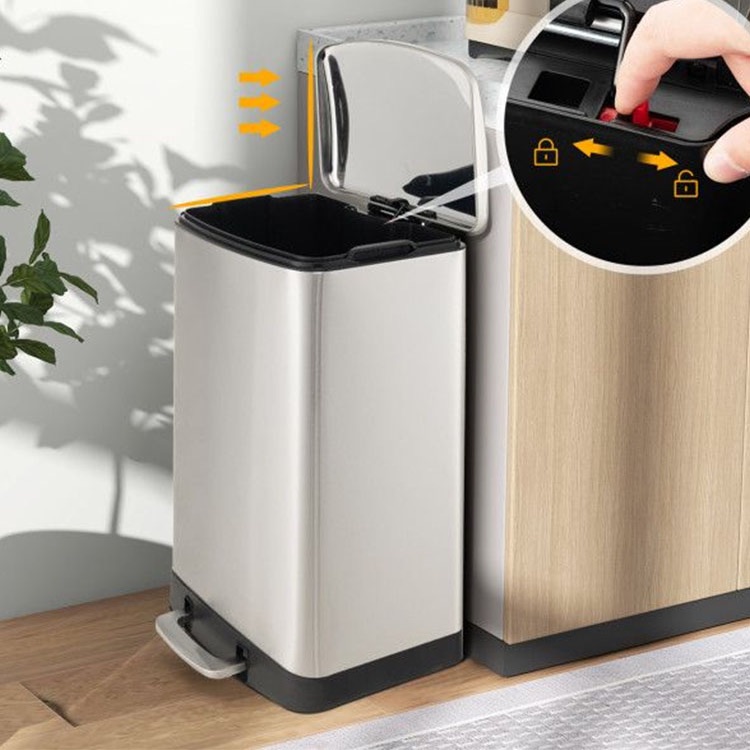
The best trash bins for hotels are not the biggest bins or the bins with the most categories. They are the bins that match traffic pattern, liner-change rhythm, contamination risk, and brand standard. A luxury lobby trash can with open top works because guests understand it instantly. A pedal-operated stainless steel bin works in staff or mixed-touch areas because it reduces contact. A custom recycling station with clear openings works when the hotel actually wants separation rather than symbolic sustainability.
But a permanent corridor can? That usually solves the wrong problem in the wrong place.
When guest corridor waste bins might be defensible
The exception exists, but it is narrower than operators think
Rare case, yes.
If I were forced to entertain should hotels place trash bins in hallways as a serious design option, I would only do it in highly controlled conditions: oversized corridors, no encroachment on required egress width, fixed service windows, covered or recessed units, noncombustible or low-combustibility specification, no placement directly at room entries, and written operating rules with inspection accountability. Notice what just happened there: the “simple” hallway-bin idea turned into a small compliance program.
So I ask the question owners hate: if it takes that much operational discipline to keep the hallway bin safe, clean, and temporary, why not put that discipline into guestrooms, elevator nodes, breakfast areas, and service rooms instead?
My real objection is not just safety
It is symbolism.
Hotels sell controlled environment. Corridor waste interrupts that promise because it tells the guest, without words, that overflow is being managed in public. I have seen properties save pennies on labor motion and lose dollars on perception. Nobody puts that line item in the procurement spreadsheet, but it is there.
FAQs
Are hotel corridor trash bins a fire code issue?
Hotel corridor trash bins are a fire-safety and egress issue because any container placed in a shared guest hallway can reduce clear width, create combustible load, complicate evacuation flow, and draw scrutiny when location, material, service timing, or containment are loosely managed. That is why corridor placement should be treated as an exception, not a standard. Official exit-route rules and recent corridor-container controls point the same way: shared circulation space is regulated space, not free storage.
Should hotels place trash bins in hallways at all?
Hotels should place trash bins in hallways only when the design is a tightly controlled exception, because permanent hallway bins usually create more operational, visual, and compliance risk than they solve for overflow, litter control, or housekeeping convenience. My answer for most full-service, upscale, and branded properties is no. Use guestrooms, public nodes, and back-of-house collection instead.
What are the best trash bins for hotels?
The best trash bins for hotels are containers matched to the point of waste generation, which usually means a controlled guestroom wastebasket, a discreet public-area bin near elevators or lobbies, and back-of-house sorting stations designed for safe servicing, liner concealment, and clear recycling labels. In other words, buy for workflow, not volume alone. A beautiful bin in the wrong location is still the wrong bin.
Where should hotel recycling bins be placed?
Hotel recycling bins should be placed where guests already pause and decide—lobbies, elevator banks, meeting floors, breakfast areas, and guestrooms when the program is simple—because recycling only works when signage, openings, servicing schedules, and contamination controls are stronger than guest confusion or staff improvisation. The 2024 hotel data backs that up: guestroom and front-of-house recycling is already common, while serious tracking remains rare. Placement matters, but disciplined follow-through matters more.
How can hotels improve housekeeping waste disposal without corridor bins?
Housekeeping waste disposal is the operating system for collecting, moving, sorting, and removing guest and staff waste, and the best systems reduce touches, preserve corridor appearance, protect egress width, and separate recyclables or organics before bags start leaking, smelling, or slowing room-turn labor. Start with room-level bin sizing, cart routes, timed pull schedules, and service-room consolidation. That is less visible to guests and far more repeatable for staff.
Your Next Move
If you run a hotel, do not debate corridor bins in the abstract.
Walk one guest floor this week. Measure clear widths. Log overflow complaints for 14 days. Identify where cups, takeaway packaging, amenity bottles, and breakfast leftovers actually appear. Then build placement from behavior, not guesswork: rooms first, public nodes second, sorting points third.