Share your requirements and target market. We’ll suggest the right configuration, sampling path, and production plan.
During business hours, We can usually provide a preliminary quote within two hours.
: workflow-based setups to improve efficiency and keep corridors tidy
: easier bag changes and maintenance, built for daily facility use
: 1–3 stream options with clear icon/label systems to reduce contamination
: materials, finishes, branding & packaging locked for consistent reorders
Your info is used only for quoting and communication.
How Indoor Trash Bins Help Control Odors in Commercial Spaces
Indoor trash bins do not “solve” odor by hiding garbage. They control the odor chain: wet waste, oxygen, bacteria, heat, overflow, poor liner handling, and lazy collection routes.
Table of Contents
The Smell Is Not the Problem. The System Is.
Odor is data.
When a lobby, office pantry, hotel corridor, dining zone, restroom vestibule, trash room, or back-of-house service route starts smelling “off,” the bin is usually being blamed for a wider operational failure involving wet waste, poor separation, wrong capacity, open exposure, slow collection, and cleaning routines that look fine on a checklist but collapse at 3:40 p.m. during real traffic.
So why do so many facilities still treat odor like a fragrance issue?
I’ll say the unfashionable part first: air fresheners are often evidence of surrender. They make the facility smell like citrus sprayed over decomposition. That is not hygiene. That is branding perfume over a process leak.
The better starting point is the bin itself. Not because a trash can is magical. It is not. But commercial indoor trash cans are the first physical control point between waste and the room air people breathe, complain about, review online, and quietly associate with poor management.
New York City made that point bluntly in 2024. The NYC Department of Sanitation required all businesses to use bins with secure lids when setting out trash as of March 1, 2024, and its own notice says all trash, food, and food-soiled paper must be in a secure-lid bin at curb setout. The same page also says businesses need enough bins to contain waste generated in a 72-hour period. That is not décor advice. That is capacity, containment, and public-health logic in legal clothing.
And inside the building? Same physics. Smaller stage. Faster complaints.
What Actually Creates Trash Bin Odor Indoors
Most odor in commercial spaces comes from a few repeat offenders: food residue, coffee liquids, dairy, meat packaging, restroom waste, wet paper, sugary drink cups, and organic material trapped under liners or inside rough seams.
The chemistry is ugly but simple. Organic waste breaks down. Bacteria feed. Moisture speeds the party. Warm indoor air spreads the evidence. In low-oxygen pockets, sulfur compounds can enter the conversation, including hydrogen sulfide, H₂S, the “rotten egg” gas associated with decomposition and sewer-type smells. The New Jersey Department of Health’s hazardous substance sheet lists hydrogen sulfide’s odor threshold at 0.008 to 0.1 ppm and warns that odor should not be relied on alone because smell detection can fail at higher levels.
That matters.
A facilities team does not need a laboratory every time a pantry bin smells bad. But it does need respect for the process. Odor is not just “trash smell.” It is volatile organic compounds, sulfur compounds, ammonia-like notes from nitrogen-rich waste, biofilm, residue, and airflow.
Here is the hard truth I keep seeing in product specs: buyers over-focus on the visible shell and under-spec the parts staff touch every shift — lids, liner rings, removable buckets, interior seams, service doors, and cleaning access.
A shiny bin with a bad liner system is a polished mistake.
The Indoor Bin Features That Actually Suppress Odor
A good bin slows odor release. A better bin prevents odor buildup. The best setup makes bad disposal behavior harder.
That is the hierarchy.
1. Lids reduce exposed surface area
Commercial waste bins with lids work because they reduce the contact between odor-producing waste and open room air. A tight or controlled lid does not sterilize the contents, but it limits vapor movement, discourages pests, and buys the cleaning team time between service rounds.
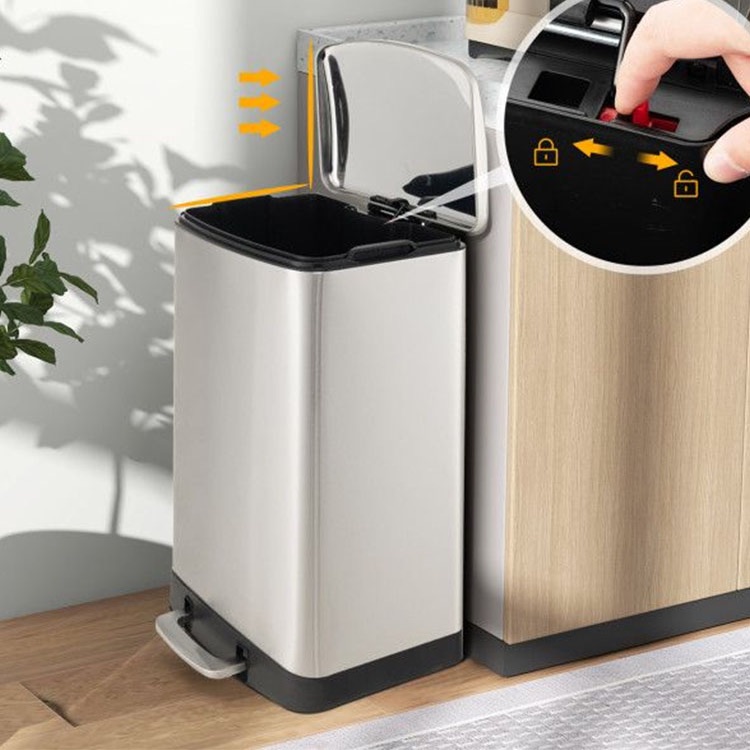
Touchless lids matter in specific spaces. In office pantries, hotel restrooms, healthcare-adjacent areas, and food service support zones, a smart sensor trash can for offices can reduce shared touchpoints while keeping waste covered between deposits. I do not recommend sensor lids everywhere. Batteries, mechanisms, and misuse are real. But in the right room, they earn their keep.
2. Removable liners keep residue from becoming permanent
Odor does not only live in the bag. It lives under the bag.
If liquid leaks into the bottom of a bin and staff cannot easily remove, rinse, and dry the inner liner, the facility has created a hidden fermentation cup. That cup gets wiped badly. Then it gets lined again. Then everyone pretends the problem is the cleaning chemical.
Facility Project Solutions gets this right on its commercial recycling bin with removable liners, where the removable liner and front service access are built into the maintenance logic, not treated as an afterthought. This is where indoor trash bins for businesses become operational equipment instead of furniture.
3. Smooth surfaces beat decorative traps
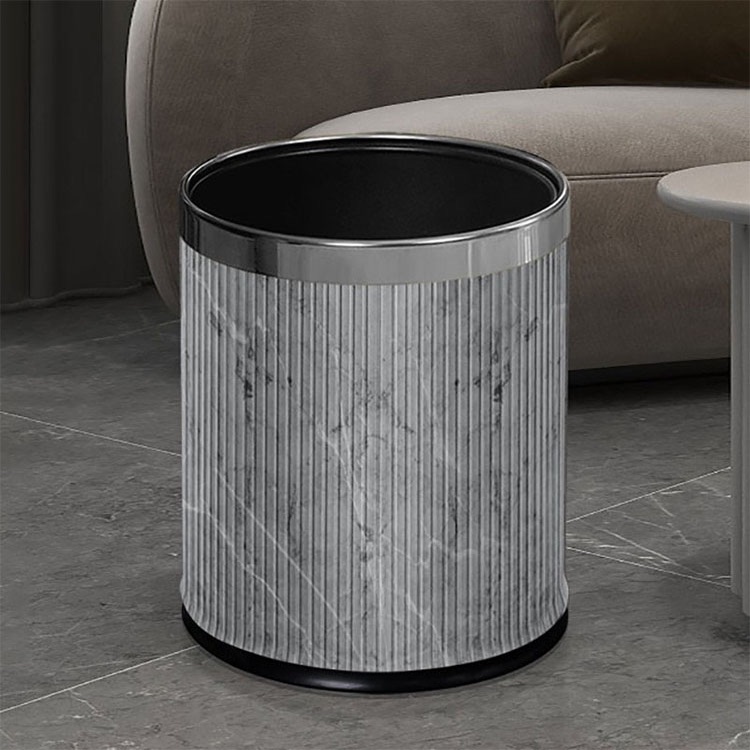
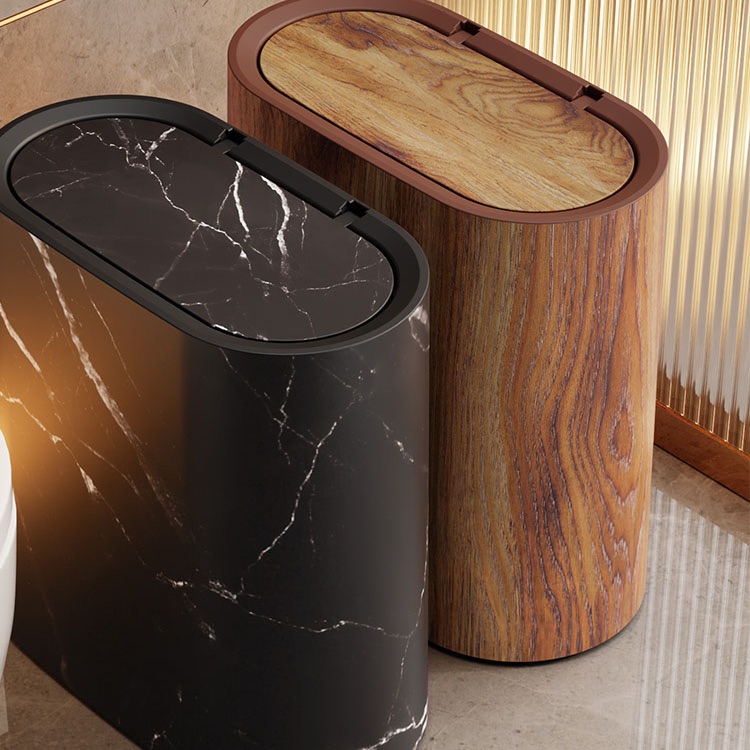
Decorative grooves, deep seams, faux textures, and complicated corners look good in procurement decks. They also trap residue.
For odor control trash cans, smooth interiors and easy-wipe exteriors beat visual drama. Stainless steel can make sense because it tolerates frequent cleaning and has a clean, durable public-space look. A stainless steel lobby litter bin is not automatically odor-proof, but it is easier to keep from becoming a smell reservoir.
4. Restricted openings reduce contamination
A round bottle opening, paper slot, or landfill flap is not just signage. It is behavioral design.
Restricted openings slow down careless disposal. They reduce the odds that half-finished coffee lands in a paper stream, or food waste ends up in a dry lobby bin, or recyclable bottles contaminate general waste bags with sticky liquid. California’s statewide organic waste rules make this logic explicit: businesses must place collection containers for organic waste and recyclables in customer disposal areas, except restrooms, and those internal containers need correct labeling or colors.
In other words, sorting is odor control. Not just sustainability theater.
Where Commercial Indoor Trash Cans Fail First
Failure Point
What Facility Teams Notice
Real Cause
Better Bin/Process Fix
Pantry odor by midday
Sour coffee, dairy, fruit peel smell
Wet organic waste in open or oversized bin
Lidded organics stream, smaller capacity, more frequent service
Lobby bin smells “old”
Stale air near reception or elevators
Residue under liner, slow wipe-down routine
Smooth interior, removable liner, bag-retention ring
Restroom bin odor
Hygiene complaints, staff avoidance
Poor lid control, wet waste, wrong bag fit
Pedal or touchless lid, inner bucket, daily disinfecting
Trash room odor
Smell spreads into corridors
Overfilled bags, poor ventilation, long dwell time
Bin too close to desks, pantry waste mixed with dry waste
Relocate bins, separate food waste, right-size service frequency
Small bins lie.
A tiny office bin can look tidy during a walkthrough, while quietly forcing staff to overflow liners, compress wet waste by hand, or move bags more often than the labor model allows. At the other extreme, oversized bins allow waste to sit too long, which is how “efficient collection” becomes odor storage.
The right answer is rarely “buy the biggest bin.” It is “match capacity to waste velocity.”
The Regulatory Signal Facility Managers Should Not Ignore
Here is the bigger pattern: governments are moving away from loose bags, vague sorting, and casual organics handling.
NYC’s 2024 business containerization rule is the clearest urban example. The city said businesses placing trash at the curb must use lidded bins, and its February 29, 2024 notice said rigid, lidded containers reduce odors, vermin, and sidewalk mess. The first offense fine was listed at $50, then $100 for a second offense, and $200 for later violations.
California’s organics requirements push the same idea indoors: put the right container where disposal happens, label it correctly, educate users, and inspect for contamination. That is less glamorous than “smart building” software. It also works.
The EPA’s wasted food work adds another layer. Its Wasted Food Scale, based on a 2023 EPA report, ranks prevention, donation, and upcycling above landfill and drain disposal because wasted food pathways have different environmental impacts. For facility teams, the practical message is blunt: food waste is not just a sustainability metric; it is one of the dirtiest odor inputs in the building.
So when a property manager asks how to control trash bin odors in commercial spaces, I do not start with deodorizer cartridges. I start with streams.
Where is food entering the waste system? Where is liquid entering? Where is the bag failing? Where is the bin too open? Where is the service route too slow?
A Smarter Bin Strategy for Offices, Hotels, and Public Interiors
Hotels are especially unforgiving. Guests judge smell before they judge design.
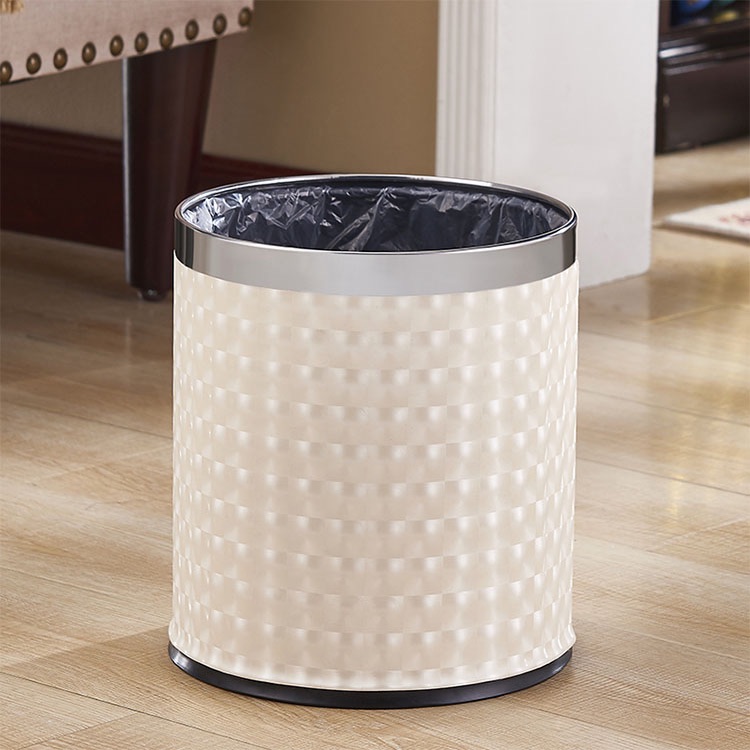
For lobby zones, I like open-top bins only when the waste stream is mostly dry and the location is serviced often. A luxury open-top lobby trash can can work beautifully near reception, corridors, or business centers when it is used for dry litter and supported by fast liner changes. Put that same open-top bin beside a breakfast area with yogurt cups and coffee dregs? Now you are gambling.
For offices, the pantry is the battlefield. Desk-side bins are mostly paper, wrappers, tissues, and minor waste. Pantry bins collect wet organics, coffee, tea bags, fruit, sauces, and takeout packaging. Treating those two locations the same is lazy.
For multi-site buyers, standardization matters. A sustainable facility waste program should define bin families by zone: lobby, office floor, restroom, pantry, café, back-of-house, loading route, and trash room. That way, odor control is not left to whoever ordered the last batch of bins.
The Facility Buyer’s Odor-Control Checklist
Before buying more commercial indoor trash cans, ask these questions:
Waste stream
What actually goes into this bin: dry paper, food, cups, restroom waste, mixed packaging, or organics?
Lid logic
Should the bin be open-top, swing-top, pedal, flap, or sensor-controlled?
Liner control
Does the bag stay hidden and secure, or does it sag, leak, and expose residue?
Cleaning access
Can staff remove the inner bucket or liner fast enough during peak service?
Placement
Is the bin near odor sources, or is it placed where design wanted it rather than where waste happens?
Service cadence
Will this bin be emptied before odor starts, or only after it looks full?
Signage
Do users know where food, liquids, landfill waste, and recyclables belong?
Bad placement multiplies odor. Bad signage feeds it. Bad capacity hides it until the complaint lands.
FAQs
How do indoor trash bins help control odors in commercial spaces?
Indoor trash bins help control odors by containing waste, reducing air exposure, separating wet and dry materials, supporting faster liner changes, and preventing residue from building up inside the container. In commercial spaces, the bin acts as the first control point before odor spreads into lobbies, offices, restrooms, dining areas, or trash rooms.
The best bins do not rely on perfume. They rely on lids, removable liners, smooth cleanable surfaces, correct sizing, and better placement. For odor-heavy zones, covered bins and separate organics containers usually outperform attractive open-top designs.
What type of commercial indoor trash can is best for odor control?
The best commercial indoor trash can for odor control is usually a lidded, smooth-surface bin with a removable inner liner, secure bag retention, and a capacity matched to the room’s waste volume. In high-touch areas, pedal or sensor lids can also reduce contact while keeping trash covered between uses.
For dry lobby litter, open-top bins can work. For pantries, restrooms, food-adjacent spaces, and trash rooms, covered bins are safer. The more moisture and food residue involved, the more the bin needs containment and fast servicing.
How often should office trash cans be emptied to prevent odor?
Office trash cans should be emptied based on waste type, not just fullness; dry desk-side bins may last a day, while pantry, restroom, food-service, and mixed-waste bins often need one or more service rounds daily. If a bin smells before it looks full, the service schedule is wrong.
I prefer a simple rule: wet waste gets priority. Coffee, dairy, fruit, sauces, and food packaging should not sit indoors through long warm periods. The room temperature, HVAC flow, and user traffic all affect odor speed.
Are open-top trash cans bad for commercial odor control?
Open-top trash cans are not automatically bad for commercial odor control, but they are risky when used for wet, food-heavy, restroom, or high-volume mixed waste. They work best in dry-litter zones where users discard paper, wrappers, and small non-liquid items, and where staff can service the bin frequently.
The mistake is using open-top bins everywhere because they look premium. In a lobby, fine. Near a café condiment station, probably not. In a restroom, no. In a trash room, absolutely not.
What is the fastest way to control trash room odor?
The fastest way to control trash room odor is to remove wet waste quickly, use secure-lid staging bins, clean leaked residue, improve airflow, and stop overfilled bags from sitting too long. Trash room odor usually comes from dwell time, liquid leakage, poor containment, and organic waste breaking down in warm, enclosed air.
Do not start with fragrance. Start with the leak path: bags, bin interiors, floor drains, carts, door seals, and collection timing. If the room still smells after cleaning, the operating schedule is probably too slow.
Your Next Step: Audit the Odor Trail Before Buying More Bins
Do not buy another bin until you walk the odor trail.
Start at the place where people complain. Follow the waste backward: the desk, pantry, lobby, restroom, café, service corridor, elevator, loading route, and trash room. Note the waste type, moisture level, bin style, liner fit, lid behavior, fullness at peak hour, and cleaning access.
Then specify bins by zone, not by catalog photo.
If your facility needs a cleaner, more defensible waste setup, build the standard around lidded containment where odor risk is high, open-top convenience only where waste is dry, removable liners where residue is likely, and labeled sorting wherever food, liquids, or recyclables enter the stream. Start with the right indoor trash bins for businesses, then tighten the service routine around them. That is how odor control stops being a complaint response and becomes part of the operating system.