Share your requirements and target market. We’ll suggest the right configuration, sampling path, and production plan.
During business hours, We can usually provide a preliminary quote within two hours.
: workflow-based setups to improve efficiency and keep corridors tidy
: easier bag changes and maintenance, built for daily facility use
: 1–3 stream options with clear icon/label systems to reduce contamination
: materials, finishes, branding & packaging locked for consistent reorders
Your info is used only for quoting and communication.
Why Liner Change Efficiency Matters in Commercial Trash Bins
The wrong bin-and-liner setup quietly taxes every cleaning route. Commercial Trash Can Liners are not just bags; they are workflow components that decide whether staff spend ten clean seconds on a changeout or ninety ugly seconds fighting suction, leaks, tears, and bad fit.
Table of Contents
The 20-Second Problem Nobody Budgets For
Small motions compound.
A liner change looks like nothing on a purchasing spreadsheet, but when one cleaner services 40, 80, or 150 receptacles across a hotel, office tower, campus, hospital corridor, airport lounge, or street-level public space, every snagged bag, wet bottom, over-tight rim, hidden tear, and awkward inner bucket becomes a labor tax that repeats daily. Why tolerate that?
I’ll say the quiet part: a lot of “best commercial trash can liners” conversations are fake procurement discipline. Teams argue over gauge, case count, and penny-per-bag pricing while ignoring the bin geometry that decides whether the bag actually releases. That is backwards. The liner does not work alone. The bin mouth, inner bucket, venting path, rim retention, door clearance, waste stream, and service route decide the real cost.
Commercial Trash Can Liners are workflow parts, not disposable afterthoughts.
The U.S. Bureau of Labor Statistics says janitors and building cleaners “gather and empty trash,” often move or lift heavy supplies, and face sprains, strains, and repetitive-motion pain; it also reported a May 2024 median wage of $17.27 per hour for janitors and building cleaners. See the BLS occupational profile for janitors and building cleaners. (Bureau of Labor Statistics) That wage number matters because slow liner changes are not free. They are paid labor minutes disguised as housekeeping friction.
Facility Project Solutions already positions its commercial trash bins around faster liner changes, cleaner public areas, and repeatable rollout standards for hotels and public facilities. That matters because a multi-site operator does not need one attractive bin. It needs one repeatable service behavior across 30, 80, or 300 locations.
The Liner Is Not the Product; the Changeout Is the Product
Here is the hard truth: a commercial bin that looks premium but fights the bag is a bad bin.
I do not care how good the brushed stainless steel looks under lobby lighting. If the janitorial team has to yank the liner sideways, hold the door open with one knee, compress an overfilled bag by hand, or reach into a wet cavity because the bag collapsed below the rim, the design failed. Not aesthetically. Operationally.
A strong liner can still perform badly in a poorly designed bin. And cheap commercial trash bin liners can appear “fine” during the first week because nobody has yet measured service time, spill frequency, or staff complaints.
What efficient liner change actually means
Trash can liner change efficiency means a worker can remove, tie, replace, seat, and reset a liner quickly with low force, low contact, and low risk of tearing, slipping, leaking, or contaminating the surrounding area.
That definition is boring. Good. Facility work should be boring when it is done correctly.
In commercial settings, the ideal changeout has six traits:
Efficiency Factor
What It Means in the Field
Failure Mode When Ignored
Correct liner-to-bin fit
Bag sits securely without excessive stretch
Slippage, rim collapse, bag drag
Air release or venting
Bag lifts without vacuum suction
Staff yank harder; bag tears
Removable inner liner or bucket
Waste can be serviced away from the decorative shell
More contact with residue and odor
Smooth interior surfaces
No snag points, seams, burrs, or sharp edges
Punctures and slow wipe-downs
Proper aperture design
Waste enters without forcing staff to overfill bags
Overflow, compression, contamination
Route-based capacity
Bin volume matches traffic and collection frequency
Heavy bags, leakage, skipped service points
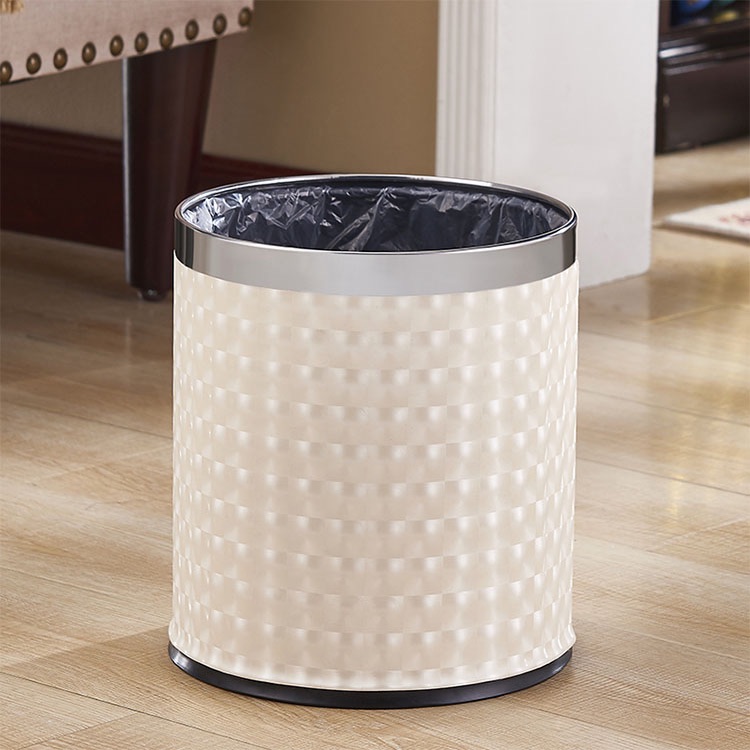
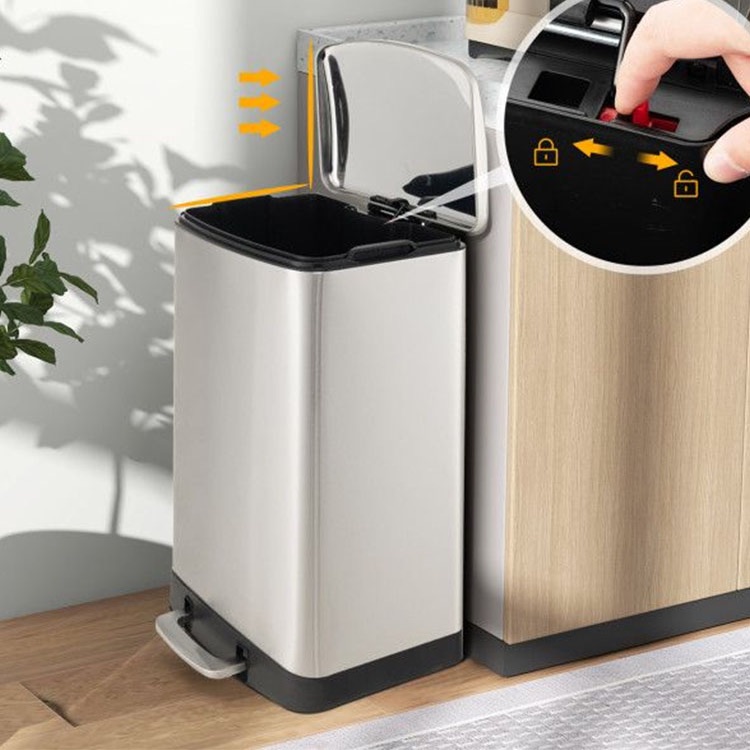
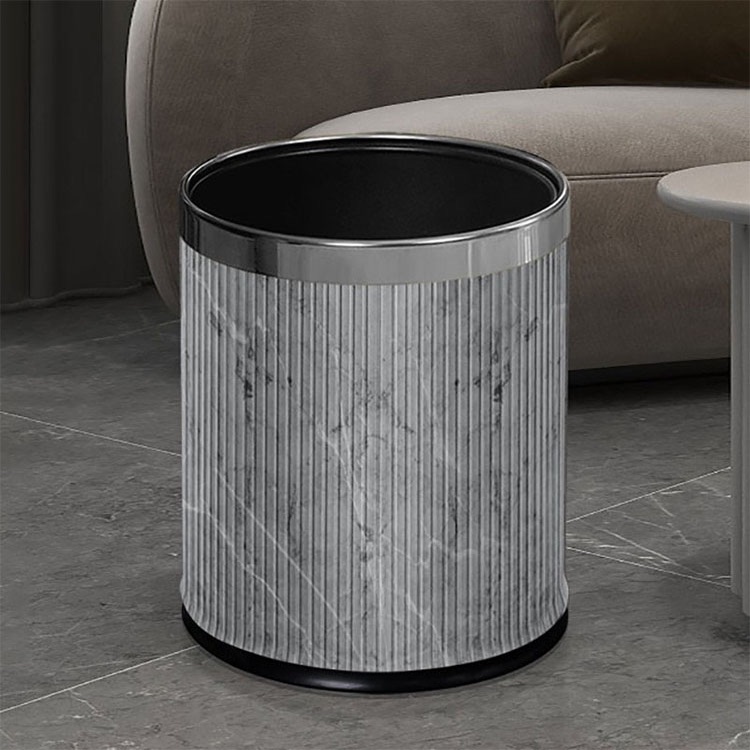
This is why commercial recycling bins with removable liners make sense in lobbies, offices, and dining areas: the design separates public-facing appearance from back-of-house service movement. Facility Project Solutions describes removable liners, modular streams, restricted openings, and front-service access as part of that configuration.
The Numbers Are Ugly When You Stop Averaging Them Away
Let’s do facility math, not brochure math.
Assume a property has 125 commercial trash bins. Assume each bin is serviced twice daily. That is 250 liner changes per day. If bad fit, suction, awkward access, or weak janitorial trash can liners add only 20 seconds per change, the building loses 5,000 seconds daily.
That is 83.3 minutes. Every day.
Using the BLS May 2024 median hourly wage of $17.27 for janitors and building cleaners, then adding a conservative 30% burden for payroll taxes, insurance, uniforms, supervision, and administrative overhead, the loaded labor rate becomes roughly $22.45 per hour. That tiny 20-second delay now costs about $31 per day, or more than $11,000 per year in one property before spill cleanup, complaints, injury risk, replacement liners, odor calls, or overtime are counted.
And that is the polite estimate.
The BLS also reported that private industry employers recorded 2.5 million nonfatal workplace injuries and illnesses in 2024, down 3.1% from 2023, with total recordable cases at 2.3 per 100 full-time equivalent workers. The data is in the BLS employer-reported workplace injuries and illnesses release. (Bureau of Labor Statistics) No, that does not prove every trash bag causes injury. But it does prove the bigger point: repetitive physical work has a measurable cost, and facility managers who ignore small ergonomic defects are gambling with staff time and claims exposure.
The OSHA Angle: Sanitation Is Not Optional Theater
Waste handling is not just a cleanliness preference. It connects to workplace sanitation duties.
The eCFR version of OSHA’s sanitation rule says receptacles used for putrescible waste must not leak, must be cleanable and sanitary, and should have a tight-fitting cover unless sanitation can be maintained without one. It also says solid or liquid waste must be removed often enough to avoid a health menace and maintain sanitary conditions. See 29 CFR 1910.141.
That language should make facility buyers more aggressive about bin serviceability.
If your liner system causes leaks, forces overfilling, slows collection rounds, or leaves residue in the shell, you do not have a “minor maintenance issue.” You have a sanitation workflow defect. And if trash sits too long because staff avoid the bad bins first, the problem spreads into odor control, pest pressure, guest perception, and cleaning labor.
OSHA’s walking-working surface rule also requires work areas, passageways, storerooms, service rooms, and walking-working surfaces to be kept clean, orderly, and sanitary. See OSHA 1910.22. A leaking liner at a service door, cafeteria exit, restroom bank, or back hallway is not just gross. It can become a slip-and-fall input.
This is why I like bins with removable liners, smooth interiors, open service access, and controlled openings. They reduce improvisation. Improvisation is where injuries and messes breed.
The Procurement Lie: “Heavy Duty” Does Not Mean Efficient
Heavy duty trash bags for commercial bins sound safe. Sometimes they are. Sometimes they are just overbought plastic compensating for bad sizing, sharp bin edges, poor collection frequency, or wet waste being thrown into a dry-waste container.
A thicker liner can resist puncture, but it will not fix the wrong width. It will not fix a bin that creates vacuum lock. It will not fix food waste sitting in an open lobby receptacle. It will not fix a 45-gallon liner stuffed into a 32-gallon inner bucket with four inches of folded plastic choking the rim.
The cheapest liner is often expensive. The thickest liner is often lazy. The right liner is boringly matched to the bin, the waste stream, and the route.
For indoor areas, the better question is not “What is the strongest bag?” It is: what combination of indoor trash bins, liner gauge, rim retention, lid type, and collection frequency creates the fastest clean reset?
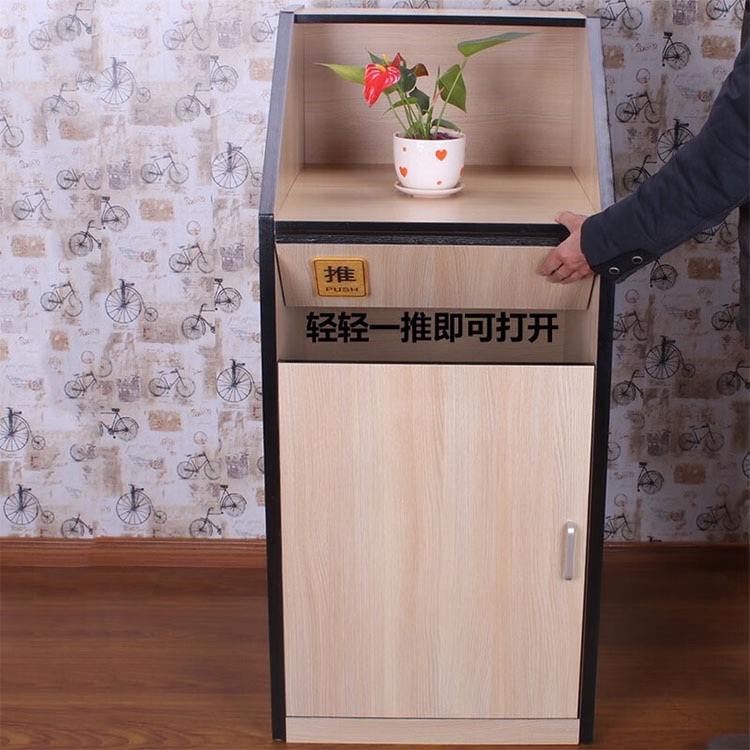
For exterior routes, the question changes. Outdoor bins face rainwater, wind, vandalism, public misuse, and heavier mixed waste. A site using all-weather metal trash cans for public spaces needs removable liners and anchoring logic because the crew is not servicing a quiet office pantry; they are handling weather, curb debris, drinks, food packaging, and occasional abuse. Facility Project Solutions specifically notes that removable liners support quicker rounds and help crews avoid reaching into the cabinet.
Commercial Waste Management Efficiency Starts at the Rim
Commercial waste management efficiency is usually discussed at the hauler level: collection contracts, compactor pulls, recycling diversion, contamination fees, landfill rates, and ESG reporting.
Fine. But that is the second half of the story.
The first half happens at the bin rim.
If the aperture is too wide, people throw everything into it. If the recycling slot is confusing, contamination rises. If the liner slips, staff double-bag. If the bin is too small, waste gets compressed by hand. If the inner bucket has no grip points, workers lift from awkward positions. If the back-of-house route is too long, bags get dragged instead of carted.
The EPA’s 2024 recycling infrastructure assessment estimated that $36.5 billion to $43.4 billion would be needed to modernize U.S. recycling infrastructure and that better investment could increase recovery by 82 to 89 million tons of packaging and organic waste. See the EPA’s U.S. Recycling Infrastructure Assessment. (US EPA) That sounds huge and national. But the local expression of the same problem is simple: if people and cleaners cannot use the bin system correctly, the system fails early.
The Recycling Partnership’s 2024 State of Recycling report estimated that only 43% of U.S. households participate in recycling and that recycling facilities should be able to process 95% of received recyclable material into saleable commodities, while the current estimate was 87%. See the State of Recycling 2024 report. That is residential data, yes. But the behavioral lesson applies inside commercial facilities: signage, openings, access, and servicing habits determine whether material recovery is clean or wishful.
For multi-stream setups, I would rather see a smaller number of well-designed, serviceable stations than a larger number of decorative bins that confuse users and punish cleaners. The recycling and sorting systems category is the right internal path for that conversation because sorting accuracy and liner service need to be designed together, not bolted together after procurement.
How to Change Trash Bin Liners Faster Without Buying Garbage
Here is the operational checklist I use when evaluating commercial trash can liners and bin systems.
1. Measure time per change, not just liner price
Run a simple test: ten changes per bin type, same worker, same route conditions. Measure remove, tie, replace, seat, close. If one model takes 18 seconds and another takes 52, the “cheaper” unit may be a budget trap.
2. Match bag dimensions to the inner bucket, not the catalog label
A 32-gallon bin does not always need the same liner as another 32-gallon bin. Bucket shape, rim thickness, depth, and door access change the fit. Measure width, depth, and circumference. Stop guessing.
3. Stop overfilling wet waste
Food courts, pantries, restrooms, cafés, and stadium concourses need different assumptions than dry office copy rooms. Wet waste punishes weak seams and makes heavy bags dangerous.
4. Specify venting and grip points
If a bag vacuums to the inside wall, staff pull harder. If there are no handholds on the inner liner, staff lift badly. These are design defects, not worker defects.
5. Treat odor as a collection-frequency problem first
Fragrance pads and deodorizing gimmicks are usually a confession that the waste stream, lid, liner, or service interval is wrong. For odor-sensitive interiors, Facility Project Solutions’ discussion of indoor odor-control trash bins points to lids, removable liners, smooth cleanable surfaces, secure bag retention, and capacity matched to waste volume.
6. Standardize across sites
One-off bin buying is how brands create invisible labor variation. If you operate multiple properties, use the OEM/ODM services path to lock in dimensions, finishes, liner behavior, signage, and reorder consistency before the first rollout becomes ten incompatible rollouts.
Why Trash Bin Liners Matter for Businesses More Than Buyers Admit
Because trash is where brand standards meet human behavior.
Nobody compliments a perfect liner change. Guests do not notice the bag sitting clean under the rim. Tenants do not email property management because the restroom bin was serviced without drama. Shoppers do not praise a food court receptacle because the liner did not collapse.
But they notice failure immediately.
They notice sour smell. Overflow. Sticky floor. A loose bag hanging outside the bin. A cleaner wrestling with waste in a premium lobby. Coffee leaking from a stretched liner. Recycling contaminated by food because the apertures were wrong. A public-space bin shifted sideways because it was not anchored. A restroom bin that looks full an hour after service.
That is why commercial trash can liners matter for businesses. Not because bags are glamorous. Because failure is visible, smelly, and repetitive.
For exterior public routes, something as simple as a city park garbage bin with wide mouth can reduce litter pressure while a removable inner liner speeds bag changes and rinse-down cleanup. Facility Project Solutions states that the removable inner liner helps staff lift, bag, and return the liner quickly, reducing contact with the outer shell. That is the point: design the ugly task so the public never sees it.
The Buyer’s Field Test: What I Would Reject Immediately
I would reject any commercial bin that fails one of these tests:
Field Test
Pass Standard
Reject It If
One-hand door test
Door stays accessible during liner removal
Worker needs knee, hip, or second person
Dry pull test
Empty liner lifts without suction lock
Bag clings to inner wall
Wet load test
Liner can be removed without seam stress
Corners stretch, leak, or tear
Rim reset test
New liner seats in under 10 seconds
Rim band fights the bag
Wipe-down test
Interior cleans with no snag points
Seams trap residue
Route test
Bag weight stays manageable at normal interval
Staff must compress waste by hand
Sorting test
Users can identify correct stream in two seconds
Recyclables and trash mix immediately
That table is more valuable than most showroom photos.
FAQs
What is liner change efficiency in commercial trash bins?
Liner change efficiency is the speed, cleanliness, and physical ease with which staff remove a used trash liner, secure it, replace it with a new liner, and return the bin to service without leaks, suction lock, awkward lifting, rim slippage, contamination, or unnecessary contact with waste.
In plain English, it measures whether the bin-and-bag system respects labor. A good system allows fast, repeatable servicing. A bad system forces cleaners to compensate with strength, double-bagging, extra wipes, or skipped details.
Why are Commercial Trash Can Liners important for facility operations?
Commercial Trash Can Liners are important because they directly affect labor time, odor control, leak prevention, sanitation, staff ergonomics, waste separation, and the visible cleanliness of lobbies, restrooms, offices, hotels, campuses, food courts, and public areas where waste is handled repeatedly throughout the day.
The liner is the cheapest visible component, but it interacts with the most expensive component: labor. Bad liner fit turns a routine route into a chain of small delays.
How can a business change trash bin liners faster?
A business can change trash bin liners faster by matching liner size to the actual inner bucket, using bins with removable liners and smooth interiors, preventing suction lock, avoiding overfilled wet waste, standardizing bag specifications, and measuring service time per bin type before approving a large rollout.
Do not start with the bag catalog. Start with the route. Count the bins, weigh typical waste, test change time, and then specify liners and receptacles around the real work.
Are heavy duty trash bags for commercial bins always better?
Heavy duty trash bags for commercial bins are not always better because excess thickness can waste money while failing to solve poor fit, bad bin design, wet waste overload, sharp interior edges, overfilling, or collection intervals that produce bags too heavy for safe and fast handling.
Use heavier liners where puncture risk, wet waste, or high load justifies them. For dry office waste, a properly fitted liner can beat an overbuilt liner that slows installation and increases plastic use.
What makes janitorial trash can liners fail in real buildings?
Janitorial trash can liners usually fail because of poor sizing, weak seams, sharp bin edges, suction between the liner and inner wall, wet waste, overfilled receptacles, incorrect gauge selection, bad rim retention, or staff being forced to remove heavy bags from awkward angles during rushed cleaning routes.
The failure is rarely one dramatic event. It is usually a pattern: one slipped liner, one wet bottom, one torn corner, one delayed route, repeated hundreds of times.
Your Next Steps: Audit the Bin Before You Blame the Bag
Do this before your next reorder: time ten liner changes, photograph every failure point, weigh three full bags from different zones, and compare indoor, outdoor, restroom, pantry, lobby, and recycling stations separately.