Share your requirements and target market. We’ll suggest the right configuration, sampling path, and production plan.
During business hours, We can usually provide a preliminary quote within two hours.
: workflow-based setups to improve efficiency and keep corridors tidy
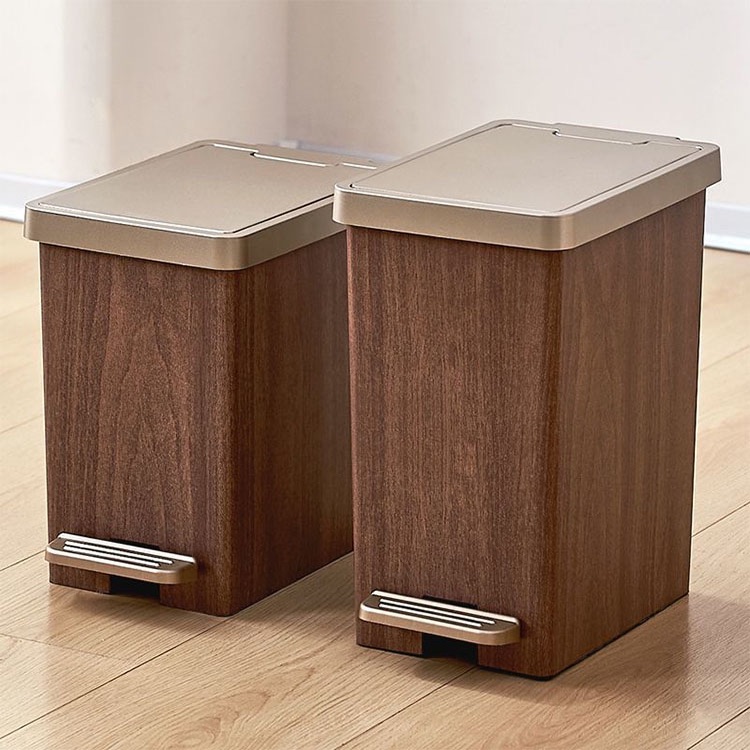
: easier bag changes and maintenance, built for daily facility use
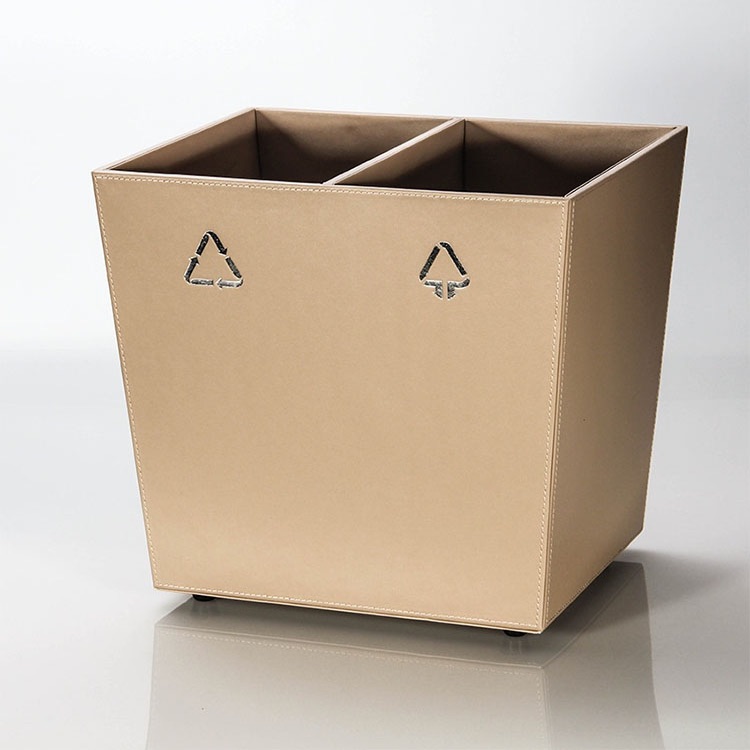
: 1–3 stream options with clear icon/label systems to reduce contamination
: materials, finishes, branding & packaging locked for consistent reorders
Your info is used only for quoting and communication.
Hotel Luggage Cart Buying Guide: Balancing Load, Appearance, and Maneuverability
Most buyers overweight finish and underweight turning behavior. This guide shows how to choose a hotel luggage cart that survives real corridors, real staffing pressure, and real guest expectations.
Looks sell.
But I’ve watched enough hotel equipment decisions go sideways to say this plainly: the wrong hotel luggage cart does not fail in the warehouse, or in the quote sheet, or in the polished product photo; it fails at 5:12 p.m. in a crowded lobby, half-loaded with polycarbonate cases, garment bags, and a stroller, when one employee tries to cut a tight elevator turn and the whole thing suddenly feels twice as heavy as procurement promised.
That matters more in 2026 than buyers sometimes admit. In the U.S., the 2023 injury rate for NAICS 72111, “Hotels (except casino hotels) and motels,” was 4.1 cases per 100 full-time workers, materially above the 2.4 private-industry average. Then layer on the labor story: in September 2024, Reuters reported 10,000 U.S. hotel workers striking over pay, workloads, and pandemic-era staffing cuts. I don’t think that’s background noise. I think it changes how you should buy carts.
My hard rule is simple. Buy for the building first, the load second, the finish third.
Most teams do the reverse.
Load is where serious buyers should start, because “hotel luggage cart weight capacity” is not a marketing brag line; it is a handling question. A cart can survive a static test and still behave badly in motion if the deck sits too high, the frame flexes under mixed loads, or the wheel package starts resisting directional change once the center of gravity shifts toward one corner. I’ve seen buyers obsess over headline capacity and ignore a more expensive truth: a cart that feels unstable at 60% of its rated load is a bad cart, full stop.
So how do I choose a hotel luggage cart? I ask ugly operational questions. What is the heaviest real mixed load on a group-arrival Friday? How many elevators serve guest floors? What is the narrowest turn radius between porte-cochère and room corridor? Are staff pushing one-handed while opening doors? Does the property need garment handling for wedding blocks or executive arrivals? If those questions are missing from the buying process, the buying process is unserious.
The OEM/ODM hotel equipment program gets one thing exactly right: it talks about corridor widths, elevator turns, load targets, cleaning routines, and noise expectations before it talks about branding. That is how a commercial luggage cart should be specified. Not as décor. As rolling infrastructure.
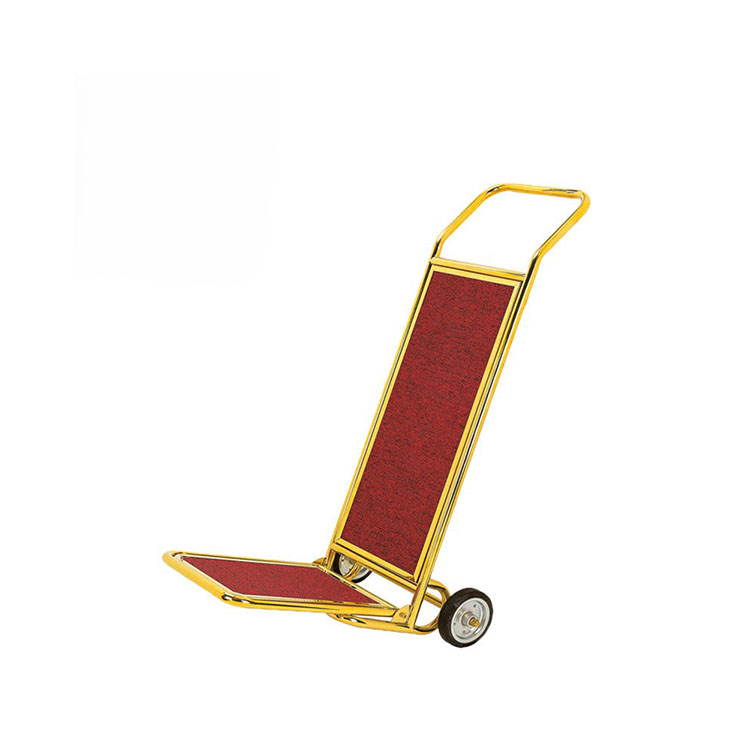
Appearance still matters. Of course it does. Guests read equipment faster than managers do. A polished brass bellman cart telegraphs classic service, ceremony, and old-money hospitality. A stainless rail trolley reads cleaner, harder, more contemporary. But the industry keeps lying to itself when it treats appearance as a standalone variable. Finish choice affects fingerprints, scratch visibility, wipe-down frequency, and how quickly a cart looks tired under real occupancy. Brass can look fantastic in a luxury lobby and embarrass you six months later if the maintenance discipline is weak. Stainless is less romantic, but it forgives more.
That tension shows up in guest research. In J.D. Power’s 2024 North America Hotel Guest Satisfaction Index, hotel performance was judged across six factors, including hotel facility and staff service, using 39,468 guest responses for stays between May 2023 and May 2024. J.D. Power also reported a U.S. hotel ADR of $158.45 in May 2024 and said that higher prices put more attention on room cleanliness, facilities maintenance, and front-desk interactions. Translation: once rates climb, equipment that looks sloppy or moves awkwardly stops being invisible.
And maneuverability? That is the part buyers underweight because it is hard to photograph.
A hotel luggage cart maneuverability problem usually starts with geometry, not wheels alone. Frame width, caster diameter, swivel quality, push-handle leverage, bumper placement, deck balance, and empty-cart weight all interact. Add a carpeted deck, three large suitcases, two duffels, one garment bag, and a guest who stops in the doorway to check a phone, and the best hotel luggage cart is suddenly the one that can recover from a bad approach angle without wall contact or a dead stop.
The Facility Project Solutions product pages keep circling back to that same operating truth. The Compact Maid Cart with Linen Storage emphasizes non-marking casters, protective bumpers, corridor turns, and elevator movement; the hotel food delivery trolley with tray racks does the same. I like that because it suggests the site’s internal product logic is based on hallway performance across categories, not just on category names. A luggage trolley for hotels should be judged by that same corridor logic.
Here’s my blunt view of the common cart types shown in the site’s luggage section.
Cart style
Best use case
Load behavior
Appearance signal
Maneuverability note
My take
Gold Brass Bellhop Luggage Cart with Hanging Bar
Luxury, wedding-heavy, garment-heavy arrivals
Good for mixed soft/hard luggage if loading stays balanced
High-ceremony, premium, visible service
Can become a vanity purchase if frame width and wheel quality are not tested in your elevators
Buy it only if the lobby truly sells service theater
Heavy Duty Bellman Luggage Cart, Carpeted Deck
Full-service hotels with high turnover and repeat baggage volume
Stable deck feel, especially for stacked cases
Traditional, less flashy than brass
Carpet helps bag stability but does not solve poor steering
Usually the safer procurement decision
OEM Birdcage Hotel Luggage Cart with Bumper
Properties that want classic form with more wall protection
Strong front-of-house option
Upscale, familiar hotel iconography
The bumper is not decorative; it is budget protection
Smarter than the prettier versions if your walls take abuse
Stainless Steel Hotel Luggage Trolley with Rails
Modern hotels, serviced apartments, cleaner-lined properties
Better for straightforward baggage moves than ceremonial presentation
Contemporary, lower-maintenance visual language
Often easier to live with day to day
My favorite for operators who care more about uptime than nostalgia
That editorial read is based on the site’s four named luggage-cart models and the repeated emphasis across the site on mobility, bumpers, corridor use, and repeatable specifications. (Facility Project Solutions)
What about the bellman cart versus the broader commercial luggage cart category? Here’s where buyers get sloppy with language. A bellman cart is a front-of-house service object. It has to carry weight, yes, but it also has to make the hotel feel competent. A back-of-house mindset produces ugly decisions here: too industrial, too clunky, too loud. But a showroom mindset is just as bad: too ornate, too tall, too wide, too hard to reverse under pressure. The sweet spot is a cart that looks expensive without behaving fragile.
I also think buyers should stop pretending one cart spec fits every property tier. A 120-room urban boutique with narrow elevators is not buying the same thing as a 420-room resort moving golf bags, wedding garments, and family luggage at the same time. Different building. Different problem. Same keyword, sure. Different answer.
There is one more piece that procurement teams should not ignore. In J.D. Power’s 2024 third-party hotel management benchmark, hotels improved overall satisfaction partly through cleaner rooms, better maintenance, and stronger staff responsiveness, and staff service achieved the highest guest scores. That tells me the cart decision is not separate from service perception. Faster front-desk and bell-desk flow is not just payroll math. It is guest-facing performance.
So, yes, appearance matters. But not by itself. And load matters. But not as a single capacity number. And maneuverability matters most when everything else goes wrong, which is exactly why it deserves more weight in the buying guide than most vendors give it.
My recommendation is boring on purpose. Run an in-building test with real luggage. Use your worst elevator. Force two staff members of different heights to push and reverse the cart. Include one sharp corridor turn, one threshold, one carpet-to-stone transition, and one guest-door pause. Time it. Listen for wheel chatter. Look for bumper contact. Watch whether the cart tracks straight after a half-turn correction. That is how to choose a hotel luggage cart. Not by admiring brass under trade-show lights.
FAQs
What weight capacity should a hotel luggage cart have?
A hotel luggage cart should be rated for the heaviest realistic mixed guest load your property sees in one trip, while still steering cleanly through your tightest elevator turn and narrowest corridor pinch point without frame flex, wheel chatter, bumper strike, or loss of directional control.
In practice, I would not buy off the headline number alone. I want a live test with stacked hard-shell luggage, soft bags, and garment bags, because dynamic handling tells you more than static capacity.
What is the difference between a bellman cart and a luggage trolley for hotels?
A bellman cart is the front-of-house baggage carrier designed to move guest luggage visibly through lobbies, elevators, and corridors with a polished service presentation, while a luggage trolley for hotels is the broader category that includes birdcage carts, rail trolleys, and other baggage-moving formats used across hospitality properties.
The bellman cart sells service. The trolley sells function. Some hotels need both in one SKU. Many buyers pretend they do, then end up with a cart that is only average at each job.
Are brass-finish hotel luggage carts better than stainless steel models?
A brass-finish hotel luggage cart is a presentation-first choice that signals classic luxury and ceremonial service, while a stainless steel model is usually the lower-maintenance option for operators who care more about wipe-down speed, scratch forgiveness, and long-term consistency than about ornate visual impact in the lobby.
I like brass when the property can maintain it. I like stainless when the property lives in the real world.
What makes a hotel luggage cart easy to maneuver?
A maneuverable hotel luggage cart is one whose caster setup, frame width, handle leverage, bumper placement, and load balance let staff turn, stop, reverse, and enter elevators smoothly under real baggage loads without fishtailing, excessive push force, repeated hand repositioning, or visible contact with walls and door frames.
That is why I keep coming back to wheel package and geometry. Fancy finishes do not save a bad turning radius.
What is the best hotel luggage cart for most properties?
The best hotel luggage cart for most properties is the model that keeps stable handling under mixed loads, clears guest-area geometry without drama, and still looks appropriate for the hotel’s brand standard, which usually means a restrained, durable front-of-house cart rather than the most decorative unit in the catalog.
If I were buying for a broad middle of the market, I’d lean toward a heavy-duty bellman cart or bumper-equipped birdcage format before I reached for the flashiest brass option.
If you’re building or refreshing a luggage-cart spec, start with the hotel luggage trolley collection, then pressure-test it against the building logic inside the OEM/ODM program. I’d rather see one cart chosen honestly for corridor geometry and guest-facing uptime than five decorative carts bought for the wrong reasons.