Share your requirements and target market. We’ll suggest the right configuration, sampling path, and production plan.
During business hours, We can usually provide a preliminary quote within two hours.
: workflow-based setups to improve efficiency and keep corridors tidy
: easier bag changes and maintenance, built for daily facility use
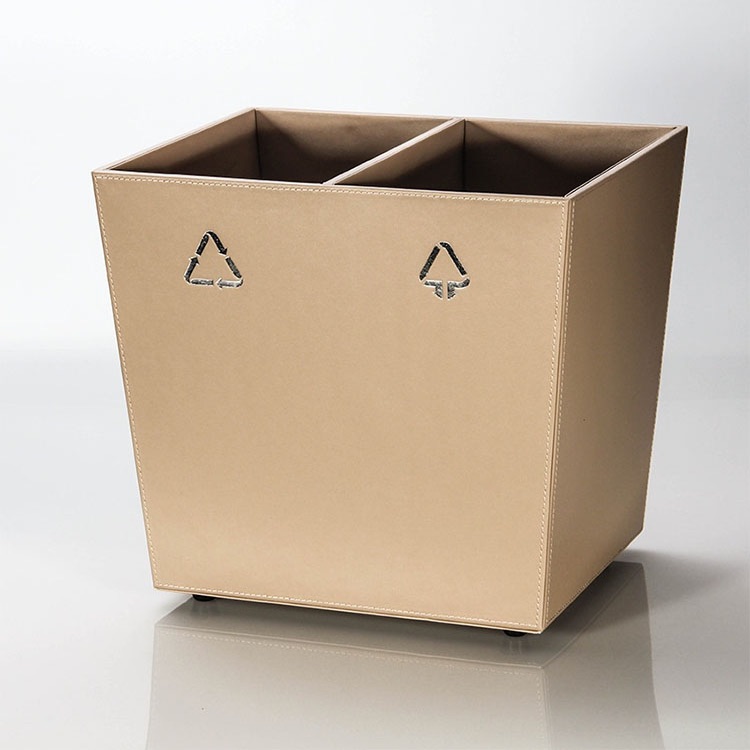
: 1–3 stream options with clear icon/label systems to reduce contamination
: materials, finishes, branding & packaging locked for consistent reorders
Your info is used only for quoting and communication.
15 Questions to Ask Before Buying a Hotel Housekeeping Cart
Most buyers price a cart like furniture. That is the first mistake. This guide shows what to ask before buying a hotel housekeeping cart, how to compare maid cart and housekeeping trolley formats, and which details quietly drive labor, safety, and replacement cost.
Table of Contents
Stop buying the photo
Cheap carts lie.
When the AHLA June 2024 staffing survey says 76% of surveyed hotels are understaffed, 13% are severely understaffed, and housekeeping is the top hiring need for 50% of properties, the hotel housekeeping cart stops being a minor purchasing line and becomes a labor tool, a guest-facing signal, and, frankly, a management decision with payroll attached to it; add Reuters’ report that more than 10,000 hotel workers struck over Labor Day 2024 and OSHA’s count of 10,239 injury and illness cases for maids and housekeeping cleaners in 2023, and the message is not subtle anymore. Why are so many buyers still shopping by hero image?
I have watched buyers argue over a few dollars in unit price while nobody measures the real pain points: loaded width at the bag frame, caster drag at month six, elevator threshold behavior, wall-scuff risk, or whether the maid cart forces attendants to mix clean and dirty flow because the shelf logic was designed by somebody who never pushed one through a live corridor.
The cart types I’d compare before anyone says “RFQ”
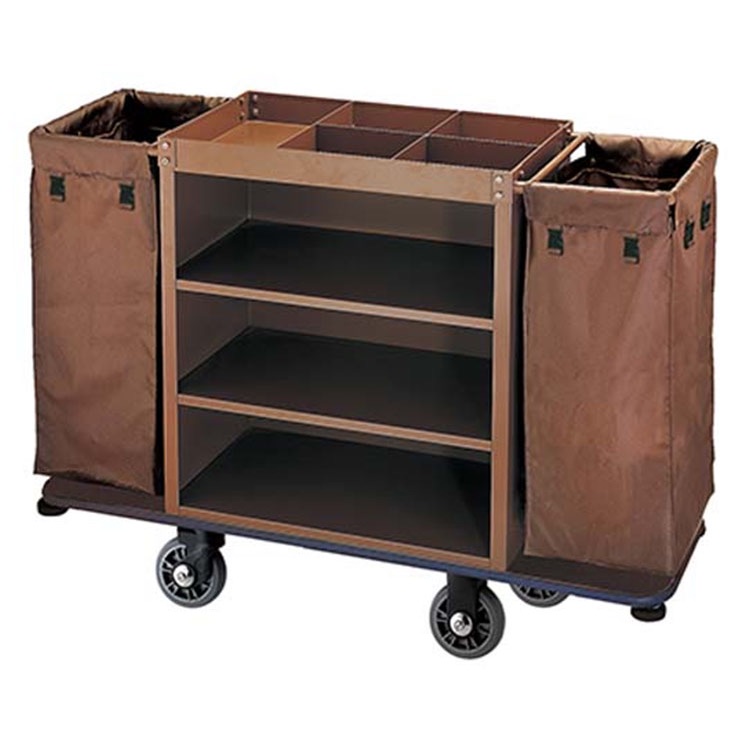
Facility Project Solutions already has a usable commercial spine here: the housekeeping cart collection currently centers the compact maid cart, bag-holder housekeeping cart, lockable-door cart, heavy-duty floor cart, and large housekeeping trolley, while the related product pages keep repeating the details serious buyers should care about most, such as adjustable shelving, zoned storage, non-marking casters, protective bumpers, easy-clean surfaces, and corridor-friendly maneuverability. That is a far better starting point than jumping straight to a random SKU.
Hides chemicals and amenities, cleaner presentation, better control
Access can slow slightly if the layout is poor
Worth it when appearance matters
Custom linen and amenity cart
Properties with messy room mixes, longer replenishment logic, brand standards
Flexible zoning and better fit to real workflows
“Custom” gets abused when there is no workflow map
Strong option for disciplined operators
The 15 questions that separate operators from spreadsheet tourists
1. What is the real working width, not the brochure width?
Measure everything.
I want the live footprint with bag frame, handles, bumpers, and operator hand position accounted for, because a commercial housekeeping cart that looks tidy in a product render can suddenly become a corridor bully once it is loaded with terry, boxed amenities, liners, and a full soiled-linen bag. Are you buying a cart or buying recurring obstruction?
2. Will it respect corridor and doorway clearance when it is actually in service?
Corridors decide.
The U.S. Access Board’s ADA route guidance sets a 36-inch minimum clear width for walking surfaces, with only a limited 32-inch reduction for short segments, and door openings on accessible routes generally need 32 inches clear, with deeper openings needing 36 inches; I would not spec any hotel housekeeping trolley that forces your team to live on exception language every single shift. Do you want smoother turns, or do you want complaints, scuffs, and awkward guest encounters?
3. Does the cart create clean-dirty separation, or just the illusion of organization?
Separation matters.
A room attendant cart should never make attendants improvise dirty flow on the same shelf stack used for fresh linen, and that is exactly why a hotel housekeeping cart with integrated bag holder or a custom linen and amenity cart for hotels can make more sense than a generic open maid cart: the site’s own product language leans on zoned shelving, dedicated compartments, and separation between clean inventory and soiled material. If the flow is mixed, what exactly are you standardizing?
4. Are chemicals isolated, labeled, and capable of being secured?
This one bites.
The California Department of Public Health’s cart setup guidance says not to mix chemicals, to keep bags or bins for soiled materials, and to lock the cart or store it in a secure place; CDC guidance also warns that chlorine bleach can release toxic gas if mixed with certain cleaners, and its ammonia fact sheet bluntly says not to mix household cleaners. If sodium hypochlorite products and ammonia-based products can mingle because your cart logic is sloppy, what do you think happens next?
5. How does it behave at elevator thresholds, tight turns, and room-door parking?
Behavior beats specs.
Facility Project Solutions keeps emphasizing smooth steering, swivel or non-marking casters, and protective bumpers on the compact maid cart with linen storage, the bag-holder model, and the lockable-door model, which tells me the site at least understands the real battlefield: corners, baseboards, elevator interiors, and the ten-second pause outside a guest room when a cart either behaves or embarrasses the operator. Have you watched the cart move, or only read its page?
6. What happens to the wheels after lint, hair, thread, and abuse show up?
Wheels tell truth.
A lot of carts look fine on day one and start dragging like a dead shopping trolley by quarter two, which is why I pay more attention to mobility language, thread-guard concepts, wheel quality, and serviceability than to decorative paneling, because nobody ever saved labor with a stylish cart that steers like a refrigerator. Why do buyers still act surprised when casters become the tax?
7. How much linen and amenity stock does one real floor run require?
Right-size it.
I do not buy the fantasy that “more capacity” is always better, because the best hotel housekeeping cart is usually the one that carries one realistic working set for a floor run, not the one that turns every corridor into a warehouse aisle and every attendant into a forklift operator.
8. Are the shelves adjustable, or are you stuck with somebody else’s workflow?
Fixed shelves age badly.
The product language on the compact, lockable, and custom amenity carts keeps returning to adjustable shelving and reconfigurable space, and I agree with that emphasis because room mix changes, VIP kits change, towel programs change, and brand standards change; a housekeeping trolley with frozen internals becomes obsolete faster than buyers admit. Why lock tomorrow’s workflow into today’s compromise?
9. Do the bumpers actually protect walls and door frames, or is that just sales copy?
Walls keep score.
The site descriptions repeatedly call out protective or non-marring bumpers, and that sounds dull until you price repainting, trim repair, chipped door frames, and the quiet resentment that grows when operations keeps calling damage “general wear” instead of admitting the cart caused it. If the cart is touching the building all day, why are we pretending the building is not part of the cost?
10. Is the cart easy to wipe down and keep presentation-ready?
Dirty carts talk.
Facility Project Solutions keeps using “easy-clean surfaces” across its housekeeping-cart pages, and that is not fluff to me, because guest-facing floors punish sloppy presentation fast, especially when amenities, PPE, soiled bags, and chemical bottles are all competing for sightlines in narrow hallways. Do you want your room attendant cart to look like equipment or evidence?
11. What breaks first, and how quickly can your team replace it?
Ask the ugly question.
The first failure is usually not dramatic; it is a caster, a shelf fastener, a bag frame, a latch, or a bumper, and if your supplier cannot tell you what fails first, what the spare-parts path looks like, and how replacement is handled across multiple properties, then you are not buying a system, you are buying future improvisation.
12. Do you need an open maid cart, a bag-holder cart, or a lockable cart for guest-visible floors?
Visibility changes everything.
A housekeeping cart with lockable cabinet doors is not automatically better than an open maid cart, but on premium floors, mixed-use buildings, or properties that sell “quiet luxury” while leaving chemicals and loose amenities on display, I think the open-cart habit is often just laziness disguised as speed. What message does your cart send when it is parked outside the suite?
13. Can one attendant park it outside a room without blocking traffic?
Parking is design.
A cart that technically moves through a corridor but parks badly is still the wrong cart, and I would test it loaded, outside a room, near a housekeeping closet, at a lift lobby, and at a turn, because legal clearance and operational grace are not the same thing. Why buy a cart that starts arguments every time it stops?
14. What is the three-year total cost, not the opening price?
This is money.
BLS May 2024 wage data show 854,910 maids and housekeeping cleaners in the United States with an annual mean wage of $36,180, and the broader building-and-grounds cleaning group averaged $39,540; combine that with staffing pressure and you get the hard truth I wish more procurement teams would say out loud: minutes lost to bad steering, bad shelf logic, and needless refill trips are not clutter, they are labor cost. What did the “cheap” cart really save?
15. Are you buying one cart, or standardizing a fleet across properties?
Scale changes the play.
I would treat a single-property purchase very differently from a rollout, because once you need consistency in finish, labeling, packaging marks, receiving lists, and repeat specs, you are in program territory, not casual sourcing territory; that is where an OEM/ODM hotel equipment program starts to make more sense than random SKU shopping. Are you still buying units, or are you finally buying control?
The internal link path I’d actually build on Facility Project Solutions
A hotel housekeeping cart is a mobile room-attendant workstation designed to carry fresh linen, guest amenities, approved chemicals, waste collection, and basic tools in a layout that protects clean-dirty separation, moves safely through corridors and elevators, and reduces needless return trips to the service closet. I judge it by route behavior, not catalog adjectives.
What is the best hotel housekeeping cart for narrow corridors?
The best hotel housekeeping cart for narrow corridors is a slim, well-zoned unit whose real loaded footprint respects accessible-route clearance, keeps dirty flow controlled, and still carries one realistic floor run of linen and amenities without turning every doorway into a three-point maneuver. I would pick restraint over brute capacity almost every time.
Are lockable housekeeping carts worth it?
A lockable housekeeping cart is a guest-floor service cart with enclosed storage that hides chemicals and amenities, supports cleaner presentation, and gives operators tighter control over visible clutter, unauthorized access, and mixed-use corridor exposure during active room servicing. On premium or guest-visible floors, I think the answer is usually yes.
How do I choose between a maid cart and a room attendant cart with a bag holder?
A maid cart is usually the simpler open-access format, while a room attendant cart with a bag holder adds a dedicated collection zone for soiled linen or waste so clean stock stays separate, more visible, and easier to manage during fast turns. If dirty-clean separation is slipping, the bag-holder format is usually the better buy.
What should hotel buyers ask suppliers before standardizing carts across multiple properties?
Hotel buyers standardizing carts across multiple properties should ask for a repeatable spec library, finish consistency, spare-parts plan, packaging marks, receiving documentation, QA checkpoints, and a workflow-based rationale for each cart format rather than a pile of disconnected product claims. If the supplier cannot talk program discipline, I would not trust the rollout.
Your next move
Do this tomorrow.
Build a one-page cart brief before you ask for price: corridor width, door clear opening, elevator interior width, room count, room mix, linen par, guest-floor visibility, chemical-control needs, and whether you are buying one unit or a fleet. Then make every supplier answer the 15 questions above in writing.
That is my bias. And I stand by it.
The wrong hotel housekeeping cart does not fail in the quotation. It fails in the hallway, in the elevator, on payroll, and eventually in the back of somebody’s shoulders.