Share your requirements and target market. We’ll suggest the right configuration, sampling path, and production plan.
During business hours, We can usually provide a preliminary quote within two hours.
: workflow-based setups to improve efficiency and keep corridors tidy
: easier bag changes and maintenance, built for daily facility use
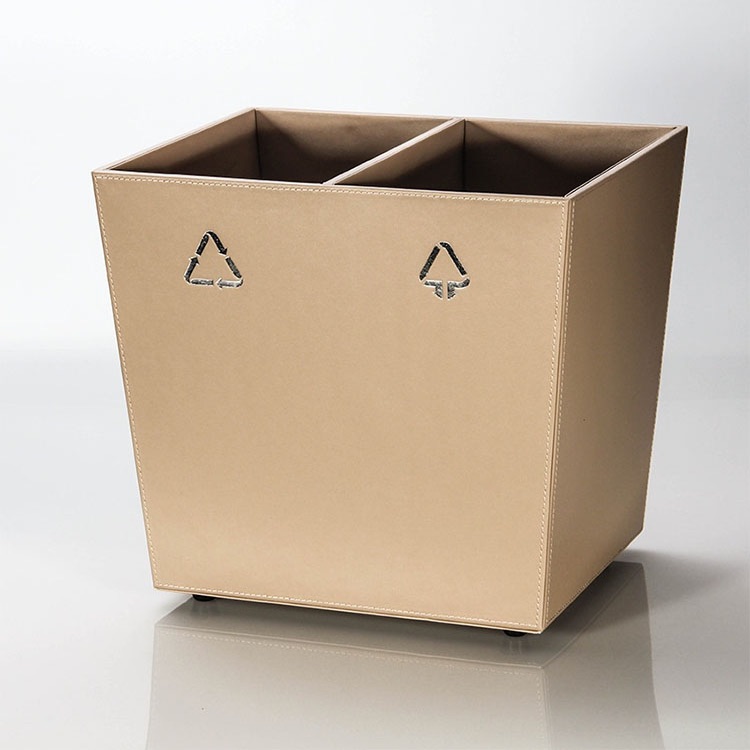
: 1–3 stream options with clear icon/label systems to reduce contamination
: materials, finishes, branding & packaging locked for consistent reorders
Your info is used only for quoting and communication.
Most buyers frame this wrong. The question is not which linen cart looks tougher on a spec sheet. The real question is which cart matches your corridor width, wet-load profile, contamination rules, and labor reality without punishing staff, walls, elevators, or room-turn time.
Table of Contents
The answer buyers hate
It depends. Usually.
If you force me to give one blunt answer, I will: for most hotels, a bag-style linen cart is the smarter buy; for hospitals, linen supply operations, and back-of-house routes with wet loads or stricter containment rules, a rigid linen cart usually wins because the decision lives at the intersection of maneuverability, load control, hygiene, and labor strain, not brochure aesthetics. In May 2024, the AHLA staffing survey found 76% of surveyed hotels reporting staffing shortages and 50% naming housekeeping as the top hiring need, while the BLS 2024 injury table still showed meaningful injury rates in traveler accommodation, hotels, hospitals, and linen supply, and the BLS 2023–2024 employer-reported injury summary said overexertion, repetitive motion, and bodily conditions led all DART cases at 946,290.
So. Still think the cart is a side issue?
The numbers are louder than vendor copy
Here is the ugly part.
According to the BLS 2024 industry table, traveler accommodation posted a total recordable case rate of 3.8 per 100 full-time workers, hotels except casino hotels and motels hit 3.9, hospitals hit 5.1, and linen supply reached 4.2; that is a useful reality check because it tells you the environments arguing over linen carts are not low-friction workplaces to begin with. Add the 2024 systematic review on hotel housekeepers and cleaners, which found pooled musculoskeletal disorder prevalence of 53.9% for low back pain, 41.4% for shoulders, and 40.1% for wrists and hands, and the argument gets even less theoretical.
And California already put this into legal language. The official Title 8, Section 3345 definition of hotel housekeeping tasks explicitly includes “loading, unloading, pushing, and pulling linen carts,” then requires worksite evaluation of pushing, pulling, forceful exertions, awkward postures, and recovery time. I like that specificity. It kills the lazy procurement fiction that the cart is just a container on wheels.
When bag-style linen carts beat rigid ones
Bag-style wins often.
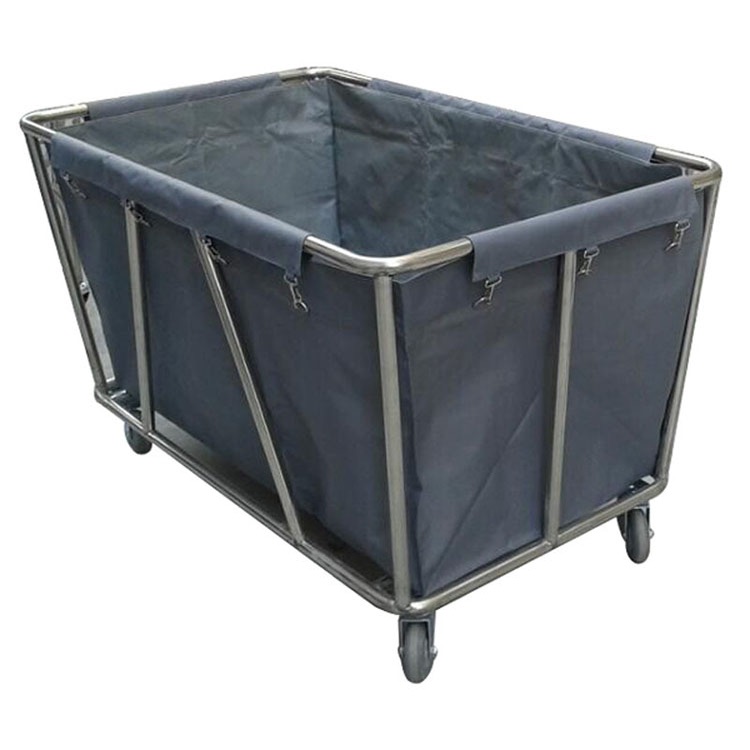
A bag-style linen cart, especially a double-bag or split-flow model, is usually the better call when your real enemy is route geometry: narrow corridors, shallow elevators, quick room turns, light-to-moderate dry loads, and the constant need to keep soiled linen moving without turning the cart into a wall-battering ram. That is why I would route hotel readers first into how to choose a slim housekeeping cart for narrow hotel corridors, then into the hotel housekeeping cart with bag holder and the double-bag laundry cart for housekeeping, because those pages line up with the actual operational question: separation without bulk. Facility Project Solutions is right to stress non-marking casters, bumpers, bag isolation, and corridor control on those pages.
OSHA’s laundry ergonomics guidance backs that logic harder than most vendors do. The agency tells operators to use well-maintained rolling carts with large, low-resistance wheels, keep handles at waist-to-chest height, and push rather than pull whenever possible. That is classic bag-style territory when the load is not excessive, because lighter frames and simpler dirty-flow collection reduce steering drag and save seconds on every stop. Seconds matter. Minutes compound. Payroll remembers.
My opinion? The best linen cart for hotels is usually not the biggest one. It is the one staff can steer cleanly at 7:10 a.m. with half a floor still to go.
When rigid linen carts are flat-out better
Rigid wins when conditions get serious.
A rigid linen cart, linen truck, or bulk linen truck is the better machine when the job involves longer back-of-house hauls, heavier or wetter loads, stricter contamination control, cleaner visual presentation, or stable structured storage that should not sag, swing, twist, or collapse as the shift gets uglier. The CDC’s 2024 linen handling guidance says soiled linen should go into a clearly labeled, leak-proof container in the patient-care area and should not be hand-carried outside that area, while the CDC laundry and bedding guidance says contaminated textiles in bags can be transported by cart but the bags should be closed or secured to prevent contents from falling out. That is not an anti-bag argument. It is an anti-sloppy-system argument. But rigid carts usually make disciplined containment easier.
The real warning shot comes from the official NIOSH linen bag handling assessment. The study found 30- and 40-gallon bags with dry compact linen could exceed recommended lifting limits when more than half full, and wet compact linen could exceed those limits when less than one-quarter full. Read that twice. Less than one-quarter full. I do not care how “flexible” a bag-style linen cart sounds in a catalog; once wet linen enters the story, your margin for error gets thin fast.
That is also where more structured, enclosed, or panel-based options start making sense on this site. For guest-facing control and concealed stock, the housekeeping cart with lockable cabinet doors is the natural internal step. For mixed room types and more disciplined zoning, the custom linen & amenity cart for hotels fits better than forcing a soft-sided bag cart to behave like a structured supply platform. Those are not identical to a hospital rigid linen truck, no. But they express the same truth: once containment, presentation, or structured storage matters more than bare-minimum agility, rigid logic takes over.
Bag-style vs rigid linen carts in plain English
Here is my operator’s read, built from OSHA ergonomics guidance, CDC linen transport rules, the NIOSH bag-handling case study, and the current internal product architecture on Facility Project Solutions.
Attribute
Bag-Style Linen Cart
Rigid Linen Cart
Upfront cost pressure
Usually lower
Usually higher
Corridor maneuverability
Better in tight hotel routes
Worse if footprint is oversized
Wet-load tolerance
Weaker once bags get heavy or compacted
Stronger and more stable
Clean/dirty separation
Good if double-bag or disciplined
Better when containment rules are strict
Ease of wipe-down sanitation
Moderate
Better
Guest-floor presentation
Functional, sometimes messy-looking
Cleaner and more controlled
Risk of operator overload
High when teams treat the bag as “infinite”
High if buyers overspec size and weight
Best fit
Hotels, short routes, quick turns, dry linen
Hospitals, linen supply, long hauls, wet or high-volume loads
My call
Best default for most hotel housekeeping teams
Best default for healthcare and high-volume back-of-house transport
The hard truth is simple: bag-style carts fail by overload; rigid carts fail by overbuilding. Buyers manage to get both wrong.
The cost nobody budgets correctly
Cheap turns expensive.
I have seen this pattern in almost every service operation: a buyer saves a few hundred dollars on the cart, then loses thousands through slower turns, wall damage, awkward parking, extra refill trips, and staff fatigue that never appears cleanly on the original PO. That logic got sharper after OSHA’s July 2023 injury-reporting rule expansion, reported by Reuters, which widened annual detailed incident reporting for many high-hazard sectors beginning January 1, 2024. More reporting does not create injuries. It makes sloppy systems harder to hide.
And yes, I think many operators still buy commercial laundry carts backwards. They buy by volume class first, then discover too late that the real killers were handle height, wheel resistance, bag sag, public-floor optics, or elevator thresholds. That is amateur stuff.
FAQs
What is a bag-style linen cart?
A bag-style linen cart is a rolling cart that uses one or more suspended fabric, vinyl, or mesh bags on a light frame to collect, sort, or transport linen with lower upfront cost, faster bag changes, and easier maneuvering in tight hotel corridors, service alcoves, and elevators. That makes it a strong fit for hospitality routes where speed and turning radius matter more than full enclosure or hard-body containment.
What is a rigid linen cart?
A rigid linen cart is a hard-body linen truck or enclosed rolling cart made from polymer, PVC, metal, or paneled construction that keeps its shape under load, supports better wipe-down cleaning, and usually performs best on longer routes, heavier loads, and operations with stricter hygiene or presentation demands. In plain English, it is less forgiving on footprint, but better at containment and structure.
Which is better for hotels: bag-style or rigid linen carts?
For most hotels, a bag-style linen cart is better when corridor width, elevator turns, room-turn speed, and simple dirty-flow separation matter more than maximum containment, while a rigid cart becomes the smarter option on premium guest floors, mixed-traffic zones, or properties that need cleaner presentation and tighter control over exposed supplies. If the property is small or mid-scale, I usually start soft-sided. If the property is luxury, mixed-use, or chemistry-heavy in public view, I start asking harder questions.
How do I choose between bag-style and rigid linen carts?
Choose between bag-style and rigid linen carts by auditing five things in order: route geometry, average load weight, wet-versus-dry linen mix, contamination-control rules, and how long carts sit parked in public view, because those factors predict labor drag, safety risk, and cleaning demands better than vague capacity labels ever will. That is how to choose between bag-style and rigid linen carts without getting fooled by generic “heavy-duty” marketing language.
Your Next Step
Walk the route. Measure the elevator. Weigh the wet load.
Then make one honest call: if your operation is mostly hotel housekeeping with tight turns and controlled dry-linen collection, buy bag-style and keep it disciplined. If your operation deals with wet, compact, high-volume, or contamination-sensitive transport, stop pretending agility is the top priority and spec rigid. For multi-property buyers, I would take the route data, load profile, and floor conditions straight into OEM/ODM services for hospitality rollouts, because standardization only works when the spec matches the building, not when a chain forces one bad cart onto twenty different routes.