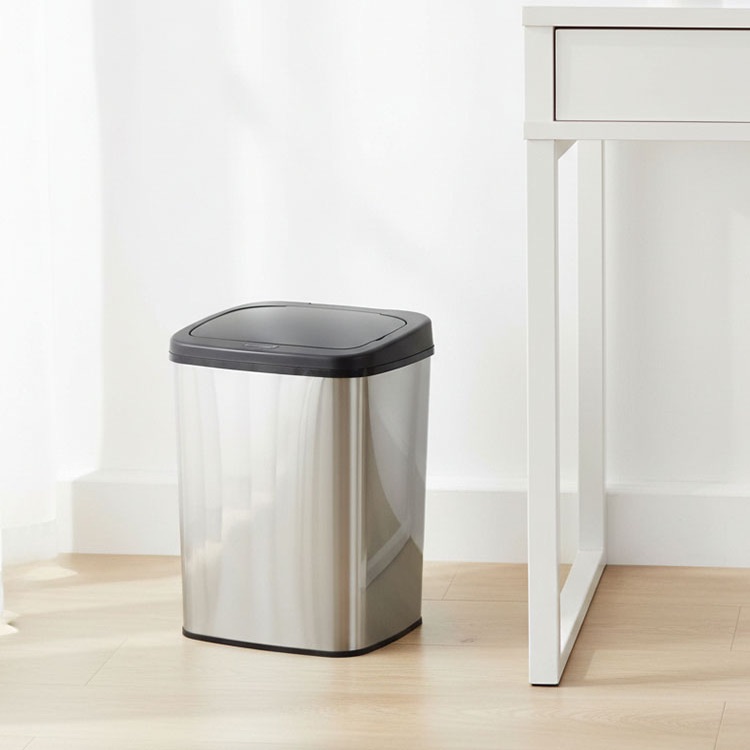
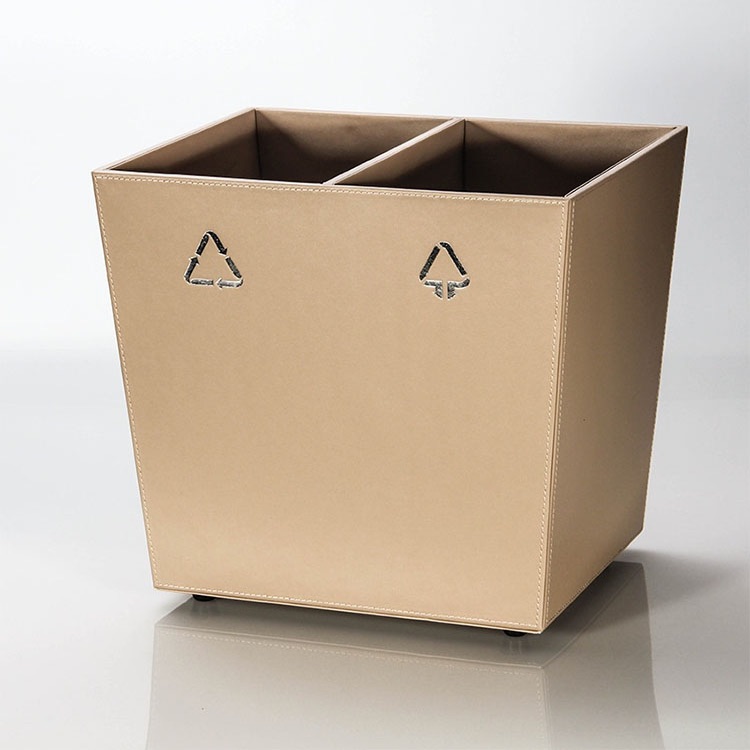
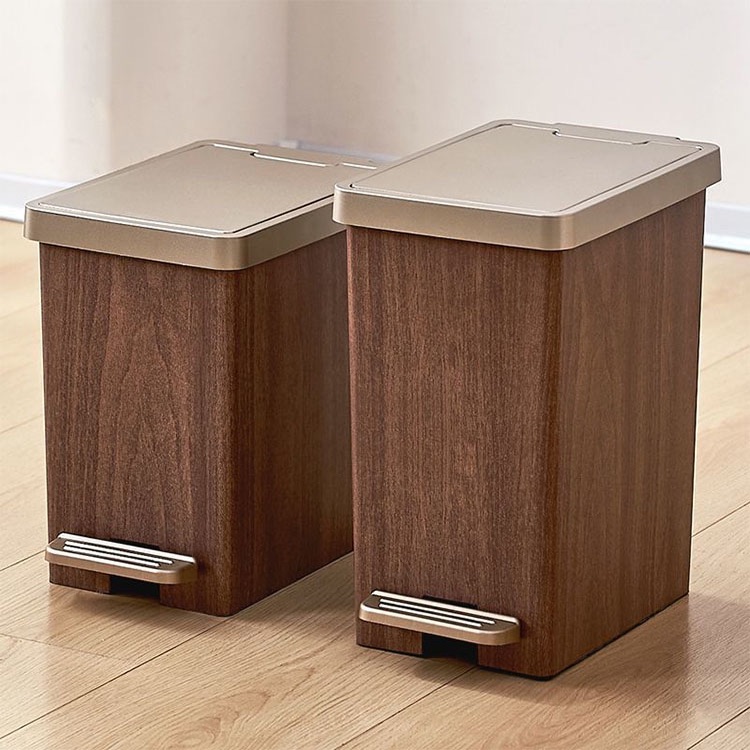
Share your requirements and target market. We’ll suggest the right configuration, sampling path, and production plan.
During business hours, We can usually provide a preliminary quote within two hours.
: workflow-based setups to improve efficiency and keep corridors tidy
: easier bag changes and maintenance, built for daily facility use
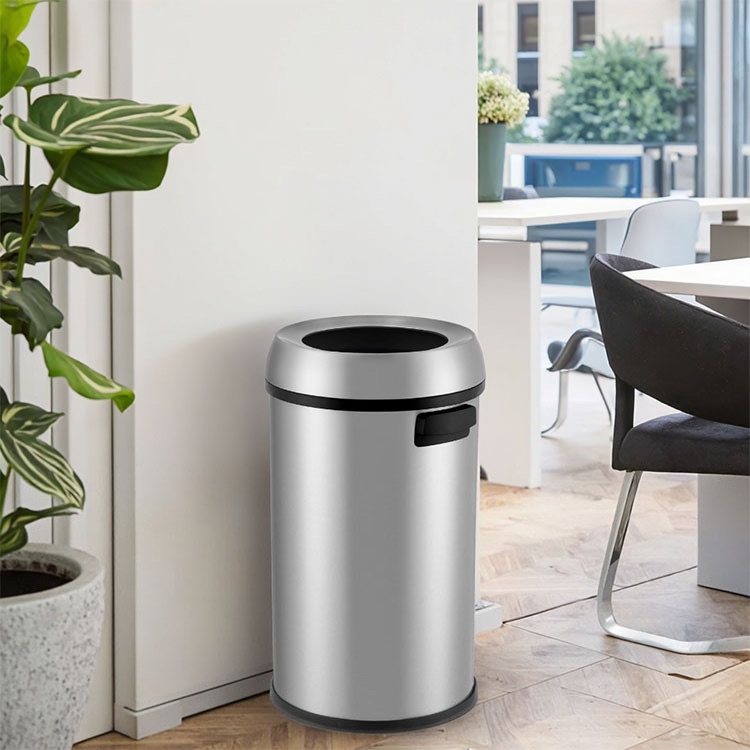
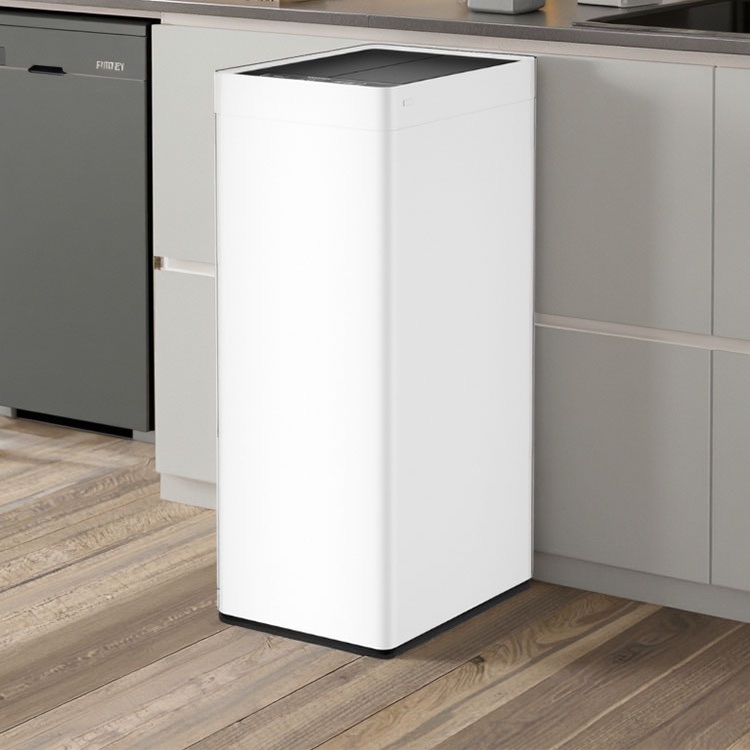
: 1–3 stream options with clear icon/label systems to reduce contamination
: materials, finishes, branding & packaging locked for consistent reorders
Your info is used only for quoting and communication.
Open vs Enclosed Housekeeping Carts: Which Is Better for Hotels?
Most hotels buy carts like they are buying shelves on wheels. I think that is lazy procurement. Open carts are faster, yes, but enclosed carts usually make better operational sense once you factor in guest visibility, labor strain, chemical control, and corridor reality.
Table of Contents
The blunt answer most vendors dodge
Enclosed usually wins.
That is the uncomfortable verdict I keep landing on, because hotels are not warehouses, and once a cart enters a guest corridor it stops being a simple utility tool and starts acting like a moving billboard for your standards, your staffing discipline, your chemical control, and your willingness to trade five seconds of access speed for a cleaner, calmer floor. So why do so many buyers still shop by shelf count alone?
I am not saying open housekeeping carts are bad. I am saying they are overbought. In real hotel operations, open carts work best when the floor is low-visibility, the route is short, the stock list is disciplined, and the team actually restocks on cadence instead of cramming the cart like a panic closet. That is a narrower use case than the catalog copy admits.
My rule is simple. If the cart spends real time in guest view, carries chemistry, or parks outside occupied rooms, I lean enclosed or at least semi-enclosed. If the cart runs mostly in service corridors or on stripped-down select-service routes where attendants need quick grabs and tight turns, open can still make sense.
Hotels are buying labor efficiency, not metal frames
Labor is tight.
And that changes everything, because the June 10, 2024 AHLA staffing survey said 76% of surveyed hotels were dealing with staffing shortages, while 50% named housekeeping as their top hiring need. Add the fact that the BLS counted 836,230 U.S. maids and housekeeping cleaners at a mean wage of $16.66 an hour in May 2023, and you get the real math: a cart is not furniture, it is a labor-multiplier attached to one of the hardest roles to fill in the building.
Then the industry got a louder reminder. Reuters reported on September 2, 2024 that more than 10,000 U.S. hotel workers struck across multiple cities, with housekeeping disruptions showing up immediately at affected hotels. That matters because when labor gets thinner, every bad cart decision compounds into slower turns, more clutter, more wall strikes, and more staff fatigue.
I have watched procurement teams obsess over unit cost and ignore movement cost. Big mistake. A cart that saves $120 upfront and wastes minutes on every run is the expensive cart.
Open housekeeping carts: fast, visible, and often too forgiving of bad habits
Open carts are speed-biased.
They let attendants grab terry, paper goods, amenities, and tools without opening doors, which is why they still make sense on low-visibility floors, back-of-house routes, and compact operations where par levels are tight and restocking is disciplined. Facility Project Solutions’ compact maid cart with linen storage leans into that logic with dedicated linen storage, adjustable shelving, non-marking casters, and protective bumpers, while its hotel housekeeping cart with bag holder adds dirty-clean separation without forcing a full cabinet footprint.
But here is the hard truth I do not hear enough people say out loud: open carts forgive sloppy operators. They make it easy to overstock, easy to expose chemistry, easy to let clean and dirty zones drift into each other, and easy to broadcast disorder to guests. That is not an equipment flaw by itself. It is a systems flaw that open carts make easier to see.
There is also the corridor problem. The U.S. Access Board’s ADA guide says accessible routes need a continuous clear width of at least 36 inches, with 32 inches allowed only at short pinch points such as doorways for a maximum of 24 inches. Open carts with side bags, overhanging linen, and attendants working from the side can blow through that working profile faster than buyers expect. I do not care what the brochure body width says if the live parked footprint behaves like a blockade.
Enclosed housekeeping carts: slower access, better hotel logic
Looks matter.
And so does control, because once a hotel sells a guest on “clean, calm, premium,” it is foolish to roll exposed spray bottles, loose refills, and half-visible waste bags through the same corridor as if nobody notices. Guests notice. They always do.
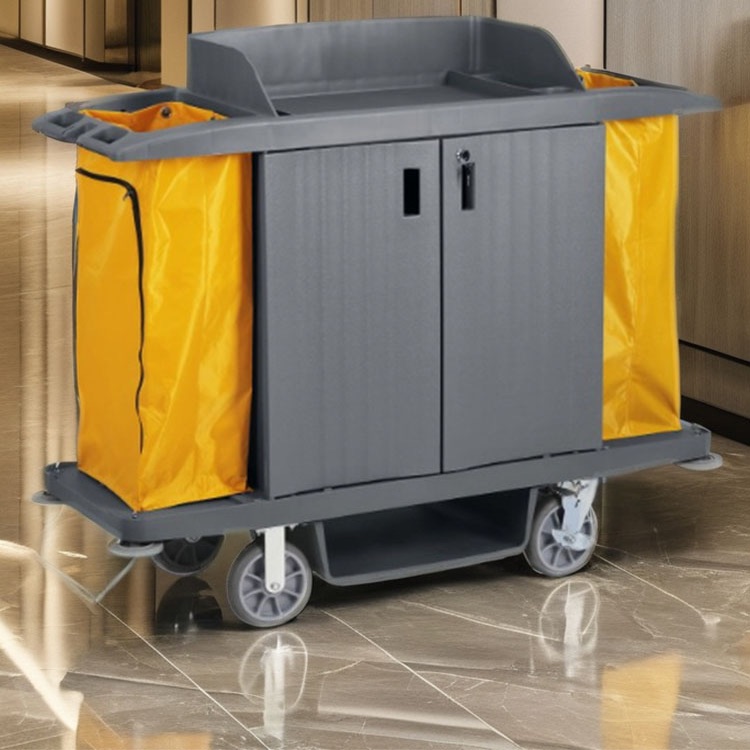
That is why I think the housekeeping cart with lockable cabinet doors is the smarter default for guest-facing floors. Facility Project Solutions positions it around lockable cabinet doors, adjustable shelving, zoned compartments, non-marking casters, protective bumpers, and easy-clean surfaces, which is exactly the right mix for hotels that care about presentation and access control. If your room mix is messier or your amenity load is heavier, the custom linen & amenity cart for hotels is the stronger internal step because it shifts the conversation from raw capacity to compartment logic.
I would go further. Enclosed carts are not just about optics. They also align better with risk management. OSHA’s Hazard Communication rule requires employers to communicate chemical hazards through labeling and safety data sheets; enclosed storage does not replace that duty, but it does help operational control by keeping products less exposed in public areas and less prone to casual grabbing, visual clutter, or accidental mixing with guest supplies. That is my inference, and I think it is the sane one.
And there is a worker-health angle procurement people still underrate. A 2024 systematic review indexed by PubMed found musculoskeletal disorders are highly prevalent among hotel housekeepers and cleaners, with low back pain affecting up to one in two workers. When cities are posting real workload rules like Seattle’s 2024 hotel employee notice, which says covered employees cleaning rooms in hotels with 100+ rooms have the right to a maximum of 4,500 square feet in an 8-hour day and 3x pay above that threshold, the smart buyer stops treating cart design like a cosmetic choice.
My side-by-side verdict for open vs enclosed housekeeping carts
I would not buy this category by instinct. I would buy it by floor type.
Factor
Open Housekeeping Carts
Enclosed Housekeeping Carts
My Verdict
Refill speed
Faster grab-and-go access
Slightly slower because doors and compartments add steps
Open wins, but only narrowly
Guest-facing appearance
Exposed shelves can look messy fast
Cleaner visual profile, better concealment
Enclosed wins clearly
Clean/dirty separation
Easy to botch without strict zoning
Easier to control if the layout is well designed
Enclosed wins
Corridor behavior
Can stay nimble, but side bags and overflow create real width
Slightly bulkier, yet often more disciplined in live use
Buyers tend to overpay only if the floor does not need it
Open is easier to misuse
That table is my synthesis, but it is grounded in today’s labor pressure, corridor clearance rules, chemical communication requirements, injury data, and the way Facility Project Solutions has structured its relevant cart pages and hotel equipment offering.
The internal-link path this site should push hard
This is where I think Facility Project Solutions already has the bones of a good cluster, and it should lean into it harder.
I would not send them straight to a generic category page and hope for the best. That is lazy SEO. More important, it is lazy selling.
So which is better for hotels?
Enclosed is better for hotels in the broad, real-world sense.
Not because open carts are obsolete. Not because every hotel needs a cabinet door. But because most hotels care about guest perception, corridor order, chemical control, brand consistency, and multi-property standardization more than they care about shaving a few seconds off each item grab. Open carts win on speed. Enclosed carts win on hotel logic.
My practical call looks like this: choose open for low-visibility service routes, very tight footprints, and disciplined teams. Choose enclosed for guest-facing corridors, premium floors, mixed-use assets, and any operation that is tired of carts looking like mobile clutter.
FAQs
What is the main difference between open and enclosed housekeeping carts?
The main difference between open and enclosed housekeeping carts is that open carts prioritize instant shelf access and faster item retrieval, while enclosed carts prioritize concealment, tighter storage control, cleaner guest-facing presentation, and better separation of amenities, tools, and chemicals in public corridors. In practice, that means speed versus control.
Are enclosed housekeeping carts better for hotels?
Enclosed housekeeping carts are generally better for hotels because they reduce visible clutter, support a cleaner brand presentation, help control access to supplies and chemicals, and fit guest-facing operations more naturally than open carts, especially on premium floors, mixed-use corridors, and properties with stricter service standards. I think that is the honest answer for most buyers.
When should a hotel choose an open housekeeping cart?
A hotel should choose an open housekeeping cart when attendants work mostly in low-visibility corridors, need quick access to a limited stock list, operate with disciplined restocking routines, and can maintain clean-dirty separation without relying on cabinet doors or heavy concealment features. Open is the sharper tool when the workflow is already tight.
Do lockable housekeeping carts help with safety and compliance?
Lockable housekeeping carts help with safety and compliance by improving control over stored supplies, reducing exposure of guest-facing corridors to visible chemicals and clutter, and supporting more disciplined staging of amenities, tools, and consumables alongside the employer’s existing labeling, training, and hazard-communication duties. They are not a legal shortcut, but they are a better control point.
Your next step
Stop guessing.
Walk one active guest floor with a tape measure, a stopwatch, and enough honesty to admit what the operation actually looks like. Measure the live parked footprint, not the brochure width. Count refill trips. Watch what happens when linen, trash, and chemistry collide. Then buy the cart that fixes the friction you just saw, not the one that looked impressive in a product thumbnail.
If you are publishing this piece to drive qualified leads, steer readers toward the configuration that matches their floor reality, then move them into a spec conversation. That is the conversion path I would back, and yes, I would say it bluntly: for most hotels, enclosed housekeeping carts are the better buy.