Share your requirements and target market. We’ll suggest the right configuration, sampling path, and production plan.
During business hours, We can usually provide a preliminary quote within two hours.
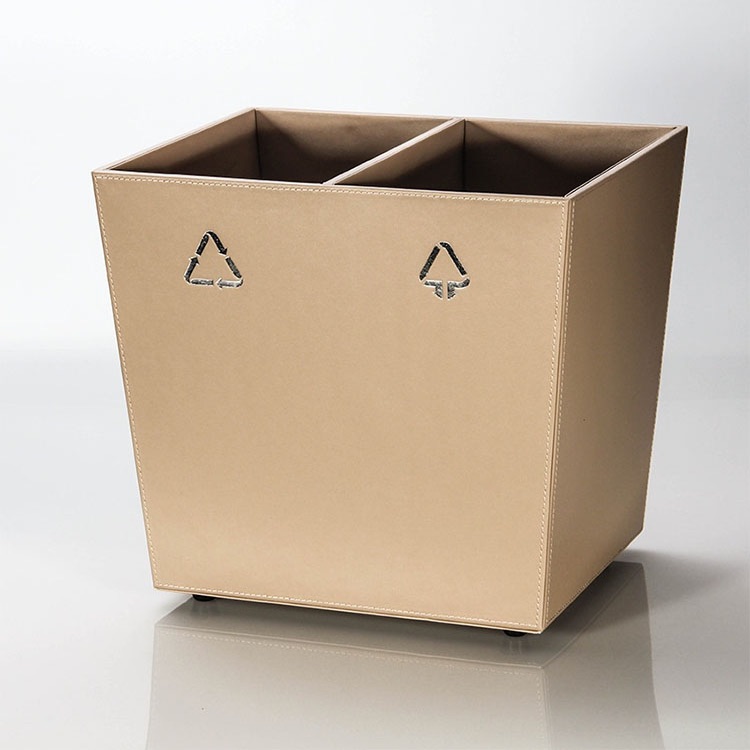
: workflow-based setups to improve efficiency and keep corridors tidy
: easier bag changes and maintenance, built for daily facility use
: 1–3 stream options with clear icon/label systems to reduce contamination
: materials, finishes, branding & packaging locked for consistent reorders
Your info is used only for quoting and communication.
Freestanding vs Wall-Mounted Cigarette Receptacles
Most buyers treat cigarette receptacles like a minor accessory. I think that is lazy procurement. The right choice changes litter rates, cleaning labor, code exposure, façade wear, and even where smokers gather.
This is not a hardware debate
Buyers miss it.
What looks like a small fixture choice is really a behavior-control decision wrapped inside janitorial routing, smoke-policy enforcement, façade protection, and low-grade fire prevention, which is why I get suspicious whenever someone says, “Just mount a little ash urn by the door and move on.”
Want the hard truth?
A 2024 PLOS One analysis estimated 145.77 billion cigarette butts were littered over one year in the contiguous United States, and it found metropolitan areas averaging 96.4 times the cigarette-butt density of rural areas. Johns Hopkins, summarizing 2024 tobacco-litter research and WHO figures, noted that tobacco product litter accounts for 25% to 40% of all litter globally and that roughly 4.5 trillion cigarette butts are littered every year. That is not a nuisance problem. That is infrastructure failure in miniature.
And the material itself is ugly. NOAA says cigarette butts are the most common form of marine litter and explains that filters are made from cellulose acetate, a plastic-like material that breaks into microplastics rather than disappearing; the California Coastal Commission adds that 95% of cigarette filters are plastic and that butts carry toxic chemicals including arsenic, lead, and cadmium. So no, a cigarette butt receptacle is not solving “just ash.” It is containing plastic waste plus chemical residue.
That is why the strongest internal starting point on this site is the broad Ashtrays & Smoking Stations hub, not a random SKU buried three clicks down. Facility Project Solutions already clusters standing ashtrays, sand-fill bins, square-top stations, and windproof units in one archive, which makes this H1 easier to support with contextual internal links rather than thin product stuffing.
Table of Contents
The operational difference nobody puts in the brochure
I think wall-mounted cigarette receptacles are oversold because they look tidy on an elevation drawing. Freestanding cigarette receptacles usually win where people actually smoke, where policies shift, and where maintenance teams—not architects—have to live with the consequences.
Why? Because smokers do not behave like CAD symbols.
Factor
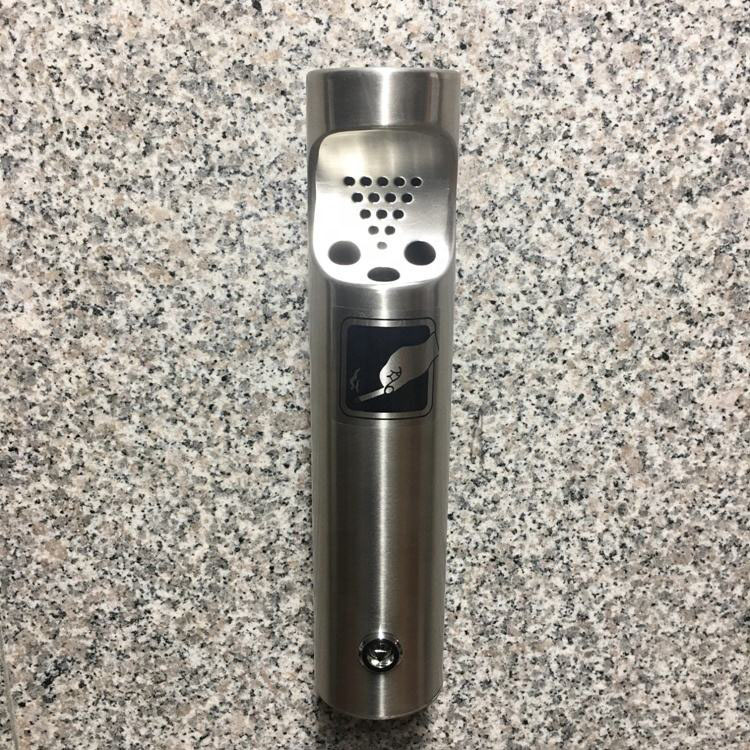
Wall-Mounted Cigarette Receptacles
Freestanding Cigarette Receptacles
My Take
Footprint
Very small
Larger
Wall-mounted wins only on space
Visibility
Easy to miss unless directly in path
Better sightline from a distance
Freestanding usually wins
Capacity
Lower
Higher
Freestanding
Repositioning
Poor
Excellent
Freestanding
Façade staining/corrosion risk
Higher
Lower
Freestanding
Theft/tamper control
Good if properly fixed
Good only when anchored/weighted
Tie
Policy setback flexibility
Weak
Strong
Freestanding
Best use case
Low-volume staff exits
Outdoor smoking zones, campuses, transport edges, hotel perimeters
Freestanding
The budget angle is worse than most teams admit. The California Coastal Commission cites research estimating cigarette-butt abatement at $3 million to $16 million per U.S. city, and it also points to a San Francisco estimate of roughly $7.4 million annually for tobacco-product-waste cleanup. So when I hear someone ask for the cheapest smoker’s receptacle, I usually hear, “We have decided to pay for litter later.” (coastal.ca.gov)
Compliance is where wall-mounted units quietly lose
Codes bite.
I have seen too many businesses buy wall-mounted ash urns for the exact spot where smoking later becomes restricted, which turns the receptacle into a contradiction bolted to the building, because now the disposal point tells smokers to stand where policy tells them not to stand.
Why install a wall-mounted unit on the façade if your smoking area has to move off the façade anyway?
The legal pattern is not theoretical. The City of Encinitas’ 2023 rule barred smoking and vaping in public places and within 20 feet of a public place, while also stating that cigarette butts and vaping cartridges must be disposed of in designated smoking-waste receptacles. Old Dominion University’s 2024 tobacco policy requires combustible smoking waste to go into designated ash urns, not waste receptacles or the ground, and says those ash urns must be anchored no closer than 25 feet from the side of a building. Once those distances show up in policy, freestanding units stop looking optional. They become the only practical configuration.
Fire risk gets waved away until a claims file lands on someone’s desk. FEMA’s U.S. Fire Administration says the 2021 national estimates for residential building smoking fires were 7,800 fires, 275 deaths, 750 injuries, and $361.5 million in dollar loss, and Washington State’s 2024 fire-marshal release said cigarette-caused fires in Washington totaled 125 fires in 2022, with 2 deaths and $4,108,139 in property loss. Both agencies push the same boring advice, which happens to be right: extinguish butts fully in a stable ashtray or a sand-filled container, not in bushes, mulch, planters, or standard trash.
What actually works by property type
Hotels and resorts
Front-of-house is theater.
If you let smokers cluster near a valet lane or porte-cochère, the receptacle has to control sightlines, litter spread, and ember containment without cheapening the entrance. That usually points me toward a slim freestanding unit such as the Stainless Steel Standing Ashtray for Lobbies or the Square Top Ashtray Station for Hotels, both of which the site positions around designated smoking points, removable liners, and optional oxygen-limiting disposal.
Wall-mounted ash urns at guest-facing doors? I rarely like them. They attract the smoker to the wall, put residue near mats and glazing, and encourage that ugly half-step-from-the-entrance behavior every hotel GM claims to hate.
Hospitals, clinics, and assisted-living settings
Use freestanding. Period.
In healthcare-adjacent environments, I want distance from doors, clear smoking-zone definition, simple servicing, and as little ambiguity as possible. A Windproof Outdoor Cigarette Bin with Lid makes more sense here than a wall box because the product is explicitly framed around wind resistance, weather exposure, removable liners, and optional oxygen-limiting disposal for higher-risk outdoor edges.
Offices, warehouses, and staff exits
This is the only place where I still defend wall-mounted units.
If cigarette volume is low, smoking is permitted in a tightly controlled rear location, and the wall is genuinely the behavior-control point, a wall-mounted receptacle can work. But even here, I often prefer a freestanding sand-fill or pillar design because it is easier to move when site rules change and easier to position away from cladding damage. The Outdoor Smoking Ashtray Bin with Sand Fill is a better operational bet for loading-dock edges and break patios than a tiny wall urn people ignore.
Campuses, transit edges, and public-space perimeters
These sites punish bad placement fast.
You need visibility, anchoring, weather resistance, and enough holding capacity that maintenance does not become a daily panic. That is where a freestanding model—or, in some cases, a hybrid like the Commercial Outdoor Bin with Ashtray Top—makes sense, especially when paired with broader weather-resistant outdoor bin options for exposed environments. The site’s taxonomy already separates smoking stations from general Outdoor Trash Bins, which is exactly how I would keep user intent clean for SEO and for buyers.
I would also keep one editorial link pointed at Product Selection and Cost-Effective Solutions because that page cluster is already framed around buying logic, QC, and repeat-order thinking. In SEO terms, that gives this H1 somewhere useful to send commercial-intent readers after they finish the comparison instead of trapping them in awareness-mode content.
FAQs
Which is better for businesses: wall-mounted or freestanding cigarette receptacles?
For most businesses with outdoor smoking zones, a freestanding cigarette receptacle is the better choice because it can be placed at compliant distances, handles higher volume, stays more visible to smokers, and avoids turning the façade itself into the smoking cue. If a property allows smoking only in a tight, low-volume, staff-only corner, wall-mounted can still make sense. But that is the exception, not the rule.
What is a freestanding cigarette receptacle?
A freestanding cigarette receptacle is a self-supporting metal smoking-waste container, often weighted or anchorable, designed to sit on pavement rather than on a wall so facility teams can place it where smokers actually stand, maintain legal setbacks from doors, and handle moderate to heavy cigarette volume. It is usually the stronger choice for hotels, campuses, medical perimeters, public spaces, and windy outdoor zones.
What is a wall-mounted cigarette receptacle?
A wall-mounted cigarette receptacle is a compact ash urn fixed to a wall, post, or façade, built for low-footprint cigarette disposal at controlled points such as staff exits, fenced service yards, or private terraces where smoking is permitted and the building surface is part of the control plan. I use them sparingly because they are easy to install and just as easy to misplace.
Where should outdoor cigarette receptacles be installed?
Outdoor cigarette receptacles should be installed exactly where smoking behavior concentrates but only after policy setbacks, fire exposure, pedestrian flow, and servicing routes are mapped, which usually means designated smoking zones away from doors, oxygen lines, planters, and standard trash cans rather than directly beside entrances. Encinitas’ 2023 rule and Old Dominion University’s 2024 policy are good reminders that disposal points have to follow smoking-area rules, not fight them.
Are cigarette receptacles legally required?
Cigarette receptacles are not required everywhere by one blanket national rule, but many cities, campuses, and agencies require designated smoking-waste disposal in approved areas, so the real answer depends on local ordinances, lease terms, campus policy, insurance expectations, and whether smoking is allowed on-site at all. Encinitas requires disposal in designated smoking-waste receptacles, and Old Dominion requires designated ash urns rather than general waste containers.
Do cigarette filters actually create a plastic-pollution problem?
Cigarette filters create a plastic-pollution problem because they are largely made from cellulose acetate, a plastic-like material that breaks into microplastics while also carrying toxic chemical residue, which means every “harmless little butt” is both litter and contamination. NOAA and the California Coastal Commission are explicit on this point. That is why a cigarette butt receptacle is partly a janitorial tool and partly an environmental-control device.
Your Next Steps
Do this now.
Audit your smoking behavior for seven days, not your procurement catalog for seven minutes. Count where people actually smoke, measure the setback from doors, note whether cigarette volume is low or heavy, and check whether your team needs a unit that can be relocated, anchored, or standardized across properties.
My verdict is simple: freestanding cigarette receptacles usually beat wall-mounted units in the real world. Not because they look better. Because they solve the problem where the problem actually happens.