Share your requirements and target market. We’ll suggest the right configuration, sampling path, and production plan.
During business hours, We can usually provide a preliminary quote within two hours.
: workflow-based setups to improve efficiency and keep corridors tidy
: easier bag changes and maintenance, built for daily facility use
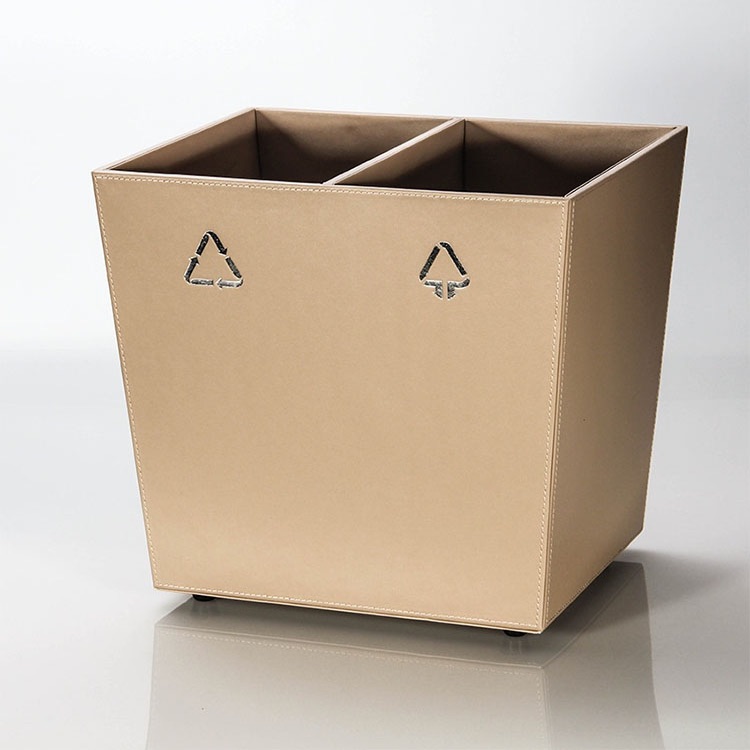
: 1–3 stream options with clear icon/label systems to reduce contamination
: materials, finishes, branding & packaging locked for consistent reorders
Your info is used only for quoting and communication.
Hotel Room Trash Bin Buying Guide: Capacity, Inner Buckets, and Liner Rings
Most hotel room trash bins are bought for appearance first and serviced badly forever. This guide shows what actually works in guestrooms, based on labor pressure, waste patterns, and the ugly reality of daily room turns.
Most bins fail.
I say that after watching procurement teams spend more time debating finish color, faux leather wrap, and whether a rim looks “premium” than debating the thing attendants deal with every single shift: how fast the bin relines, how clean it looks between services, how much wet mess it traps, and whether it quietly adds seconds or minutes to every room turn. Why are we still buying hotel room trash bins like décor props?
The labor math is not subtle. According to the June 2024 AHLA staffing survey, 76% of surveyed hotels said they were dealing with staffing shortages, 79% said they still could not fill open roles, and housekeeping ranked as the top hiring need for 50% of properties; then Reuters reported on September 2, 2024 that more than 10,000 U.S. hotel workers struck across multiple cities while pushing back on pay, staffing, and workload pressure. So no, a hotel room trash bin is not a side detail. It is a labor tool in disguise.
Most guestrooms do not need a giant wastebasket. They need a disciplined one. In standard rooms, I usually favor 8 L to 10 L for the main room bin and 3 L to 5 L in the bathroom, because anything larger starts encouraging dead air, odor dwell time, and overbuilt shells that look expensive but don’t improve guest use. And yes, I’ve seen operators spec 14 L or 16 L bins because they “feel upscale.” They feel upscale right up until the liner collapses, the bag ears show, and attendants start fighting the bin at 11:20 a.m.
The waste side of the problem is bigger than many operators admit. A 2023 open-access study in Annals of Tourism Research Empirical Insights said tourism generates more than 35 million tons of solid waste annually and found that hotel waste patterns differ enough from other sectors, and from one another, that targeted solutions beat one-size-fits-all buying. That is exactly why a “universal guestroom bin” is usually lazy purchasing dressed up as efficiency.
Capacity is labor, not liters
Small matters.
A hotel room trash bin should match the room’s waste profile, not the designer’s mood board, because a king room with coffee pods, takeaway packaging, tissue use, and two-night occupancy behaves very differently from a limited-service overnight stay, and both behave differently from a suite with bathroom amenities, desk work, and family snack waste. Isn’t that obvious by now?
If the room generates mostly dry waste, think tissues, wrappers, water-bottle sleeves, amenity cartons, then a compact open-top or ring-top bin wins. If the room sees wet coffee grounds, fruit peels, leaked minibar residue, or heavy bathroom paper loads, capacity alone will not save you; the servicing method will. That’s where buyers get tricked. They solve the wrong variable.
And if you sell into California, design choices around weight, grip, and emptying are not harmless preferences. California’s Title 8, Section 3345 explicitly treats collecting and disposing of trash as a hotel housekeeping task and requires employers to identify and correct ergonomic hazards, which means awkward liners, sticky inner walls, and overfilled bins are not just annoying; they sit inside a real compliance conversation.
Inner buckets are useful, but not always smart
This is where buyers waste money.
An inner bucket sounds premium, and sometimes it is, but in many guestrooms it simply adds another part, another cleaning surface, another item to crack or go missing, and another way to shrink usable capacity while raising unit cost. So when do I actually want one?
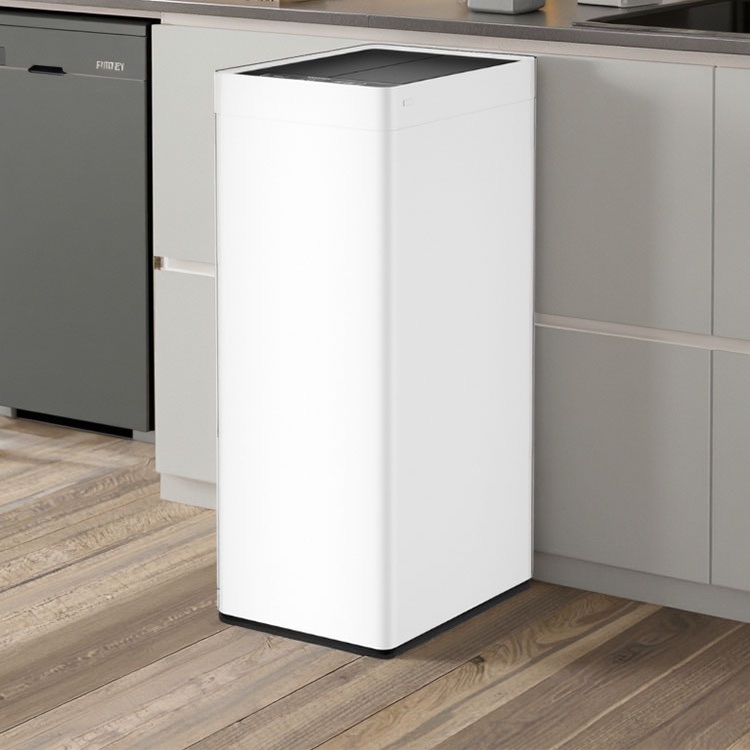
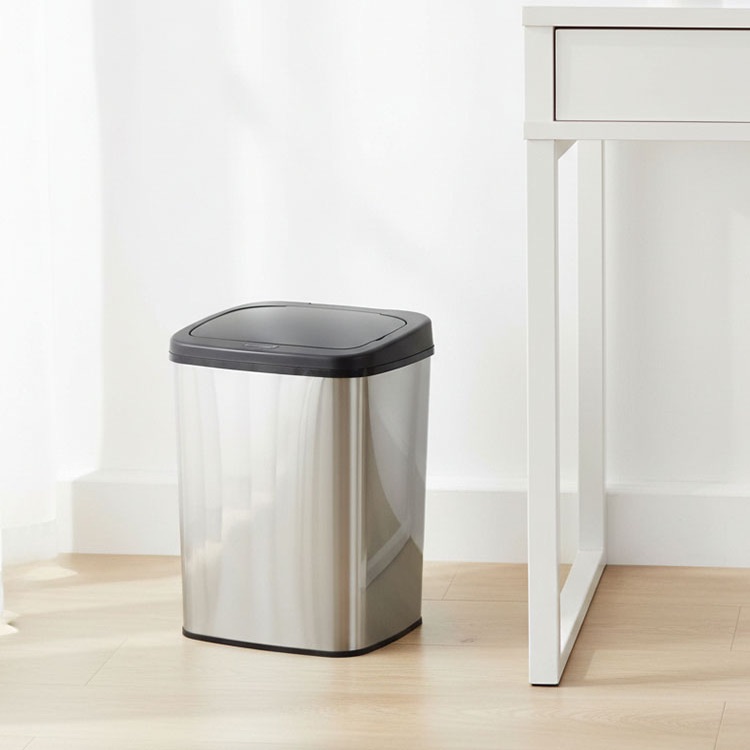
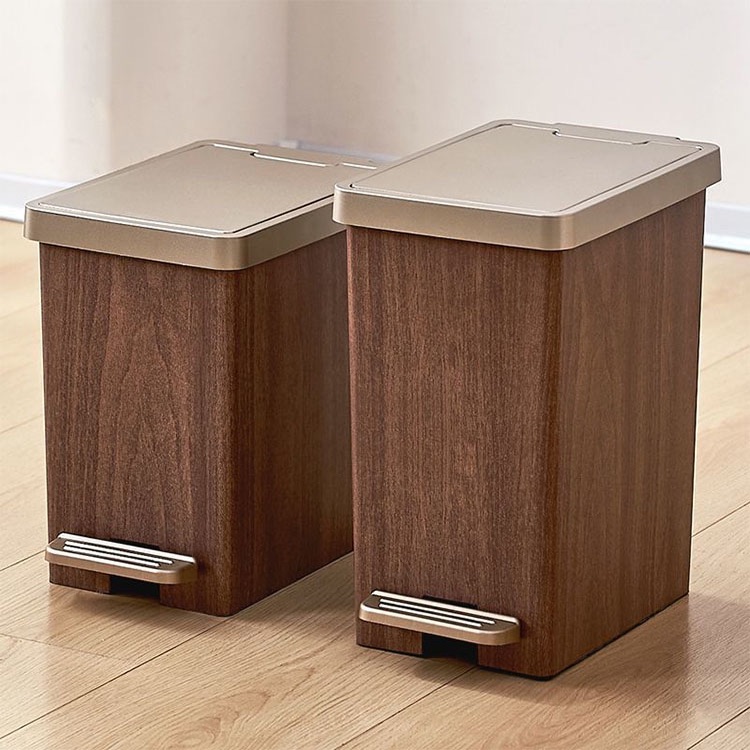
I want an inner bucket in three cases: bathroom bins, touchless/sensor bins, and guestrooms where wet waste or spill cleanup is plausible. Facility Project Solutions’ sensor trash can with inner bucket is a good example of where the feature earns its place, because the product is built around a removable insert and liner-retaining rim for cleaner resets in hotel interiors. The same logic applies to the site’s pedal bin for hotel bathrooms in stainless steel, where the removable bucket, liner-lock rim, and quiet-close lid fit actual bathroom use rather than showroom theory.
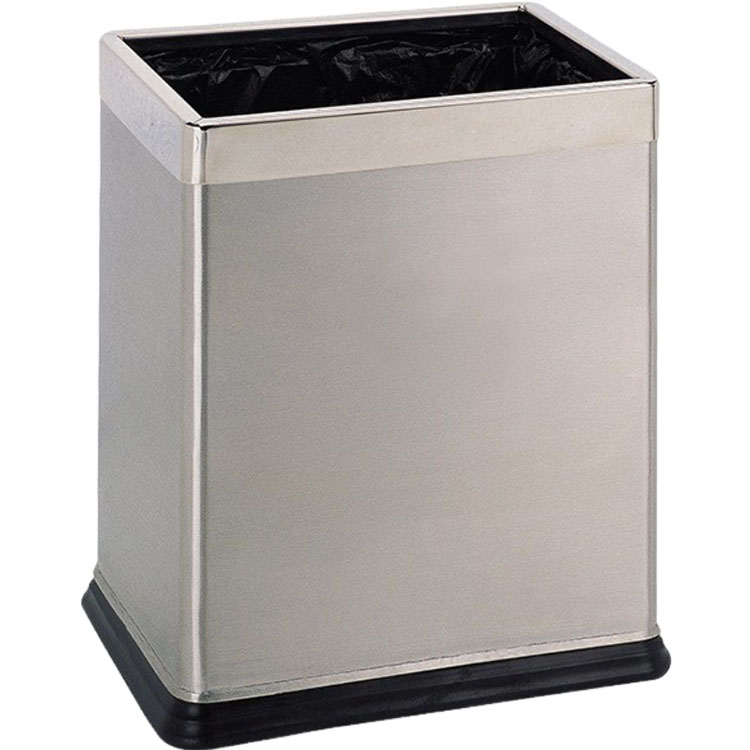
But for a dry guestroom basket near the desk or minibar? I usually skip the inner bucket. A clean one-piece shell in PP, ABS, or a lined composite body with a good ring system often works better, costs less, and wastes less interior volume. I know that sounds unromantic. Procurement should get over it.
Liner rings are the cheapest feature buyers underrate
They change everything.
A liner ring is not glamour hardware; it is the device that stops the bag from sinking, hides excess plastic, keeps the rim looking clean between services, and cuts the tiny repeated corrections that quietly tax housekeeping across hundreds of rooms, especially when attendants are moving fast and trying to keep visible surfaces guest-ready. Want the fastest visual upgrade per dollar? Buy the ring.
Facility Project Solutions’ compact guestroom wastebasket with liner ring gets the core idea right: the ring holds the liner out of sight and lifts out for fast relining, while the category around hotel room bins shows the broader range of formats this site is already clustering for the topic. That is a much better user journey than dumping readers into a generic trash-can page and hoping they figure it out.
And there is a guest-perception point buyers love to pretend is subjective. It isn’t. Exposed bag edges make a room look cheaper. Full stop. I don’t care how nice the millwork is, how expensive the mattress is, or how often the lobby diffuser runs. A floppy white liner peeking over the rim tells the guest someone improvised the finish.
What I would spec, room by room
Room / Use Case
Recommended Capacity
Inner Bucket
Liner Ring
Best Format
My Take
Standard guestroom
8–10 L
Usually no
Yes
Open-top or rim-top basket
Best balance of appearance, speed, and cost
Premium guestroom / suite
10–12 L
Optional
Yes
Decorative open-top or soft-close bin
Size up only if stay length or packaging waste is higher
Bathroom bin
3–5 L
Yes
Yes
Pedal bin or quiet-close lid
Hygiene and leak control matter more here
Touchless room concept
8–12 L
Yes
Yes
Sensor bin
Works only if battery and spare-part discipline are real
Family / extended-stay room
12–15 L
Optional
Yes
Larger guestroom bin or dual-bin setup
One of the few times bigger capacity actually pays
Eco-forward room with recycling
2 x 6–8 L
Optional
Yes
Dual, clearly labeled bins
Only buy this if back-of-house sorting is disciplined
The buying mistake I see most
People buy for the photo.
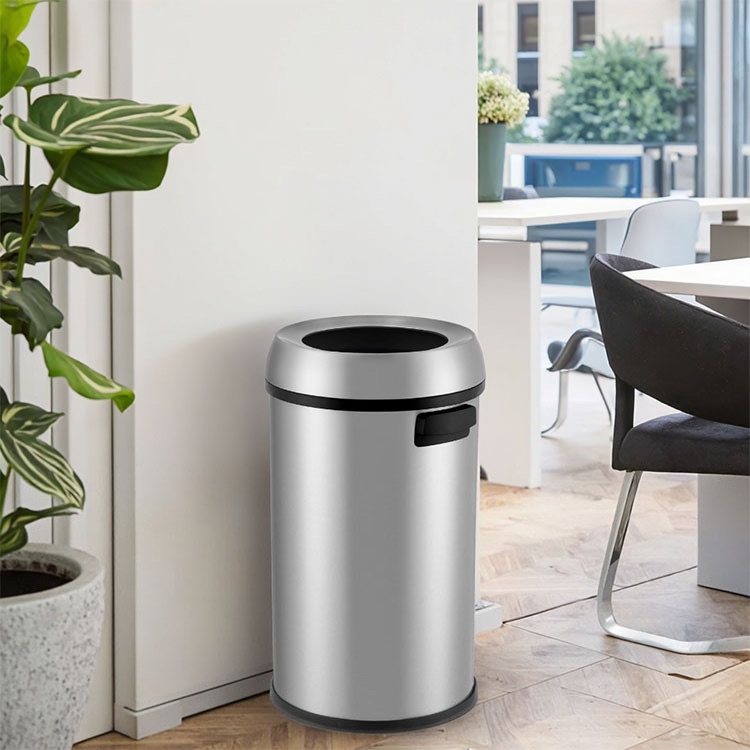
They buy cylindrical bins because the silhouette looks refined in a render, or stainless accents because the room set feels more “hospitality grade,” but they ignore bag fit, liner retention, wipe-down speed, replacement parts, and whether the bin can survive twelve months of rushed morning turns without looking beaten up. Then they act surprised when the housekeeping team hates the spec. Should they clap?
A smarter buying stack is simple: first choose the waste profile, then the capacity, then the servicing method, then the finish. Not the other way around. Start broad with the site’s indoor trash bins category, narrow into guestroom and bathroom formats, and only then move into brand-standard work through the OEM/ODM hotel equipment program. That sequence fits how buyers actually think once the initial browsing fog clears. (Facility Project Solutions)
And I would not separate sustainability from this conversation. UNEP’s Food Waste Index Report 2024 pushed the sector again to measure waste at food-service and consumer levels, while the 2023 tourism waste study showed hotel waste streams are heterogeneous enough that targeted collection design matters. In plain English: if you want better waste outcomes, stop buying anonymous bins with anonymous behavior.
FAQs
What is the best capacity for a hotel room trash bin?
The best capacity for a hotel room trash bin is usually 8 to 12 liters in the main guestroom, because that range holds the normal mix of tissues, wrappers, coffee pods, and minibar waste without making the bin visually bulky, needlessly heavy, or irritating for housekeeping to reline during fast turns. In bathrooms, I go smaller, usually 3 to 5 liters. Bigger is not better unless your stay pattern proves it.
Do hotel room trash bins need inner buckets?
An inner bucket is a removable rigid insert that makes the most sense when a hotel expects wet waste, occasional leaks, or hands-free lids, because it lets attendants lift out contents, rinse the insert, and reset the visible shell without scrubbing residue directly off the main body of the bin. For dry guestroom waste, I often skip it. For bathrooms and sensor bins, I usually keep it.
What does a liner ring do on a hotel trash bin?
A liner ring is a top frame or press ring that locks the bag in place and hides excess plastic, which matters because guests notice messy liner edges instantly and attendants lose time every time a loose bag slips into the can during a high-pressure room reset. It is the simplest way to make a bin look more intentional. It also reduces those tiny mid-shift corrections that drain labor.
Should hotels use sensor bins or pedal bins in guestrooms?
Open-top bins are usually best for dry guestroom waste, while sensor or pedal bins belong in bathrooms, premium suites, or hygiene-sensitive settings where touch reduction and odor control matter more than absolute speed, cost, battery management, and spare-parts simplicity during routine housekeeping. I would not default to sensor bins across a whole property. Too many hotels love the idea more than the maintenance reality.
Do hotels need separate recycling bins inside the room?
Separate in-room recycling bins work only when a hotel supports them with clear labels, staff training, and back-of-house sorting discipline, because a second stream in the room often looks virtuous on paper yet fails in practice when contamination rules are vague or collection routes are inconsistent. If the operation cannot keep streams clean, don’t fake it. A bad recycling setup is worse than an honest single-stream one.
If you’re writing a room standard now, be blunt with yourself: pick the bin your housekeeping team can empty fastest, keep cleanest, and present best at 10:45 a.m., not the one that photographs best at a design review. Start with the hotel room bins collection, compare it against the wider indoor trash bins range, and move into the OEM/ODM hotel equipment program if you need multi-property standardization by capacity, finish, and servicing style.