Share your requirements and target market. We’ll suggest the right configuration, sampling path, and production plan.
During business hours, We can usually provide a preliminary quote within two hours.
: workflow-based setups to improve efficiency and keep corridors tidy
: easier bag changes and maintenance, built for daily facility use
: 1–3 stream options with clear icon/label systems to reduce contamination
: materials, finishes, branding & packaging locked for consistent reorders
Your info is used only for quoting and communication.
Housekeeping Cart Cleaning and Sanitizing SOP for Hotels
Most hotels do not have a real housekeeping cart cleaning and sanitizing SOP. They have a vague wipe-down habit. This guide fixes that with a usable hotel procedure, a practical frequency model, product-selection logic, and internal routing that matches how operators actually buy and standardize carts.
Table of Contents
The cart nobody respects
Dirty carts spread.
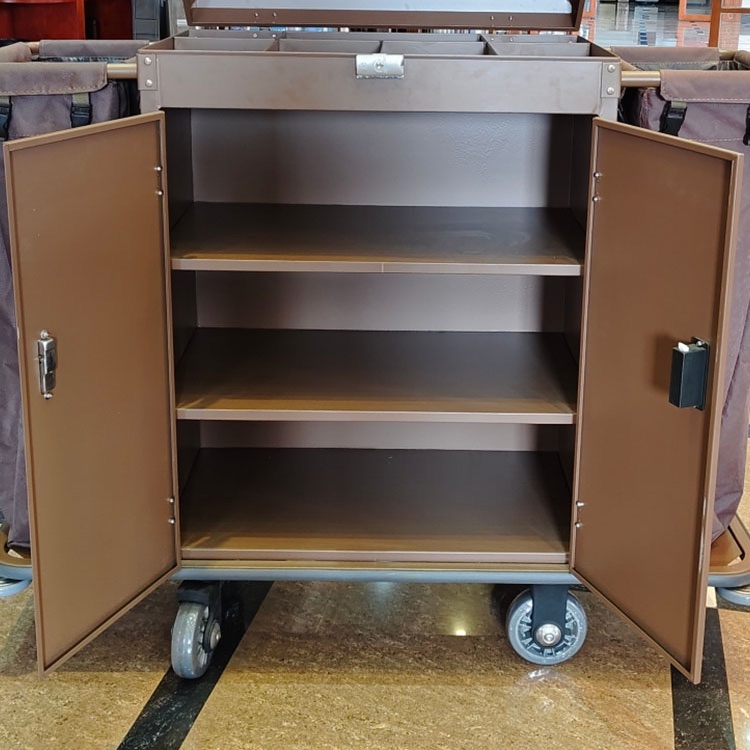
I think most hotels are cleaning the wrong thing, at the wrong time, with the wrong chemistry, while pretending the real risk lives only inside the guestroom, even though the housekeeping cart handle, top rail, bag frame, door pull, lock, and lower bumper are the one shared system every attendant touches while hustling between clean stock and dirty flow. Why are we still acting surprised when that turns into cross-contact, ugly presentation, and staff fatigue at the same time?
The labor math is not abstract. In 2024, the U.S. accommodation sector employed 422,760 maids and housekeeping cleaners, with median hourly wages of $16.40 and mean hourly wages of $17.21, according to the U.S. Bureau of Labor Statistics accommodation profile. Then, on September 1, 2024, Reuters reported that about 10,000 hotel workers struck across 24 hotels, with the union saying some teams were being asked to do the work of four people with three staff. When labor is squeezed that hard, a sloppy housekeeping cart cleaning SOP stops being a housekeeping detail and becomes an operating model failure.
Call it a housekeeping trolley cleaning procedure. Call it a maid cart cleaning checklist. I do not care what name you use. I care whether the system is real. If your site needs a better product path before the SOP even starts, your best opening move is a hotel housekeeping cart buying guide by property size, because cart width, bag placement, and storage zoning decide whether the SOP will be followed or quietly ignored.
Cleaning, sanitizing, disinfecting: stop blending them together
Words matter.
The CDC’s April 2024 facility guidance draws a line many hotel teams still blur: cleaning removes dirt and lowers the number of germs, sanitizing reduces the germs that remain, and disinfecting kills harmful germs left after cleaning; the CDC also says to clean high-touch surfaces regularly, clean other surfaces when visibly dirty, and disinfect when someone has obviously been ill. So no, “spray everything with whatever is in the bottle” is not a grown-up SOP. Isn’t that the bad habit behind half the inconsistency on guest floors?
Label beats folklore.
The EPA List N database shows just how lazy generic instructions are: institutional hard-nonporous products on the list use actives such as quaternary ammonium compounds, hydrogen peroxide (H2O2), sodium hypochlorite (NaOCl), ethanol, citric acid, and hypochlorous acid (HOCl), and the contact times vary wildly—from 15 seconds to 10 minutes depending on the product and claim. That is why I hate “wipe and move on” SOP language. If the surface does not stay wet for the label contact time, you did not disinfect it. You performed theater.
And here is the hard truth I wish more operators would say out loud: not every hotel housekeeping cart needs full disinfecting after every room. In a normal non-healthcare hotel setting, routine cleaning of high-touch cart surfaces is the baseline, while targeted disinfecting should be triggered by visible contamination, waste leaks, illness-response service, or end-of-shift policy for shared equipment. That is faster, smarter, and easier to enforce than all-day chemical fog.
The risk is not just germs
Bad carts hurt.
A 2024 PubMed systematic review found very high musculoskeletal disorder prevalence among hotel housekeepers and cleaners: low back symptoms at 53.9%, shoulders at 41.4%, and wrists or hands at 40.1%. Meanwhile, California’s Title 8, Section 3345 explicitly treats hotel housekeeping as a musculoskeletal injury problem and defines control measures to include tools, equipment, devices, work practices, and administrative controls; it also names pushing and pulling linen carts as covered housekeeping tasks. Add the CCOHS handcart guidance, which says hand carts reduce carrying strain but still create overexertion hazards when pushed, pulled, and maneuvered poorly, and the point gets obvious: a dirty, overloaded, badly organized cart is not one problem. It is three problems wearing one frame.
This is why I do not separate hygiene from ergonomics. I won’t. If attendants have to touch six different unstable surfaces, reach across mixed clean-and-dirty stock, and wrestle a heavy hotel housekeeping cart through an elevator threshold, your SOP is already broken before the disinfectant bottle comes out.
Below is the best housekeeping cart cleaning procedure for hotels I would sign my name to, because it respects CDC definitions, EPA label logic, labor reality, and the fact that attendants do not have time for bloated binder language.
Housekeeping cart sanitizing checklist by zone
Cart zone
What usually gets contaminated
Minimum action
When to disinfect
Chemistry notes
Push handle, side rails, top rim
Hands, gloves, corridor contact
Clean at start and end of shift
After illness-response room, visible soil, body-fluid risk
Hard nonporous surfaces; use label-approved quat, H2O2, HOCl, or NaOCl product
Shelf lips, top tray, amenity access points
Repeated touch during room turns
Clean routinely during shift
Disinfect if contamination is visible or stock was handled during illness event
Observe label contact time exactly
Bag frame, dirty-linen edge, waste-touch points
Soiled linen, liners, trash handling
Clean after each bag change or leak event
Disinfect after leak, odor event, or infectious-material concern
Stronger soil load means cleaning first is non-negotiable
Cabinet pulls, locks, latch points
High-touch metal/plastic points
Clean daily and when visibly soiled
Disinfect after illness-response work or shared-shift handoff
Do not skip creases and latch recesses
Lower bumpers, caster forks, wheel housings
Dust, splash, corridor grime
Clean daily; spot-clean mid-shift if needed
Disinfect when contamination splashes upward or after bio-risk event
Floor grime kills “spray-and-go” SOPs
Spray bottle holsters, tool clips
Chemical residue, glove transfer
Clean daily and after spills
Disinfect only if contamination risk is credible
Confirm surface compatibility before repeated use
The logic behind that table comes straight from CDC cleaning frequency guidance and EPA label variability, not from vendor mythology. Clean first. Disinfect when the trigger is real. Respect the dwell time. That is how to sanitize a housekeeping cart without turning the shift into a chemistry experiment.
The 7-step housekeeping cart cleaning SOP
1. Empty and stage the cart. Remove clean linen, guest amenities, chemicals, PPE, and waste before cleaning starts. Clean stock should never sit on a surface being wiped down, and I would quarantine any exposed paper goods or open amenity packs that were left near visible soil.
2. Dry-remove debris first. Pick up lint, paper scraps, amenity wrappers, and visible dust before introducing liquid. Wetting dry debris just creates dirty slurry in seams, wheel housings, and shelf lips.
3. Clean from high-touch to low-touch. Use a detergent or cleaner compatible with the cart material on handles, rails, trays, shelves, door pulls, bag frames, locks, and holsters first; move to lower panels, bumpers, and caster covers second. I like microfiber by zone, not one all-purpose rag for the whole frame.
4. Separate clean flow from dirty flow before reloading. Fresh linen belongs in the clean zone. Waste liners, dirty-linen bags, and spill tools belong in the dirty zone. If your cart design makes that separation awkward, the hardware is fighting the SOP.
5. Disinfect only where the trigger justifies it. Use an EPA-registered disinfectant for hard nonporous surfaces after illness-response service, visible contamination, bag leaks, or end-of-shift shared-equipment policy. This is where label selection matters more than brand loyalty.
6. Honor contact time. Keep the surface visibly wet for the full label dwell time—15 seconds, 30 seconds, 1 minute, 2 minutes, 5 minutes, even 10 minutes, depending on the product. I know teams hate hearing that. Chemistry still does not care.
7. Air dry, inspect, document, reload. Let surfaces dry as directed, inspect handles, corners, wheels, and bag frames, then reload the cart by zone. A one-line log with date, shift, attendant initials, and exception notes is enough. Fancy software is nice. Compliance is nicer.
Where hotels usually get this wrong
They rush.
I keep seeing the same five failures: the same cloth touches clean shelves and dirty bag frames; attendants spray disinfectant onto dust and think that counts; managers demand full-cart disinfection after every room even when the label and labor model make that nonsense; wheel housings never get touched; and nobody adjusts the cart layout even after admitting the workflow is bad. Why do operators keep blaming people for a system they designed badly?
I will say one unpopular thing. Bigger is not better. Hotels overbuy cart capacity and underbuy workflow control. Then they wonder why the cart looks dirty by 10:15 a.m., why attendants hang overflow bags off the side, and why hallway presentation collapses on the busiest floor.
What the SOP should look like in policy language
Write this down.
Use language your supervisors can enforce in ten seconds: “All housekeeping carts must be cleaned at shift start and shift end, spot-cleaned when visibly soiled, and disinfected after contamination events, illness-response service, waste leaks, or other documented high-risk exposure. High-touch points include push handles, tray edges, shelf lips, locks, pulls, bag frames, and spray holsters. Product labels govern contact time.”
That sentence alone will outperform a six-page document full of passive voice and zero timing standards.
And yes, if you are still searching for a housekeeping cart cleaning SOP template, steal that logic and tailor the chemistry list to your approved products. I would rather see a short SOP used daily than a polished manual nobody opens.
FAQs
What is a housekeeping cart cleaning and sanitizing SOP?
A housekeeping cart cleaning and sanitizing SOP is a written hotel procedure that tells attendants exactly how to remove soil, reduce microbial load, apply disinfectant when required, protect clean-versus-dirty separation, and document the result so the cart stays safe, presentable, and ready for the next room block. In practice, the document should identify zones, frequencies, triggers, approved chemicals, contact times, and inspection points. Anything less is vague advice, not an SOP.
How often should a hotel sanitize a housekeeping cart?
A hotel should clean high-touch housekeeping cart surfaces at the start and end of each shift, spot-clean them whenever they become visibly dirty, and escalate to disinfecting after illness-response service, waste leaks, body-fluid risk, or other credible contamination events rather than blindly disinfecting the entire cart after every room. That frequency lines up far better with CDC facility guidance than the common “spray everything constantly” routine.
What disinfectant is best for a hotel housekeeping cart?
The best disinfectant for a hotel housekeeping cart is an EPA-registered product approved for the cart’s hard nonporous surfaces, the property’s use case, and the hotel’s contact-time tolerance, because quats, hydrogen peroxide, sodium hypochlorite, hypochlorous acid, and alcohol-based formulas all differ in dwell time, residue profile, and compatibility. I usually prefer products operators can actually use correctly at speed. A brilliant chemistry with a 10-minute contact time on a rushed floor often loses to a simpler product that teams will apply and hold correctly.
Should hotels disinfect the housekeeping cart after every room?
Hotels should not automatically disinfect the entire housekeeping cart after every room; they should clean high-touch cart surfaces on a routine schedule, then escalate to full disinfecting after visible contamination, waste leaks, body-fluid exposure, or service in a room linked to vomiting, diarrhea, or other obvious illness. That is the cleaner operational answer and, in my view, the more honest one. It respects CDC cleaning logic and prevents burnout from pointless repetition.
Why does cart design matter so much in a sanitizing SOP?
Cart design matters because zoning, bag placement, caster quality, easy-clean surfaces, lock control, and corridor fit decide whether attendants can actually keep clean stock separated from dirty flow while still moving fast enough to survive a real hotel shift. I do not believe “training” can rescue a bad cart forever. If the geometry is wrong, the SOP will slowly die in the hallway. That is exactly why the product path should match the operational pain point, not just the budget line.
Your next steps
Run the audit.
Take five housekeeping carts from one live floor, not your cleanest sample cart from a showroom corner. Time a real wipe-down. Check the handle, shelf lip, bag frame, lock, lower bumper, and caster housings. Record whether the team cleaned first, whether the disinfectant stayed wet for the label time, and whether clean-versus-dirty zones survived the shift. Then fix the hardware that keeps breaking the process.