Share your requirements and target market. We’ll suggest the right configuration, sampling path, and production plan.
During business hours, We can usually provide a preliminary quote within two hours.
: workflow-based setups to improve efficiency and keep corridors tidy
: easier bag changes and maintenance, built for daily facility use
: 1–3 stream options with clear icon/label systems to reduce contamination
: materials, finishes, branding & packaging locked for consistent reorders
Your info is used only for quoting and communication.
How Luxury Hotels Balance Aesthetics and Cleanability in Trash Bins
A hard look at how luxury hotels choose hotel trash bins that look expensive, clean fast, hide liners, resist odor, and survive daily housekeeping without becoming design theater.
Table of Contents
The Dirty Secret: Guests Notice the Bin When Something Fails
Bins betray brands.
A hotel can spend seven figures on marble, lighting temperature, scent strategy, Frette-style linens, and custom millwork, but if the trash bin has a wrinkled liner hanging over the rim like a grocery bag in a dorm room, the whole illusion drops by two star levels in about three seconds. Why does such a small object carry so much reputational weight?
Because hotel trash bins sit at the intersection of three things executives love to discuss separately: design, sanitation, and labor. In real operations, they are inseparable.
I’ll put it bluntly: most bad hospitality waste bins are not “cheap.” They are confused. Someone chose them because they looked right in a rendering, not because a housekeeper could empty 18 rooms per hour without touching a wet liner edge, scraping a knuckle on a hinge, or fighting a suction-sealed bag at 9:40 a.m.
That is why the September 2024 Ecolab Hotel Cleanliness Consumer Survey matters. Room cleanliness ranked as the top reason guests leave both negative reviews and positive reviews; the same survey showed 63% of guests tied negative reviews to room cleanliness, 58% to odors, and 57% to pests, while 53% preferred hotels using disinfectant cleaners that kill bacteria and viruses over bio-based products that do not disinfect.
That is not a trash-bin statistic on the surface. But it is, operationally. Odor. Residue. Pest pressure. Visible liner slop. Sticky bathroom waste. Public-area overflow. These are the quiet failures that turn “boutique” into “poorly run.”
Luxury Hotel Trash Bins Are Furniture Until Housekeeping Touches Them
The best luxury hotel trash bins do something difficult: they disappear visually, then perform brutally.
A lobby bin should read like architectural hardware, not a municipal object. A guestroom bin should match the interior palette without pretending to be a decorative basket. A bathroom pedal bin should feel quiet, hygienic, and stable. A public-area waste station should guide behavior without shouting “cafeteria.”
But cleanability is where the serious buyers separate themselves from catalog shoppers.
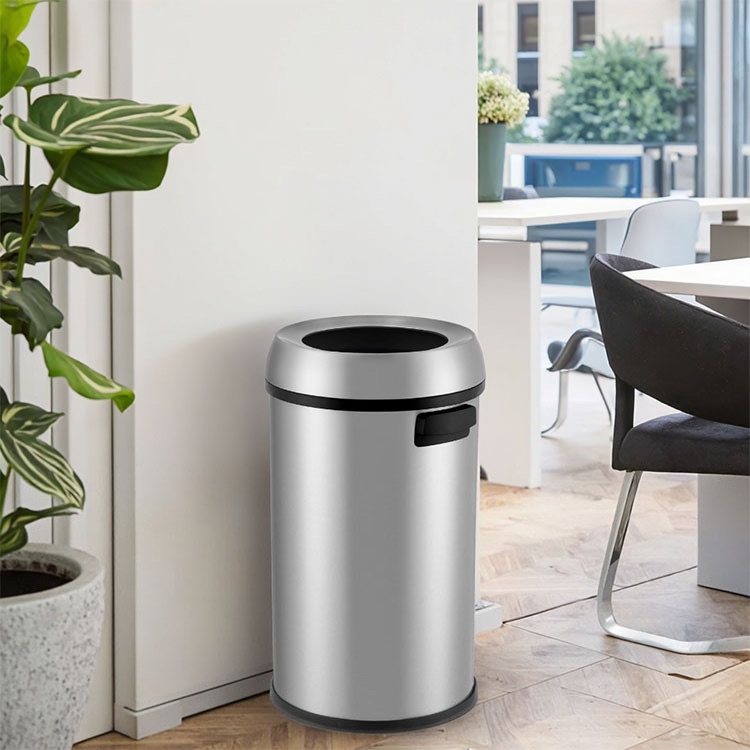
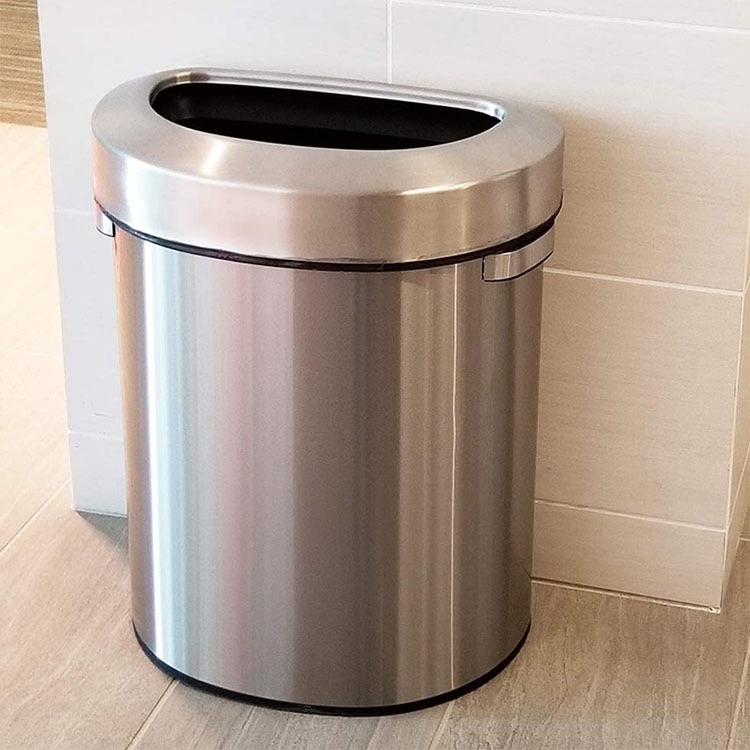
The luxury open-top lobby trash can is a good example of where this category is going: clean architectural lines, open access, concealed liner options, and smooth surfaces that staff can wipe down quickly between traffic peaks. That mix matters more than a glossy finish alone.
Here is the hard truth: some “designer commercial trash cans” are sanitation liabilities wearing a good suit. Deep grooves, stitched leatherette, raw wood interiors, brushed finishes that show every fingerprint, and lids with tiny hinge cavities all create the same problem. They photograph well. They clean badly.
And hotels do not operate in photographs.
They operate in checkout windows, banquet breaks, elevator spills, wet umbrellas, minibar wrappers, and bathroom waste that nobody on the design committee wants to discuss.
The Cleanability Math: Seconds Become Payroll
A trash bin that saves 12 seconds per room sounds trivial. It is not.
If a 300-room luxury hotel turns 210 rooms on a heavy checkout day, a 12-second savings equals 42 minutes of labor on room bins alone. Add bathrooms, corridor bins, lobby receptacles, meeting rooms, breakfast areas, and back-of-house sorting points, and suddenly “easy-to-clean trash bins” become a staffing strategy.
The AHLA May 2024 hotel workforce survey reported that 76% of surveyed hotels had staffing shortages, 79% could not fill open roles, and housekeeping was the most strained department, with 50% ranking it as their top hiring need.
So, yes, I care about liner rings.
A hidden liner ring is not a cosmetic flourish. It prevents bag overhang, speeds relining, and protects the guest-facing look. A removable inner bucket is not “extra.” It lets staff rinse, disinfect, and reset a bin without wrestling the whole shell. A rounded internal corner is not a detail. It is the difference between a fast wipe and a residue trap.
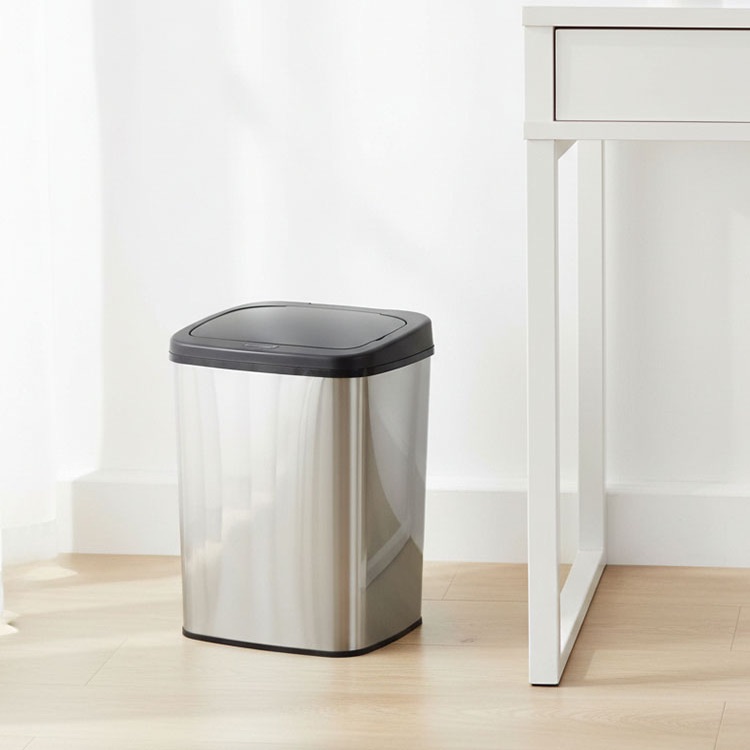
The pedal bin for hotel bathrooms in stainless steel fits this logic: hands-free use, a removable inner bucket, a liner-lock rim, and a quiet-close lid. That is the kind of boring specification that makes luxury feel effortless.
Boring wins here.
Where Aesthetics and Cleanability Actually Collide
Luxury hotels do not need ugly bins to stay clean. They need honest bins.
The collision usually happens in five places: finish, form, access, liner control, and material porosity. Procurement teams should stop asking, “Does it match the room?” and start asking, “What does it look like after 500 liner changes, 300 disinfectant wipes, and one guest pouring coffee into it?”
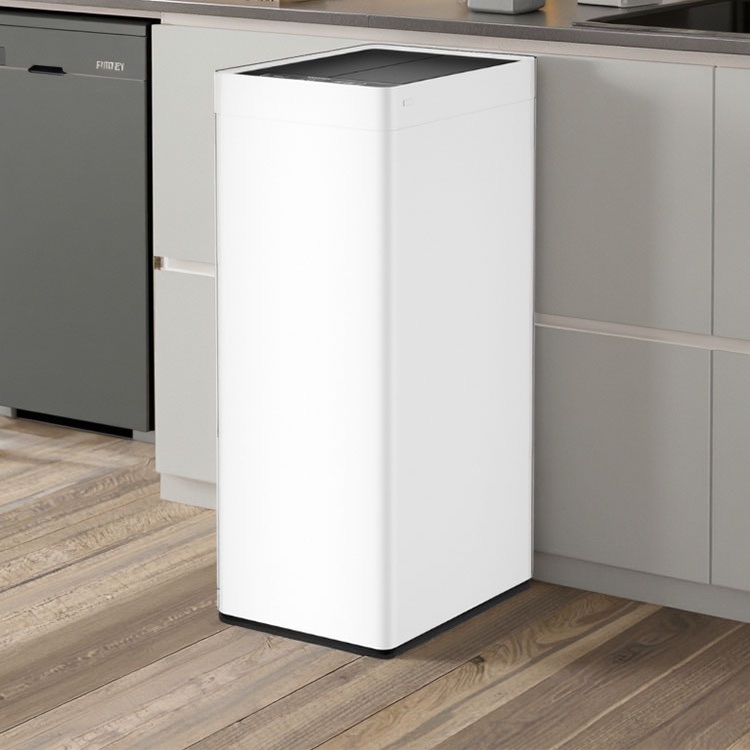
Modular sorting station, service doors, 60–120L capacity
Mixed random bins from different vendors
This is why I like using hotel room bins as their own category, not as an afterthought under generic office supplies. Guestroom waste is a different beast from lobby waste. Bathroom waste is different again. Banquet waste, corridor waste, and sorting waste each need their own logic.
A luxury brand that uses the same bin strategy everywhere is not being efficient. It is being lazy.
The Materials Fight: Stainless Steel, ABS, Leatherette, and the Myth of “Premium”
Let’s talk materials without the sales perfume.
304 stainless steel works because it is nonporous, familiar to cleaning teams, and compatible with many routine cleaning workflows when used correctly. Powder-coated steel works when the coating is durable, smooth, and chip-resistant. ABS and HDPE can work beautifully in guestrooms because they resist moisture, reduce weight, and allow soft shaping. Real wood? Dangerous unless it is sealed, protected, and kept away from wet waste. Leatherette? I am skeptical.
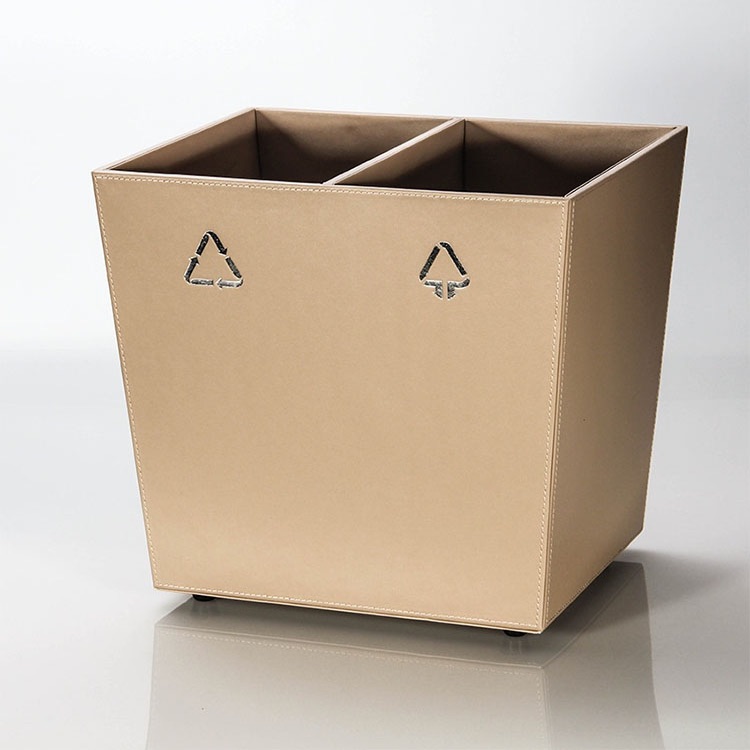
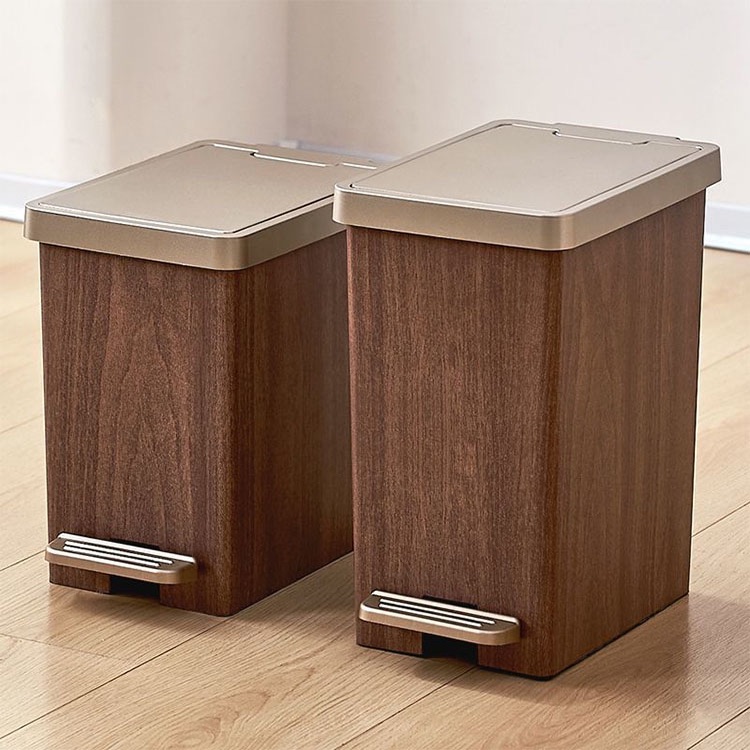
Yes, leatherette hotel trash bins can look expensive in a guestroom. But seams are the problem. Once a seam becomes a residue line, it stops being luxury and starts being a maintenance memo.
The CDC’s April 2024 cleaning guidance says high-touch surfaces should be cleaned regularly, surfaces should be cleaned before sanitizing or disinfecting, and EPA-registered disinfecting products should be used for the specific germ when disinfection is needed.
That guidance was written broadly for facilities, not specifically for hotels, but the operational principle translates cleanly: if a bin has hard-to-access seams, porous trim, or a finish that degrades under routine chemicals, the design has already failed.
Here is my preferred hotel trash bin material hierarchy:
Material / Finish
Best Use
Strength
Weakness
My Verdict
304 Stainless Steel
Bathrooms, public areas, offices
Durable, nonporous, professional
Fingerprints, water spots
Strong choice if finish is controlled
Powder-Coated Steel
Lobby, corridors, outdoor-adjacent areas
Color control, durable shell
Chips reveal damage
Good for brand-matched programs
ABS / HDPE
Guestrooms, inner buckets
Lightweight, washable, cost-controlled
Can look cheap if poorly molded
Excellent when hidden or well-designed
Sealed Wood Veneer
Select luxury rooms
Warm visual tone
Moisture and edge damage
Use carefully, never as raw interior
Leatherette / Wrapped Surface
Boutique guestrooms
Soft residential look
Seams, odor, cleaning limits
High-risk unless removable and protected
Stone / Marble Effect
Lobby statement bins
Premium visual cue
Weight, cracking, cost
Prefer stone-look over real stone for serviceability
The smartest luxury hotels are not anti-design. They are anti-friction.
Waste Sorting Has Entered the Luxury Conversation
A few years ago, recycling bins in luxury hotels were often treated like necessary ugliness. That is changing.
The Green Lodging Trends Report 2024 benchmarked 20,000 hotels across 50 countries and included 80 sustainability best-practice questions, which tells us something important: waste behavior is no longer a back-office topic. It is part of brand proof.
But I have a hard opinion here: most hotel recycling fails because the bin system is designed for the sustainability slide deck, not for guests holding a coffee cup, a receipt, and a half-second of attention.
A good 2-stream waste sorting bin for hotels solves that with restricted openings, clear labels, removable liners, and a service door. That is not just sustainability. That is behavioral design.
The goal is not to make the guest think deeply. The goal is to make the correct disposal action feel obvious.
For multi-property groups, the sustainable hotel supplies program angle is especially useful because consistency beats novelty. Same icons. Same aperture shapes. Same color logic. Same liner access. Same staff training. Different property, same operating language.
Luxury hates visual noise, but waste sorting needs visual instruction. The compromise is precision: icon-first signage, restrained color bands, matte finishes, and placement where disposal decisions actually happen.
Labor Pressure Is Changing the Trash Bin Spec
Hotel bins are now part of the labor story, whether owners admit it or not.
That may feel far away from a wastebasket. It is not.
Workload is built from tiny actions repeated thousands of times. Remove liner. Tie liner. Wipe rim. Replace liner. Hide liner. Clean splash. Move bin. Replace bin. Repeat until the body complains.
So when a purchasing manager asks me whether a removable bucket is worth the added cost, I hear a different question: “Do we want to push small inefficiencies onto the lowest-paid people in the building?”
My answer is no.
For luxury hotels, the best trash bins for luxury hotels are not the most ornate. They are the ones that reduce touchpoints, keep the room looking composed, and shorten the reset cycle without creating noise, odor, or visual compromise.
This is also where custom recycling projects become more than branding exercises. Customization should not mean “put our logo on it.” It should mean matching capacity, aperture, liner access, signage language, finish durability, and replacement-part logic to the property’s actual waste stream.
How to Choose Cleanable Trash Bins for Hotels Without Getting Fooled
Start with the waste stream, not the finish sample.
A luxury hotel spec should answer these questions before any designer picks champagne bronze, matte black, brushed stainless, faux stone, or warm gray:
1. What waste actually goes into this bin?
Guestroom dry waste is different from bathroom waste. Lobby waste includes cups, tissues, wrappers, receipts, and sometimes liquids. Meeting-room waste may include food. Pool-area waste brings moisture. Outdoor-adjacent waste brings dirt and pests.
A bin chosen without waste-stream mapping is guesswork.
2. How fast can staff empty and reset it?
If liner removal requires tugging, twisting, or lifting a heavy decorative shell, the bin is wrong. If the liner hangs outside the rim, the bin is also wrong. A concealed liner ring, removable bucket, or service door usually pays for itself in labor consistency.
3. Can it survive the cleaning chemistry?
Hotels may use quaternary ammonium compounds, hydrogen peroxide formulations, alcohol-based wipes, sodium hypochlorite solutions, neutral detergents, or pH-balanced cleaners depending on zone and protocol. The bin finish should not haze, pit, rust, peel, swell, or trap residue after repeated cleaning.
4. Does the opening match guest behavior?
Open tops reduce touchpoints in lobbies. Pedal lids work in bathrooms. Swing lids can hide waste but create contact and jam points. Sensor lids look modern but add batteries, failure points, and service complexity. Use them only where the hygiene story justifies the maintenance.
5. Is the bin part of a family?
A hotel should avoid a random collection of one-off receptacles. A coordinated family of hotel waste receptacles across guestrooms, bathrooms, corridors, lobby, offices, and sorting areas creates visual order and replacement simplicity.
That is where OEM and private-label thinking helps. Not because every bin must be custom, but because every bin should belong to a system.
FAQs
What makes hotel trash bins different from regular commercial trash cans?
Luxury hotel trash bins should be specified as cleanable interior equipment: smooth, nonporous containers with concealed liners, stable bases, quiet access, and finishes that match the property’s design language while surviving daily exposure to trash liquids, disinfectants, gloved hands, luggage bumps, and rapid housekeeping resets.
Regular commercial trash cans are often judged by capacity and durability alone. Hotels need more. A bin has to protect guest perception, housekeeping speed, odor control, brand consistency, and room photography. In luxury environments, exposed liners, loud lids, unstable bases, and hard-to-clean seams are not small defects; they are visible service failures.
What is the best material for luxury hotel room trash cans?
The best material for luxury hotel room trash cans is usually 304 stainless steel, powder-coated steel, or high-grade ABS/HDPE, because these materials tolerate frequent wiping, resist odor absorption, and can be manufactured with hidden liner rings, removable buckets, and softened edges for guest-facing rooms.
For guestrooms, I would prioritize smooth interiors and liner concealment over heavy decorative skins. For bathrooms, stainless steel or washable plastic inner buckets make more sense. For lobby bins, powder-coated steel, brushed stainless, or stone-look finishes can create a premium feel without sacrificing daily serviceability.
How do hotels choose cleanable trash bins without ruining the interior design?
Hotels can choose cleanable trash bins by auditing waste volume, room category, finish palette, disinfectant chemistry, liner system, opening style, and service time per unit, then rejecting any design with fabric, deep seams, loose trim, porous inserts, unstable bases, or inaccessible corners.
The design team should treat the bin like door hardware or bathroom fixtures: visible, touched, cleaned, and judged. That means matching finish families, using quiet mechanisms, hiding liners, and testing the bin with real housekeeping staff before a full rollout. A pretty bin that fails the cleaning cart test is not a luxury product.
Are open-top trash bins better for luxury hotel lobbies?
Open-top lobby bins look cleaner when traffic is high, because guests can dispose of waste without touching a lid, but covered or pedal bins are better in bathrooms, food-adjacent zones, and back-of-house spaces where odor control, splash protection, or hand hygiene matters.
The open-top format works when the aperture is wide, the liner is concealed, and capacity matches traffic. The mistake is choosing a tiny sculptural lobby bin that overflows during check-in or coffee service. In public zones, capacity is part of aesthetics; overflow is the ugliest design feature in the building.
Your Next Step: Audit the Bin Before It Embarrasses the Brand
Do not buy hotel trash bins from a mood board.
Walk the property. Count the rooms. Watch housekeeping. Check elevator banks at 10 a.m., breakfast exits at 9:15 a.m., meeting foyers during coffee breaks, and lobby seating after checkout. Then specify bins by zone: guestroom, bathroom, lobby, corridor, meeting area, office, outdoor, and back-of-house.
If you are planning a renovation, opening, or multi-property standard, start with a cleanable family of bins rather than one decorative hero piece. Review luxury lobby trash cans, hotel room bins, and hotel waste sorting systems together, then build a spec that protects the guest experience and the people who reset it every day.