Share your requirements and target market. We’ll suggest the right configuration, sampling path, and production plan.
During business hours, We can usually provide a preliminary quote within two hours.
: workflow-based setups to improve efficiency and keep corridors tidy
: easier bag changes and maintenance, built for daily facility use
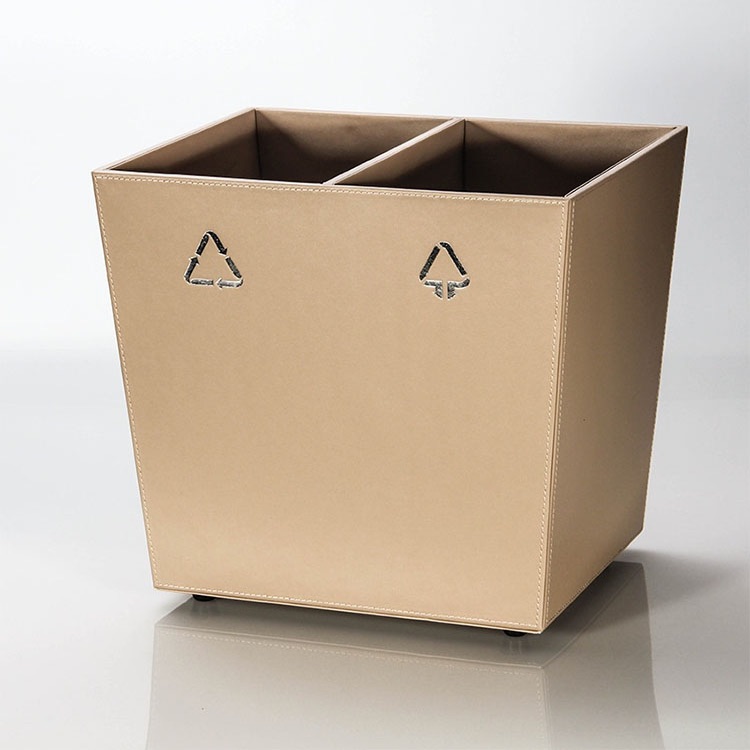
: 1–3 stream options with clear icon/label systems to reduce contamination
: materials, finishes, branding & packaging locked for consistent reorders
Your info is used only for quoting and communication.
How to Calculate Housekeeping Cart Total Cost of Ownership
Most buyers still price a housekeeping cart like a piece of hallway furniture. That is a mistake. The real cost sits in labor drag, caster failure, wall damage, compliance exposure, and how fast a bad cart burns out your team.
Table of Contents
Stop pricing the cart like furniture
Cheap carts lie.
I keep seeing procurement teams obsess over a unit price that looks tidy on a spreadsheet, then quietly absorb the ugly costs that follow for three or four years: extra push force in long corridors, wasted reaches for towels and amenities, slower elevator entries, wall and door-frame impacts, messy clean-versus-soiled separation, and earlier replacement because somebody bought a corridor tool as if it were lobby décor. Why are we still pretending the invoice is the whole story?
The labor math alone should end that fantasy. The U.S. Bureau of Labor Statistics said leisure and hospitality employers were paying an average of $19.90 per hour in total compensation in December 2024, with service occupations at $18.00 per hour, while May 2024 wage data put maids and housekeeping cleaners at an annual mean wage of $36,180. Meanwhile, Reuters reported in 2024 that hotel staffing per occupied room was down 13% since 2019. In plain English, every extra minute a bad cart creates now lands on a thinner labor base that already costs more. BLS compensation data and BLS May 2024 wage data make that hard to ignore, and so does Reuters’ staffing report.
My rule is blunt: a housekeeping cart is a labor multiplier with wheels. Buy the wrong one, and you do not save money. You just move cost out of capex and hide it in payroll, maintenance, and burnout.
The housekeeping cart TCO formula I would actually trust
Use simple math.
A housekeeping cart total cost of ownership model should include every dollar the cart triggers from day one through replacement: acquisition, freight, setup, training, labor drag, maintenance, facility damage, downtime, and end-of-life replacement reserve. Why make this mystical when it is really just disciplined accounting?
Housekeeping Cart TCO
= Purchase Price
+ Freight / Duties / Assembly
+ Training / rollout cost
+ Annual labor drag
+ Annual maintenance and parts
+ Annual corridor / wall / door damage
+ Compliance or injury-related risk cost
+ Replacement reserve
- Residual value
The line item most buyers bury is annual labor drag:
Annual labor drag
= (minutes lost per shift ÷ 60)
× loaded hourly labor cost
× operating shifts per year
And yes, I would annualize replacement instead of pretending lifespan is somebody else’s problem:
Replacement reserve
= (net acquisition cost - residual value)
÷ expected service life
× years in the model
Here is the table I use before I let anyone say the phrase “best hotel housekeeping cart for long-term value.”
Cost bucket
What to measure
What buyers usually miss
Why it matters
Acquisition
Unit price, freight, duties, assembly
Freight and setup are rarely zero
Cheap ex-factory pricing gets inflated fast
Labor drag
Minutes lost per shift, turns per day, loaded labor rate
A two-year cart is not cheaper than a four-year cart
Replacement timing changes the whole TCO picture
Where the money really leaks out
Labor drag is the main event
Minutes matter.
When one cart adds even 6 to 8 wasted minutes per shift through poor steering, bad shelf logic, or constant re-stocking trips, the annual cost stacks up much faster than most buyers admit, especially when labor costs in leisure and hospitality are already elevated and staffing density has not recovered to 2019 levels. Who exactly thinks that friction is free?
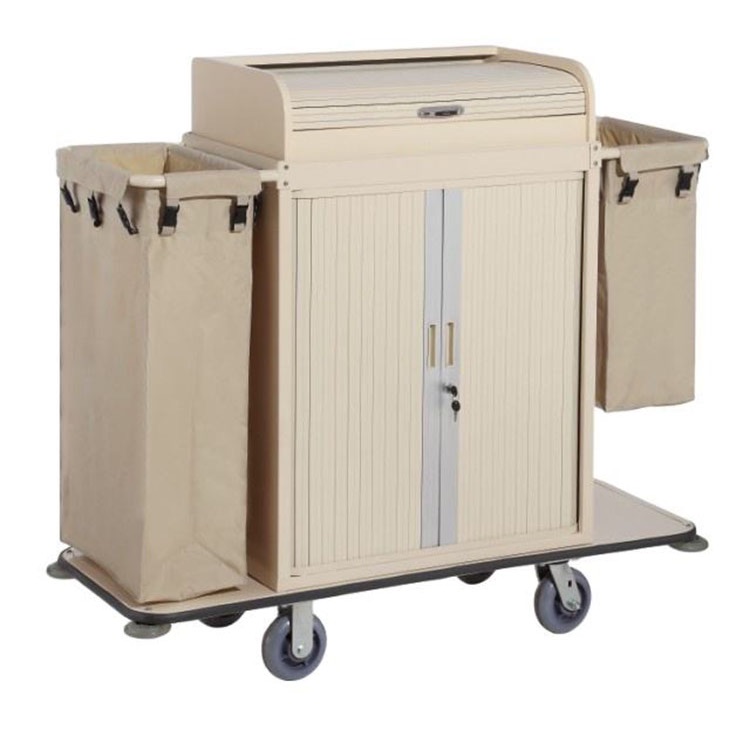
This is why I would send readers first into the housekeeping cart category, then into route-specific options like the Compact Maid Cart with Linen Storage for tighter floor plates or the Hotel Housekeeping Cart with Bag Holder where dirty-versus-clean separation matters more than pretty panels. Facility Project Solutions repeatedly frames these products around non-marking casters, protective bumpers, zoned compartments, adjustable shelving, and corridor/elevator maneuverability, which is exactly the language serious buyers should care about.
Injury risk is not a soft variable
Bodies keep score.
A 2024 systematic review found musculoskeletal disorders were highly prevalent among hotel housekeepers and cleaners, with low-back symptoms at 53.9%, shoulders at 41.4%, and wrists or hands at 40.1%. California’s current hotel-housekeeping rule, T8CCR §3345, exists specifically to control musculoskeletal risk and explicitly treats tools, equipment, devices, work practices, and administrative controls as hazard controls; it also lists loading, unloading, pushing, and pulling linen carts as housekeeping tasks. That is not abstract compliance language. That is procurement language wearing legal clothes. The 2024 systematic review and California Code of Regulations §3345 say it plainly.
OSHA is not subtle on cart handling either: pushing generally takes less effort than pulling, handle height matters, and loads that require higher pushing force raise injury risk. UCLA’s ergonomics guidance for custodial and housekeeping equipment says selection criteria should be based on direct observation, work-environment analysis, user feedback, pilot testing, doorway fit, flooring, maintenance access, and handle height; its cart criteria call out 36- to 38-inch handle height and even a motorized tug adapter as a preferred option for some use cases. That is why I do not treat wheel quality, handle geometry, or shelf access as cosmetic. OSHA’s pushing and pulling guidance and UCLA’s custodial equipment criteria back that up.
Maintenance and wall damage are the silent tax
Walls remember everything.
The site’s own product framing makes the right point, even if many buyers still ignore it: non-marking casters, impact-absorbing bumpers, easy-clean surfaces, and smoother steering are not “nice features.” They are TCO controls. The Housekeeping Cart with Lockable Cabinet Doors emphasizes secure storage, non-marking casters, bumpers, and easy-clean surfaces for guest-facing routes, while the Large Housekeeping Trolley with Multiple Shelves pushes shelf zoning, stability, and corner protection for larger operations. That tells me the site understands the real question: how many unnecessary hits, wipes, and returns will this cart create over its life?
I have a strong view here. Buyers who strip bumpers and downgrade casters to save a few percentage points are not being disciplined. They are just transferring cost to engineering, housekeeping supervisors, and the paint budget.
A sample 3-year TCO model that exposes the lie
Run the numbers.
Below is an illustrative example, not a market quote, built to show how a lower purchase price can still lose on total cost. Does this look familiar?
3-year cost element
Budget maid cart
Better-spec housekeeping cart
Purchase + freight + setup
$1,250
$1,800
Labor drag (8 min/day vs 2 min/day at $18/hr)
$2,628
$657
Maintenance and parts
$900
$360
Wall / door / corridor damage
$450
$120
Replacement reserve
$625
$450
Estimated 3-year TCO
$5,853
$3,387
That is the entire argument.
A cart can be $550 cheaper on day one and still cost roughly $2,466 more over three years if it burns labor, damages finishes, and dies early. I do not know how many more times this industry needs to learn the same lesson before it stops calling low upfront cost “value.”
Match the cart to the route, not the catalog photo
Route logic first.
A 90-room boutique hotel with narrow corridors, shallow elevators, and frequent guest visibility does not need the same cart profile as a 320-room resort pushing bulk linen and amenities across long floor runs, yet buyers keep trying to standardize by appearance instead of route physics. Why do so many teams trust PDFs more than door frames?
My take is simple: the best hotel housekeeping cart for long-term value is not the most expensive unit or the cheapest unit. It is the cart whose footprint, wheel behavior, shelf logic, bag separation, and service life fit the building you actually operate.
FAQs
What is housekeeping cart total cost of ownership?
Housekeeping cart total cost of ownership is the full multi-year cost of buying, using, maintaining, damaging around, and replacing a housekeeping cart, including labor drag, repairs, compliance exposure, and facility impacts rather than just the initial purchase price.
Most hotels miss labor drag first. I would never approve a cart without modeling minutes lost per shift, expected parts replacement, and a realistic replacement cycle.
How do I calculate housekeeping cart TCO?
To calculate housekeeping cart TCO, add acquisition, freight, assembly, training, annual labor drag, annual maintenance, annual damage cost, and replacement reserve, then subtract any residual value, using the cart’s real operating route and service life instead of catalog assumptions.
The labor-drag line is usually where the truth shows up. Multiply wasted minutes per shift by loaded hourly labor cost and annual operating shifts, and the “cheap” cart often stops looking cheap.
What is usually the biggest hidden cost in hotel housekeeping cart cost?
The biggest hidden cost in hotel housekeeping cart cost is usually recurring labor loss from poor steering, weak shelf zoning, bad clean-versus-soiled separation, and repeated refill trips, because those frictions happen every shift and compound faster than most maintenance invoices.
That is why I care more about route performance than finish color. Labor repeats. Paint scratches do not.
Does housekeeping cart maintenance cost really change TCO that much?
Housekeeping cart maintenance cost changes TCO materially because casters, bumpers, handles, shelves, and door hardware fail at different rates, and every failure adds both part cost and operating disruption while shortening the useful service life of the cart.
I have no patience for buyers who model parts but ignore downtime. A broken caster is not just a wheel invoice. It is a slower shift.
How long is normal housekeeping cart lifespan?
Housekeeping cart lifespan is the period a cart can stay operational, safe, and economically sensible before replacement, which depends on build quality, load profile, wheel condition, corridor surfaces, cleaning chemistry exposure, and whether the cart is being pushed through guest floors daily or occasional back-of-house routes.
Do not ask for a universal number. Ask how your building treats wheels, bumpers, handles, and doors over 24 to 48 months.