Share your requirements and target market. We’ll suggest the right configuration, sampling path, and production plan.
During business hours, We can usually provide a preliminary quote within two hours.
: workflow-based setups to improve efficiency and keep corridors tidy
: easier bag changes and maintenance, built for daily facility use
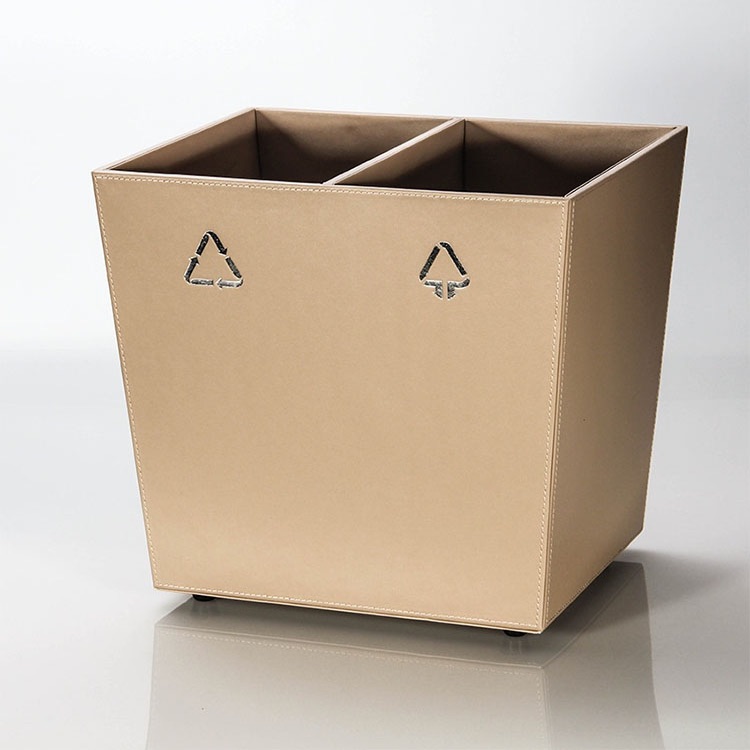
: 1–3 stream options with clear icon/label systems to reduce contamination
: materials, finishes, branding & packaging locked for consistent reorders
Your info is used only for quoting and communication.
How to Choose a Housekeeping Cart with Protective Bumpers
Most buyers treat bumpers like trim. I think that is backwards. In hotels, a housekeeping cart with protective bumpers is not decoration; it is part wall protection, part labor control, part noise management, and, in some jurisdictions, part risk management.
Bad carts bruise.
I have watched buyers spend real money on finish color, cabinet symmetry, and whatever looked “premium” in a showroom, then act stunned when the cart starts kissing door frames, clipping elevator jambs, and rattling through guest corridors by week three, because the cart they bought was built for a brochure, not a building. Why are we still pretending protective bumpers are a cosmetic extra?
Table of Contents
Protective bumpers separate real equipment from showroom props
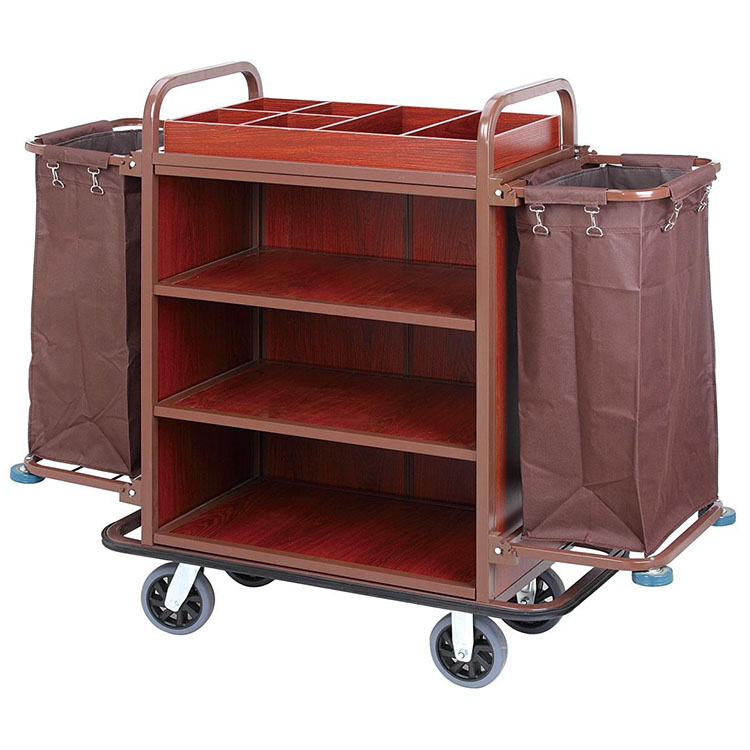
A housekeeping cart with protective bumpers is a working tool built for repeated contact, tight turns, mixed flooring, elevator thresholds, and guest-facing traffic, so the bumper system needs to do more than soften one accidental hit. It has to absorb daily abuse without turning the cart into a bulky, slow, snag-prone mess.
Here is the hard truth I wish more procurement teams would say out loud: if your cart runs on guest floors, bumpers are not optional. They are part of the operating spec.
And the labor backdrop is not gentle. Reuters’ September 2024 report on the hotel worker strike said more than 10,000 U.S. hotel workers walked out, with staff citing pay, staffing cuts, and fair workloads; Reuters also reported that housekeeping and restaurant services were disrupted at some hotels during the action. That matters because every bad turn, every awkward push, every wall strike lands on a team already working under pressure.
And if you think this is just a “soft” guest-experience issue, it is not. The 2024 BLS accommodation data shows the U.S. accommodation sector at 2.3 total recordable cases and 1.2 cases involving days away from work per 100 full-time workers in 2024, while the 2024 PubMed-indexed systematic review on hotel housekeepers and cleaners found pooled musculoskeletal disorder prevalence at 53.9% for low back, 41.4% for shoulders, and 40.1% for wrists and hands. I do not read that and conclude “buy the cheapest trolley.”
The buying mistake I see over and over
Pretty sells.
But a hotel housekeeping cart is not furniture, and the second you buy it like furniture, you start making bad decisions: small hard casters, decorative corner pads instead of full contact protection, high shelves that raise center of gravity, narrow handles that encourage bad pushing posture, and token bumpers that protect nothing except the supplier’s margin. Should a bumper that only covers two corners really count as protection?
I usually judge a hotel housekeeping cart by five questions before I care about finish.
1. Where does it make contact?
If the answer is “mostly corners,” fine, use reinforced corner bumpers. If the cart regularly passes through narrow corridors, room-door swing zones, service alcoves, and elevators, I want wrap-around or near full-perimeter protection in TPE or EPDM, not tiny decorative pads.
2. What happens under load?
An empty cart glides. A loaded one tells the truth. Linens, amenities, chemicals, and waste change turning behavior fast, and this is where a cleaning cart with bumpers either feels controlled or feels like a rolling liability.
3. Is the bumper proud enough to protect, but not so proud it snags?
That balance matters. Too little projection and the wall still takes the hit. Too much and the bumper becomes its own problem around door hardware and corners.
4. What is the caster package?
I usually trust bumpers more when the cart also has 125 mm non-marking casters. Why? Because small hard wheels create the kind of chatter and directional instability that guarantee more wall contact.
5. Can staff actually stage clean and dirty streams properly?
A janitorial cart with bumpers that still forces clean linen beside waste is not well designed. It is just padded.
The spec sheet I would actually approve
I am not interested in vague claims like “hotel grade” or “durable for hospitality.” Those phrases have hidden a lot of junk over the years. So here is the table I would use.
Component
Weak spec
Better spec
Why I care
Bumper system
Small corner pads only
Full-corner coverage or wrap-around TPE/EPDM bumper
Less wall strike damage, better forgiveness in tight turns
Casters
75–100 mm hard wheels
125 mm non-marking soft-tread casters
Quieter travel, lower push effort, smoother elevator transitions
Storage layout
Open shelves with no zoning
Zoned shelves for linen, amenities, chemicals, and waste
Lockable cabinet doors for chemicals or premium supplies
Better guest-floor presentation and safer storage
Bag module
Loose bag frame
Integrated bag holder with stable separation from clean stock
Better waste or linen control without contaminating supplies
Shelf surface
Bare metal or laminate
3 mm EVA liners or anti-rattle inserts
Less bottle clink, less noise, less item migration
Cart width/profile
Oversized body
Corridor-aware profile sized for elevator and doorway clearance
Fewer strikes, easier parking outside rooms
That is the difference between a commercial housekeeping cart with bumpers and a cart that merely happens to have some rubber on it.
What Facility Project Solutions already gets right in its internal structure
This part matters.
I went through the site, and the internal-link pattern should lean into operational use cases, not generic product dumping. The strongest hub is the housekeeping carts collection, because it already clusters the topic around actual hotel use rather than abstract catalog taxonomy. From there, the best contextual path is into the compact maid cart with linen storage, the housekeeping cart with lockable cabinet doors, and the hotel housekeeping cart with bag holder. Those pages consistently emphasize non-marking casters, protective bumpers, zoned storage, corridor movement, and elevator handling, which is exactly the semantic cluster this article should reinforce.
I would also route readers into the collapsible linen collection cart with casters and the OEM/ODM hotel cart engineering page. Why? Because once a buyer understands bumpers, the next questions are storage discipline, fold-flat staging, corridor footprint, and whether the supplier can standardize the spec across multiple properties. That is where serious buyers go next, and the site already has the bones for that journey.
And the site’s own low-noise housekeeping cart guide makes the internal cluster even stronger, because it ties bumpers to quieter travel, better wheel packages, and guest-corridor performance instead of treating bumpers as isolated trim. That is smart. Quiet carts with good bumpers are not different topics. They are the same buying decision seen from two angles.
The compliance angle buyers ignore until legal cares
This is where the conversation gets less comfortable.
California’s Title 8, Section 3345 is not a cart-spec document, but it is very clear about the work reality: hotel housekeeping tasks include pushing and pulling linen carts, collecting and disposing of trash, and moving furniture, and covered employers must establish and maintain a written musculoskeletal injury prevention program for housekeeping hazards. So when I hear someone say bumper choice is “just preference,” I hear someone who has not thought through the chain reaction from bad mobility to force, impact, awkward handling, and preventable wear on people and property.
My view is blunt: protective bumpers matter most when they are paired with sane cart geometry. A badly balanced cart with excellent bumpers is still a bad cart. A low, stable, zoned cart with good bumpers and decent casters is where the buying gets intelligent.
What I would choose by property type
For limited-service hotels, I usually favor a compact housekeeping cart with protective bumpers, 125 mm non-marking casters, a contained bag holder, and tight corridor profile.
For full-service properties, I like a hotel housekeeping cart with either lockable cabinets or controlled open-access zoning, because visual presentation matters more when the cart lives in guest sightlines.
For resorts or mixed-use properties, I lean toward modularity. Loads vary. Routes vary. Teams vary. A fixed spec can age badly.
For multi-property groups, I would not buy ad hoc at all. I would push the supplier toward a standard bumper material, fixed caster diameter, approved shelf map, and one repeatable frame family through an OEM program.
FAQs
What is a housekeeping cart with protective bumpers?
A housekeeping cart with protective bumpers is a service trolley designed to transport linens, amenities, chemicals, tools, and waste while using impact-absorbing contact zones along corners or the cart perimeter to reduce wall strikes, soften noise, and improve maneuvering safety during daily guestroom servicing.
In plain terms, it is a hotel housekeeping cart built to survive real corridors instead of looking good in a product photo.
How do protective bumpers help a hotel housekeeping cart?
Protective bumpers help a hotel housekeeping cart by absorbing repeated contact with walls, door frames, baseboards, elevator interiors, and furniture edges, which lowers visible property wear, reduces impact noise, and gives staff a margin of error when moving quickly through narrow guest-floor traffic paths.
I think the real value is forgiveness. Hotels run on rushed movement, not perfect movement.
What makes the best housekeeping cart for hotels?
The best housekeeping cart for hotels is a stable, corridor-sized unit with non-marking 125 mm casters, full-corner or wrap-around bumpers, zoned storage for clean and dirty workflows, easy-clean surfaces, and a layout that keeps high-use items reachable without making the cart top-heavy or noisy.
The prettiest cart is not always the best one. The most controlled cart usually is.
How do I choose a commercial housekeeping cart with bumpers?
Choosing a commercial housekeeping cart with bumpers means matching bumper coverage, caster size, storage zoning, bag-holder design, cabinet security, and overall cart footprint to your real building conditions, especially corridor width, elevator clearances, staff load, room-turn volume, and whether the cart operates in guest view.
I would always test a loaded cart, not an empty one. Empty demos lie.
Your Next Move
Do this next.
Ask the supplier for a loaded cart demo through a real doorway and a real elevator threshold. Ask for bumper material, bumper projection, caster diameter, wheel tread type, and the full cart width at its widest contact point. And ask one impolite question: “Show me where this cart hits first when my staff is rushing.”