Share your requirements and target market. We’ll suggest the right configuration, sampling path, and production plan.
During business hours, We can usually provide a preliminary quote within two hours.
: workflow-based setups to improve efficiency and keep corridors tidy
: easier bag changes and maintenance, built for daily facility use
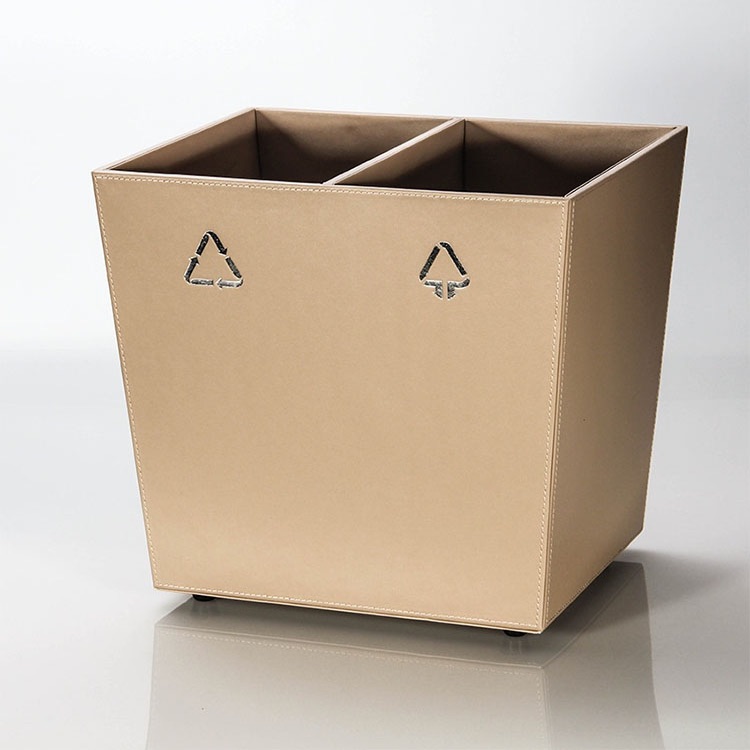
: 1–3 stream options with clear icon/label systems to reduce contamination
: materials, finishes, branding & packaging locked for consistent reorders
Your info is used only for quoting and communication.
How to Choose Compact Room Service Trolleys for Narrow Corridors
Most hotels buy room service trolleys backwards. They start with capacity, finish with regret, and then wonder why guest-floor service feels noisy, slow, and awkward. Here’s how I would choose a compact room service trolley when corridor width, labor pressure, and guest experience all matter at once.
So ask yourself this: are you buying a trolley, or are you buying a corridor problem with wheels?
Table of Contents
The corridor is the buyer, not procurement
Here is my blunt view.
A compact room service trolley for narrow corridors should be selected against movement constraints first, storage second, and aesthetics third, because the legal and operational environment is not forgiving: ADA guidance sets accessible-route clear width at 36 inches minimum, with only limited 32-inch pinch points for 24 inches maximum. I would never spec a trolley that forces staff to live near those minimums once you add hands, handles, bumpers, tray overhang, and the operator’s body position. Legal minimum is not operational comfort.
That is why I like that Facility Project Solutions already frames its compact room service trolley for corridors around tight turns, elevator access, divided storage, non-marking casters, and bumper protection rather than bloated capacity claims. Their adjacent article on a slim housekeeping cart for narrow hotel corridors makes the same corridor-first argument, which tells me the internal content spine is at least pointing in the right direction: workflow before vanity.
And yes, I am opinionated here. A beautiful trolley that clips walls and stalls at room doors is not premium. It is expensive denial.
What a compact room service trolley must actually do
Three things matter.
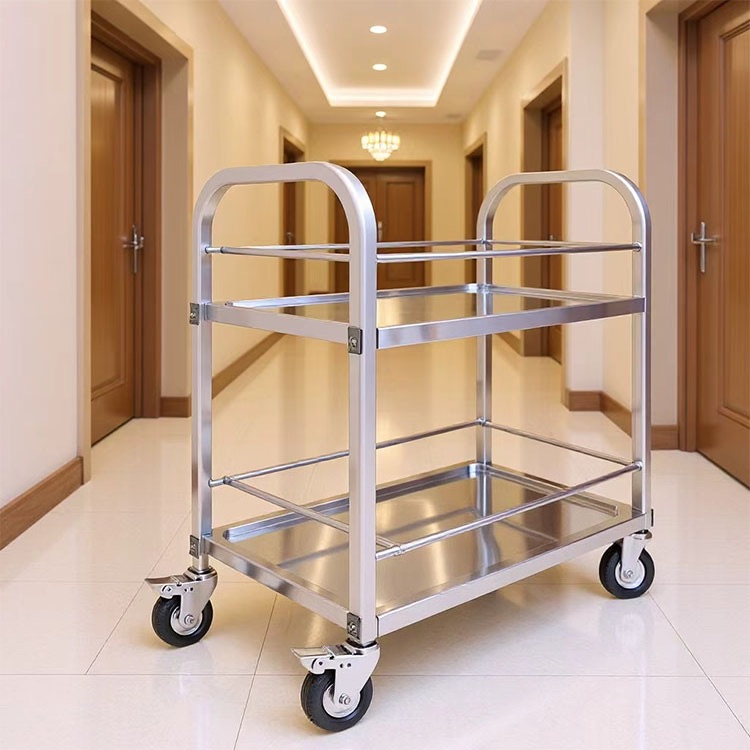
It must move quietly, hold a disciplined load, and stop pretending that “more shelves” automatically means better service. I look for a hotel room service trolley with a reduced footprint, responsive casters, decent bumper protection, fast-wipe surfaces, and storage that separates hot food, beverage setups, disposables, and used-service returns without making the operator dig through layers. That is why an open-shelf format like this room service trolley with stainless shelves works when speed matters, while a more discreet covered room service cart with sliding doors makes more sense on guest-sensitive floors, executive levels, or premium-service routes. If tray density is the bottleneck, a hotel food delivery trolley with tray racks is the more honest answer.
A lot of buyers miss the labor piece. Bad trolley design is not just annoying; it is physically costly. A 2024 systematic review in Musculoskeletal Science and Practice found that the most affected pain sites among hotel housekeepers and cleaners were the low back at 53.9%, shoulders at 41.4%, and wrists or hands at 40.1%, with low back pain affecting up to one in two workers. Room service is not housekeeping, obviously. But the ergonomic warning is the same: repetitive pushing, stopping, twisting, and reaching add up. That review is worth reading.
So when someone pitches me the “best room service trolley for hotels,” I do not ask how much it carries. I ask how little resistance it creates while carrying enough.
The spec table I would actually use
Below is the matrix I would use before approving any room service trolley for narrow corridors.
Buying factor
What I would approve
What I would reject
Why it matters on guest floors
Overall operating width
A compact profile with no hidden overhang from handles, shelves, or bumpers
A slim body with wide appendages that ruin the true footprint
Narrow corridors punish fake compactness
Caster package
Quiet, non-marking casters with stable tracking and clean swivel response
Hard, noisy wheels that chatter over thresholds
Noise and steering errors get noticed fast
Bumper protection
Full-contact protection where walls, frames, and elevator interiors get hit
Decorative trim with weak edge coverage
Cosmetic damage becomes a maintenance bill
Storage zoning
Clear separation for trays, cutlery, condiments, and returns
One big cavity that turns service into rummaging
Fast service is organized service
Door or enclosure style
Sliding or compact-opening access if privacy matters
Swing doors that need extra clearance in tight halls
Door behavior matters as much as cart width
Shelf logic
Easy top-access and quick reload paths
Deep shelves that force awkward reaches
Reaching and twisting slow staff down
Cleaning speed
Smooth, wipe-friendly surfaces with fewer dirt traps
Fussy joints and hard-to-clean corners
Hospitality equipment lives or dies on upkeep
Elevator behavior
Predictable turning and stable load at threshold transitions
Top-heavy builds that drift or snag
Corridors and elevator lobbies are the real test
My bias is simple: a slimline hotel trolley should earn its place by reducing interruption, not by impersonating a banquet cart.
Open shelf, covered body, or tray-rack format?
This part matters.
If your in-room dining volume is modest and reload speed matters most, I would start with an open configuration such as the room service trolley with stainless shelves. The logic is brutally practical: faster access, fewer hand motions, quicker reloads, less dead time between calls. But it also creates more visual exposure and less discretion in guest-facing corridors.
If privacy, presentation, and cleaner sightlines matter more than seconds saved, the covered room service cart with sliding doors is usually the better room service trolley for narrow corridors, because sliding access avoids the extra clearance penalty of swinging doors while keeping the cart face cleaner in public view. I would pick this for luxury floors, long-stay properties, or any site where the corridor doubles as a brand stage.
If the job is really food-run density, not mixed guest amenity service, then stop pretending a generic trolley is enough and use a tray-focused unit. The hotel food delivery trolley with tray racks is a cleaner match when the operating pattern is repeated meal drops, organized tray handling, and quick turnover. That is not nuance. That is fit-for-purpose buying.
And no, I am not sold on every “folding room service trolley” pitch I hear. Foldability sounds smart until the hinges add wobble, cleaning complexity, or a weaker frame. Compact beats collapsible most days.
The mistakes I see again and again
Buyers chase volume.
Then they discover too late that the advertised width ignored handle flare, door swing, shelf lip, and the staff member’s own shoulder line. Then complaints start: wall marks, awkward passing, jammed thresholds, noisy turns, and the classic hotel disease of all underperforming equipment, “It looked fine in the quote.”
I also see teams under-spec the sourcing process. Facility Project Solutions’ OEM/ODM services page is actually useful here because it frames design review around corridor widths, elevator turns, load targets, cleaning routines, and noise expectations. That is how I would want a supplier to talk. Not “premium finish.” Not “versatile solution.” Show me workflow inputs, sample validation, QC checkpoints, and repeat-order control. Their contact page also states they can return initial pricing quickly when requirements are clear, which is exactly why the operator should show up with measurements instead of adjectives. Contact the team here.
One more hard truth: the hotel industry still behaves as if labor can absorb bad equipment. It cannot. AHLA said in July 2024 that U.S. hotels were still more than 196,000 jobs below February 2020 staffing levels. In that environment, every extra push, turn, reload, and corridor block becomes more expensive than it looks on paper. That workforce report matters more than most buyers admit.
FAQs
What is a compact room service trolley?
A compact room service trolley is a hotel in-room dining cart designed with a reduced operating footprint, controlled turning behavior, quiet wheels, protective bumpers, and enough zoned storage to move trays, serviceware, and amenities through narrow corridors without blocking circulation or damaging guest-area finishes.
In plain English, it is not just a smaller cart. It is a corridor-appropriate service platform. I would judge it by live movement, not by catalog adjectives.
What width should a room service trolley be for narrow corridors?
The right width for a room service trolley is the narrowest real operating profile that still preserves stable storage and easy access, while staying comfortably away from ADA minimum route pressure once handles, bumpers, operator position, and door interactions are included in the actual working envelope.
My rule is simple: do not buy to the legal minimum. Buy to the working margin. The ADA route benchmark is still your warning sign, not your design target. See the ADA standard here.
Is a covered room service trolley better than an open-shelf trolley?
A covered room service trolley is better when guest-facing discretion, visual tidiness, and protected storage matter more than split-second access, while an open-shelf trolley is better when speed, fast restocking, and direct reach are the priority in a lower-visibility or higher-frequency service environment.
I would use covered units on premium floors and open shelves on speed-driven routes. There is no universal winner. There is only better alignment with the service pattern.
What features matter most for quiet corridor service?
The most important features for quiet corridor service are non-marking casters, stable steering geometry, bumper coverage, fast-access storage zoning, and surfaces that clean quickly, because guest-floor performance is shaped less by headline capacity and more by noise, turning control, collision prevention, and reload speed.
That is why I care more about wheels and layout than decorative trim. Guests hear bad carts before they see them.
Your next move
Measure first.
Before you ask for a quote, pull five numbers from one real guest floor: corridor width, pinch-point width, door opening, elevator threshold behavior, and the widest load you actually send during peak service. Then decide whether your operation needs an open-access room service trolley with stainless shelves, a more discreet covered room service cart with sliding doors, or a tray-heavy food delivery trolley with tray racks. If you are standardizing across multiple properties, go straight to the OEM/ODM program and submit real measurements, not vague preferences. That is how you choose a room service trolley like an operator, not like a catalog browser.