Share your requirements and target market. We’ll suggest the right configuration, sampling path, and production plan.
During business hours, We can usually provide a preliminary quote within two hours.
: workflow-based setups to improve efficiency and keep corridors tidy
: easier bag changes and maintenance, built for daily facility use
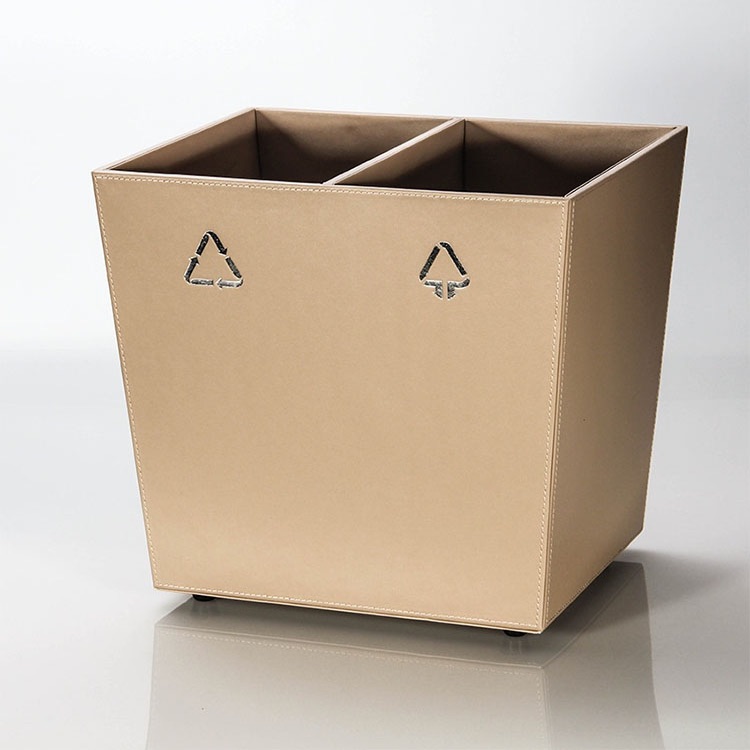
: 1–3 stream options with clear icon/label systems to reduce contamination
: materials, finishes, branding & packaging locked for consistent reorders
Your info is used only for quoting and communication.
Hotel vs Office Trash Bin Requirements: What Changes?
Hotels punish weak bin specs faster than offices because guests generate unpredictable mixed waste across rooms, bathrooms, lobbies, breakfast areas, meeting spaces, and back-of-house routes. Offices are steadier, but tenant compliance and recycling contamination create their own problems.
Table of Contents
The Bin Spec Is Not the Same Building Problem
Bins expose management.
I have watched facilities teams treat hotel trash cans and office waste bins as if they are interchangeable plastic shells, then spend the next 18 months fighting overflow, odor complaints, recycling contamination, housekeeping delays, tenant friction, and procurement arguments that could have been killed with a sharper spec sheet. Why does this keep happening?
Because “trash bin” sounds simple. It is not.
Commercial Trash Bin Requirements change the moment the building use changes. A hotel is a rotating behavioral experiment: guests eat in rooms, unwrap amenities, abandon coffee cups, produce bathroom waste, attend events, and judge cleanliness while pretending not to. An office is more predictable, but it has paper, pantry waste, desk-side habits, confidential disposal, tenant politics, and workplace recycling bin requirements that fail when nobody owns the rules.
Here is my hard truth: hotels need waste systems designed around service speed and guest optics. Offices need waste systems designed around compliance, sorting accuracy, and janitorial efficiency. The container is just the visible piece.
Hotel trash bin requirements are uglier than most purchasing teams admit.
Guest rooms need small, discreet containers. Bathrooms need separate, cleanable bins. Lobbies need bins that look intentional but empty fast. Breakfast zones need liquid, food, paper, plastic, and sometimes organics separation. Banquet areas need surge capacity. Back-of-house needs worker-safe movement. And housekeeping needs liner changes that do not burn 20 seconds per room.
Twenty seconds sounds tiny until it repeats across 180 rooms.
The internal guidance on 10–14 liter hotel guest room trash bin sizing gets the room-level logic right: standard rooms usually do not need giant cans; they need compact, hidden-liner, fast-service bins. Oversizing a guestroom bin often creates the wrong visual cue: guests treat it as permission to dump food packaging, liquids, and takeaway waste in the sleeping area.
Offices are different. They are not cleaner because office workers are better behaved. They are cleaner because the waste profile is repetitive: paper, cups, snack wrappers, delivery packaging, pantry waste, restroom paper, and recyclables that people “wish-cycle” because the sign is vague.
The EPA’s national waste data still gives the blunt background: the U.S. generated 292.4 million tons of municipal solid waste in 2018, with about 69 million tons recycled and 25 million tons composted, producing a 32.1% recycling and composting rate; about 146 million tons went to landfills, which is why commercial buildings cannot fake diversion strategy anymore. See the EPA national MSW data.
The Real Comparison: Hotel vs Office Commercial Waste Bin Requirements
Capacity Is Not a Number. It Is a Service Contract with Reality
I dislike capacity charts when they float without context.
A 13-gallon bin can be smart in one office pantry and ridiculous in a boutique hotel corridor. A 10-liter guestroom bin can be perfect for a one-night business stay and underpowered for extended-stay suites where guests bring groceries. A 3-stream recycling station can lift diversion in a lobby or become theater if labels do not match the hauler’s accepted materials.
The commercial trash can sizes that matter are not just liters or gallons. They are touch frequency, waste density, liner fit, hand clearance, door swing, inner bucket removal, liquid exposure, and whether one cleaner can service the bin without twisting like a circus act.
In hotels, I would specify by zone:
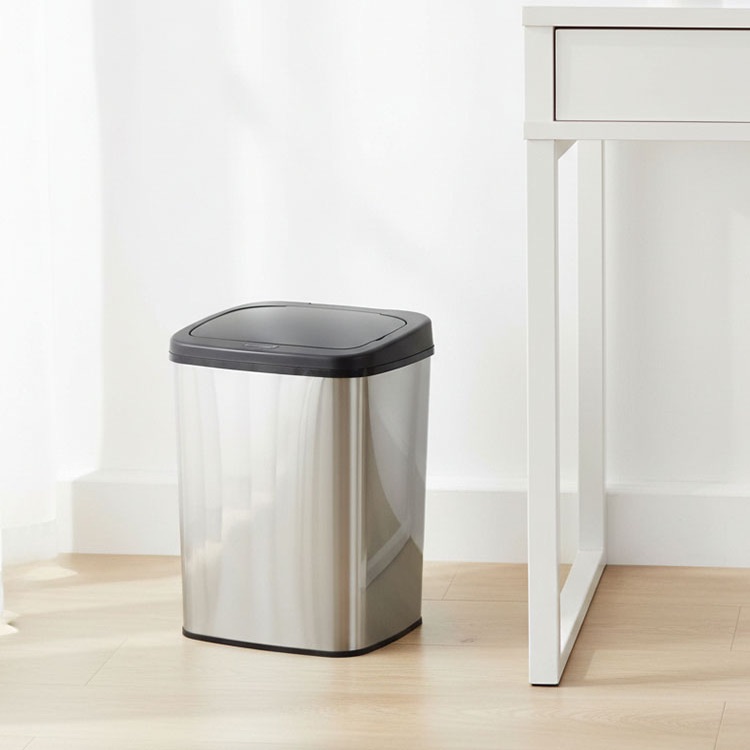
Guest rooms: 10–14 L main bin, concealed liner, wipeable body, quiet placement near desk or minibar.
Bathrooms: 5–8 L pedal or open small bin, corrosion-resistant surface, fast bag change.
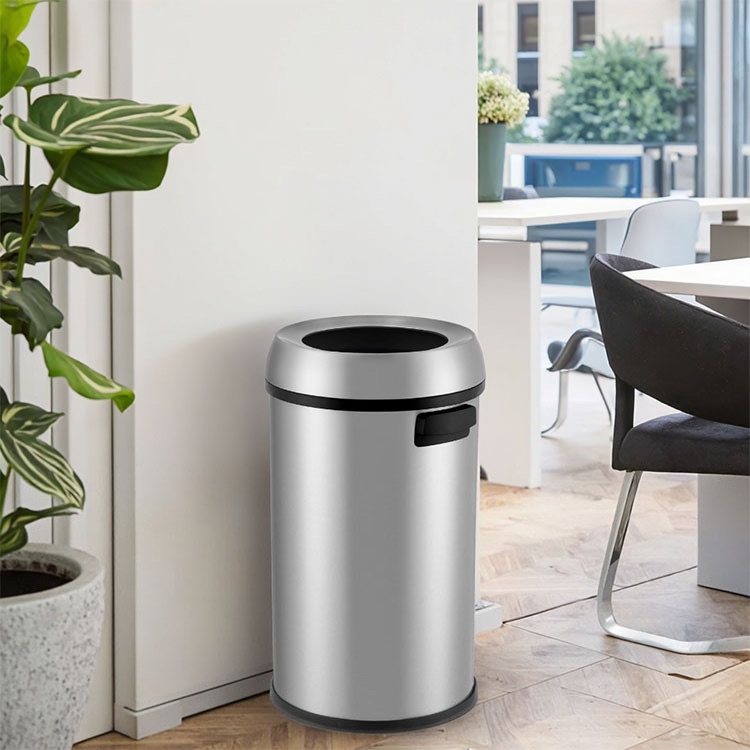
Lobby and elevator banks: 30–60 L decorative or semi-concealed commercial indoor trash cans, often paired with recycling.
Breakfast and meeting areas: 2-stream or 3-stream station, restricted openings, liquid-aware servicing.
Back-of-house: larger wheeled or removable-liner units, chosen around route safety rather than aesthetics.
In offices, I would specify by behavior:
Desk-side: reduce or remove where central sorting is the goal.
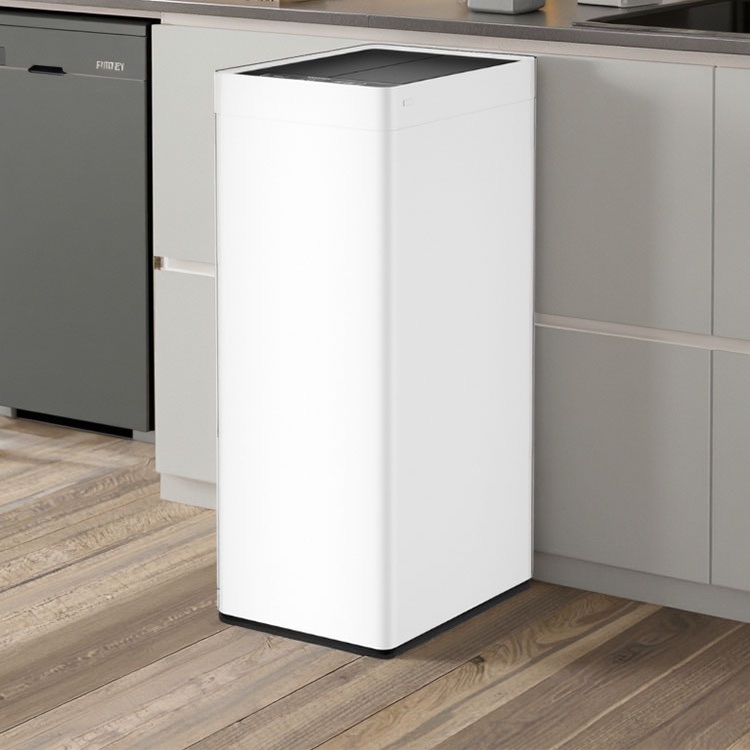
Pantry: higher capacity, closed or semi-closed lids, recycling next to landfill every time.
Print/copy zones: paper-focused recycling, no food-adjacent contamination.
Meeting rooms: modest landfill and bottle/can capture, emptied after events.
Central hubs: consistent color, icons, openings, and tenant-facing signage.
And yes, I think many offices should kill most under-desk bins. People hate hearing that. But desk bins multiply liner use, hide contamination, and make janitorial routes longer. Centralized stations are less convenient at first and better in the long run.
Compliance Is Where the “Pretty Bin” Argument Dies
The law does not care that the bin matches the lobby millwork.
New York City made this painfully concrete: as of March 1, 2024, all businesses setting waste at the curb must use bins with secure lids, unless their waste is collected from a loading dock. That is not a design preference; it is a setout rule. See NYC DSNY’s Setout and Containers.
NYC also requires covered commercial organics businesses to separate staff-handled back-of-house organic waste, including food scraps and food-soiled paper, and to provide labeled containers and visible employee instructions. That directly affects hotels with food service, large event spaces, and office buildings with commercial kitchens or cafeterias. See NYC Commercial Organics Requirements.
California is just as clear in a different way. CalRecycle says a business meeting the 2-cubic-yard weekly threshold across recycling, organics recycling, and disposal must engage in organic recycling activity. See CalRecycle business organics requirements.
So when a procurement team asks, “Can we use the same bin everywhere?” my answer is usually: only if your legal exposure, waste stream, staffing model, traffic pattern, and brand standards are also the same everywhere. They are not.
Accessibility is another quiet trap. The 2010 ADA Standards state that objects with leading edges more than 27 inches and not more than 80 inches above the finished floor may protrude only 4 inches maximum into the circulation path. See the 2010 ADA Standards for Accessible Design.
That matters for wall-mounted bins, narrow corridors, elevator banks, hotel room placement, restroom vestibules, and office circulation routes. A wastebasket can become an access problem without looking like one.
Odor, Labor, and Injury: The Part Buyers Prefer Not to Price
Odor tells truth.
A bin that smells is rarely “just” a bin problem; it is usually wet waste, slow service, poor liner fit, bad lid choice, bacterial residue, HVAC movement, and staff forced to improvise because the spec was written by someone who never emptied the thing. The article on odor-control commercial indoor trash cans is useful here because it frames odor as a system failure, not a fragrance problem.
Hotels are far less forgiving than offices. A guest may tolerate a slow elevator. They will not forgive a sour-smelling corridor outside room 412.
Offices have odor flashpoints too: pantries, wellness rooms, restroom-adjacent zones, and trash rooms where food containers sit over a weekend. But in offices, the solution is usually centralization, better lids, more frequent pantry pulls, and clearer separation. In hotels, the solution is zone-by-zone waste stream mapping.
Labor is the hidden bill.
The BLS reported 2.6 million nonfatal workplace injuries and illnesses in private industry in 2023, with 946,500 involving days away from work. Waste handling is not the only cause, obviously, but any facility manager who has watched cleaners lift leaking liners, drag overfilled bags, or twist around awkward inner buckets knows the connection is not theoretical. See the BLS 2023 workplace injury data.
A better commercial waste bin requirement should include:
Removable rigid liners.
No sharp internal seams.
Liner retention rings.
Non-slip bases.
Bag change access under 20 seconds in high-turnover zones.
Washable surfaces.
Handles positioned for neutral wrist movement.
Doors that do not fight the worker.
This is not luxury. This is procurement growing up.
Recycling Stations Need Behavior Design, Not Hope
Recycling fails at the opening.
People do not read paragraphs at the bin. They scan color, shape, icon, opening, and the last thing they threw away. If the office uses blue for mixed recycling but the hotel uses blue for paper only, your “standard” just manufactured contamination.
The EPA’s 2024 recycling infrastructure assessment identified contamination of recyclables, low collection rates, limited market demand, low profitability for commercial recycling programs, and limited decision-making information as major recycling-system barriers. See the EPA 2024 recycling system assessment.
This is where a 2- or 3-stream commercial recycling bin earns its keep. Not because three holes look sustainable. Because restricted openings, removable liners, and consistent labels reduce the number of bad decisions made in half a second.
Hotels need multilingual or icon-heavy signage in guest-facing zones. Offices need tenant-specific signage that matches the local hauler’s accepted materials. Both need landfill, recycling, and organics placed together. Never make recycling less convenient than trash and then act shocked when diversion stalls.
A hotel lobby station should answer: bottle, cup, paper, food, landfill.
An office pantry station should answer: food, liquid, cup, container, landfill.
A back-of-house station should answer: organics, cardboard, mixed recycling, landfill, special waste.
Different building. Different truth.
The Hotel vs Office Spec Sheet I Would Actually Use
For Hotels
I would require guestroom bins with concealed liners, quiet finishes, and small footprints. I would separate bathroom bins from main room bins. I would use lobby bins that look built-in without becoming maintenance sculptures. I would put recycling beside trash in visible zones, not 40 feet away near a plant. I would give breakfast and banquet areas their own surge plan.
For hotels with food service, I would add organics mapping, pest-resistant storage, staff-only back-of-house containers, and a written service cadence by daypart: breakfast close, lunch reset, event turnover, overnight.
For Offices
I would centralize waste wherever tenant culture allows it. I would reduce desk-side bins. I would put recycling and landfill together at every station. I would over-spec pantry bins before I over-spec workstation bins. I would require signage that shows actual items used in the building: coffee cups, salad bowls, PET bottles, aluminum cans, copy paper, cardboard sleeves.
Offices also need tenant onboarding. Without it, the bin system becomes furniture.
For Shared Commercial Buildings
Mixed-use buildings are where lazy specs go to die. A hotel-office podium, public lobby, retail edge, and conference floor may need four different bin families. That is fine. What should stay consistent is the logic: stream color, icon language, liner system, replacement parts, service access, and finish family.
FAQs
What changes between hotel and office trash bin requirements?
Hotel trash bin requirements differ from office trash bin requirements because hotels handle mixed guest waste, bathroom waste, room-turnover speed, food and beverage spillover, brand-facing aesthetics, and back-of-house separation, while offices mostly manage desk waste, pantry waste, paper, packaging, and tenant compliance inside predictable workday traffic. The hotel bin is part of the guest experience; the office bin is part of workplace operations.
How should commercial trash bin sizes be chosen?
A commercial trash bin should be sized by waste stream, service frequency, floor area, user behavior, and route labor, not by catalog appearance, because the wrong capacity either creates overflow, burns cleaner time, or hides contamination until the hauler, guest, tenant, or inspector complains. In practice, size the bin after mapping the zone, not before.
Do hotels need more recycling bins than offices?
Hotels usually need more specialized recycling and organics stations than offices because guest waste moves through rooms, lobby zones, meeting areas, breakfast operations, banquets, bathrooms, corridors, and back-of-house routes, which creates more touchpoints and more chances for contamination during every shift. Offices need fewer station types, but stronger consistency and tenant education.
Are centralized office trash bins better than desk-side bins?
Office trash bins should be centralized when the goal is cleaner sorting, lower janitorial labor, and fewer under-desk liner changes, but desk-side bins still make sense for confidential paper workflows, accessibility needs, executive areas, or legacy tenant expectations that cannot be changed quickly. The best office programs usually phase centralization instead of forcing it overnight.
What makes a hotel or office waste bin program compliant?
A hotel or office waste bin program is compliant when it matches local recycling, organics, accessibility, fire-safety, pest-control, and hauler setout rules, with labeled containers, correct lids, clear placement, staff training, and records that prove the system exists beyond the purchasing invoice. Compliance is not the bin alone; it is the operating system around the bin.
Your Next Steps: Audit the Waste Before You Buy the Bin
Do not start with a catalog.
Walk the building. Photograph the waste points. Count overflow. Time liner changes. Check ADA circulation. Ask the hauler what ruins the stream. Separate hotel guest-facing zones from back-of-house zones. Separate office pantry behavior from desk behavior. Then write the spec.
If you are standardizing across hotels, offices, public facilities, or mixed-use buildings, send the site count, waste streams, capacity targets, signage rules, and brand requirements to Facility Project Solutions and request a configured commercial trash bin and recycling station plan that matches the way the building actually operates.