Share your requirements and target market. We’ll suggest the right configuration, sampling path, and production plan.
During business hours, We can usually provide a preliminary quote within two hours.
: workflow-based setups to improve efficiency and keep corridors tidy
: easier bag changes and maintenance, built for daily facility use
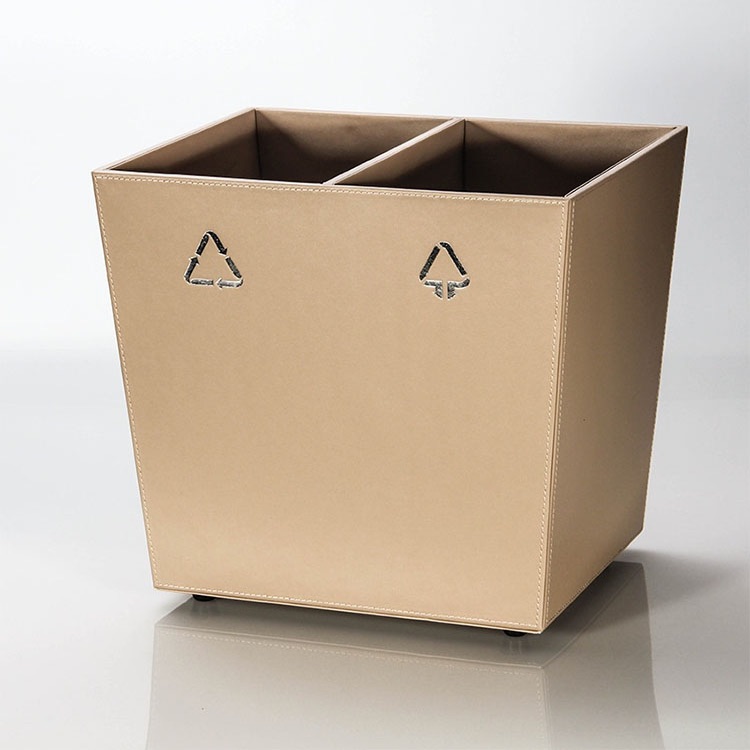
: 1–3 stream options with clear icon/label systems to reduce contamination
: materials, finishes, branding & packaging locked for consistent reorders
Your info is used only for quoting and communication.
How to Choose Housekeeping Cart Casters for Noise, Load, and Debris Control
Most properties do not have a cart problem. They have a caster problem. This guide breaks down how I’d spec housekeeping cart wheels for quiet corridors, safer load handling, and less downtime from hair, lint, and trash wrap.
Table of Contents
Most buyers get the body right and the wheels wrong
Three bad inches.
That is sometimes the whole difference between a cart that glides through a guest corridor and a cart that chatters, fishtails at the elevator lip, and starts collecting hair, lint, and thread until the staff hates it by week three, even though procurement swears they “bought quality.” Why does the industry keep pretending the frame is the headline and the caster is a footnote?
I do not buy that story. I have watched buyers obsess over shelves, doors, and color panels, then save a little money on the one component that actually touches the floor 10,000 times a week. In hospitality, the wheel decides the noise signature, the push force, the turning radius under load, and the maintenance burden. Everything else is secondary.
If I were building the internal-link spine for this article on Facility Project Solutions, I would not dump readers into one random SKU and hope for the best. I would open with the broad housekeeping carts collection, then move people into a compact maid cart with linen storage for tight corridors, a hotel housekeeping cart with bag holder for cleaner dirty-versus-clean separation, a housekeeping cart with lockable cabinet doors for guest-facing floors, and finish chain buyers on the OEM/ODM hotel cart program where corridor widths, elevator turns, load targets, and noise expectations can actually be standardized across properties. Facility Project Solutions’ own pages keep coming back to non-marking wheels, protective bumpers, corridor maneuverability, and workflow-based design, which tells me the site already has the right semantic cluster to support this H1.
In hospitals, the argument is already settled. A 2024 Macquarie University report on ward noise found average patient-room noise at 47.2 dB versus the WHO recommendation of 30 dB, with peaks from 93.6 dB to 106.9 dB and one interruption every seven minutes in one shared room; a separate 2024 George Washington University–hosted study reported cardiac ICU sound levels averaging 50.6 dB by day and 49.5 dB by night, with higher noise associated with increased heart rate, blood pressure, and sedation use. Hotels are not ICUs, obviously. But the hard truth is the corridor-acoustics lesson still holds: hard wheels on hard floors are a bad idea when your brand sells sleep.
So what do I spec when quiet matters? Soft-tread, non-marking housekeeping cart wheels first. Usually TPE or quality rubber over hard nylon, and usually 125 mm rather than tiny bargain wheels that amplify every grout line and threshold. Facility Project Solutions clearly leans into non-marking mobility on its housekeeping pages, and I agree with that bias. On polished tile, LVT, or sealed stone, a quiet housekeeping cart caster is not a luxury line item. It is brand protection. Do you really want guests hearing room turns before they see the attendant?
My unpopular opinion: a lot of “heavy-duty” caster recommendations for hotels are warehouse thinking imported into guest corridors. Harder compounds carry weight, sure. They also broadcast vibration, feel harsher over joints, and make staff push harder when debris starts binding in the swivel head. I would rather slightly overspec a soft, non-marking wheel with good bearings than underspec a hard wheel that sounds indestructible in a catalog and obnoxious at 6:10 a.m.
Load rating is where the fake heavy-duty claims collapse
Math first.
California is blunt about the labor reality. In Title 8, Section 3345, Cal/OSHA explicitly treats loading, unloading, pushing, and pulling linen carts as part of the housekeeping task set tied to musculoskeletal injury risk. Then the clinical literature piles on: a 2024 meta-analysis in Musculoskeletal Science and Practice found hotel housekeepers and cleaners had very high musculoskeletal-disorder prevalence, with low back symptoms affecting up to about half the population studied, while the BLS 2024 injury report still counted 2.5 million nonfatal workplace injuries and illnesses across private industry. Anyone who treats cart load as a brochure number is missing the point.
Here is the rule I use, and yes, it is harsher than most supplier copy. I calculate the true loaded cart mass, including linen, amenities, chemicals, trash, wet textiles, and the junk staff inevitably stage on the top deck. Then I divide by three, not four, because one wheel is almost always carrying more than its fair share when the cart pivots, parks at a room threshold, or clips an elevator seam. Add a 25 percent abuse margin after that. But suppliers love quoting static load as if carts live on laboratory concrete, don’t they?
A practical example helps. If the real working load is 180 kg, or about 397 lb, I do not accept four casters rated around 100 lb each and call it safe. I want a per-wheel rating that survives off-center loading, acceleration, and threshold shock. That usually pushes me toward a genuine heavy-duty housekeeping cart caster on the rear or, better yet, a matched set with real bearing quality instead of four cheap wheels that merely survived the sample room.
OSHA’s broader material-handling rules are not hotel-caster spec sheets, but the logic is still useful: mechanical handling requires safe clearances in aisles, doorways, and turns, and rated capacities are not suggestions. That is exactly how I want buyers to think about housekeeping cart wheels too. Load capacity is not just “how much can this wheel hold?” It is “how much abuse can it hold in motion, in a corridor, with a human pushing it under time pressure?”
Debris control is the maintenance trap nobody budgets for
Lint kills.
Cheap casters rarely fail in a dramatic way. They die slowly, by hair wrap, thread wrap, axle grime, and grit packed into the swivel race until the wheel still technically rolls but no longer tracks straight, no longer turns cleanly, and no longer sounds civilized. That is why I take debris-resistant caster wheels more seriously than most buyers do.
Facility Project Solutions quietly gives away the answer on its own site. The homepage references non-marking wheels and even “thread-guard caster concepts for debris,” while the product pages keep reinforcing corridor maneuverability and easy-clean operation. That tells me the right internal message is not “choose stronger wheels.” It is “choose wheels that stay functional after lint, dust, and housekeeping waste start behaving like a bearing test.” I would work that phrase into this article and route readers toward the hotel housekeeping cart with bag holder and the lockable housekeeping cart because those pages align with the same operational logic: separation, control, and less mess around the wheel path.
My recommendation is simple. Use thread guards when routes are lint-heavy. Use sealed precision bearings when wash-downs or wet waste are common. Avoid deep-tread patterns that love to collect string. And stop pairing premium cart bodies with bargain swivel heads. I have seen properties spend thousands on nicer-looking carts and then lose the savings in replacement wheels, wall marks, and staff frustration inside one budget cycle. That is not procurement discipline. That is denial.
The caster matrix I would actually hand to procurement
I keep this ugly on purpose. Pretty tables sell carts. Practical tables prevent reorders.
This is my synthesis, but it lines up with the operational cues already built into the Facility Project Solutions catalog: non-marking mobility, corridor-ready maneuverability, protective bumpers, and workflow-specific cart formats rather than one-size-fits-all hardware. (Facility Project Solutions)
The internal-link path I would deploy on this page
I would also keep the anchor text literal and useful. Not “learn more.” Not “click here.” Use phrases that match the buyer’s actual next thought: “quiet housekeeping cart casters for guest floors,” “bag-holder cart for dirty-clean separation,” “lockable cart for guest-facing corridors,” “OEM cart standardization for hotel groups.” Search engines understand that. More importantly, skeptical humans understand it too.
FAQs
What are housekeeping cart casters?
Housekeeping cart casters are the wheel-and-swivel assemblies mounted under a hotel or facility cleaning cart, and they determine how quietly the cart rolls, how much weight it can carry in motion, how sharply it turns in corridors, and how well it resists thread, lint, and debris accumulation during daily service rounds.
In plain English, they are not accessories. They are the mobility system. When people complain about a cart being noisy, hard to steer, or always “pulling weird,” they are usually describing a caster failure, not a cart-body failure.
What wheel material is best for quiet housekeeping cart casters?
The best wheel material for quiet housekeeping cart casters is usually a non-marking soft tread, most often TPE or quality rubber, because it absorbs floor vibration better than hard nylon or bargain plastic, reduces chatter on tile and elevator thresholds, and is less likely to create the sharp corridor noise that guests notice immediately.
That is my default for guest floors. If the property has unusually heavy routes, I move toward polyurethane, but only when the load problem is real and not imagined.
How do I calculate caster load capacity for a housekeeping cart?
Caster load capacity for a housekeeping cart should be calculated from the cart’s true fully loaded working weight, including linens, amenities, chemicals, waste, and wet items, then adjusted for dynamic use by assuming uneven weight distribution during turns, thresholds, and elevator transitions rather than dividing the load evenly across all four wheels.
My rule is to divide by three, then add at least 25 percent headroom. It is conservative, yes. It is also how you stop “heavy-duty” from turning into a maintenance joke six months later.
Are debris-resistant caster wheels really worth it?
Debris-resistant caster wheels are wheels specified with features such as thread guards, better seals, cleaner tread geometry, and more durable bearings so they remain steerable and quiet even after exposure to hair, lint, dust, string, and housekeeping waste that would gradually choke a cheaper wheel assembly.
Absolutely. Debris does not usually stop a cart on day one. It degrades tracking, noise, push force, and staff patience over time. That slow failure is why buyers underestimate it.
That is the hard truth. The right caster will not make a bad workflow good. But the wrong caster will make a good workflow miserable, noisy, and expensive.